173 kr
Skickas
173 kr
Skickas
185 kr
Skickas
The images from Abu Ghraib are as murderous for America as those of the World Trade Center in flames. The whole West is contained in the burst of sadistic laughter of the American soldiers, as it is behind the construction of the Israeli wall. This is where the truth of these images lies. Truth, but not veracity. As virtual as the war itself, their specific violence adds to the specific violence of the war. In The Conspiracy of Art, Baudrillard questions the privilege attached to art by its practitioners. Art has lost all desire for illusion: feeding back endlessly into itself, it has turned its own vanishment into an art unto itself. Far from lamenting the "end of art," Baudrillard celebrates art's new function within the process of insider-trading. Spiraling from aesthetic nullity to commercial frenzy, art has become transaesthetic, like society as a whole. Conceived and edited by life-long Baudrillard collaborator Sylvère Lotringer, The Conspiracy of Art presents Baudrillard's writings on art in a complicitous dance with politics, economics, and media. Culminating with "War Porn," a scathing analysis of the spectacular images from Abu Ghraib prison as a new genre of reality TV, the book folds back on itself to question the very nature of radical thought.
147 kr
Skickas
Thirty years of “crisis,” mass unemployment, and flagging growth, and they still want us to believe in the economy... We have to see that the economy is itself the crisis. It's not that there's not enough work, it's that there is too much of it. The Coming Insurrection is an eloquent call to arms arising from the recent waves of social contestation in France and Europe. Written by the anonymous Invisible Committee in the vein of Guy Debord—and with comparable elegance—it has been proclaimed a manual for terrorism by the French government (who recently arrested its alleged authors). One of its members more adequately described the group as “the name given to a collective voice bent on denouncing contemporary cynicism and reality.” The Coming Insurrection is a strategic prescription for an emergent war-machine capable of “spreading anarchy and live communism.” Written in the wake of the riots that erupted throughout the Paris suburbs in the fall of 2005 and presaging more recent riots and general strikes in France and Greece, The Coming Insurrection articulates a rejection of the official Left and its reformist agenda, aligning itself instead with the younger, wilder forms of resistance that have emerged in Europe around recent struggles against immigration control and the “war on terror.” Hot-wired to the movement of '77 in Italy, its preferred historical reference point, The Coming Insurrection formulates an ethics that takes as its starting point theft, sabotage, the refusal to work, and the elaboration of collective, self-organized life forms. It is a philosophical statement that addresses the growing number of those—in France, in the United States, and elsewhere—who refuse the idea that theory, politics, and life are separate realms.
345 kr
Skickas
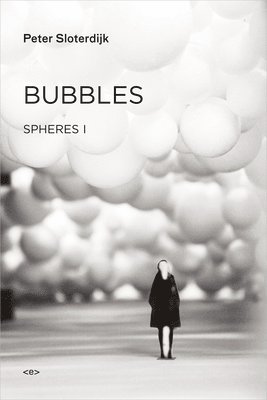
An epic project in both size and purview, Peter Sloterdijk's three-volume, 2,500-page Spheres is the late-twentieth-century bookend to Heidegger's Being and Time. Rejecting the century's predominant philosophical focus on temporality, Sloterdijk, a self-described “student of the air,” reinterprets the history of Western metaphysics as an inherently spatial and immunological project, from the discovery of self (bubble) to the exploration of world (globe) to the poetics of plurality (foam). Exploring macro- and micro-space from the Greek agora to the contemporary urban apartment, Sloterdijk is able to synthesize, with immense erudition, the spatial theories of Aristotle, René Descartes, Gaston Bachelard, Walter Benjamin, and Georges Bataille into a morphology of shared, or multipolar, dwelling—identifying the question of being as one bound up with the aerial technology of architectonics and anthropogenesis.
Sloterdijk describes Bubbles, the first volume of Spheres, as a general theory of the structures that allow couplings—or as the book's original intended subtitle put it, an “archeology of the intimate.” Bubbles includes a wide array of images, not to illustrate Sloterdijk's discourse, but to offer a spatial and visual “parallel narrative” to his exploration of bubbles.
Written over the course of a decade, the Spheres trilogy has waited another decade for its much-anticipated English translation from Semiotext(e). Volumes II, Globes, and III, Foam, will be published in the coming seasons.
393 kr
Skickas
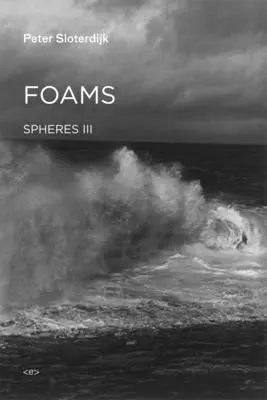
“So the One Orb has imploded—now the foams are alive."—from Foams
Foams completes Peter Sloterdijk's celebrated Spheres trilogy: his 2,500-page “grand narrative” retelling of the history of humanity, as related through the anthropological concept of the "Sphere." For Sloterdijk, life is a matter of form and, in life, sphere formation and thought are two different labels for the same thing. The trilogy also offers his corrective answer to Martin Heidegger's Being and Time, reformulating it into a lengthy meditation on Being and Space—a shifting of the question of who we are to a more fundamental question of where we are.
In this final volume, Sloterdijk's “plural spherology” moves from the historical perspective on humanity of the preceding two volumes to a philosophical theory of our contemporary era, offering a view of life through a multifocal lens. If Bubbles was Sloterdijk's phenomenology of intimacy, and Globes his phenomenology of globalization, Foams could be described as his phenomenology of spatial plurality: how the bubbles that we form in our duality bind together to form what sociological tradition calls "society." Foams is an exploration of capsules, islands, and hothouses that leads to the discovery of the foam city.
The Spheres trilogy ultimately presents a theology without a God—a spatial theology that requires no God, whose death therefore need not be of concern.
As with the two preceding volumes, Foams can be read on its own or in relation to the rest of the trilogy.
168 kr
Skickas
Speed and Politics (first published in France in 1977) is the matrix of Virilio's entire work. Building on the works of Morand, Marinetti, and McLuhan, Virilio presents a vision more radically political than that of any of his French contemporaries: speed as the engine of destruction. Speed and Politics presents a topological account of the entire history of humanity, honing in on the technological advances made possible through the militarization of society. Paralleling Heidegger's account of technology, Virilio's vision sees speed—not class or wealth—as the primary force shaping civilization. In this "technical vitalism," multiple projectiles—inert fortresses and bunkers, the "metabolic bodies" of soldiers, transport vessels, and now information and computer technology—are launched in a permanent assault on the world and on human nature. Written at a lightning-fast pace, Virilio's landmark book is a split-second, overwhelming look at how humanity's motivity has shaped the way we function today, and what might come of it.
119 kr
Skickas inom 7-10 vardagar
158 kr
Skickas
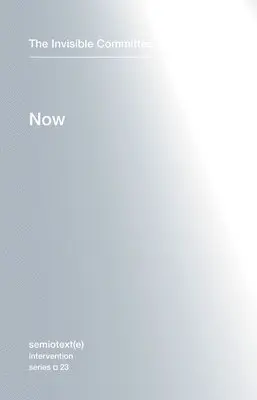
Now is the phantom chapter to the Invisible Committee's previous book, To Our Friends: a new critique from the anonymous collective that establishes their opposition to the world of capital and its law of labor, addresses current anti-terrorist rhetoric and the ferocious repression that comes with it, and clarifies the end of social democracy and the growing rumors of the need for a coming “civil war.” Now emerges at a time when the Invisible Committee's contestation has found echoes throughout the West, with a collapse of trust in the police, an inept weariness on the part of the political system, a growing urgency for opposition, a return of the theme of the Commune, a vanishing distinction between radicals and citizens, and a widespread refusal on the part of the citizen to be governed. As farcical political elections continue to unfold worldwide like a line of tumbling dominoes, and governments increasingly struggle to reclaim a legitimacy that has already slipped out of their grasp, Now clarifies the Invisible Committee's attitude toward all such elections and their outcome: one of utter indifference. Now proposes a “destituent process” that charts out a different path to be taken, a path of outright refusal that simply ignores elections altogether. It is a path that calls for taking over the world and not taking power, for exploring new forms of life and not a new constitution, and for desertion and silence as alternatives to proclamations and crashes. It is also a call for an unprecedented communism—a communism stronger than nation and country.
230 kr
Skickas
277 kr
Skickas inom 7-10 vardagar
171 kr
Skickas
180 kr
Skickas
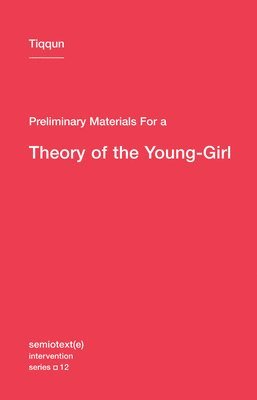
The Young-Girl is not always young; more and more frequently, she is not even female. She is the figure of total integration in a disintegrating social totality.—from Theory of the Young-Girl
First published in France in 1999, Preliminary Materials for a Theory of the Young-Girl dissects the impossibility of love under Empire. The Young-Girl is consumer society's total product and model citizen: whatever “type” of Young-Girl she may embody, whether by whim or concerted performance, she can only seduce by consuming. Filled with the language of French women's magazines, rooted in Proust's figure of Albertine and the amusing misery of (teenage) romance in Witold Gombrowicz's Ferdydurke, and informed by Pierre Klossowski's notion of “living currency” and libidinal economy, Preliminary Materials for a Theory of the Young-Girl diagnoses—and makes visible—a phenomenon that is so ubiquitous as to have become transparent.
In the years since the book's first publication in French, the worlds of fashion, shopping, seduction plans, makeover projects, and eating disorders have moved beyond the comparatively tame domain of paper magazines into the perpetual accessibility of Internet culture. Here the Young-Girl can seek her own reflection in corporate universals and social media exchanges of “personalities” within the impersonal realm of the marketplace. Tracing consumer society's colonization of youth and sexuality through the Young-Girl's “freedom” (in magazine terms) to do whatever she wants with her body, Tiqqun exposes the rapaciously competitive and psychically ruinous landscape of modern love.
225 kr
Skickas
155 kr
Skickas
“Why am I telling you all this? Partly 'cause the whole queerness/identity thing for me stretches through everything, absolutely everything. Slipping between straight/gay is child's play compared to slipping between writer/teacher/influence-peddler whatever. I forget who I am. You reminded me of who I prefer to be.” [M.W.]
“It's two in the morning... I know what you mean about slipping roles: I love it, going high low, power helpless even captive, male female, all over the place, space totally together and brain-sharp, if it wasn't for play I'd be bored stiff and I think boredom is the emotion I find most unbearable... ” [KA]—from I'm Very into You
After Kathy Acker met McKenzie Wark on a trip to Australia in 1995, they had a brief fling and immediately began a heated two-week email correspondence. Their emails shimmer with insight, gossip, sex, and cultural commentary. They write in a frenzy, several times a day; their emails cross somewhere over the International Date Line, and themselves become a site of analysis. What results is an index of how two brilliant and idiosyncratic writers might go about a courtship across 7,500 miles of airspace—by pulling in Alfred Hitchcock, stuffed animals, Georges Bataille, Elvis Presley, phenomenology, Marxism, The X-files, psychoanalysis, and the I Ching.
Their corresepondence is a Plato's Symposium for the twenty-first century, but written for queers, transsexuals, nerds, and book geeks. I'm Very Into You is a text of incipience, a text of beginnings, and a set of notes on the short, shared passage of two iconic individuals of our time.
179 kr
Skickas inom 7-10 vardagar
340 kr
Skickas inom 7-10 vardagar
201 kr
Skickas
"One day, perhaps, this century will be Deleuzian," Michel Foucault once wrote. This book anthologizes 40 texts and interviews written over 20 years by renowned French philosopher Gilles Deleuze, who died in 1995. The early texts, from 1953-1966 (on Rousseau, Kafka, Jarry, etc.), belong to literary criticism and announce Deleuze's last book, Critique and Clinic (1993). But philosophy clearly predominates in the rest of the book, with sharp appraisals of the thinkers he always felt indebted to: Spinoza, Bergson. More surprising is his acknowledgement of Jean-Paul Sartre as his master. "The new themes, a certain new style, a new aggressive and polemical way of raising questions," he wrote, "come from Sartre." But the figure of Nietzsche remains by far the most seminal, and the presence throughout of his friends and close collaborators, Felix Guattari and Michel Foucault. The book stops shortly after the publication of Anti-Oedipus, and presents a kind of genealogy of Deleuze's thought as well as his attempt to leave philosophy and connect it to the outside—but, he cautions, as a philosopher.
255 kr
Tillfälligt slut
180 kr
Kommande
200 kr
Skickas
People tend to confuse winning freedom with conversion to capitalism. It is doubtful that the joys of capitalism are enough to free peoples.... The American “revolution” failed long ago, long before the Soviet one. Revolutionary situations and attempts are born of capitalism itself and will not soon disappear, alas. Philosophy remains tied to a revolutionary becoming that is not to be confused with the history of revolutions.—from Two Regimes of Madness
Covering the last twenty years of Gilles Deleuze's life (1975-1995), the texts and interviews gathered in this volume complete those collected in Desert Islands and Other Texts (1953-1974). This period saw the publication of his major works: A Thousand Plateaus (1980), Cinema I: Image-Movement (1983), Cinema II: Image-Time (1985), all leading through language, concept and art to What is Philosophy? (1991). Two Regimes of Madness also documents Deleuze's increasing involvement with politics (with Toni Negri, for example, the Italian philosopher and professor accused of associating with the Red Brigades). Both volumes were conceived by the author himself and will be his last. Michel Foucault famously wrote: “One day, perhaps, this century will be Deleuzian.” This book provides a prodigious entry into the work of the most important philosopher of our time. Unlike Foucault, Deleuze never stopped digging further into the same furrow. Concepts for him came from life. He was a vitalist and remained one to the last. This volume restores the full text of the original French edition.
277 kr
Skickas inom 7-10 vardagar
278 kr
Skickas inom 7-10 vardagar
230 kr
Skickas inom 7-10 vardagar
402 kr
Skickas inom 3-6 vardagar
273 kr
Skickas inom 3-6 vardagar
155 kr
Skickas
The Uprising is an Autonomist manifesto for today's precarious times, and a rallying cry in the face of the catastrophic and irreversible crisis that neoliberalism and the financial sphere have established over the globe. In his newest book, Franco “Bifo” Berardi argues that the notion of economic recovery is complete mythology. The coming years will inevitably see new surges of protest and violence, but the old models of resistance no longer apply. Society can either stick with the prescriptions and “rescues” that the economic and financial sectors have demanded at the expense of social happiness, culture, and the public good; or it can formulate an alternative. For Berardi, this alternative lies in understanding the current crisis as something more fundamental than an economic crisis: it is a crisis of the social imagination, and demands a new language by which to address it.
This is a manifesto against the idea of growth, and against the concept of debt, the financial sector's two primary linguistic means of manipulating society. It is a call for exhaustion, and for resistance to the cult of energy on which today's economic free-floating market depends. To this end, Berardi introduces an unexpected linguistic political weapon—poetry: poetry as the insolvency of language, as the sensuous birth of meaning and desire, as that which cannot be reduced to information and exchanged like currency. If the protests now stirring about the world are to take shape and direction, then the revolution will be neither peaceful nor violent—it will be linguistic, or will not be at all.
Toward a Politics of Revolutionary Love
187 kr
Skickas
Why am I writing this book? Because I share Gramsci's anxiety: “The old are dying and the new cannot be born; in this interregnum a great variety of morbid symptoms appear.” The fascist monster, born in the entrails of Western modernity. Of course, the West is not what it used to be. Hence my question: what can we offer white people in exchange for their decline and for the wars that will ensue? There is only one answer: peace. There is only one way: revolutionary love.—from Whites, Jews, and Us
With Whites, Jews, and Us, Houria Bouteldja launches a scathing critique of the European Left from an indigenous anti-colonial perspective, reflecting on Frantz Fanon's political legacy, the republican pact, the Shoah, the creation of Israel, feminism, and the fate of postcolonial immigration in the West in the age of rising anti-immigrant populism. Drawing upon such prominent voices as James Baldwin, Malcolm X, and Jean Genet, she issues a polemical call for a militant anti-racism grounded in the concept of revolutionary love.
Such love will not come without significant discomfort for whites, and without necessary provocation. Bouteldja challenges widespread assumptions among the Left in the United States and Europe—that anti-Semitism plays any role in Arab–Israeli conflicts, for example, or that philo-Semitism doesn't in itself embody an oppressive position; that feminism or postcolonialist theory is free of colonialism; that integrationalism is a solution rather than a problem; that humanism can be against racism when its very function is to support the political-ideological apparatus that Bouteldja names the “white immune system.”
At this transitional moment in the history of the West—which is to say, at the moment of its decline—Bouteldja offers a call for political unity that demands the recognition that whiteness is not a genetic question: it is a matter of power, and it is high time to dismantle it.
This Semiotext(e)/Intervention series English-language edition includes a foreword by Cornel West.
219 kr
Skickas inom 7-10 vardagar
An autobiographical novel by turn naïve and cunning, funny and moving, this most recent work by Moroccan expatriate Abdellah Taïa is a major addition to the new French literature emerging from the North African Arabic diaspora. Salvation Army is a coming-of-age novel that tells the story of Taïa's life with complete disclosure—from a childhood bound by family order and latent (homo)sexual tensions in the poor city of Salé, through an adolescence in Tangier charged by the young writer's attraction to his eldest brother, to a disappointing arrival in the Western world to study in Geneva in adulthood. In so doing, Salvation Army manages to burn through the author's first-person singularity to embody the complex mélange of fear and desire projected by Arabs on Western culture. Recently hailed by his native country's press as “the first Moroccan to have the courage to publicly assert his difference,” Taïa, through his calmly transgressive work, has “outed” himself as “the only gay man” in a country whose theocratic law still declares homosexuality a crime. The persistence of prejudices on all sides of the Mediterranean and Atlantic makes the translation of Taïa's work both a literary and political event. The arrival of Salvation Army (published in French in 2006) in English will be welcomed by an American audience already familiar with a growing cadre of talented Arab writers working in French (including Muhammad Dib, Assia Djebar, Tahar Ben Jelloun, Abdelkebir Khatibi, and Katib Yasin).
389 kr
Skickas inom 7-10 vardagar
259 kr
Skickas inom 7-10 vardagar