

E-bok
Engelska, 2023215 kr
Läs direkt efter köp
215 kr
Läs direkt efter köp
294 kr
Läs direkt efter köp
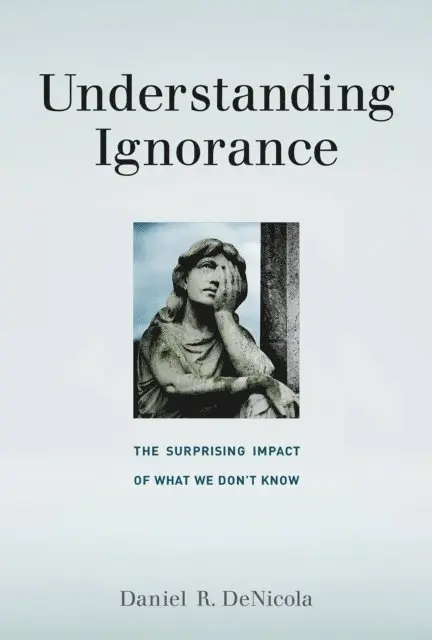
An exploration of what we can know about what we don''t know: why ignorance is more than simply a lack of knowledge.
Ignorance is trending. Politicians boast, “I''m not a scientist.” Angry citizens object to a proposed state motto because it is in Latin, and “This is America, not Mexico or Latin America.” Lack of experience, not expertise, becomes a credential. Fake news and repeated falsehoods are accepted and shape firm belief. Ignorance about American government and history is so alarming that the ideal of an informed citizenry now seems quaint. Conspiracy theories and false knowledge thrive. This may be the Information Age, but we do not seem to be well informed. In this book, philosopher Daniel DeNicola explores ignorance—its abundance, its endurance, and its consequences.
DeNicola aims to understand ignorance, which seems at first paradoxical. How can the unknown become known—and still be unknown? But he argues that ignorance is more than a lack or a void, and that it has dynamic and complex interactions with knowledge. Taking a broadly philosophical approach, DeNicola examines many forms of ignorance, using the metaphors of ignorance as place, boundary, limit, and horizon. He treats willful ignorance and describes the culture in which ignorance becomes an ideological stance. He discusses the ethics of ignorance, including the right not to know, considers the supposed virtues of ignorance, and concludes that there are situations in which ignorance is morally good.
Ignorance is neither pure nor simple. It is both an accusation and a defense (“You are ignorant!” “Yes, but I didn''t know!”). Its practical effects range from the inconsequential to the momentous. It is a scourge, but, DeNicola argues daringly, it may also be a refuge, a value, even an accompaniment to virtue.
246 kr
Läs direkt efter köp
14 kr
Läs direkt efter köp
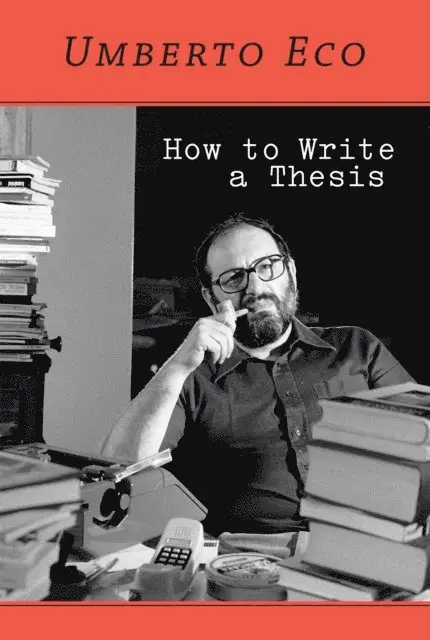
Umberto Eco''s wise and witty guide to researching and writing a thesis, published in English for the first time.
By the time Umberto Eco published his best-selling novel The Name of the Rose, he was one of Italy''s most celebrated intellectuals, a distinguished academic and the author of influential works on semiotics. Some years before that, in 1977, Eco published a little book for his students, How to Write a Thesis, in which he offered useful advice on all the steps involved in researching and writing a thesis—from choosing a topic to organizing a work schedule to writing the final draft. Now in its twenty-third edition in Italy and translated into seventeen languages, How to Write a Thesis has become a classic. Remarkably, this is its first, long overdue publication in English.
Eco''s approach is anything but dry and academic. He not only offers practical advice but also considers larger questions about the value of the thesis-writing exercise. How to Write a Thesis is unlike any other writing manual. It reads like a novel. It is opinionated. It is frequently irreverent, sometimes polemical, and often hilarious. Eco advises students how to avoid “thesis neurosis” and he answers the important question “Must You Read Books?” He reminds students “You are not Proust” and “Write everything that comes into your head, but only in the first draft.” Of course, there was no Internet in 1977, but Eco''s index card research system offers important lessons about critical thinking and information curating for students of today who may be burdened by Big Data.
How to Write a Thesis belongs on the bookshelves of students, teachers, writers, and Eco fans everywhere. Already a classic, it would fit nicely between two other classics: Strunk and White and The Name of the Rose.
ContentsThe Definition and Purpose of a Thesis • Choosing the Topic • Conducting Research • The Work Plan and the Index Cards • Writing the Thesis • The Final Draft
213 kr
Läs direkt efter köp
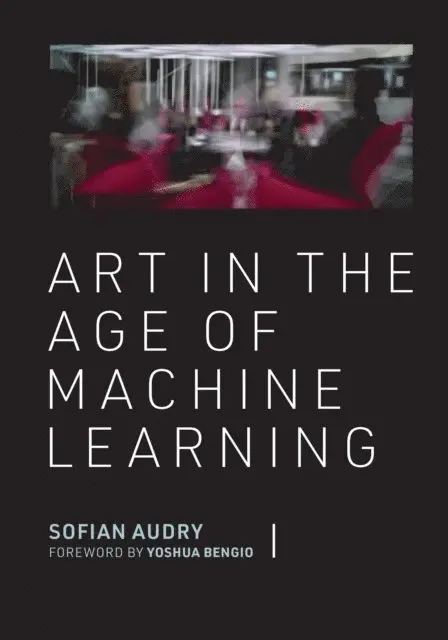
567 kr
Läs direkt efter köp

325 kr
Skickas inom 3-6 vardagar
610 kr
Skickas inom 7-10 vardagar

899 kr
Skickas inom 3-6 vardagar
283 kr
Läs direkt efter köp
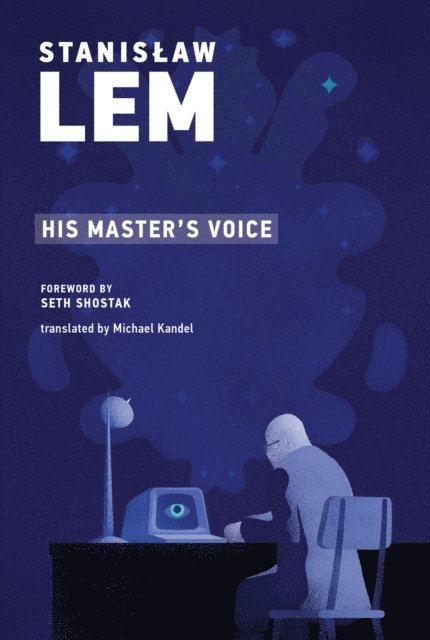
Scientists attempt to decode what may be a message from intelligent beings in outer space.
By pure chance, scientists detect a signal from space that may be communication from rational beings. How can people of Earth understand this message, knowing nothing about the senders—even whether or not they exist? Written as the memoir of a mathematician who participates in the government project (code name: His Master''s Voice) attempting to decode what seems to be a message from outer space, this classic novel shows scientists grappling with fundamental questions about the nature of reality, the confines of knowledge, the limitations of the human mind, and the ethics of military-sponsored scientific research.
301 kr
Läs direkt efter köp
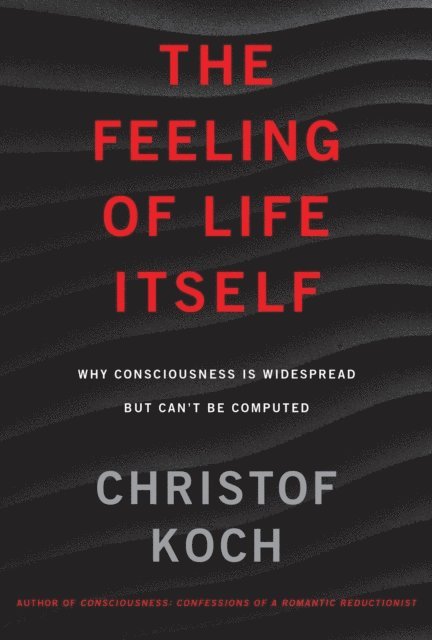
An argument that consciousness, more widespread than previously assumed, is the feeling of being alive, not a type of computation or a clever hack.
In The Feeling of Life Itself, Christof Koch offers a straightforward definition of consciousness as any subjective experience, from the most mundane to the most exalted—the feeling of being alive.
Psychologists study which cognitive operations underpin a given conscious perception. Neuroscientists track the neural correlates of consciousness in the brain, the organ of the mind. But why the brain and not, say, the liver? How can the brain, three pounds of highly excitable matter, a piece of furniture in the universe, subject to the same laws of physics as any other piece, give rise to subjective experience? Koch argues that what is needed to answer these questions is a quantitative theory that starts with experience and proceeds to the brain. In The Feeling of Life Itself, Koch outlines such a theory, based on integrated information.
Koch describes how the theory explains many facts about the neurology of consciousness and how it has been used to build a clinically useful consciousness meter. The theory predicts that many, and perhaps all, animals experience the sights and sounds of life; consciousness is much more widespread than conventionally assumed. Contrary to received wisdom, however, Koch argues that programmable computers will not have consciousness. Even a perfect software model of the brain is not conscious. Its simulation is fake consciousness. Consciousness is not a special type of computation—it is not a clever hack. Consciousness is about being.

362 kr
Skickas inom 7-10 vardagar

290 kr
Läs direkt efter köp
An examination of the narrative strategies employed in the most dangerous book of the twentieth century and a reflection on totalitarian literature.
Hitler''s Mein Kampf was banned in Germany for almost seventy years, kept from being reprinted by the accidental copyright holder, the Bavarian Ministry of Finance. In December 2015, the first German edition of Mein Kampf since 1946 appeared, with Hitler''s text surrounded by scholarly commentary apparently meant to act as a kind of cordon sanitaire. And yet the dominant critical assessment (in Germany and elsewhere) of the most dangerous book of the twentieth century is that it is boring, unoriginal, jargon-laden, badly written, embarrassingly rabid, and altogether ludicrous. (Even in the 1920s, the consensus was that the author of such a book had no future in politics.) How did the unreadable Mein Kampf manage to become so historically significant? In this book, German literary scholar Albrecht Koschorke attempts to explain the power of Hitler''s book by examining its narrative strategies.
Koschorke argues that Mein Kampf cannot be reduced to an ideological message directed to all readers. By examining the text and the signals that it sends, he shows that we can discover for whom Hitler strikes his propagandistic poses and who is excluded. Koschorke parses the borrowings from the right-wing press, the autobiographical details concocted to make political points, the attack on the Social Democrats that bleeds into an anti-Semitic conspiracy theory, the contempt for science, and the conscious attempt to trigger outrage.
A close reading of National Socialism''s definitive text, Koschorke concludes, can shed light on the dynamics of fanaticism. This lesson of Mein Kampf still needs to be learned.
297 kr
Läs direkt efter köp
492 kr
Läs direkt efter köp
Using our moral and technical imaginations to create responsible innovations: theory, method, and applications for value sensitive design.
Implantable medical devices and human dignity. Private and secure access to information. Engineering projects that transform the Earth. Multigenerational information systems for international justice. How should designers, engineers, architects, policy makers, and others design such technology? Who should be involved and what values are implicated? In Value Sensitive Design, Batya Friedman and David Hendry describe how both moral and technical imagination can be brought to bear on the design of technology. With value sensitive design, under development for more than two decades, Friedman and Hendry bring together theory, methods, and applications for a design process that engages human values at every stage.
After presenting the theoretical foundations of value sensitive design, which lead to a deep rethinking of technical design, Friedman and Hendry explain seventeen methods, including stakeholder analysis, value scenarios, and multilifespan timelines. Following this, experts from ten application domains report on value sensitive design practice. Finally, Friedman and Hendry explore such open questions as the need for deeper investigation of indirect stakeholders and further method development.
This definitive account of the state of the art in value sensitive design is an essential resource for designers and researchers working in academia and industry, students in design and computer science, and anyone working at the intersection of technology and society.
342 kr
Läs direkt efter köp
An authority on creativity introduces us to AI-powered computers that are creating art, literature, and music that may well surpass the creations of humans.
Today''s computers are composing music that sounds “more Bach than Bach,” turning photographs into paintings in the style of Van Gogh''s Starry Night, and even writing screenplays. But are computers truly creative—or are they merely tools to be used by musicians, artists, and writers? In this book, Arthur I. Miller takes us on a tour of creativity in the age of machines.
Miller, an authority on creativity, identifies the key factors essential to the creative process, from “the need for introspection” to “the ability to discover the key problem.” He talks to people on the cutting edge of artificial intelligence, encountering computers that mimic the brain and machines that have defeated champions in chess, Jeopardy!, and Go. In the central part of the book, Miller explores the riches of computer-created art, introducing us to artists and computer scientists who have, among much else, unleashed an artificial neural network to create a nightmarish, multi-eyed dog-cat; taught AI to imagine; developed a robot that paints; created algorithms for poetry; and produced the world''s first computer-composed musical, Beyond the Fence, staged by Android Lloyd Webber and friends.
But, Miller writes, in order to be truly creative, machines will need to step into the world. He probes the nature of consciousness and speaks to researchers trying to develop emotions and consciousness in computers. Miller argues that computers can already be as creative as humans—and someday will surpass us. But this is not a dystopian account; Miller celebrates the creative possibilities of artificial intelligence in art, music, and literature.

246 kr
Läs direkt efter köp
213 kr
Läs direkt efter köp
514 kr
Läs direkt efter köp

372 kr
Läs direkt efter köp
An examination of brain-immune system communication in autism, schizophrenia, and depression.
In Infectious Behavior, neurobiologist Paul Patterson examines the involvement of the immune system in autism, schizophrenia, and major depressive disorder. Although genetic approaches to these diseases have garnered the lion''s share of publicity and funding, scientists are uncovering evidence of the important avenues of communication between the brain and the immune system and their involvement in mental illness. Patterson focuses on this brain-immune crosstalk, exploring the possibility that it may help us understand the causes of these common, but still mysterious, diseases. The heart of this engaging book, accessible to nonscientists, concerns the involvement of the immune systems of the pregnant woman and her fetus, and a consideration of maternal infection as a risk factor for schizophrenia and autism. Patterson reports on research that may shed light on today''s autism epidemic. He also outlines the risks and benefits of both maternal and postnatal vaccinations.
In the course of his discussion, Patterson offers a short history of immune manipulation in treating mental illness (recounting some frightening but fascinating early experiments) and explains how the immune system influences behavior and how the brain regulates the immune system, looking in particular at stress and depression. He examines the prenatal origins of adult disease and evidence for immune involvement in autism, schizophrenia, and depression. Finally, he describes the promise shown by recent animal experiments that have led to early clinical trials of postnatal and adult treatments for patients with autism and related disorders.

481 kr
Skickas inom 7-10 vardagar
492 kr
Läs direkt efter köp
How, despite thirty years of effort, Soviet attempts to build a national computer network were undone by socialists who seemed to behave like capitalists.
Between 1959 and 1989, Soviet scientists and officials made numerous attempts to network their nation—to construct a nationwide computer network. None of these attempts succeeded, and the enterprise had been abandoned by the time the Soviet Union fell apart. Meanwhile, ARPANET, the American precursor to the Internet, went online in 1969. Why did the Soviet network, with top-level scientists and patriotic incentives, fail while the American network succeeded? In How Not to Network a Nation, Benjamin Peters reverses the usual cold war dualities and argues that the American ARPANET took shape thanks to well-managed state subsidies and collaborative research environments and the Soviet network projects stumbled because of unregulated competition among self-interested institutions, bureaucrats, and others. The capitalists behaved like socialists while the socialists behaved like capitalists.
After examining the midcentury rise of cybernetics, the science of self-governing systems, and the emergence in the Soviet Union of economic cybernetics, Peters complicates this uneasy role reversal while chronicling the various Soviet attempts to build a “unified information network.” Drawing on previously unknown archival and historical materials, he focuses on the final, and most ambitious of these projects, the All-State Automated System of Management (OGAS), and its principal promoter, Viktor M. Glushkov. Peters describes the rise and fall of OGAS—its theoretical and practical reach, its vision of a national economy managed by network, the bureaucratic obstacles it encountered, and the institutional stalemate that killed it. Finally, he considers the implications of the Soviet experience for today''s networked world.

383 kr
Läs direkt efter köp
372 kr
Läs direkt efter köp
How the creative abundance of today''s media culture was made possible by the decline of elitism in the arts and the rise of digital media.
Media culture today encompasses a universe of forms—websites, video games, blogs, books, films, television and radio programs, magazines, and more—and a multitude of practices that include making, remixing, sharing, and critiquing. This multiplicity is so vast that it cannot be comprehended as a whole. In this book, Jay David Bolter traces the roots of our media multiverse to two developments in the second half of the twentieth century: the decline of elite art and the rise of digital media. Bolter explains that we no longer have a collective belief in “Culture with a capital C.” The hierarchies that ranked, for example, classical music as more important than pop, literary novels as more worthy than comic books, and television and movies as unserious have broken down. The art formerly known as high takes its place in the media plenitude. The elite culture of the twentieth century has left its mark on our current media landscape in the form of what Bolter calls “popular modernism.” Meanwhile, new forms of digital media have emerged and magnified these changes, offering new platforms for communication and expression.
Bolter outlines a series of dichotomies that characterize our current media culture: catharsis and flow, the continuous rhythm of digital experience; remix (fueled by the internet''s vast resources for sampling and mixing) and originality; history (not replayable) and simulation (endlessly replayable); and social media and coherent politics.
503 kr
Läs direkt efter köp
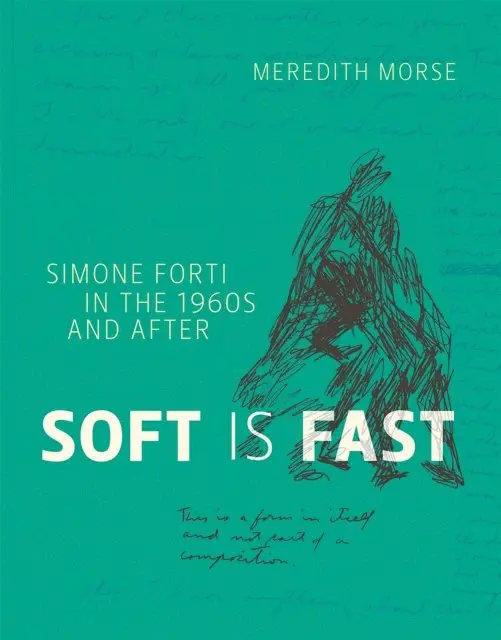
An innovative analysis of Simone Forti''s interdisciplinary art, viewing her influential 1960s “dance constructions” as negotiating the aesthetic strategies of John Cage and Anna Halprin.
Simone Forti''s art developed within the overlapping circles of New York City''s advanced visual art, dance, and music of the early 1960s. Her “dance constructions” and related works of the 1960s were important for both visual art and dance of the era. Artists Robert Morris and Yvonne Rainer have both acknowledged her influence.
Forti seems to have kept one foot inside visual art''s frames of meaning and the other outside them. In Soft Is Fast, Meredith Morse adopts a new way to understand Forti''s work, based in art historical analysis but drawing upon dance history and cultural studies and the history of American social thought. Morse argues that Forti introduced a form of direct encounter that departed radically from the spectatorship proposed by Minimalism, and prefigured the participatory art of recent decades.
Morse shows that Forti''s work negotiated John Cage''s ideas of sound, score, and theater through the unique approach to movement, essentially improvisational and grounded in anatomical exploration, that she learned from performer and teacher Ann (later Anna) Halprin. Attentive to Robert Whitman''s and La Monte Young''s responses to Cage, Forti reshaped Cage''s concepts into models that could accommodate Halprin''s charged spaces and imagined, interpenetrative understanding of other bodies.
Morse considers Forti''s use of sound and her affective use of materials as central to her work; examines Forti''s text pieces, little discussed in art historical literature; analyzes Huddle, considered one of Forti''s signature works; and explicates Forti''s later improvisational practice.
Forti has been relatively overlooked by art historians, perhaps because of her work''s central concern with modes of feeling and embodiment, unlike other art of the 1960s, which was characterized by strategies of depersonalization and affectlessness. Soft Is Fast corrects this critical oversight.

737 kr
Läs direkt efter köp
511 kr
Läs direkt efter köp

907 kr
Skickas inom 7-10 vardagar
788 kr
Läs direkt efter köp

377 kr
Läs direkt efter köp
A new book by Boris Groys acknowledges the problem and potential of art''s complex relationship to power.
Art has its own power in the world, and is as much a force in the power play of global politics today as it once was in the arena of cold war politics. Art, argues the distinguished theoretician Boris Groys, is hardly a powerless commodity subject to the art market''s fiats of inclusion and exclusion. In Art Power, Groys examines modern and contemporary art according to its ideological function. Art, Groys writes, is produced and brought before the public in two ways—as a commodity and as a tool of political propaganda. In the contemporary art scene, very little attention is paid to the latter function.
Arguing for the inclusion of politically motivated art in contemporary art discourse, Groys considers art produced under totalitarianism, Socialism, and post-Communism. He also considers today''s mainstream Western art—which he finds behaving more and more according the norms of ideological propaganda: produced and exhibited for the masses at international exhibitions, biennials, and festivals. Contemporary art, Groys argues, demonstrates its power by appropriating the iconoclastic gestures directed against itself—by positioning itself simultaneously as an image and as a critique of the image. In Art Power, Groys examines this fundamental appropriation that produces the paradoxical object of the modern artwork.