Visar resultat för..."Britts"
Sökningen "Britts samvetsäktenskap Malvina Bråkenhielm" gav inga träffar.19 produkter
19 produkter
Häftad, Svenska, 2024
497 kr
Skickas
Denna antologi ingår i en serie antologier som publicerats av Nätverket för försäkringsjuridisk forskning. De föregående antologierna är: Uppsatser om försäkringsavtalslagen (2009), Uppsatser om skadeståndsrätt och ansvarsförsäkring (2012), Uppsatser om försäkringsvillkor (2015), Uppsatser om försäkringsrättsliga regler och principer (2018) och Uppsatser om ansvarsbegränsande försäkringsvillkor (2022). Uppsatserna i denna sjätte antologi är författade av Jakob Andersson, advokat, Setterwalls Advokatbyrå, Bertil Bengtsson, f.d. justitieråd och professor i rättsvetenskap vid Luleå tekniska universitet, Anders Holm, jur.dr och universitetslektor, affärsjuridiska programmet vid Linköpings universitet, Britta Behrendt Jonsson, jur.dr och universitetslektor, affärsjuridiska programmet vid Linköpings universitet, Eva Lindell-Frantz, docent och universitetslektor, Juridiska fakulteten vid Lunds universitet Marcus Radetzki, professor i civilrätt, Stockholm Centre for Commercial Law vid Stockholms universitet, Jessika van der Sluijs, professor i civilrätt, Juridiska fakulteten vid Stockholms universitet och Harald Ullman, adj. professor i försäkringsrätt, affärsjuridiska programmet vid Linköpings universitet.
Häftad, Engelska, 2018
159 kr
Skickas inom 5-8 vardagar
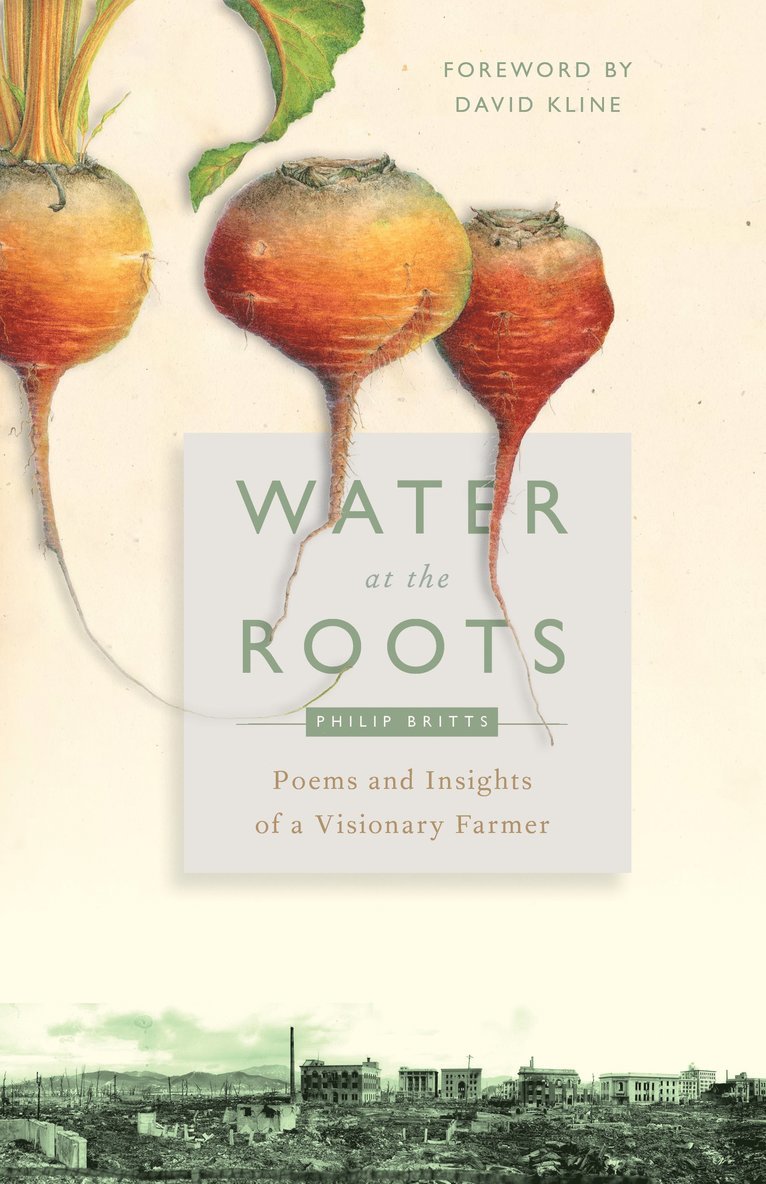
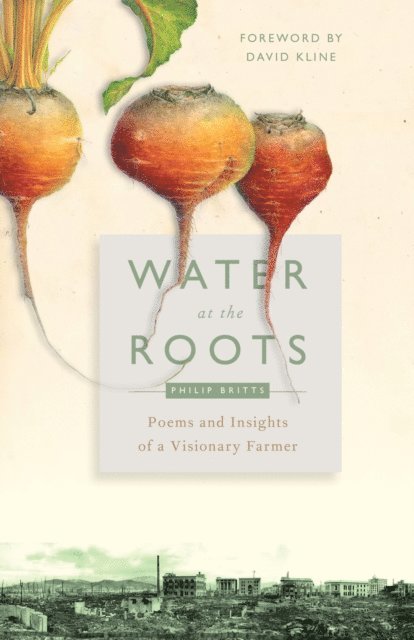
In a society uprooted by two world wars, industrialization, and dehumanizing technology, a revolutionary farmer turns to poetry to reconnect his people to the land and one another.A farmer, poet, activist, pastor, and mystic, Britts (1917–1949) has been called a British Wendell Berry. His story is no romantic agrarian elegy, but a life lived in the thick of history. As his country plunged headlong into World War II, he joined an international pacifist community, the Bruderhof, and was soon forced to leave Europe for South America.Amidst these great upheavals, his response – to root himself in faith, to dedicate himself to building community, to restore the land he farmed, and to use his gift with words to turn people from their madness – speaks forcefully into our time. In an age still wracked by racism, nationalism, materialism, and ecological devastation, the life he chose and the poetry he composed remain a prophetic challenge.
E-bok
PDF, Engelska, 2018129 kr
Läs direkt efter köp
In a society uprooted by two world wars, industrialization, and dehumanizing technology, a revolutionary farmer turns to poetry to reconnect his people to the land and one another.A farmer, poet, activist, pastor, and mystic, Britts (1917–1949) has been called a British Wendell Berry. His story is no romantic agrarian elegy, but a life lived in the thick of history. As his country plunged headlong into World War II, he joined an international pacifist community, the Bruderhof, and was soon forced to leave Europe for South America.Amidst these great upheavals, his response – to root himself in faith, to dedicate himself to building community, to restore the land he farmed, and to use his gift with words to turn people from their madness – speaks forcefully into our time. In an age still wracked by racism, nationalism, materialism, and ecological devastation, the life he chose and the poetry he composed remain a prophetic challenge.
Häftad, Engelska, 2019
102 kr
Skickas inom 5-8 vardagar
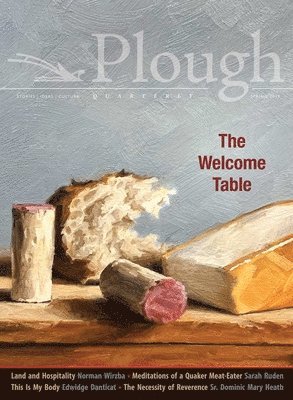
Food – how it’s grown, how it’s shared – makes us who we are. This issue traces the connections between farm and food, between humus and human. According to the first book of the Bible, tending the earth was humankind’s first task: “The Lord God planted a garden in Eden, in the east; and there he put the man whom he had formed” (Gen. 2:8). The desire to get one’s hands dirty raising one’s own food, then, doesn’t just come from modern romanticism, but is built into human nature.The title, “The Welcome Table,” comes from a spiritual first sung by enslaved African-Americans. The song refers to the Bible’s closing scene, the wedding feast of the Lamb described in the Book of Revelation, to which every race, tribe, and tongue are invited – a divine pledge of a day of freedom and freely shared plenty, of earth renewed and humanity restored. In the case of food, the symbol is the substance. Every meal, if shared generously and with radical hospitality, is already now a taste of the feast to come.Also in this issue: poetry by Luci Shaw; reviews of books by Julia Child, Robert Farrar Capon, Peter Mayle, Albert Woodfox, and Maria von Trapp; and art by Michael Naples, Sieger Köder, Carl Juste, André Chung, Ángel Bracho, Winslow Homer, Raymond Logan, Sybil Andrews, Cameron Davidson, and Jason Landsel.Plough Quarterly features stories, ideas, and culture for people eager to put their faith into action. Each issue brings you in-depth articles, interviews, poetry, book reviews, and art to help you put Jesus’ message into practice and find common cause with others.
Häftad, Engelska, 2005
226 kr
Skickas inom 5-8 vardagar
Häftad, Engelska, 2010
272 kr
Skickas inom 5-8 vardagar
Inbunden, Engelska, 2010
436 kr
Skickas inom 5-8 vardagar
E-bok
Engelska, 2017252 kr
Läs direkt efter köp
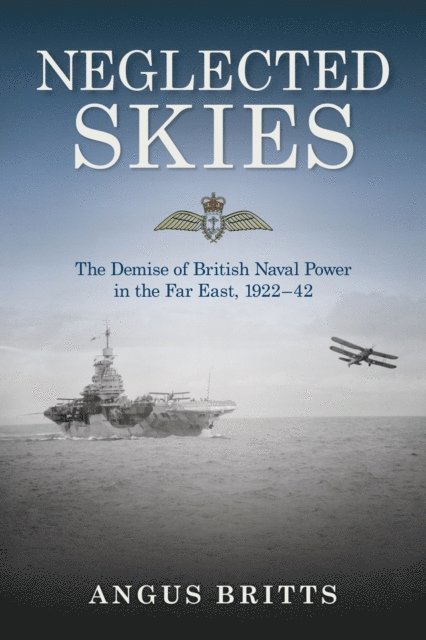
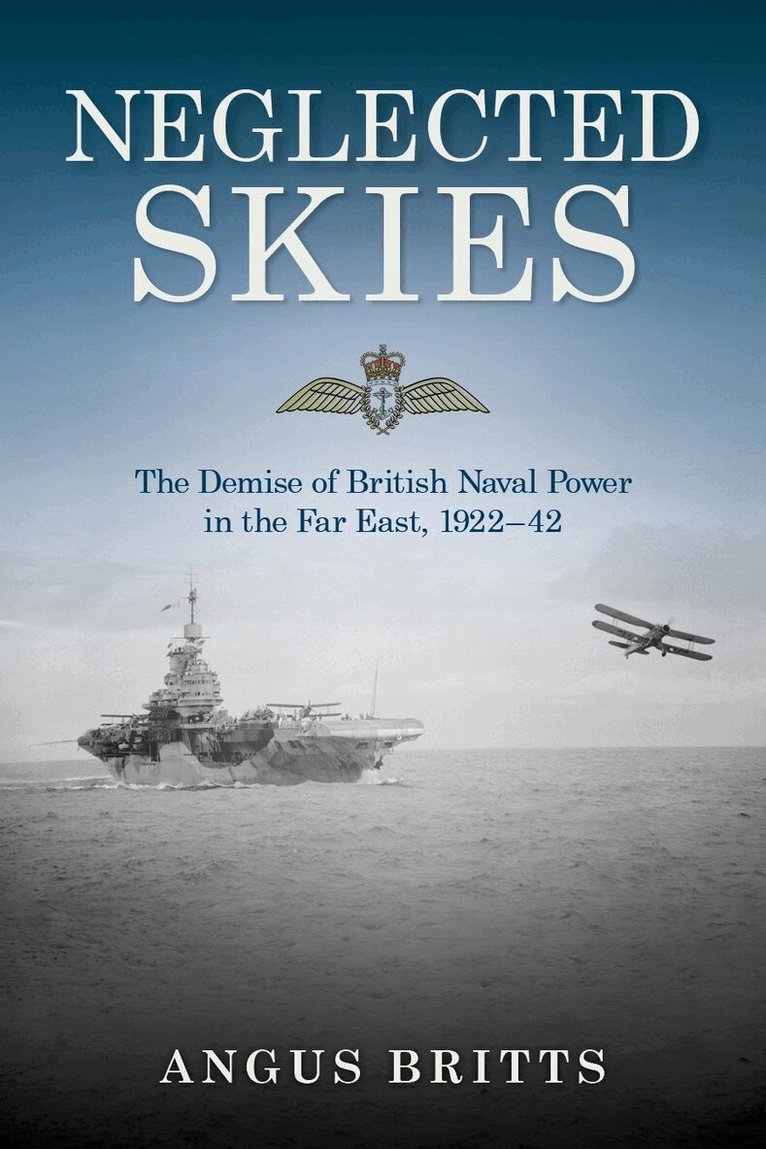
Neglected Skies is a reconsideration of one of the Second World War’s most forgotten naval engagements – the abortive clash between the British Eastern Fleet and the Imperial Japanese Navy’s First Air Fleet (Kido Butai) to the south of Ceylon, over a period of ten days in late March/early April 1942. The focus upon this battle is for the purpose of exploring the surrender of British naval supremacy from the operational perspective, most particularly the inability of the British Admiralty over two decades to develop a first-line, carrier-borne air arm. By primarily analysing the evolution of British naval aviation during the interwar period, as well as the challenges which the peacetime Royal Navy was forced to confront, most especially in the fields of international arms-limitation and domestic fiscal restraint, a picture emerges of a battlefleet which entered war in September 1939 at considerably less that a primary state of combat readiness. Likewise, the publication examines the rise of the instrument which was primarily responsible for toppling the Royal Navy from its paramount position on the battlefield – namely the development of Japan’s lethal first strike instrument known as the Kido Butai. The concentration of the IJN’s six largest aircraft-carriers into a single striking force, equipped with state-of-the-art aircraft manned by elite aviators, represented an enormous quantum leap forward in warfighting at sea, and the evolution of both the concept, and its material components in a domestic atmosphere permeated by aggressive militarism, is a central component in the book. Two essential conclusions are reach by the author. The first is that the demise of British naval supremacy was first and foremost a process that spanned two decades, prior to coming to fruition in the Indian Ocean in April 1942. The second is that the story of British naval and imperial decline did not end with the fall of Singapore on 15 February 1942, but rather reached its climax in the subsequent conduct of Japan’s Operation C, where for the first time in history, a British fleet was compelled to retire from the battlefield in the face of opposition from a force which, though similar in size, possessed a measure of modern aerial firepower which was quite beyond the capability of the British to effectively counter in any form then available to the British Admiralty.
E-bok
Engelska, 2021728 kr
Läs direkt efter köp
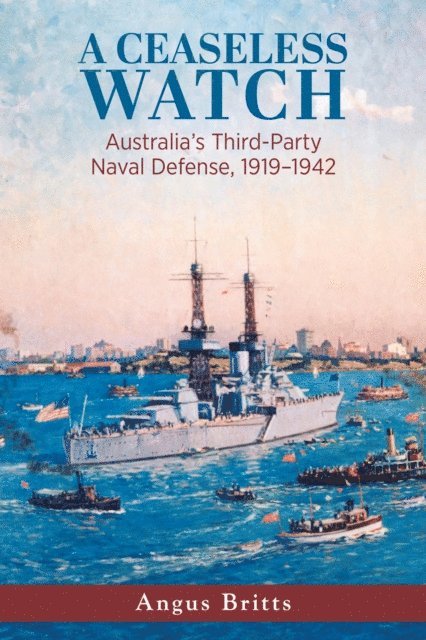
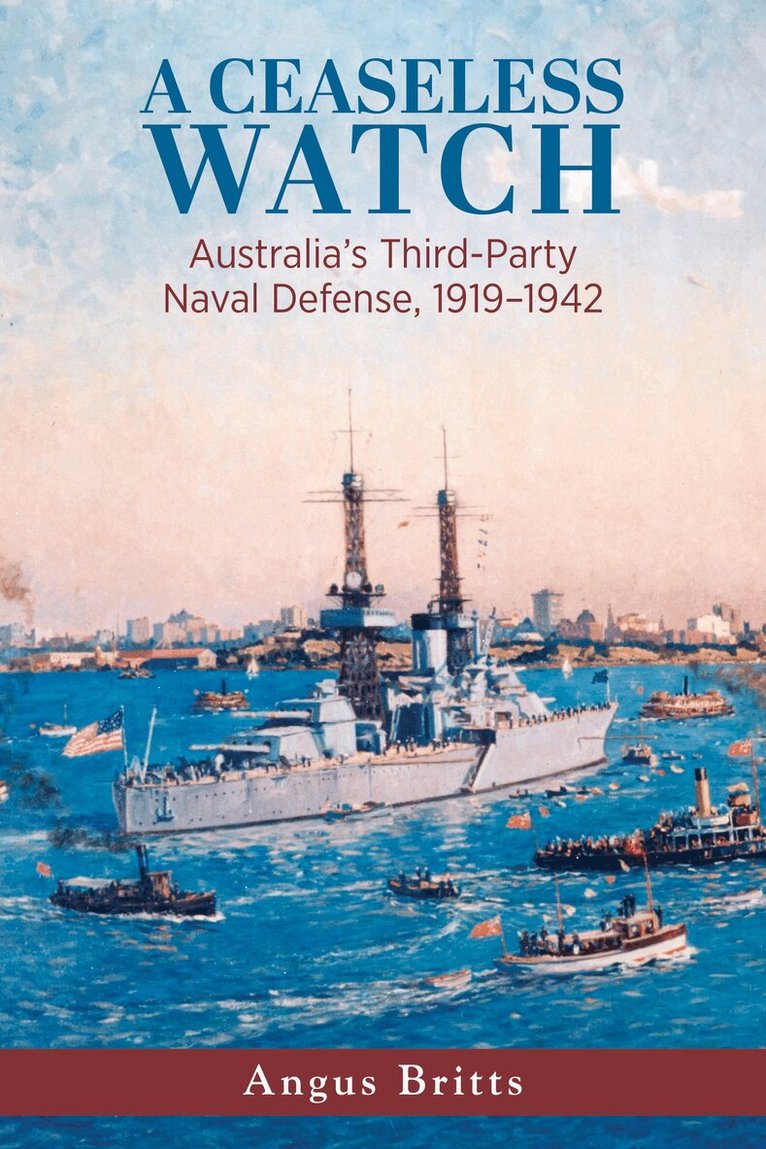
A Ceaseless Watch: Australia’s Third Party Naval Defense, 1919–1942 illustrates how Australia confronted the need to base its post–World War I defense planning around the security provided by a major naval power: in the first instance, Britain, and later the United States. Spanning the period leading up to Australia’s greatest security crisis—the military threat posed by Japan throughout the majority of 1942—the work takes the reader all the way up to the defeat of the Imperial Japanese Navy by the United States Navy in the Solomon Islands campaign. Angus Britts focuses on Anglo-Australian defense relations from 1919–42 when the British were Australia’s primary naval protectors until they were superseded in the Pacific by the United States in May 1942 at the battle of the Coral Sea. Britts traces the process of the alignment or divergence of differing strategic interests between Australia and Britain in particular. Taking place against the backdrop of Imperial Japan’s expansionism debates within Australian political and defense circles during this period, namely the nature of the most likely threat to the continent itself, what became an important subplot to the events then unfolding in the Pacific. Looking at the development of the “Singapore strategy” which utilized the British fleet at Singapore to protect Australia’s interests, Britts lays out how the cornerstone for Australian defense planning was based on the continued assurances from successive British governments that they would honor their naval commitments should Australia itself eventually come under serious threat from Japanese aggression. The Australian-American defense relationship evolved at a later stage within the timeframe in this work, but the varying interactions between both nations throughout the interwar years are likewise addressed, as is the foundation of their wartime relations. Britts illustrates the difficulty in forming a defense relationship between small and great powers, where the needs of the former are not subsumed by the interests of the latter, from the interwar years to the start of World War II. In an era when the entire Pacific region was at war, the inability of a larger power to fulfill its side of a defensive pact with a smaller power shaped the future of the region itself.
Häftad, Engelska, 2026
1 577 kr
Skickas inom 5-8 vardagar
Häftad, Engelska, 2025
177 kr
Skickas inom 5-8 vardagar
Inbunden, Engelska, 2025
327 kr
Skickas inom 5-8 vardagar
Häftad, Engelska, 2026
243 kr
Skickas inom 5-8 vardagar
Häftad, Engelska, 2026
166 kr
Skickas inom 5-8 vardagar
Häftad, Engelska, 2026
1 628 kr
Skickas inom 5-8 vardagar
Del 15 - Plough Quarterly No. 15 - Staying Human
Plough Quarterly No. 15 - Staying Human
The Tech Issue
Häftad, Engelska, 2018
102 kr
Tillfälligt slut
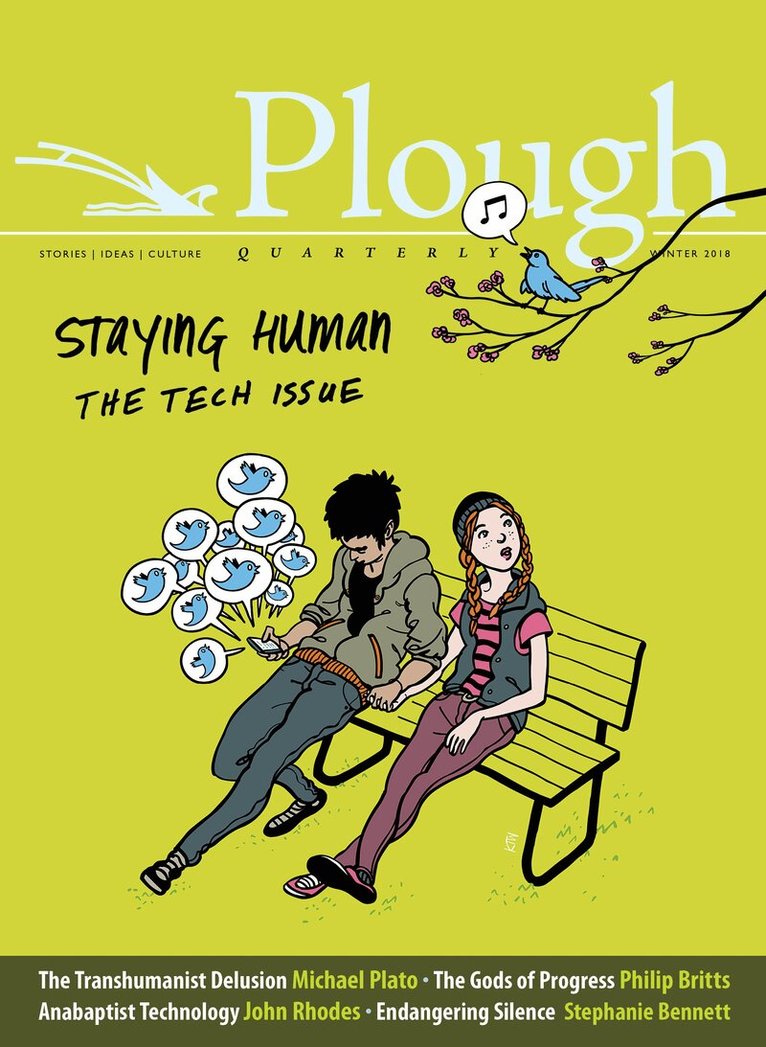
This issue of Plough Quarterly explores the effects of technology on human flourishing.Whether its artificial intelligence, genome editing, Big Tech monopolies, or social media–induced depression, we live in a world that is being reshaped by technology from the ground up. How do we stay human?This issue of Plough Quarterly addresses challenges ranging from the lure of transhumanism to the erosion of silence by the smartphone. Technophobia is no answer, our contributors agree, but neither is a refusal to tackle real dangers. They ask: Why not try living without a computer or a television? Why give tablets to children when Steve Jobs refused to give them to his kids? Why write using a keyboard when you could wield a fountain pen?Technological asceticism of this kind won’t solve society-wide dilemmas. But it can help us maintain the spiritual independence needed to respond to them rightly.Also in this issue: original poetry by Jacob Stratman; reviews of new books by Ian Johnson, Steve Roud, and Markus Rathey; insights from Wendell Berry, Viktor Frankl, Ivan Illich, Carl Sandburg, C. S. Lewis, Alfred Delp, and Christoph Blumhardt; and art by Pieter Bruegel the Elder, Jack Baumgartner, Nicholas Roerich, Rachel Newling, Kay Polk, Suellen McCrary, Stephen Scott Young, Jie Wei Zhou, Kiéra Malone, Torkel Pettersson, Mari Rast, Albrecht Dürer, René Magritte, and Kyle T. Webster.Plough Quarterly features stories, ideas, and culture for people eager to put their faith into action. Each issue brings you in-depth articles, interviews, poetry, book reviews, and art to help you put Jesus’ message into practice and find common cause with others.
Häftad, Engelska, 2018
102 kr
Tillfälligt slut
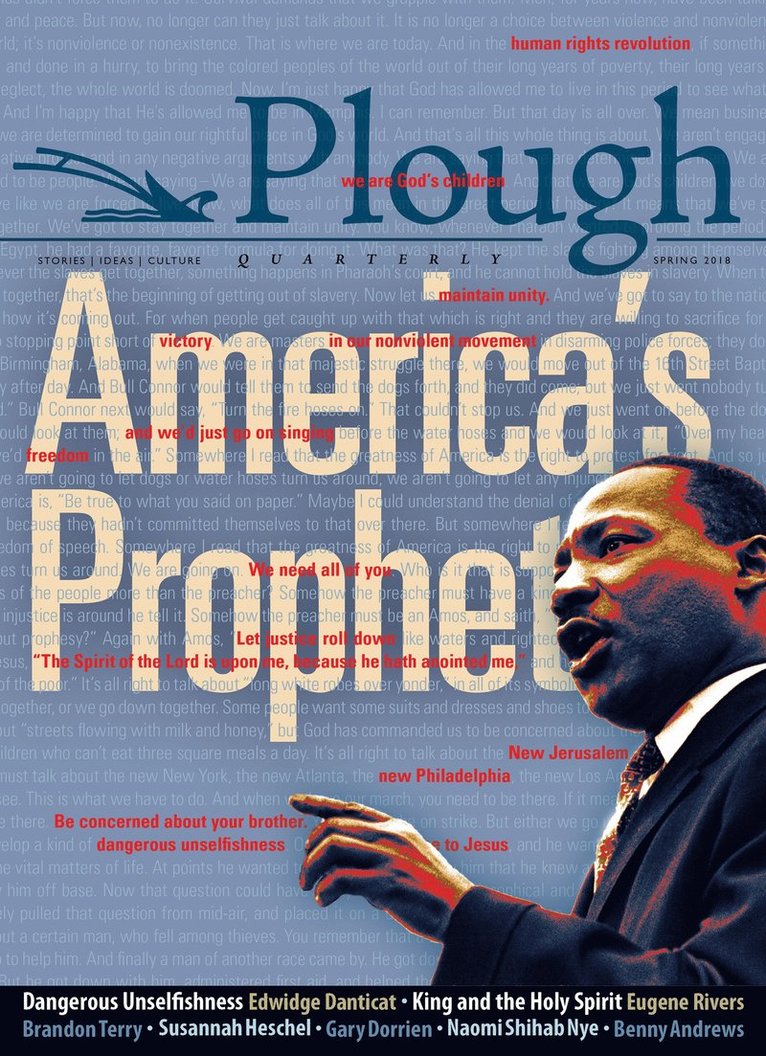
What if Martin Luther King Jr., this name-branded, oft-sanitized preacher from Atlanta, is a prophet whose message America has yet to fully reckon with?Ten days before Martin Luther King Jr.’s assassination, Rabbi Abraham Joshua Heschel said, “Where in America today do we hear a voice like the voice of the prophets of Israel? Martin Luther King is a sign that God has not forsaken the United States of America. God has sent him to us.” What if Heschel’s words about King are true? What if this name-branded, oft-sanitized, Super-Bowl-ad-commercialized, National-Mall-memorialized preacher from Atlanta . . . is a prophet whose message America has yet to fully reckon with? This issue of Plough Quarterly looks at King’s unfinished struggle against the three evils of racism, materialism, and militarism. Perspectives from Edwidge Danticat, Gary Dorrien, Brandon M. Terry, D. L. Mayfield, Eugene Rivers, and Susannah Heschel explore the ways King’s message of nonviolence, justice, and love of neighbor still matters today: to refugees and immigrants, soldiers and veterans, preachers and prisoners, black lives matter activists and the white working class.Also in this issue: original poetry by Naomi Shihab Nye; reviews of new books by James Forman Jr., Steve Krivák, Jim Forest, and Christopher de Hamel; and art by Yvan Lamothe, Roberson Joseph, Barry Moser, Benny Andrews, Zoe Cromwell, Julian Peters, Asuka Hishiki, Mark Smith, Mary Kang, Marc Chagall,John Partipilo, Yuri Kozyrev, Vinicius Barajas, Iain Stewart, Giovanni Bellini.Plough Quarterly features stories, ideas, and culture for people eager to put their faith into action. Each issue brings you in-depth articles, interviews, poetry, book reviews, and art to help you put Jesus’ message into practice and find common cause with others.
Del 23 - Plough Quarterly No. 23 - In Search of a City
Plough Quarterly No. 23 - In Search of a City
Häftad, Engelska, 2019
102 kr
Skickas inom 5-8 vardagar
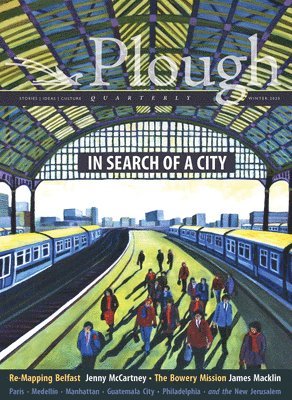
The future of humanity is urban.It might seem a bad move for a magazine named after a farm tool to bring out an issue on cities. Especially if that magazine is published by an Anabaptist community that originated in a back-to-the-land movement and still has the whiff of hayfield and woodlot to it. Why not stick to what you’re good at? Why jump lanes?Because the future of humanity, pretty clearly, is urban. Urbanization is arguably the biggest change of habitat our species has ever undergone. For anyone who cares about the common good of humanity, then, cities need to matter.The modern city is an electrifying concentration of creativity, energy, and cultural dynamism. It’s also still the “cauldron of unholy loves” that Saint Augustine discovered in Carthage one and a half millennia ago. It’s the place where the cruelties of mammon, the hubris of power, and the perversions of lust manifest themselves most crassly. But cities have also given birth to culture and community and to remarkable movements of revival and renewal.In this issue, visit:- Belfast with Jenny McCartney- New York City with James Macklin- Medellín with Adriano Cirino - Pittsburgh with Brandon McGinley- Guatemala City with José Corpas- Philadelphia with Clare Coffey- Chicago with John Thornton Jr. - Paris with Jason LandselYou’ll also find:- Insights on cities from Jane Jacobs, Eberhard Arnold, Augustine, and Philip Britts- reviews of books by Jonathan Foiles, Bethany McKinney Fox, J. Malcolm Garcia, Tatiana Schlossberg, Tim Gautreaux, Philip Bess, and Frederic Morton- art by Gail Brodholt, Michelangelo Buonarroti, Ben Ibebe, Brian Peterson, Chota, Raphael, Gertrude Hermes, Valentino Belloni, Tony Taj, and Aristarkh LentulovPlough Quarterly features stories, ideas, and culture for people eager to put their faith into action. Each issue brings you in-depth articles, interviews, poetry, book reviews, and art to help you put Jesus’ message into practice and find common cause with others.
Häftad, Engelska, 2014
108 kr
Tillfälligt slut
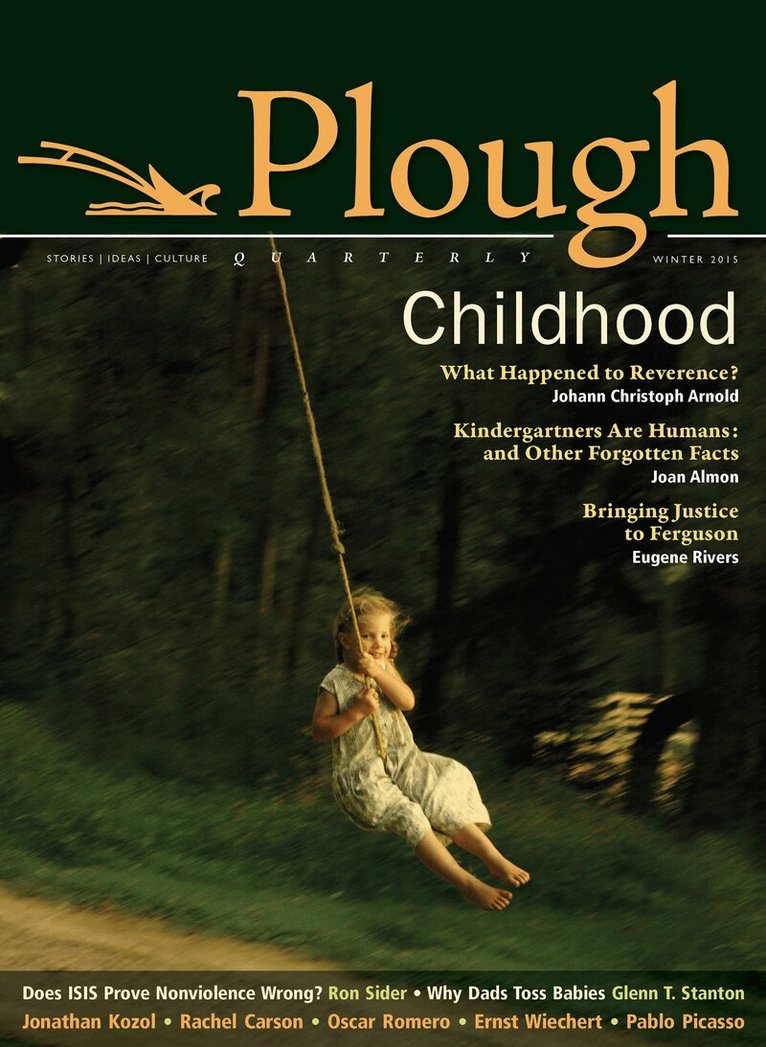
In this issue, we explore why children and childhood are at the heart of the gospel – and of God’s plan for restoring the world. Hear from Johann Christoph Arnold on “Discovering Reverence,” Joan Almon on “Kindergartners Are Humans,” and Glen Stanton on “Why Dads Toss Babies.” A surgeon shares what he’s learned from children with disabilities, while dispatches from Ferguson, Missouri, the US–Mexico border, and the South Bronx focus on places where childhood is especially threatened. Other contributors examine public, homeschool, and Christian education; highlight the role of fathers; and grapple with Jesus’ uncomfortable version of family values.Bold, hope-filled, and down-to-earth, Plough Quarterly features thought-provoking articles, commentary, interviews, short fiction, book reviews, poetry and artwork to inspire everyday faith and action. Each issue brings together essential voices from many traditions to give you fresh insights on a core theme such as peacemaking, biblical justice, children and family, building community, man and woman, nature and the environment, nonviolence, or simple living. Starting from the conviction that the teachings and example of Jesus can transform and renew our world, it aims to apply them to all aspects of life, seeking common ground with all people of goodwill regardless of creed.