eMagRes Books - Böcker
Visar alla böcker i serien eMagRes Books. Handla med fri frakt och snabb leverans.
9 produkter
9 produkter
2 030 kr
Skickas inom 11-20 vardagar
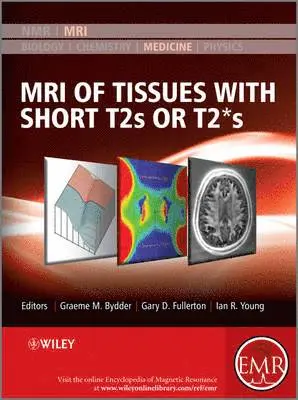
The content of this volume has been added to eMagRes (formerly Encyclopedia of Magnetic Resonance) - the ultimate online resource for NMR and MRI. Up to now MRI could not be used clinically for imaging fine structures of bones or muscles. Since the late 1990s however, the scene has changed dramatically. In particular, Graeme Bydder and his many collaborators have demonstrated the possibility – and importance – of imaging structures in the body that were previously regarded as being “MR Invisible”. The images obtained with a variety of these newly developed methods exhibit complex contrast, resulting in a new quality of images for a wide range of new applications.This Handbook is designed to enable the radiology community to begin their assessment of how best to exploit these new capabilities. It is organised in four major sections – the first of which, after an Introduction, deals with the basic science underlying the rest of the contents of the Handbook. The second, larger, section describes the techniques which are used in recovering the short T2 and T2* data from which the images are reconstructed. The third and fourth sections present a range of applications of the methods described earlier. The third section deals with pre-clinical uses and studies, while the final section describes a range of clinical applications. It is this last section that will surely have the biggest impact on the development in the next few years as the huge promise of Short T2 and T2* Imaging will be exploited to the benefit of patients.In many instances, the authors of an article are the only research group who have published on the topic they describe. This demonstrates that this Handbook presents a range of methods and applications with a huge potential for future developments.About EMR Handbooks / eMagRes Handbooks The Encyclopedia of Magnetic Resonance (up to 2012) and eMagRes (from 2013 onward) publish a wide range of online articles on all aspects of magnetic resonance in physics, chemistry, biology and medicine. The existence of this large number of articles, written by experts in various fields, is enabling the publication of a series of EMR Handbooks / eMagRes Handbooks on specific areas of NMR and MRI. The chapters of each of these handbooks will comprise a carefully chosen selection of articles from eMagRes. In consultation with the eMagRes Editorial Board, the EMR Handbooks / eMagRes Handbooks are coherently planned in advance by specially-selected Editors, and new articles are written (together with updates of some already existing articles) to give appropriate complete coverage. The handbooks are intended to be of value and interest to research students, postdoctoral fellows and other researchers learning about the scientific area in question and undertaking relevant experiments, whether in academia or industry.Have the content of this Handbook and the complete content of eMagRes at your fingertips!Visit: www.wileyonlinelibrary.com/ref/eMagRes View other eMagRes publications here
1 706 kr
Skickas inom 7-10 vardagar
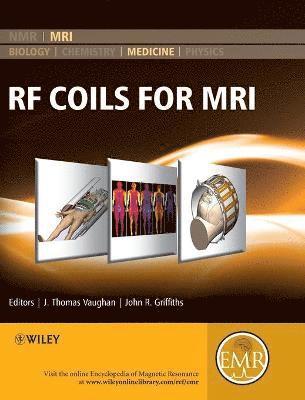
The content of this volume has been added to eMagRes (formerly Encyclopedia of Magnetic Resonance) - the ultimate online resource for NMR and MRI. To date there is no single reference aimed at teaching the art of applications guided coil design for use in MRI. This RF Coils for MRI handbook is intended to become this reference. Heretofore, much of the know-how of RF coil design is bottled up in various industry and academic laboratories around the world. Some of this information on coil technologies and applications techniques has been disseminated through the literature, while more of this knowledge has been withheld for competitive or proprietary advantage. Of the published works, the record of technology development is often incomplete and misleading, accurate referencing and attribution assignment being tantamount to admission of patent infringement in the commercial arena. Accordingly, the literature on RF coil design is fragmented and confusing. There are no texts and few courses offered to teach this material. Mastery of the art and science of RF coil design is perhaps best achieved through the learning that comes with a long career in the field at multiple places of employment…until now.RF Coils for MRI combines the lifetime understanding and expertise of many of the senior designers in the field into a single, practical training manual. It informs the engineer on part numbers and sources of component materials, equipment, engineering services and consulting to enable anyone with electronics bench experience to build, test and interface a coil. The handbook teaches the MR system user how to safely and successfully implement the coil for its intended application. The comprehensive articles also include information required by the scientist or physician to predict respective experiment or clinical performance of a coil for a variety of common applications. It is expected that RF Coils for MRI becomes an important resource for engineers, technicians, scientists, and physicians wanting to safely and successfully buy or build and use MR coils in the clinic or laboratory. Similarly, this guidebook provides teaching material for students, fellows and residents wanting to better understand the theory and operation of RF coils.Many of the articles have been written by the pioneers and developers of coils, arrays and probes, so this is all first hand information! The handbook serves as an expository guide for hands-on radiologists, radiographers, physicians, engineers, medical physicists, technologists, and for anyone with interests in building or selecting and using RF coils to achieve best clinical or experimental results. About EMR Handbooks / eMagRes Handbooks The Encyclopedia of Magnetic Resonance (up to 2012) and eMagRes (from 2013 onward) publish a wide range of online articles on all aspects of magnetic resonance in physics, chemistry, biology and medicine. The existence of this large number of articles, written by experts in various fields, is enabling the publication of a series of EMR Handbooks / eMagRes Handbooks on specific areas of NMR and MRI. The chapters of each of these handbooks will comprise a carefully chosen selection of articles from eMagRes. In consultation with the eMagRes Editorial Board, the EMR Handbooks / eMagRes Handbooks are coherently planned in advance by specially-selected Editors, and new articles are written (together with updates of some already existing articles) to give appropriate complete coverage. The handbooks are intended to be of value and interest to research students, postdoctoral fellows and other researchers learning about the scientific area in question and undertaking relevant experiments, whether in academia or industry.Have the content of this Handbook and the complete content of eMagRes at your fingertips!Visit: www.wileyonlinelibrary.com/ref/eMagRes View other eMagRes publications here
1 878 kr
Skickas inom 7-10 vardagar
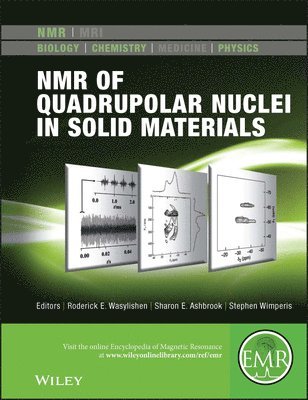
NMR OF QUADRUPOLAR NUCLEI IN SOLID MATERIALS Over the past 20 years technical developments in superconducting magnet technology and instrumentation have increased the potential of NMR spectroscopy so that it is now possible to study a wide range of solid materials. In addition, one can probe the nuclear environments of many other additional atoms that possess the property of spin. In particular, it is possible to carry out NMR experiments on isotopes that have nuclear spin greater that ½ (i.e. quadrupolar nuclei). Since more that two-thirds of all NMR active isotopes are quadrupolar nuclei, applications of NMR spectroscopy with quadrupolar nuclei are increasing rapidly. The purpose of this handbook is to provide under a single cover the fundamental principles, techniques and applications of quadrupolar NMR as it pertains to solid materials. Each chapter has been prepared by an expert who has made significant contributions to out understanding and appreciation of the importance of NMR studies of quadrupolar nuclei in solids. The text is divided into three sections: The first provides the reader with the background necessary to appreciate the challenges in acquiring and interpreting NMR spectra of quadrupolar neclei in solids. The second presents cutting-edge techniques and methodology for employing these techniques to investigate quadrupolar nuclei in solids. The final section explores applications of solid-state NMR studies of solids ranging from investigations of dynamics, characterizations of biological samples, organic and inorganic materials, porous materials, glasses, catalysts, semiconductors and high-temperature superconductors. About EMR Handbooks The Encyclopedia of Magnetic Resonance (EMR) publishes a wide range of online articles on all aspects of magnetic resonance in physics, chemistry, biology and medicine. The existence-of this large number of articles, written by experts in various fields, is enabling the publication of a series of EMR Handbooks on specific areas of NMR and MRI. The chapters of each of these handbooks will comprise a carefully chosen selection of Encyclopedia articles. In consultation with the EMR Editorial Board, the EMR Handbooks are coherently planned in advance by specially-selected Editors, and new articles, are written (together with updates of some already existing articles) to give appropriate complete coverage. The handbooks are intended to be of value and interest to research students, postdoctoral fellows and other researchers learning about the scientific area in question and undertaking relevant experiments, whether in academia or industry. Have the content of this handbook and the complete content of the Encyclopedia of Magnetic Resonance at your fingertips! Visit: www.wileyonlinelibrary.com/ref/emr
1 457 kr
Skickas inom 11-20 vardagar
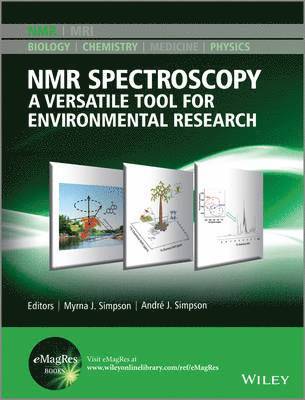
The challenges faced by environmental scientists today are vast, complex, and multi-faceted. For instance, predicting the fate of an environmental pollutant or understanding ecosystem responses to climate change, necessitate a firm understanding of molecular structure and dynamics of environmental media as well as the components that exist and interact within this media. Furthermore, linking information obtained at the molecular-scale to ecosystem-level processes is a major pursuit of modern environmental research. As such, NMR spectroscopy and its scalability from the molecular-scale to the macroscopic-scale, is facilitating rapid growth in environmental science. In addition, the versatility of NMR spectroscopy has resulted in the development and implementation of different types of NMR techniques to examine the structure of various types of environmental samples, living and non-living, as well as the study of critical environmental processes. This comprehensive handbook is a collection of chapters that span from methods to how NMR is used in environmental research to gain insight into various ecosystem properties. It is organized into three parts: Part A focuses on methods used in environmental NMR which span from solution-state to magnetic resonance imaging. Part B emphasizes how NMR spectroscopy plays an essential role in understanding various types of environmental components and related processes, including different forms of organic matter found in soil, water, and air as well as how NMR is used to probe the fate of water, organic pollutants, and metals in the environment. Part C focuses on the growing field of environmental metabolomics which uses NMR as its main discovery platform. This volume highlights the immense potential of NMR spectroscopy to expand our fundamental understanding of environmental processes and how it will continue to do so well into the future. About eMagRes Handbooks eMagRes (formerly the Encyclopedia of Magnetic Resonance) publishes a wide range of online articles on all aspects of magnetic resonance in physics, chemistry, biology and medicine. The existence of this large number of articles, written by experts in various fields, is enabling the publication of a series of eMagRes Handbooks on specific areas of NMR and MRI. The chapters of each of these handbooks will comprise a carefully chosen selection of eMagRes articles. In consultation with the eMagRes Editorial Board, the eMagRes handbooks are coherently planned in advance by specially-selected Editors, and new articles are written to give appropriate complete coverage. The handbooks are intended to be of value and interest to research students, postdoctoral fellows and other researchers learning about the scientific area in question and undertaking relevant experiments, whether in academia or industry.Have the content of this handbook and the complete content of eMagRes at your fingertips!Visit: www.wileyonlinelibrary.com/ref/eMagRes
1 311 kr
Skickas inom 7-10 vardagar
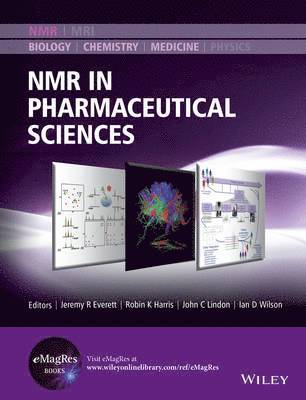
NMR in Pharmaceutical Sciences is intended to be a comprehensive source of information for the many individuals that utilize MR in studies of relevance to the pharmaceutical sector. The book is intended to educate and inform those who develop and apply MR approaches within the wider pharmaceutical environment, emphasizing the toolbox that is available to spectroscopists and radiologists.This book is structured on the key processes in drug discovery, development and manufacture, but underpinned by an understanding of fundamental NMR principles and the unique contribution that NMR (including MRI) can provide. After an introductory chapter, which constitutes an overview, the content is organised into five sections. The first section is on the basics of NMR theory and relevant experimental methods. The rest follow a sequence based on the chronology of drug discovery and development, firstly 'Idea to Lead' then 'Lead to Drug Candidate', followed by 'Clinical Development', and finally 'Drug Manufacture'. The thirty one chapters cover a vast range of topics from analytical chemistry, including aspects involved in regulatory matters and in the prevention of fraud, to clinical imaging studies.Whilst this comprehensive volume will be essential reading for many scientists based in pharmaceutical and related industries, it should also be of considerable value to a much wider range of academic scientists whose research is related to the various aspects of pharmaceutical R&D; for them it will supply vital understanding of pharmaceutical industrial concerns and the basis of key decision making processes.About eMagRes HandbookseMagRes (formerly the Encyclopedia of Magnetic Resonance) publishes a wide range of online articles on all aspects of magnetic resonance in physics, chemistry, biology and medicine. The existence of this large number of articles, written by experts in various fields, is enabling the publication of a series of eMagRes Handbooks on specific areas of NMR and MRI. The chapters of each of these handbooks will comprise a carefully chosen selection of eMagRes articles. In consultation with the eMagRes Editorial Board, the eMagRes handbooks are coherently planned in advance by specially-selected Editors, and new articles are written to give appropriate complete coverage. The handbooks are intended to be of value and interest to research students, postdoctoral fellows and other researchers learning about the scientific area in question and undertaking relevant experiments, whether in academia or industry.Have the content of this handbook and the complete content of eMagRes at your fingertips!Visit: www.wileyonlinelibrary.com/ref/eMagRes
1 840 kr
Skickas inom 7-10 vardagar
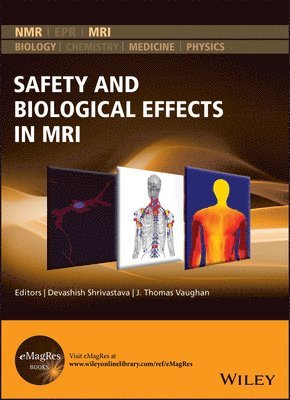
In vivo magnetic resonance imaging (MRI) has evolved into a versatile and critical, if not ‘gold standard’, imaging tool with applications ranging from the physical sciences to the clinical ‘-ology’. In addition, there is a vast amount of accumulated but unpublished inside knowledge on what is needed to perform a safe, in vivo MRI. The goal of this comprehensive text, written by an outstanding group of world experts, is to present information about the effect of the MRI environment on the human body, and tools and methods to quantify such effects. By presenting such information all in one place, the expectation is that this book will help everyone interested in the Safety and Biological Effects in MRI find relevant information relatively quickly and know where we stand as a community. The information is expected to improve patient safety in the MR scanners of today, and facilitate developing faster, more powerful, yet safer MR scanners of tomorrow.This book is arranged in three sections. The first, named ‘Static and Gradient Fields’ (Chapters 1-9), presents the effects of static magnetic field and the gradients of magnetic field, in time and space, on the human body. The second section, named ‘Radiofrequency Fields’ (Chapters 10-30), presents ways to quantify radiofrequency (RF) field induced heating in patients undergoing MRI. The effect of the three fields of MRI environment (i.e. Static Magnetic Field, Time-varying Gradient Magnetic Field, and RF Field) on medical devices, that may be carried into the environment with patients, is also included. Finally, the third section, named ‘Engineering’ (chapters 31-35), presents the basic background engineering information regarding the equipment (i.e. superconducting magnets, gradient coils, and RF coils) that produce the Static Magnetic Field, Time-varying Gradient Magnetic Field, and RF Field.The book is intended for undergraduate and post-graduate students, engineers, physicists, biologists, clinicians, MR technologists, other healthcare professionals, and everyone else who might be interested in looking into the role of MRI environment on patient safety, as well as those just wishing to update their knowledge of the state of MRI safety. Those, who are learning about MRI or training in magnetic resonance in medicine, will find the book a useful compendium of the current state of the art of the field.
Handbook of Magnetic Resonance Spectroscopy In Vivo
MRS Theory, Practice and Applications
Inbunden, Engelska, 2016
2 331 kr
Skickas inom 11-20 vardagar
This handbook covers the entire field of magnetic resonance spectroscopy (MRS), a unique method that allows the non-invasive identification, quantification and spatial mapping of metabolites in living organisms–including animal models and patients.Comprised of three parts: Methodology covers basic MRS theory, methodology for acquiring, quantifying spectra, and spatially localizing spectra, and equipment essentials, as well as vital ancillary issues such as motion suppression and physiological monitoring.Applications focuses on MRS applications, both in animal models of disease and in human studies of normal physiology and disease, including cancer, neurological disease, cardiac and muscle metabolism, and obesity.Reference includes useful appendices and look up tables of relative MRS signal-to-noise ratios, typical tissue concentrations, structures of common metabolites, and useful formulae.About eMagRes HandbookseMagRes (formerly the Encyclopedia of Magnetic Resonance) publishes a wide range of online articles on all aspects of magnetic resonance in physics, chemistry, biology and medicine. The existence of this large number of articles, written by experts in various fields, is enabling the publication of a series of eMagRes Handbooks on specific areas of NMR and MRI. The chapters of each of these handbooks will comprise a carefully chosen selection of eMagRes articles. In consultation with the eMagRes Editorial Board, the eMagRes Handbooks are coherently planned in advance by specially-selected Editors, and new articles are written to give appropriate complete coverage. The handbooks are intended to be of value and interest to research students, postdoctoral fellows and other researchers learning about the scientific area in question and undertaking relevant experiments, whether in academia or industry.Have the content of this handbook and the complete content of eMagRes at your fingertips!Visit the eMagRes Homepage
1 840 kr
Skickas inom 7-10 vardagar
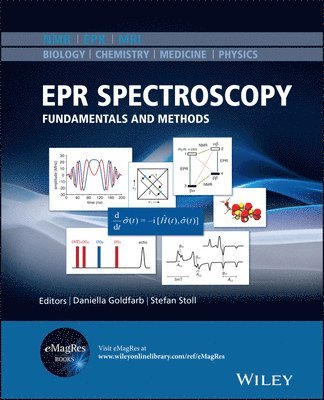
This unique, self-contained resource is the first volume on electron paramagnetic resonance (EPR) spectroscopy in the eMagRes Handbook series. The 27 chapters cover the theoretical principles, the common experimental techniques, and many important application areas of modern EPR spectroscopy. EPR Spectroscopy: Fundamentals and Methods is presented in four major parts: A: Fundamental Theory, B: Basic Techniques and Instrumentation, C: High-Resolution Pulse Techniques, and D: Special Techniques.The first part of the book gives the reader an introduction to basic continuous-wave (CW) EPR and an overview of the different magnetic interactions that can be determined by EPR spectroscopy, their associated theoretical description, and their information content. The second provides the basics of the various EPR techniques, including pulse EPR, and EPR imaging, along with the associated instrumentation. Parts C and D builds on parts A and B and offer introductory accounts of a wide range of modern advanced EPR techniques, with examples of applications. The last two parts presents most of the new advances that do not appear in most of the classical EPR textbooks that focus on CW EPR.EPR Spectroscopy: Fundamentals and Methods contains, in concise form, all the material needed to understand state-of-the-art EPR spectroscopy at the graduate school/research level, whilst the editors have ensured that it presents the topic at a level accessible to newcomers to the field and others who want to know its range of application and how to apply it.
1 600 kr
Skickas inom 11-20 vardagar
Addresses Dynamic Nuclear Polarization (DNP) as a technique for sensitivity-enhancement in solid-state NMR spectroscopyThis comprehensive handbook is a compendium of the current state-of-the art of high field Dynamic Nuclear Polarization—from long-proven, early developments, up to today’s hot topics. It covers all the relevant subjects that have made a direct or indirect contribution toward advancing this field, and focuses on topics such as: the theory behind the effects seen within DNP; instrumentation required for carrying out DNP; and specific applications of DNP including protein monitoring, catalysis, nanoparticles, biological and clinical studies. Development and application of techniques that have indirectly contributed to advancing MAS DNP NMR, such as DNP experiments on static solids within microwave resonant structures, and high-field EPR, are also examined.Handbook of High Field Dynamic Nuclear Polarization is presented in three sections—Theoretical Aspects, DNP Development (instrumentation / radical / sample), and DNP NMR Applications. The first section offers chapters on; solid and cross effect DNP; thermal mixing; Overhauser; and dissolution DNP. The second looks at: microwave technology, gyrotron, and IOE; homebuilt and commercial DNP spectrometers; and glassing vs. solvent-free DNP. The final section provides information on; amyloid, membrane, and nanocrystalline proteins; metals, and surface enhanced DNP; pharmaceuticals; nanoparticles; and much more. Covers one of the biggest developing fields in magnetic resonanceRelevant to students, academics, and industry within the physical, materials, medical, and biochemical sciencesAn excellent starting point and point-of-reference for researchers in the fieldEdited by a widely respected team with contributions from key researchers in the NMR communityPart of the eMagRes Handbook SeriesHandbook of High Field Dynamic Nuclear Polarization is an ideal reference for all researchers and graduate students involved in this complex, interdisciplinary field.About eMagRes Handbooks eMagRes publishes a wide range of online articles on all aspects of magnetic resonance in physics, chemistry, biology and medicine. The existence of this large number of articles, written by experts in various fields, is enabling the publication of a series of eMagRes Handbooks on specific areas of NMR and MRI. The chapters of each of these handbooks will comprise a carefully chosen selection of eMagRes articles. In consultation with the eMagRes Editorial Board, the eMagRes Handbooks are coherently planned in advance by specially-selected Editors, and new articles are written to give appropriate complete coverage. The handbooks are intended to be of value and interest to research students, postdoctoral fellows and other researchers learning about the scientific area in question and undertaking relevant experiments, whether in academia or industry.Have the content of this Handbook and the complete content of eMagRes at your fingertips!Visit: www.wileyonlinelibrary.com/ref/eMagRes