Management on the Cutting Edge - Böcker
Visar alla böcker i serien Management on the Cutting Edge. Handla med fri frakt och snabb leverans.
11 produkter
11 produkter
250 kr
Skickas
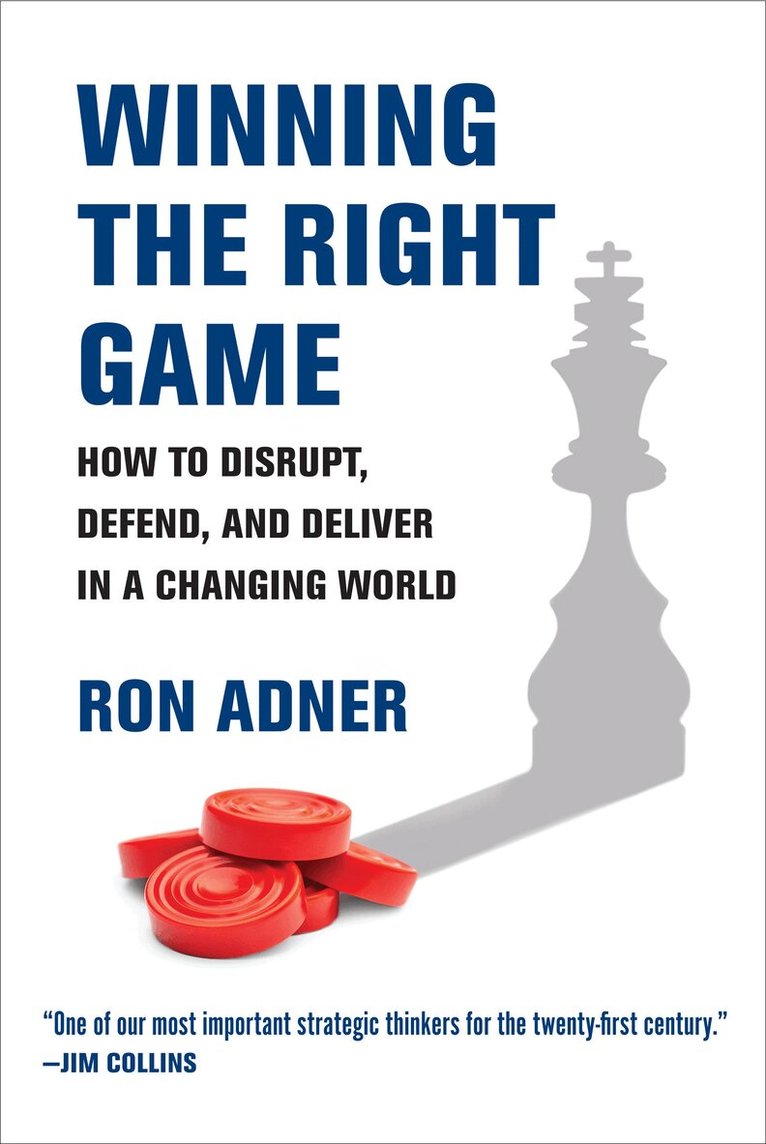
How to succeed in an era of ecosystem-based disruption: strategies and tools for offense, defense, timing, and leadership in a changing competitive landscape.The basis of competition is changing. Are you prepared? Rivalry is shifting from well-defined industries to broader ecosystems: automobiles to mobility platforms; banking to fintech; television broadcasting to video streaming. Your competitors are coming from new directions and pursuing different goals from those of your familiar rivals. In this world, succeeding with the old rules can mean losing the new game. Winning the Right Game introduces the concepts, tools, and frameworks necessary to confront the threat of ecosystem disruption and to develop the strategies that will let your organization play ecosystem offense. To succeed in this world, you need to change your perspective on competition, growth, and leadership. In this book, strategy expert Ron Adner offers a new way of thinking, illustrating breakthrough ideas with compelling cases. How did a strategy of ecosystem defense save Wayfair and Spotify from being crushed by giants Amazon and Apple? How did Oprah Winfrey redraw industry boundaries to transition from television host to multimedia mogul? How did a shift to an alignment mindset enable Microsoft's cloud-based revival? Each was rooted in a new approach to competitors, partners, and timing that you can apply to your own organization. For today's leaders the difference between success and failure is no longer simply winning, but rather being sure that you are winning the right game.
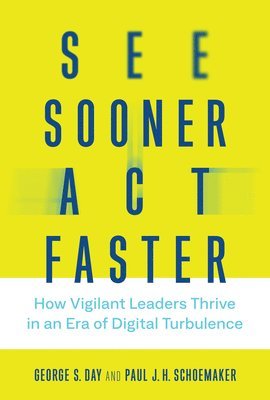
See Sooner, Act Faster
How Vigilant Leaders Thrive in an Era of Digital Turbulence
Inbunden, Engelska, 2019
277 kr
Tillfälligt slut
320 kr
Skickas
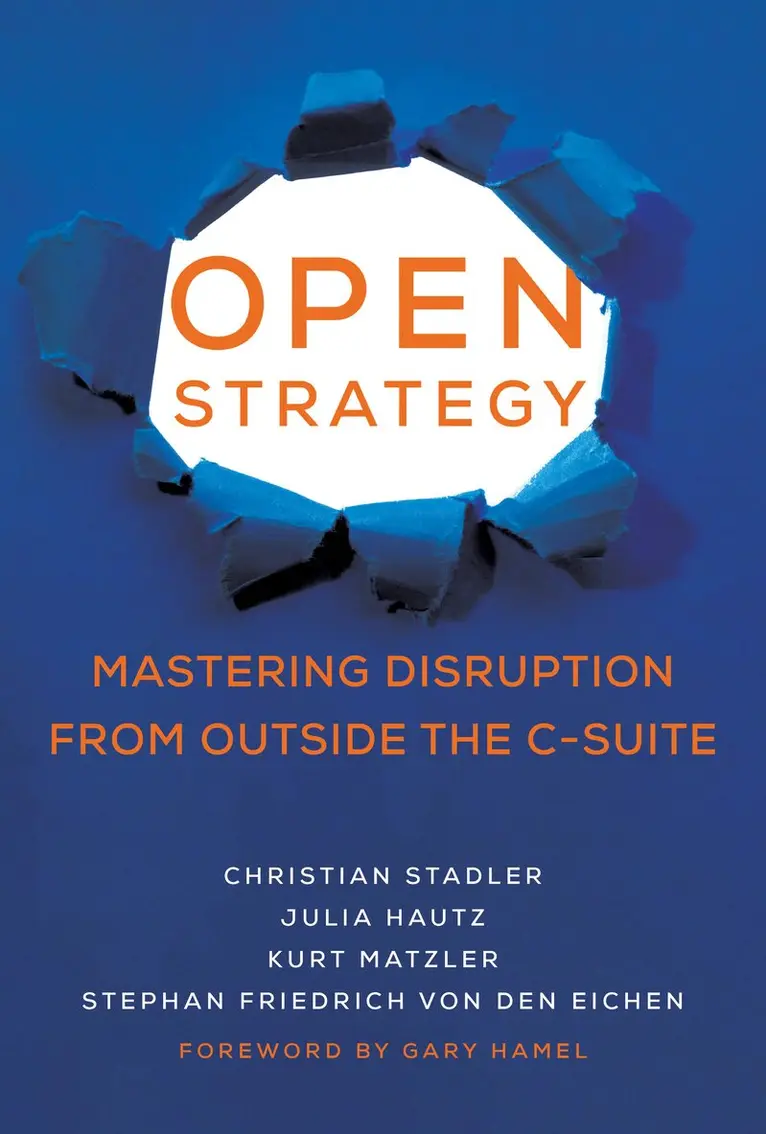
How smart companies are opening up strategic initiatives to involve front-line employees, experts, suppliers, customers, entrepreneurs, and even competitors.Why are some of the world’s most successful companies able to stay ahead of disruption, adopting and implementing innovative strategies, while others struggle? It’s not because they hire a new CEO or expensive consultants but rather because these pioneering companies have adopted a new way of strategizing. Instead of keeping strategic deliberations within the C-Suite, they open up strategic initiatives to a diverse group of stakeholders—front-line employees, experts, suppliers, customers, entrepreneurs, and even competitors. Open Strategy presents a new philosophy, key tools, step-by-step advice, and fascinating case studies—from companies that range from Barclays to Adidas—to guide business leaders in this groundbreaking approach to strategy.The authors—business-strategy experts from both academia and management consulting—introduce tools for each of the three stages of strategy-making: idea generation, plan formulation, and implementation. These are digital tools (including strategy contests), which allow the widest participation; hybrid digital/in-person tools (including a “nightmare competitor challenge”); a workshop tool that gamifies the business model development process; and tools that help companies implement and sustain open strategy efforts.Open strategy has an astonishing track record: a survey of 200 business leaders shows that although open-strategy techniques were deployed for only 30 percent of their initiatives, those same initiatives generated 50 percent of their revenues and profits. This book offers a roadmap for this kind of success.
293 kr
Skickas
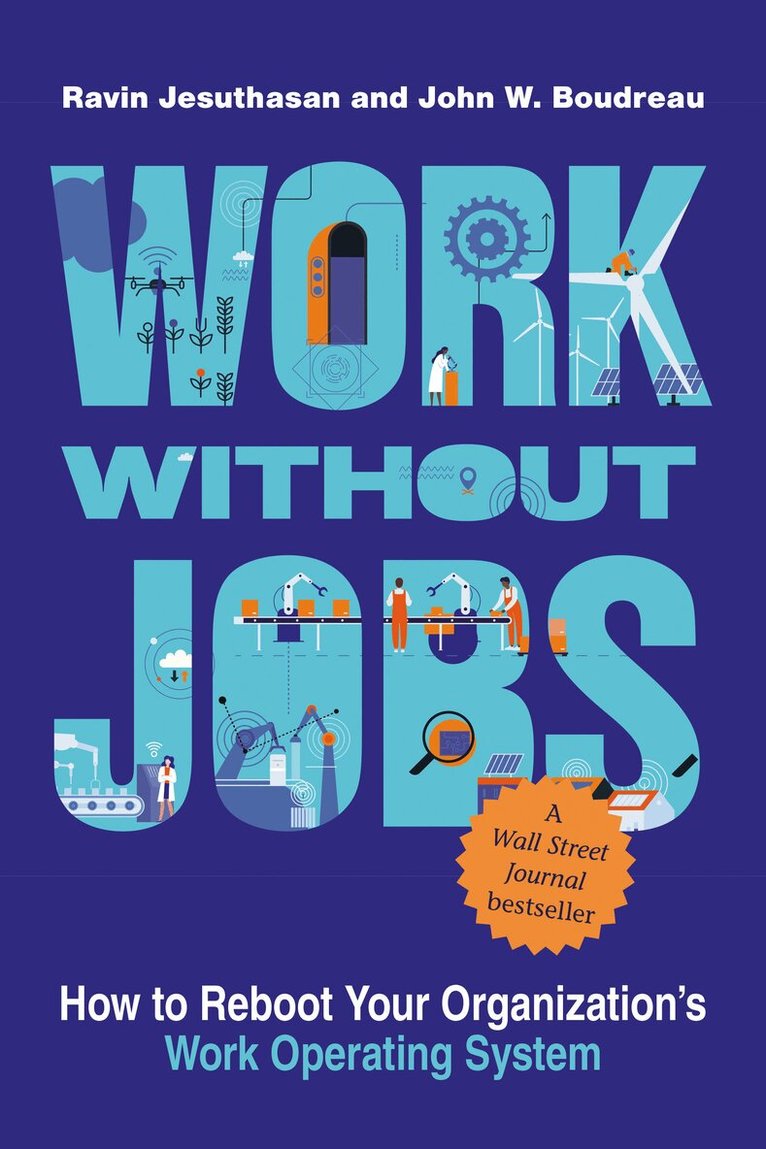
In this Wall Street Journal bestseller, why the future of work requires the deconstruction of jobs and the reconstruction of work.Work is traditionally understood as a “job,” and workers as “jobholders.” Jobs are structured by titles, hierarchies, and qualifications. In Work without Jobs, the Wall Street Journal bestseller, Ravin Jesuthasan and John Boudreau propose a radically new way of looking at work. They describe a new “work operating system” that deconstructs jobs into their component parts and reconstructs these components into more optimal combinations that reflect the skills and abilities of individual workers. In a new normal of rapidly accelerating automation, demands for organizational agility, efforts to increase diversity, and the emergence of alternative work arrangements, the old system based on jobs and jobholders is cumbersome and ungainly. Jesuthasan and Boudreau’s new system lays out a roadmap for the future of work. Work without Jobs presents real-world cases that show how leading organizations are embracing work deconstruction and reinvention. For example, when a robot, chatbot, or artificial intelligence takes over parts of a job while a human worker continues to do other parts, what is the “job”? DHL found some answers when it deployed social robotics at its distribution centers. Meanwhile, the biotechnology company Genentech deconstructed jobs to increase flexibility, worker engagement, and retention. Other organizations achieved agility with internal talent marketplaces, worker exchanges, freelancers, crowdsourcing, and partnerships. It’s time for organizations to reboot their work operating system, and Work without Jobs offers an essential guide for doing so.
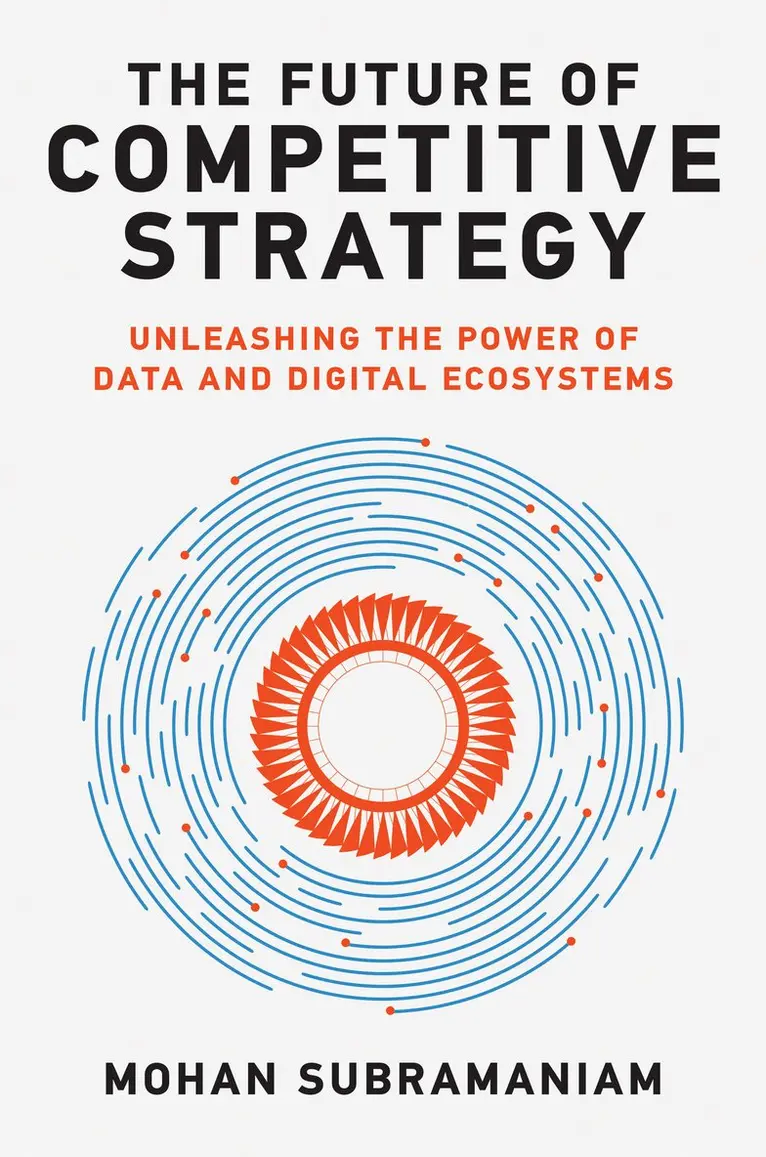
Future of Competitive Strategy
Unleashing the Power of Data and Digital Ecosystems
Inbunden, Engelska, 2022
293 kr
Skickas
How legacy firms can combine their traditional strengths with the power of data and digital ecosystems to forge a new competitive strategy for the digital era.How can legacy firms remain relevant in the digital era? In The Future of Competitive Strategy, strategic management expert Mohan Subramaniam explains how firms can leverage both their traditional strengths and the modern-day power of data and digital ecosystems to forge a new competitive strategy. Drawing on the experiences of a range of companies, including Caterpillar, Sleep Number, and Whirlpool, he explains how firms can benefit from data’s enlarged role in modern business, develop digital ecosystems tailored to their unique business needs, and use new frameworks to harness the power of data for competitive advantage. Subramaniam presents digital ecosystems as a combination of production and consumption ecosystems, which can be used by legacy firms to unlock the value of data at various levels—from improving operational efficiencies to creating new data-driven services and transforming traditional products into digital platforms. He explores the ways sensors and the Internet of Things provide new kinds of customer data; presents the concept of digital competitors—other firms that have access to similar data; discusses the new digital capabilities that firms need to develop; and addresses privacy and security issues associated with data sharing. Who needs this book? Any firm that wants to revitalize traditional business models, offer a richer customer experience, and expand its competitive arena into new digital ecosystems.
346 kr
Skickas
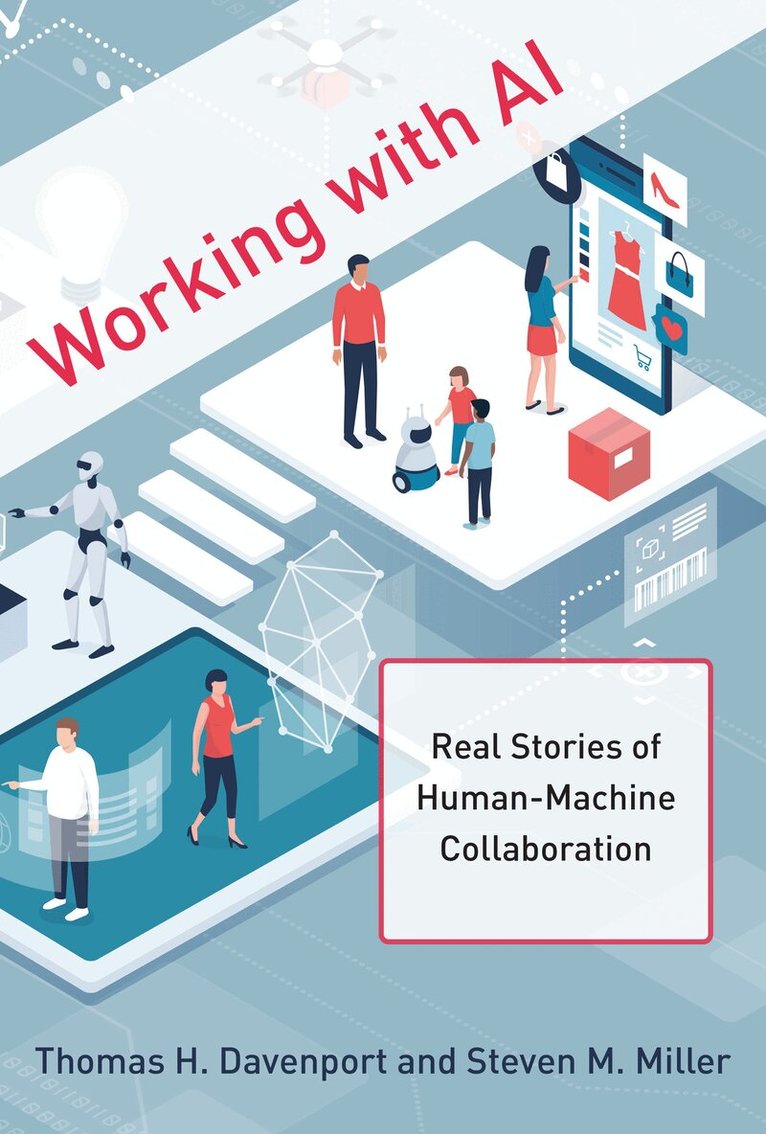
Two management and technology experts show that AI is not a job destroyer, exploring worker-AI collaboration in real-world work settings.This book breaks through both the hype and the doom-and-gloom surrounding automation and the deployment of artificial intelligence-enabled—“smart”—systems at work. Management and technology experts Thomas Davenport and Steven Miller show that, contrary to widespread predictions, prescriptions, and denunciations, AI is not primarily a job destroyer. Rather, AI changes the way we work—by taking over some tasks but not entire jobs, freeing people to do other, more important and more challenging work. By offering detailed, real-world case studies of AI-augmented jobs in settings that range from finance to the factory floor, Davenport and Miller also show that AI in the workplace is not the stuff of futuristic speculation. It is happening now to many companies and workers. These cases include a digital system for life insurance underwriting that analyzes applications and third-party data in real time, allowing human underwriters to focus on more complex cases; an intelligent telemedicine platform with a chat-based interface; a machine learning-system that identifies impending train maintenance issues by analyzing diesel fuel samples; and Flippy, a robotic assistant for fast food preparation. For each one, Davenport and Miller describe in detail the work context for the system, interviewing job incumbents, managers, and technology vendors. Short “insight” chapters draw out common themes and consider the implications of human collaboration with smart systems.
229 kr
Skickas
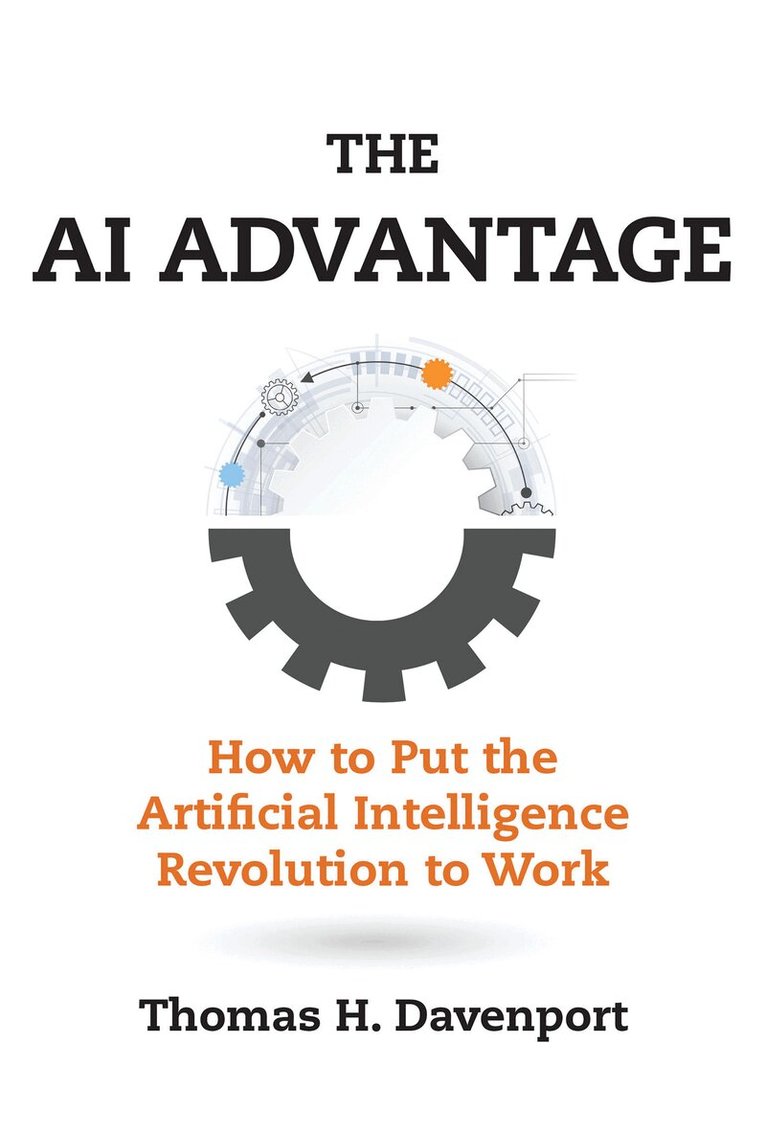
Cutting through the hype, a practical guide to using artificial intelligence for business benefits and competitive advantage.In The AI Advantage, Thomas Davenport offers a guide to using artificial intelligence in business. He describes what technologies are available and how companies can use them for business benefits and competitive advantage. He cuts through the hype of the AI craze—remember when it seemed plausible that IBM's Watson could cure cancer?—to explain how businesses can put artificial intelligence to work now, in the real world. His key recommendation: don't go for the “moonshot” (curing cancer, or synthesizing all investment knowledge); look for the “low-hanging fruit” to make your company more efficient.Davenport explains that the business value AI offers is solid rather than sexy or splashy. AI will improve products and processes and make decisions better informed—important but largely invisible tasks. AI technologies won't replace human workers but augment their capabilities, with smart machines to work alongside smart people. AI can automate structured and repetitive work; provide extensive analysis of data through machine learning (“analytics on steroids”), and engage with customers and employees via chatbots and intelligent agents. Companies should experiment with these technologies and develop their own expertise.Davenport describes the major AI technologies and explains how they are being used, reports on the AI work done by large commercial enterprises like Amazon and Google, and outlines strategies and steps to becoming a cognitive corporation. This book provides an invaluable guide to the real-world future of business AI.A book in the Management on the Cutting Edge series, published in cooperation with MIT Sloan Management Review.
197 kr
Skickas
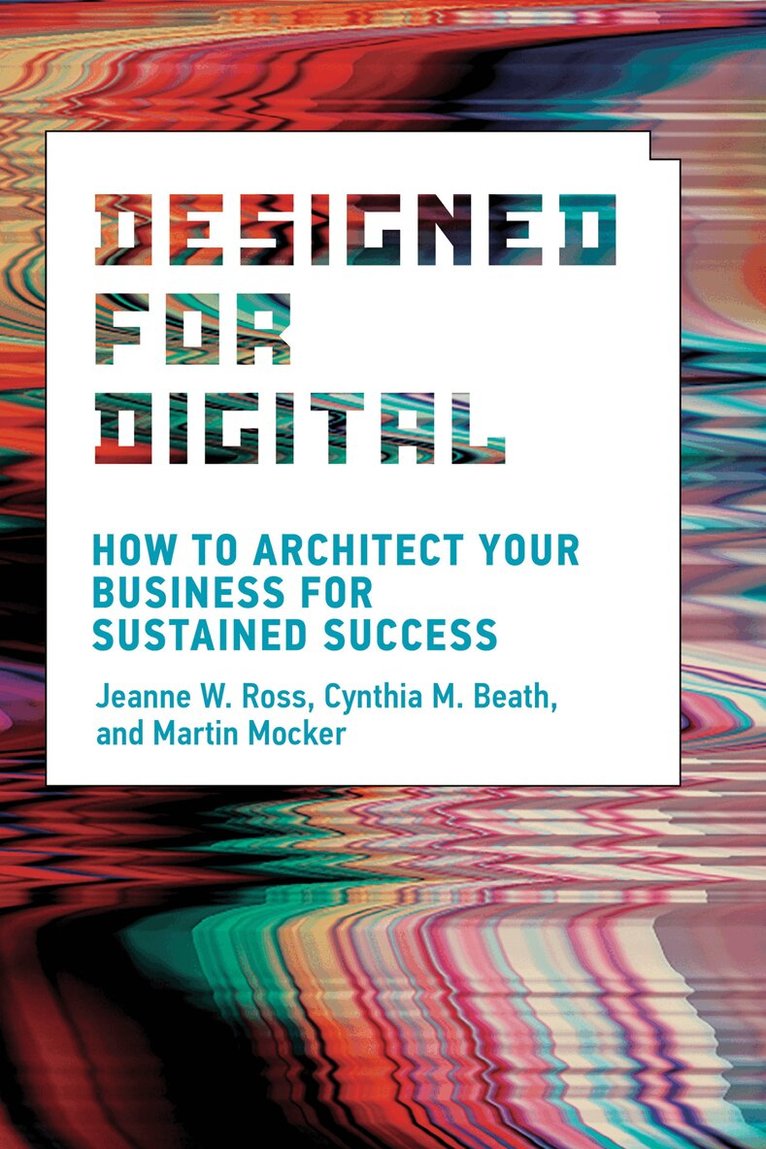
One of Forbes's Top Ten Technology Books of the YearHow to redesign ‘big, old’ companies for digital transformation and success—with examples from 300+ business leaders and 30+ organizations, including Amazon Uber, LEGO, and Toyota. Most established companies have deployed such digital technologies as the cloud, mobile apps, the internet of things, and artificial intelligence. But few established companies are designed for digital. Full of practical advice and real-life examples of digital transformation, this book is an essential guide for retooling organizations for digital success through 5 key building blocks: • Shared Customer Insights• Operational Backbone• Digital Platform• Accountability Framework• External Developer Platform In the digital economy, rapid pace of change in technology capabilities and customer desires means that business strategy must be fluid. As a result, business design has become a critical management responsibility. Effective business design enables a company to quickly pivot in response to new competitive threats and opportunities. Most leaders today, however, rely on organizational structure to implement strategy, unaware that structure inhibits, rather than enables, agility. In companies that are designed for digital, people, processes, data, and technology are synchronized to identify and deliver innovative customer solutions—and redefine strategy. Digital design, not strategy, is what separates winners from losers in the digital economy.Designed for Digital includes case studies from Amazon, BNY Mellon, DBS Bank, LEGO, Philips, Schneider Electric, USAA, and many other global organizations. Drawing on 5 years of research, the book is an essential guide for companies that want to disrupt rather than be disrupted in the new digital landscape.
198 kr
Skickas
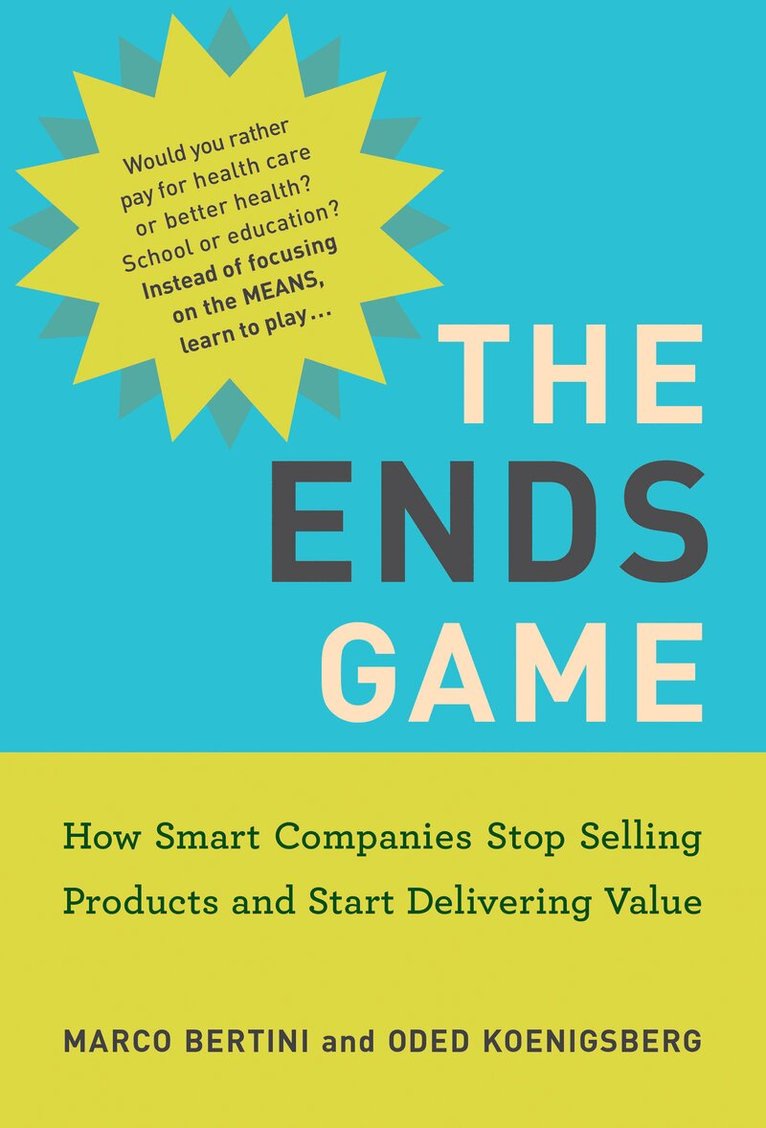
How companies like Dollar Shave Club and Rent the Runway rewrite the rules of commerce by pursuing outcomes rather than products and services. The seventh book in the Management on the Cutting Edge series—for business professionals looking to do deliver excellent customer service while maximizing value and revenue. Would you rather pay for healthcare or for better health? For school or education? For groceries or nutrition? A car or transportation? A theater performance or entertainment? In The Ends Game, Marco Bertini and Oded Koenigsberg describe how some firms are rewriting the rules of commerce: instead of selling the “means” (their products and services), they adopt innovative revenue models to pursue “ends” (actual outcomes). They examine companies such as: • Dollar Shave Club• Rent the Runway• Netflix• Spotify• Michelin• Adobe• Pearson• And many more! They show that paying by the pill, semester, food item, vehicle, or show does not necessarily reflect the value that customers actually derive from their purchases. Revenue models anchored on the ownership of products, they argue, are patently inferior.
229 kr
Skickas
In this Wall Street Journal bestseller, why the future of work requires the deconstruction of jobs and the reconstruction of work.Work is traditionally understood as a “job,” and workers as “jobholders.” Jobs are structured by titles, hierarchies, and qualifications. In Work without Jobs, the Wall Street Journal bestseller, Ravin Jesuthasan and John Boudreau propose a radically new way of looking at work. They describe a new “work operating system” that deconstructs jobs into their component parts and reconstructs these components into more optimal combinations that reflect the skills and abilities of individual workers. In a new normal of rapidly accelerating automation, demands for organizational agility, efforts to increase diversity, and the emergence of alternative work arrangements, the old system based on jobs and jobholders is cumbersome and ungainly. Jesuthasan and Boudreau’s new system lays out a roadmap for the future of work. Work without Jobs presents real-world cases that show how leading organizations are embracing work deconstruction and reinvention. For example, when a robot, chatbot, or artificial intelligence takes over parts of a job while a human worker continues to do other parts, what is the “job”? DHL found some answers when it deployed social robotics at its distribution centers. Meanwhile, the biotechnology company Genentech deconstructed jobs to increase flexibility, worker engagement, and retention. Other organizations achieved agility with internal talent marketplaces, worker exchanges, freelancers, crowdsourcing, and partnerships. It’s time for organizations to reboot their work operating system, and Work without Jobs offers an essential guide for doing so.
229 kr
Skickas
How smart companies are opening up strategic initiatives to involve front-line employees, experts, suppliers, customers, entrepreneurs, and even competitors.Why are some of the world’s most successful companies able to stay ahead of disruption, adopting and implementing innovative strategies, while others struggle? It’s not because they hire a new CEO or expensive consultants but rather because these pioneering companies have adopted a new way of strategizing. Instead of keeping strategic deliberations within the C-Suite, they open up strategic initiatives to a diverse group of stakeholders—front-line employees, experts, suppliers, customers, entrepreneurs, and even competitors. Open Strategy presents a new philosophy, key tools, step-by-step advice, and fascinating case studies—from companies that range from Barclays to Adidas—to guide business leaders in this groundbreaking approach to strategy.The authors—business-strategy experts from both academia and management consulting—introduce tools for each of the three stages of strategy-making: idea generation, plan formulation, and implementation. These are digital tools (including strategy contests), which allow the widest participation; hybrid digital/in-person tools (including a “nightmare competitor challenge”); a workshop tool that gamifies the business model development process; and tools that help companies implement and sustain open strategy efforts.Open strategy has an astonishing track record: a survey of 200 business leaders shows that although open-strategy techniques were deployed for only 30 percent of their initiatives, those same initiatives generated 50 percent of their revenues and profits. This book offers a roadmap for this kind of success.