RSC Food Analysis Monographs - Böcker
Visar alla böcker i serien RSC Food Analysis Monographs. Handla med fri frakt och snabb leverans.
9 produkter
9 produkter
2 140 kr
Skickas inom 5-8 vardagar
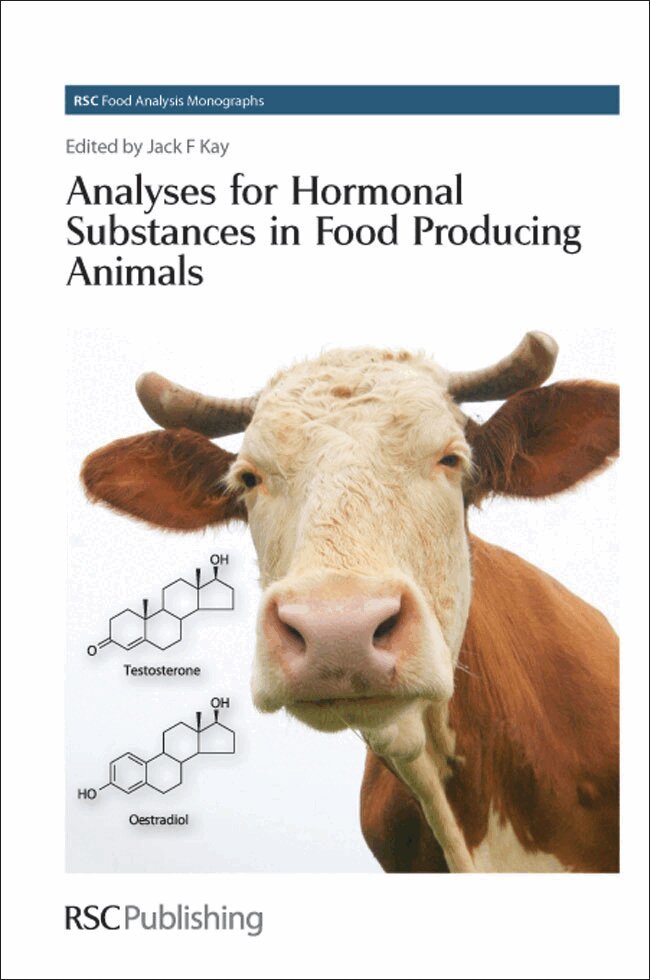
This unique and definitive reference on hormone abuse in food producing animals is for scientists, regulators and consumers. It contains the results of a meeting held in November 2006 to discuss the progress made by the Veterinary Medicines Directorate (VMD) supported programme on steroid abuse detection. When the "hormone ban" first arose in the EU, there were only 15 Member States. There are now 27 and some newer members lack the background knowledge of this issue. This book sets out to summarise the history and show the significant progress that has been, and continues to be, made in this area. It is the only comprehensive review of this subject available and contains input from leading researchers from around the world. The initial chapters provide valuable background information. For example, the chapter on toxicology and risk covers the controversies arising from the interpretation of the effects of artificial hormones in meat-producing animals. The book then goes on to deal with how the issue has been managed via national and international detection programmes. It finishes by covering the resulting cutting edge analytical science including current research using "omics"/ profiling for "natural hormones" and novel detection techniques such as IRMS. This book offers readers an insight into the risk management of an important food related issue and how current analytical analyses can assist evidence-based risk assessments. There is comprehensive coverage of all past and current issues relating to growth promoting hormone abuse in animals.
1 235 kr
Skickas inom 5-8 vardagar
In the rapidly developing field of analysis it is important to be aware of the newest methods within available techniques. Chromatography and Capillary Electrophoresis in Food Analysis describes chromatographic and electrophoretic principles and procedures for analyses of various amphiphilic and hydrophilic biomolecules, particularly for food analysis. Providing basic information, including general sample preparation, the book then goes on to describe individual analytical methods and exemplify the strategy and methodologies employed for the analyses. The theory necessary to understand the methods and interpretation of results is also included, as are numerous detailed instructions on experiments. Tables, figures and references are included to give a complete picture. Chromatography and Capillary Electrophoresis in Food Analysis will be especially valuable for students and more experienced researchers interested in analysis of natural products, both inside and outside the field of food chemistry.
1 756 kr
Skickas inom 5-8 vardagar
Fit-for-purpose is a phrase familiar to all users of analytical data, who need to be assured that data provided by laboratories is both appropriate and of the required quality. Quality in the Food Analysis Laboratory surveys the procedures that a food analysis laboratory must consider to meet such requirements. The need to introduce quality assurance, the different quality models that are available and the legislative requirements are considered. Specific aspects of laboratory practice and particular areas of accreditation which may cause problems for analytical laboratories are also discussed. Covering for the first time those areas of direct importance to food analysis laboratories, this unique book will serve as an aid to those laboratories when introducing new measures and justifying those chosen.
1 321 kr
Skickas inom 5-8 vardagar
Introducing the principles, practice and applications of mass spectrometric techniques in the study of natural substances in foods, this book conveys the depth and breadth of modern mass spectrometry in relation to food analysis. It covers traditional techniques such as electron and chemical ionisation and newer soft ionisation techniques such as matrix-assisted laser desorption ionisation and electrospray. All of these techniques are especially relevant in food quality and safety studies and in biopolymer analysis. The ability to analyse biopolymers by mass spectrometry is having a major impact on the study of food structure components, food proteins, food pathogens and food components produced from genetically modified organisms. The principles and practice of mass spectrometry are covered in the early chapters and are followed by applications in flavour analysis and the determination of non-nutrient, biologically-active, natural substances in foods. The analysis and metabolic studies of amino acids, peptides, proteins, lipids, sugars, carbohydrates and vitamins is also discussed, with separate chapters on mineral and micronutrient metabolism and techniques of pyrolysis mass spectrometry. Mass Spectrometry of Natural Substances in Food will be a valuable resource for food scientists, food analysts and others working in food research, nutrition and safety.
2 454 kr
Skickas inom 5-8 vardagar
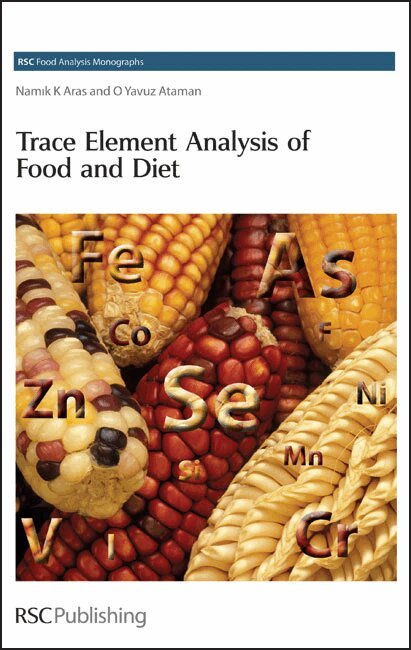
Trace element analysis has a key role to play in quality control of food and diet. This timely book introduces the subject in a practical way - from sampling and the techniques available for trace analysis, to procedures for specific elements and data analysis. Beginning with a brief introduction and discussion of statistical evaluation of data, the subsequent chapter looks at trace analysis in general, with its essentials and terminology. Another section introduces sampling and preparation of foodstuffs such as wheat, potato, vegetables and milk. This is followed by descriptions of the various spectrometric techniques (atomic absorption, atomic emission, atomic fluorescence) that are available. Plasma techniques for both optical emission and mass spectrometry are presented, as are nuclear activation analysis and X-ray methods. A comparison of the various analytical techniques is provided, and a separate chapter handles speciation analysis. Finally, procedures for determining essential and toxic elements such as arsenic, iron, selenium and zinc are suggested, using several recent references. Detailed explanations and a simple format will appeal to laboratory technicians and graduate students, as well as more experienced researchers. Comprehensive coverage, coupled with illustrations and a guide to relevant literature and manufacturers, will make Trace Element Analysis of Food and Diet a valuable source of information for anyone working on analysis of trace elements in food, diet or other biological or environmental samples - particularly food engineers, agricultural scientists and government testing agency employees.
1 059 kr
Skickas inom 5-8 vardagar
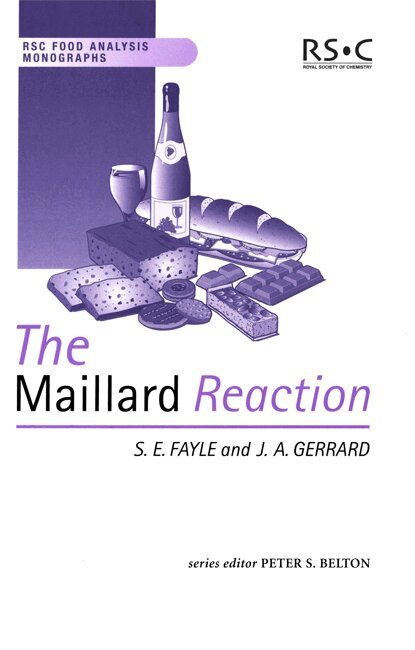
It is almost 100 years since the Maillard reaction was first described. Despite decades of research since then, the products of the reaction and the mechanistic pathways leading to their formation are only gradually being unravelled. Combining comprehensive information regarding the various methods that can be employed in the analysis of Maillard products with a discussion of the advantages and limitations of those methods, this unique book provides a 'one-stop' text from which methods of analysis may be obtained. It will be useful for both new and experienced researchers who are involved in solving the mysteries and complexities of Maillard chemistry.
2 454 kr
Skickas inom 5-8 vardagar
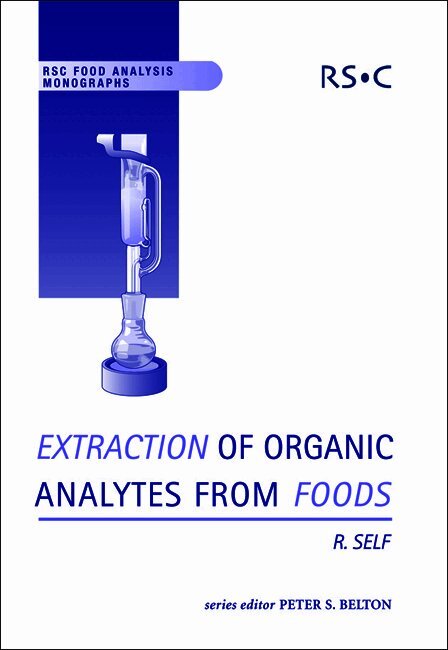
This book is designed as a laboratory manual of methods used for the preparation and extraction of organic chemical compounds from food sources. It offers ideas on how to facilitate progress towards the total automation of the assay, as well as proposing assays for unknowns by comparison with known methods. Beginning with an introduction to extraction methodology, Extraction of Organic Analytes from Foods then progresses through sample preparation, extraction techniques (partition, solvation, distillation, adsorption and diffusion) and applications. Subject indices for the applications are organised by commodity, method, chemical class and analyte, and provide useful examples of references from the literature to illustrate historical development of the techniques. Examples of methods that have been compared, combined or used in collaborative trials have been correlated and used to form the beginnings of a database that can be expanded and updated to provide a laboratory reference source. Logically structured and with numerous examples, Extraction of Organic Analytes from Foods will be invaluable to practising food analysts as both a reference and training guide. In addition, the introductory sections in each chapter have been written with food science and technology students in mind, making this an important title for academic libraries.
2 140 kr
Skickas inom 5-8 vardagar
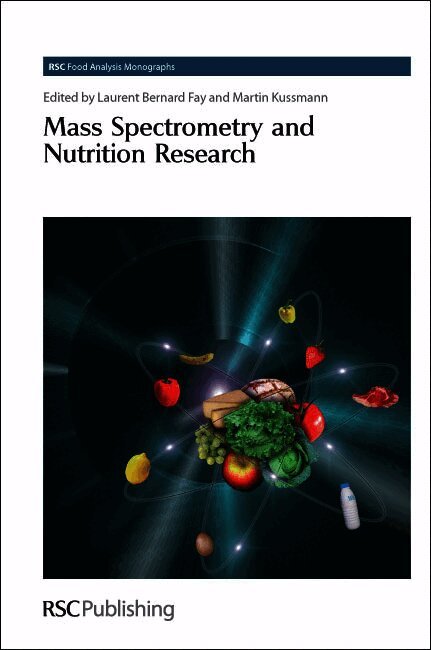
Mass spectrometry has developed into a platform for the assessment of health, sensory, quality and safety aspects of food. Current nutrition research focuses on unravelling the link between acute or chronic dietary and nutrient intake and the physiological effects at cellular, tissue and whole body level. The bioavailability and bioefficacy of food constituents and dose-effect correlations are key to understanding the impact of food on defined health outcomes. To generate this information, appropriate analytical tools are required to identify and quantify minute amounts of individual compounds in highly complex matrices (such as food or biological fluids) and to monitor molecular changes in the body in a highly specific and sensitive manner. Mass spectrometry has become the method of choice for such work and now has broad applications throughout all areas of nutrition research. This book focuses the contribution of mass spectrometry to the advancement of nutrition research. Aimed at students, teachers and researchers, it provides a link between nutrition and analytical biochemistry. It guides nutritionists to the appropriate techniques for their work and introduces analytical biochemists to new fields of application in nutrition and health. The first part of the book is dedicated to the assessment of macro- and micro-nutrient status with a view to making dietary recommendations for the treatment of diet-related diseases. The second part shows how mass spectrometry has changed nutrition research in fields like energy metabolism, body composition, protein turnover, immune modulation and cardiovascular health.
2 698 kr
Skickas inom 5-8 vardagar
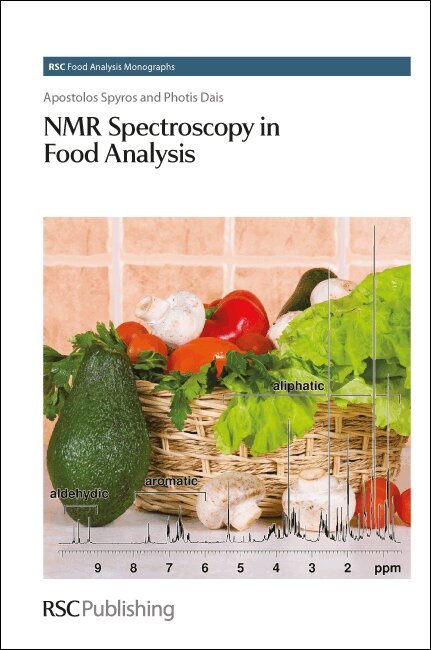
During the last two decades, the use of NMR spectroscopy for the characterization and analysis of food materials has flourished, and this trend continues to increase today. Currently, there exists no book that fulfils specifically the needs of food scientists that are interested in adding or expanding the use of NMR spectroscopy in their arsenal of food analysis techniques. Current books and monographs are rather addressed to experienced researchers in food analysis providing new information in the field. This book, written by acknowledged experts in the field, fills the gap by offering a day to day NMR guide for the food scientist, affording not only the basic theoretical aspects of NMR spectroscopy, but also practical information on sample preparation, experimental conditions and data analysis. Current developments in the field covered in this book are the availability of solid state NMR experiments such as CP/MAS and more importantly HR-MAS NMR for the analysis of semisolid foods, and the increasing use of chemometrics to analyze NMR data in food metabonomics. Moreover, this book contains an up to date discussion of MRI in food analysis including topics such as food processing and natural changes in food such as ripening. The book is a compact and complete source of information for food scientists who wish to apply methodologies based on NMR spectroscopy in food analysis. It contains information so far scattered in the primary literature, in NMR treatises and food analysis books, in a concise format that makes it appealing to food scientists who have no or minimal experience in magnetic resonance techniques. The inclusion of practical information about NMR instrumentation, experiment setup, acquisition and spectral analysis for the study of different food categories make this book a hands-on manual for food scientists wishing to implement novel NMR spectroscopy-based analytical techniques in their field.