Peter S Belton - Böcker
Visar alla böcker från författaren Peter S Belton. Handla med fri frakt och snabb leverans.
13 produkter
13 produkter
1 756 kr
Skickas inom 5-8 vardagar
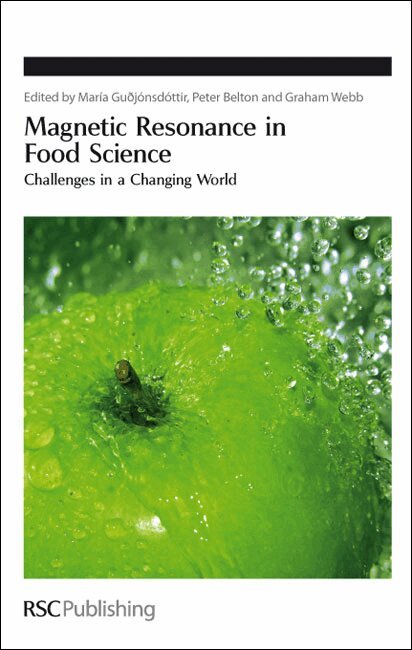
The term magnetic resonance covers a wide range of techniques, spectroscopy, relaxation and imaging. In turn, these areas are evolving and leading to various new applications of NMR and ESR in food science and nutrition. This book is part of the continuing series of proceedings of the biennial conferences on applications of magnetic resonance to food science. As always, the aim of the book is to bring the reader up-to-date with the state-of-the-art of the subject. The speakers came from Europe, North and South America, Asia and Australasia giving a global perspective to the event. The range of the conference was broad covering sensory science, authenticity, functionality, solid state methods and new methods. Magnetic Resonance in Food Science is a global survey written by leading authorities. It provides readers with an awareness of current activity in the field and potential applications.
1 740 kr
Skickas inom 5-8 vardagar
Magnetic Resonance in Food Science is an authoritative summary of state-of the-art research contributions from the world's leading scientists. Contributions from the 8th International Conference on the Applications of Magnetic Resonance in Food Science, 2006 are presented here with a foreword by the Editors. This important resource provides an overview of: * Food in the human body including MRI and metabonomics studies; * Food quality covering animal metabonomics, structure of food systems, food stability and authentication; * Food processing with emphasis on dynamic processes - including water migration and phase transformations; * New technologies, novel data analysis and exploitation which includes innovations in NMR methodologies, hardware and data analysis. The International Conference on the Applications of Magnetic Resonance in Food Science is the principle conference in the field and attracts contributions from internationally acknowledged experts from industry and academia. The 8th conference was opened with a lecture by Sir Peter Mansfield, Medicine Nobel Prize Laureate.
1 235 kr
Skickas inom 5-8 vardagar
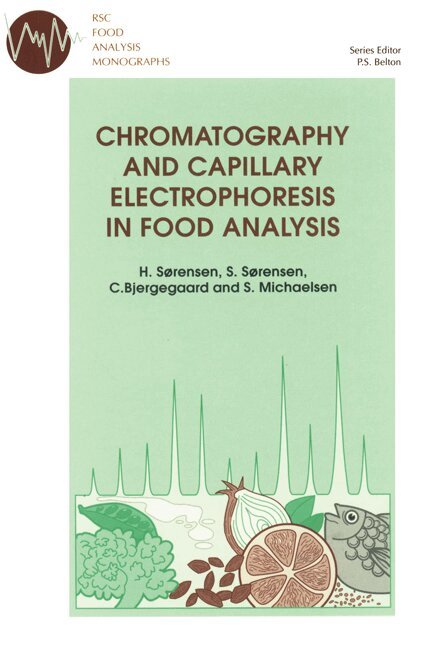
In the rapidly developing field of analysis it is important to be aware of the newest methods within available techniques. Chromatography and Capillary Electrophoresis in Food Analysis describes chromatographic and electrophoretic principles and procedures for analyses of various amphiphilic and hydrophilic biomolecules, particularly for food analysis. Providing basic information, including general sample preparation, the book then goes on to describe individual analytical methods and exemplify the strategy and methodologies employed for the analyses. The theory necessary to understand the methods and interpretation of results is also included, as are numerous detailed instructions on experiments. Tables, figures and references are included to give a complete picture. Chromatography and Capillary Electrophoresis in Food Analysis will be especially valuable for students and more experienced researchers interested in analysis of natural products, both inside and outside the field of food chemistry.
1 059 kr
Skickas inom 5-8 vardagar
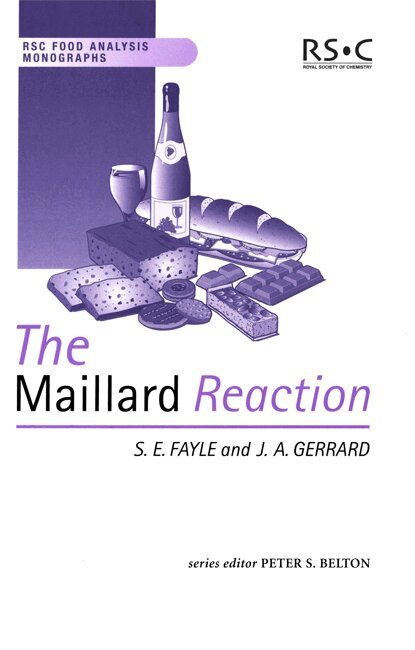
It is almost 100 years since the Maillard reaction was first described. Despite decades of research since then, the products of the reaction and the mechanistic pathways leading to their formation are only gradually being unravelled. Combining comprehensive information regarding the various methods that can be employed in the analysis of Maillard products with a discussion of the advantages and limitations of those methods, this unique book provides a 'one-stop' text from which methods of analysis may be obtained. It will be useful for both new and experienced researchers who are involved in solving the mysteries and complexities of Maillard chemistry.
2 454 kr
Skickas inom 5-8 vardagar
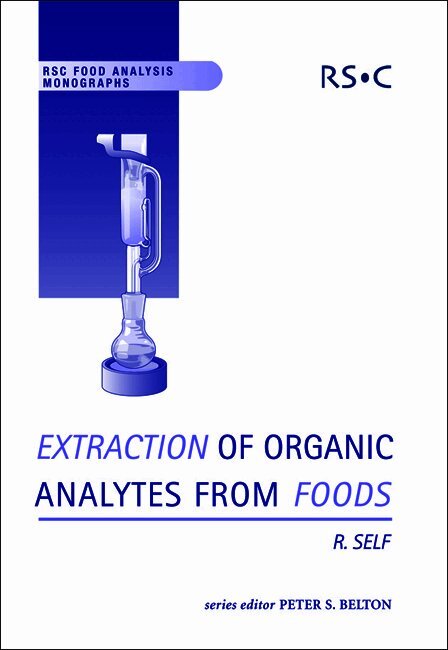
This book is designed as a laboratory manual of methods used for the preparation and extraction of organic chemical compounds from food sources. It offers ideas on how to facilitate progress towards the total automation of the assay, as well as proposing assays for unknowns by comparison with known methods. Beginning with an introduction to extraction methodology, Extraction of Organic Analytes from Foods then progresses through sample preparation, extraction techniques (partition, solvation, distillation, adsorption and diffusion) and applications. Subject indices for the applications are organised by commodity, method, chemical class and analyte, and provide useful examples of references from the literature to illustrate historical development of the techniques. Examples of methods that have been compared, combined or used in collaborative trials have been correlated and used to form the beginnings of a database that can be expanded and updated to provide a laboratory reference source. Logically structured and with numerous examples, Extraction of Organic Analytes from Foods will be invaluable to practising food analysts as both a reference and training guide. In addition, the introductory sections in each chapter have been written with food science and technology students in mind, making this an important title for academic libraries.
1 756 kr
Skickas inom 5-8 vardagar
The scope of applications of magnetic resonance to food science continues to expand. Recently, the focus has turned to the way in which the interpretation and quantification of magnetic resonance data of complex food systems increasingly requires the application of multivariate data analytical protocols. This book provides an up-to-date, global perspective of the latest developments in the field, including methods of studying metabolic processes both in vivo and in vitro, functional MRI and the sensory perception of food. Content is divided into five sections: sensory science; aroma and flavour; authenticity and quantification of food; functionality, structure and ingredients; applications of solid-state methods; and new NMR methods and instrumentation. Magnetic Resonance in Food Science: The Multivariate Challenge is ideal for graduates and researchers as well as for academics and professionals in the field.
1 168 kr
Skickas
Magnetic resonance has long demonstrated its tremendous versatility in many areas of science. Nowhere has this been more apparent than in food science, where problems encountered in a variety of situations can be resolved using one of the many techniques available to the magnetic resonance practitioner. From structural studies and investigations of molecules in frozen sugar solutions, to identifying the origins of salmon and detecting free radicals in irradiated food, magnetic resonance techniques can provide useful information. Divided into four sections entitled A View Towards the Next Century; Food Safety and Health; Structure and Dynamics; and Analysis, Monitoring and Authentication, the book consists of top quality contributions from renowned international scientists, and looks at what magnetic resonance techniques can offer both now and in the future. Offering state-of-the-art material, Magnetic Resonance in Food Science: A View to the Future is essential reading for both academics and industrialists in food science.
1 582 kr
Skickas inom 5-8 vardagar
The term magnetic resonance covers a wide range of techniques, spectroscopy, relaxation and imaging. In turn, these areas are evolving and leading to various new applications of NMR and ESR in food science and nutrition. From assessment of meat quality, through to a study of beer components and the effect of microwaves on potato texture, Magnetic Resonance in Food Science: Latest Developments provides an account of the state of the art in this lively area. Coverage includes: recent developments in magnetic resonance; human aspects of food; structure and dynamics in food; and food quality control. With contributions from international experts, this book is essential reading for academics and industrialists in food science. It is the latest in a series of titles in this area published by the RSC.
1 749 kr
Tillfälligt slut
Magnetic Resonance has become an established technique to improve the understanding of food systems. Capturing contributions from a whole range of applications in food and representing the latest technical innovations, this will be a contemporary book on the topic. Based on a conference which has established an international reputation as the forum for advances in applications of magnetic resonance to food, the coverage will be dedicated to multiscale definition of food, quantitative NMR (qNMR), foodomics, on-line non-invasive NMR (dedicated to Brian P. Hills), quality and safety and new developments in the area. It is aimed at academics and industrialists who are committed to the utilisation of MR tools to improve our understanding of food.
1 756 kr
Skickas inom 5-8 vardagar
The Clermont-Ferrand-Theix Institut National de la Recherche Agronomique (INRA) was proud to organize the 10th International Conference on the applications of Magnetic Resonance in Food Science to celebrate its 10th anniversary. This scientific event was held from 13 to 15 September 2010 in Clermont-Ferrand. The conference attracted 90 participants from 14 countries from all over the world. The conference included 7 invited lectures, 19 oral presentations and 27 oral poster presentations. Moreover, before the scientific sessions, two postgraduate sessions were given in parallel every morning. The conference was divided in 6 sessions covering i) Data processing, ii)New developments/food system, iii) New developments/NMR, iv) Nutrition, v) Metabolomic and vi) Imaging. The book follows the form of the conference. This year's meeting corresponded to its 10th anniversary. The first international conference was held in 1992 at the University of Surrey in Guilford on Professor Peter Belton's and Professor Graham Webb's initiative. During the last 20 years, a lot of developments were performed and the next 20 years are also very exciting. This meeting presentations were focused on the new developments in NMR techniques: hardware as well software with metabolomic and imaging without the new applications of NMR tools in food of course and now in nutrition.
2 018 kr
Skickas inom 5-8 vardagar
There are many challenges and problems in food science and magnetic resonance methods may be used to provide answers and deepen both fundamental and practical knowledge. This book presents the latest innovations in magnetic resonance and in particular new applications to understanding the functionality of foods, their processing and stability and their impact on health, perception and behaviour. Drawing on expert knowledge from academia and industry, coverage includes structure and function, emphasizing respectively applications of spectroscopy/relaxometry and imaging/diffusometry; high resolution NMR spectroscopy as applied to quality and safety and foodomics; and, for the first time, dedicated information on perception and behaviour demonstrating the progress that has been made in applications of fMRI in this field. Providing a resource for any newcomer to the field or for those in need of a rapid update of the latest developments, this title will be an indispensable reference tool.
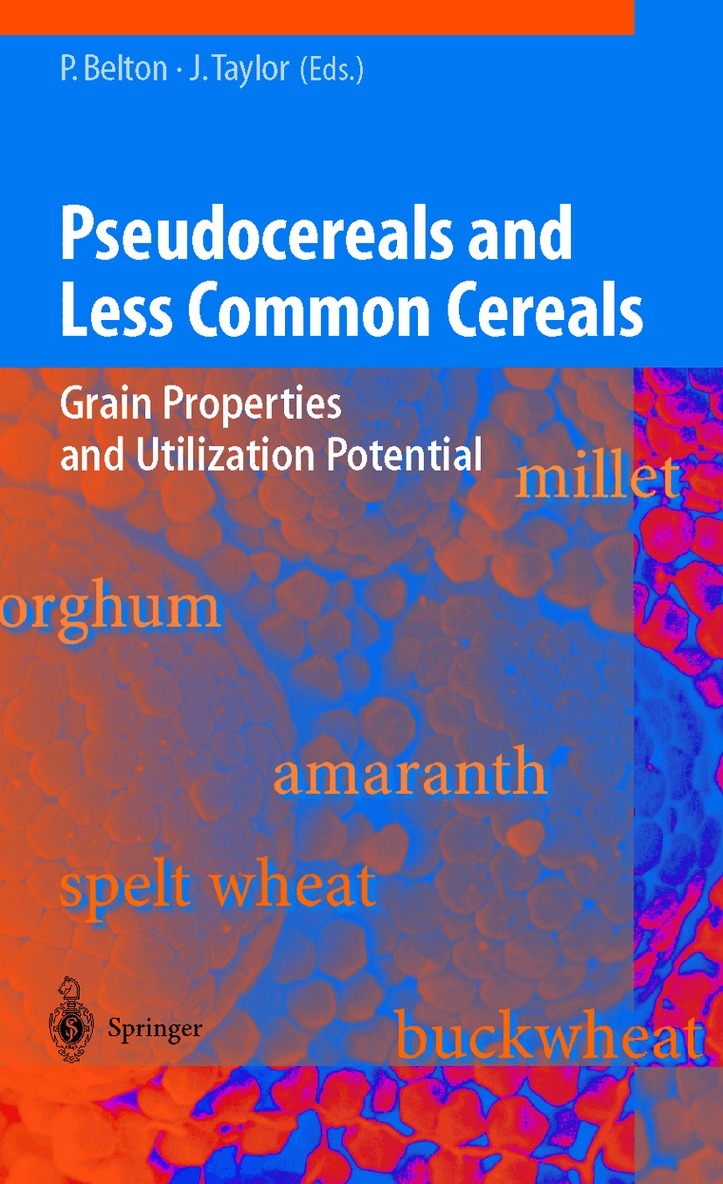
Pseudocereals and Less Common Cereals
Grain Properties and Utilization Potential
Inbunden, Engelska, 2002
1 064 kr
Skickas inom 10-15 vardagar
Today, at the beginning of the third millenium, just three cereal grains - wheat, rice and maize - dominate the world's food supply, accounting for some 75 % of all grains produced. This food "oligoculture" poses some risks for the future of humankind. The risk of catastrophic food crop failure through insect pests or fungal diseases is ever greater as genetic diversity is reduced. The introduction of genetically modified cereals may exacerbate this situation, as different speeies will share the same genes conferring resistance to pests. The intensive cultivation practices needed to produce the required high yields of these highly developed cereals, the so-called Green Revolution, is leading to environmental degradation through denudation of the soil and pollution of the environment due to pestieide and fertilizer runoff. In addition, the undoubted benefits brought about for many by the Green Revolution, with its use of intensive agricultural practises, cannot be shared by all. Such cultivation practises are often inappropriate in the developing world where farmers simply do not have the income to purchase the required agricultural machinery, inorganic fertilizers and pestieides. Also, the environmental con ditions in much of the developing world, characterised by frequent droughts interspersed with short periods of very high rainfall, are espeeially dam aging to the large areas of unprotected soil which result from mechanised agriculture. Reliance on so few different grains for our nutrition also appears to be detri mental to our long-term health.
Pseudocereals and Less Common Cereals
Grain Properties and Utilization Potential
Häftad, Engelska, 2011
1 064 kr
Skickas inom 10-15 vardagar
Today, at the beginning of the third millenium, just three cereal grains - wheat, rice and maize - dominate the world's food supply, accounting for some 75 % of all grains produced. This food "oligoculture" poses some risks for the future of humankind. The risk of catastrophic food crop failure through insect pests or fungal diseases is ever greater as genetic diversity is reduced. The introduction of genetically modified cereals may exacerbate this situation, as different speeies will share the same genes conferring resistance to pests. The intensive cultivation practices needed to produce the required high yields of these highly developed cereals, the so-called Green Revolution, is leading to environmental degradation through denudation of the soil and pollution of the environment due to pestieide and fertilizer runoff. In addition, the undoubted benefits brought about for many by the Green Revolution, with its use of intensive agricultural practises, cannot be shared by all. Such cultivation practises are often inappropriate in the developing world where farmers simply do not have the income to purchase the required agricultural machinery, inorganic fertilizers and pestieides. Also, the environmental con ditions in much of the developing world, characterised by frequent droughts interspersed with short periods of very high rainfall, are espeeially dam aging to the large areas of unprotected soil which result from mechanised agriculture. Reliance on so few different grains for our nutrition also appears to be detri mental to our long-term health.