

Häftad, Engelska, 1997
346 kr
Skickas inom 5-8 vardagar
346 kr
Skickas inom 5-8 vardagar

301 kr
Skickas inom 5-8 vardagar
336 kr
Skickas inom 5-8 vardagar
432 kr
Skickas inom 5-8 vardagar
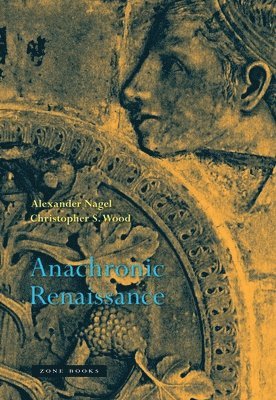
In this widely anticipated book, two leading contemporary art historians present a stunning reconsideration of the problem of time in the Renaissance. With intellectual brilliance, Alexander Nagel and Christopher S. Wood reexamine the meanings, uses, and effects of chronologies, models of temporality, and notions of originality and repetition in Renaissance images and artifacts.Anachronic Renaissance reveals a web of paths traveled by works and artists, a landscape obscured by art history’s disciplinary compulsion to anchor its data securely in time. The buildings, paintings, drawings, prints, sculptures, and medals addressed in this book were shaped by concerns about authenticity, about reference to prestigious origins and precedents, and about the implications of transposition from one medium to another. Byzantine icons taken to be early Christian antiquities, the acheiropoeton or image made without hands, the activities of spoliation and citation, differing approaches to art restoration, legends about movable buildings, and forgeries and pastiches: all of these emerge as basic conceptual structures of Renaissance art. The authors show how the complex and layered temporalities of images offered a counterpoint to the linear chronologies that increasingly structured commerce, politics, travel, and everyday life in the fourteenth and fifteenth centuries.While a work of art does bear witness to the moment of its fabrication, Nagel and Wood argue that it is equally important to understand its temporal instability: how it points away from that moment, backward to a remote ancestral origin, to a prior artifact or image, even to an origin outside of time, in divinity. The authors conclude with an analysis of Roman episodes and projects of the decades around 1500, culminating in Raphael’s Stanza della Segnatura. This book is not the story about the Renaissance, nor is it just a story. It imagines the infrastructure of many possible stories. Clearly, Anachronic Renaissance will be essential reading for historians of Western art and all those concerned with the historiography of material culture.

370 kr
Skickas inom 5-8 vardagar
352 kr
Skickas inom 5-8 vardagar
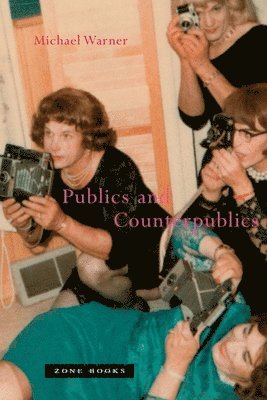
Publics and Counterpublics revolves around a central question: What is a public? The idea of a public is a cultural form, a kind of practical fiction, present in the modern world in a way that is very different from other or earlier societies. Like the idea of rights, or nations, or markets, it can now seem universal. But it has not always been so. Publics exist only by virtue of their imagining. They are a kind of fiction that has taken on life, and very potent life at that.Publics have some regular properties as a form, with powerful implications for the way our social world takes shape; but much of modern life involves struggles over the nature of publics and their interrelation. There are ambiguities, even contradictions in the idea of a public. As it is extended to new contexts and media, new polities and rhetorics, its meaning can be seen to change, in ways that we have scarcely begun to appreciate.By combining historical analysis, theoretical reflection, and extended case studies, Publics and Counterpublics shows how the idea of a public works as a formal device in modern culture and traces its implications for contemporary life. Michael Warner offers a revisionist account at the junction of two intellectual traditions with which he has been associated: public-sphere theory and queer theory. To public-sphere theory, this book brings a new emphasis on cultural forms, and a new focus on the dynamics of counterpublics. To queer theory, it brings a new way of seeing how queer culture (among other examples) is shaped by the counterpublic environment.
343 kr
Skickas inom 5-8 vardagar
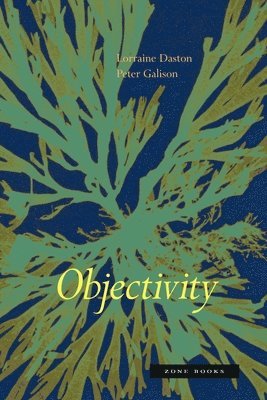
Objectivity has a history, and it is full of surprises. In Objectivity, Lorraine Daston and Peter Galison chart the emergence of objectivity in the mid-nineteenth-century sciences — and show how the concept differs from alternatives, truth-to-nature and trained judgment. This is a story of lofty epistemic ideals fused with workaday practices in the making of scientific images.From the eighteenth through the early twenty-first centuries, the images that reveal the deepest commitments of the empirical sciences — from anatomy to crystallography — are those featured in scientific atlases: the compendia that teach practitioners of a discipline what is worth looking at and how to look at it. Atlas images define the working objects of the sciences of the eye: snowflakes, galaxies, skeletons, even elementary particles.Galison and Daston use atlas images to uncover a hidden history of scientific objectivity and its rivals. Whether an atlas maker idealizes an image to capture the essentials in the name of truth-to-nature or refuses to erase even the most incidental detail in the name of objectivity or highlights patterns in the name of trained judgment is a decision enforced by an ethos as well as by an epistemology.As Daston and Galison argue, atlases shape the subjects as well as the objects of science. To pursue objectivity — or truth-to-nature or trained judgment — is simultaneously to cultivate a distinctive scientific self wherein knowing and knower converge. Moreover, the very point at which they visibly converge is in the very act of seeing not as a separate individual but as a member of a particular scientific community. Embedded in the atlas image, therefore, are the traces of consequential choices about knowledge, persona, and collective sight. Objectivity is a book addressed to any one interested in the elusive and crucial notion of objectivity — and in what it means to peer into the world scientifically.
401 kr
Skickas inom 5-8 vardagar
258 kr
Skickas inom 5-8 vardagar
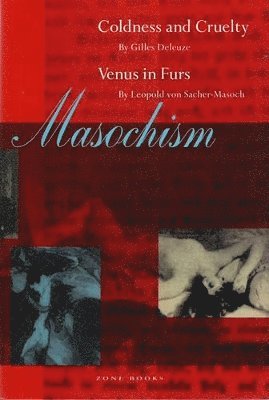
In his stunning essay Coldness and Cruelty Gilles Deleuze provides a rigorous and informed philosophical examination of the work of late nineteenth-century German novelist Leopold von Sacher-Masoch. Deleuze’s essay, certainly the most profound study yet produced on the relations between sadism and masochism, seeks to develop and explain Masoch’s “peculiar way of ‘desexualizing’ love while at the same time sexualizing the entire history of humanity.” He shows that masochism is something far more subtle and complex than the enjoyment of pain, that masochism has nothing to do with sadism: their worlds do not communicate, just as the genius of those who created them — Masoch and Sade — lie stylistically, philosophically, and politically poles apart.Venus in Furs, the most famous of Masoch’s novels, belongs to an unfinished cycle of works that Masoch entitled The Heritage of Cain. The cycle was to treat a series of themes, including love, war, and death. The present work is about love. Although the entire constellation of symbols that has come to characterize the masochistic syndrome can be found here — fetishes, whips, disguises, fur-clad women, contracts, humiliations, punishment, and always the volatile presence of a terrible coldness — these received associations do not eclipse the truly singular and surprising power of Masoch’s eroticism.

246 kr
Skickas inom 5-8 vardagar
317 kr
Skickas inom 5-8 vardagar
381 kr
Skickas inom 5-8 vardagar

422 kr
Skickas inom 5-8 vardagar
319 kr
Skickas inom 5-8 vardagar
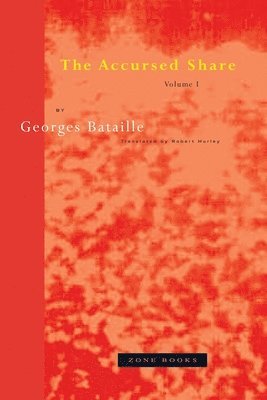
From the acclaimed French philosopher, intellectual, and novelist, a brilliant account of the social and economic costs of civilizationIn this important work, Georges Bataille uses his novel economic theory as the basis for an incisive inquiry into the very nature of civilization. He introduces here his concept of the accursed share, the surplus energy that any system, natural or cultural, must expend; it is this expenditure, according to Bataille, that most clearly defines a society. His examples include sacrifice among the Aztecs, potlatch among the Northwest Coast Indians, military conquest in Islam, and Buddhist monasticism in Tibet.In this way, Bataille proposes a theory of a “general economy” based on excess and exuberance that radically revises conventional economic models of scarcity and utility. A brilliant blend of economics and aesthetics, ethics and anthropology, The Accursed Share provides an excellent introduction to Bataille’s philosophic work. It will be of particular interest not only to readers of his fiction and essays but also to cultural theorists, anthropologists, and economists of all schools.

254 kr
Skickas inom 5-8 vardagar

332 kr
Skickas inom 5-8 vardagar
456 kr
Skickas inom 5-8 vardagar
213 kr
Skickas inom 5-8 vardagar

283 kr
Skickas inom 5-8 vardagar
325 kr
Skickas inom 5-8 vardagar

283 kr
Skickas inom 5-8 vardagar

413 kr
Skickas inom 5-8 vardagar
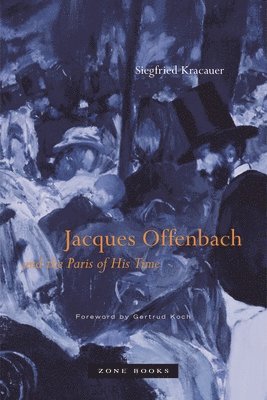
307 kr
Skickas inom 5-8 vardagar
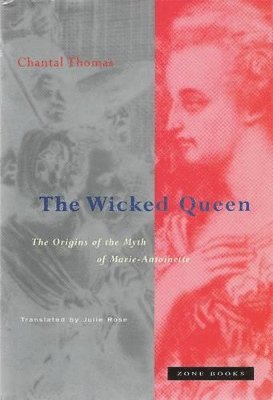
236 kr
Skickas inom 5-8 vardagar
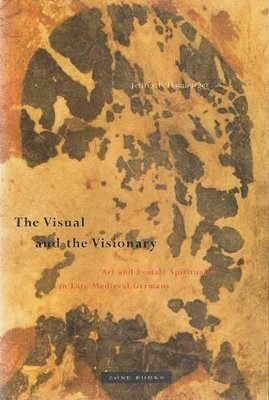
507 kr
Skickas inom 5-8 vardagar
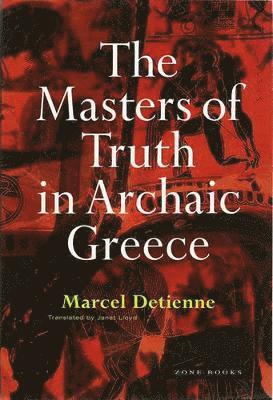
239 kr
Skickas inom 5-8 vardagar
343 kr
Skickas inom 5-8 vardagar
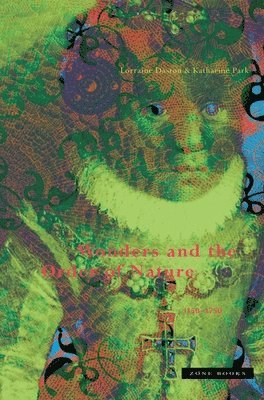
Wonders and the Order of Nature is about the ways in which European naturalists from the High Middle Ages through the Enlightenment used wonder and wonders, the passion and its objects, to envision themselves and the natural world. Monsters, gems that shone in the dark, petrifying springs, celestial apparitions — these were the marvels that adorned romances, puzzled philosophers, lured collectors, and frightened the devout.Drawing on the histories of art, science, philosophy, and literature, Lorraine Daston and Katharine Park explore and explain how wonder and wonders fortified princely power, rewove the texture of scientific experience, and shaped the sensibility of intellectuals. This is a history of the passions of inquiry, of how wonder sometimes inflamed, sometimes dampened curiosity about nature’s best-kept secrets. Refracted through the prism of wonders, the order of nature splinters into a spectrum of orders, a tour of possible worlds.

298 kr
Skickas inom 5-8 vardagar
333 kr
Skickas inom 5-8 vardagar
245 kr
Skickas inom 5-8 vardagar