• Fri frakt över 249 kr
  • •
  • Snabba leveranser
  • •
  • Billiga böcker
Kundservice

Du är på sajten för privatpersoner.

Företag, bibliotek eller offentlig verksamhet?

Du handlar på classic.bokus.com, där alla dina funktioner finns intakta.
Till classic.bokus.com
Bokus logotyp. Gå till startsidan.
  • Erbjudanden
  • Nyheter
  • Student
  • Topplistor
  • Barn & ungdom
  • Bokus Play
  • E-böcker
  • Pocketböcker
  • Spel & pussel

10% rabatt på allt med kod: NYSTART10 →

Sidfot

Mina sidor

    Hjälp

    • Kundservice
    • Vanliga frågor och svar
    • Frakt och leverans
    • Retur vid ångerrätt
    • Reklamera vara
    • Betalning
    • Köpvillkor
    • Allmänna villkor
    • Information om webbplatsens tillgänglighet

    Om Bokus

    • Om oss
    • Pressrum
    • För studenter
    • För företag
    • För bibliotek och offentlig verksamhet
    • För leverantörer
    • Hållbarhet

    Populärt

    • Aktuella erbjudanden
    • Presentkort
    • Studentlitteratur
    • Nya böcker
    • Topplistor
    • Signerade böcker
    • Engelska böcker

    Inspiration

    • Boktips
    • BookTok
    • Populära bokserier
    • Barnbokskaraktärer
    • Populära författare
    Logotyp för Bokus
    Följ oss på Facebook (extern länk)Följ oss på Instagram (extern länk)Följ oss på YouTube (extern länk)Följ oss på TikTok (extern länk)
    bokus @ CookiesAnpassa cookiesIntegritetspolicyKöpvillkor
    Till Citymail hemsida (extern länk)Till Budbee hemsida (extern länk)Till Postnord hemsida (extern länk)Till Schenker hemsida (extern länk)Till Early Bird hemsida (extern länk)Till Walleys hemsida (extern länk)
    1. Samhälle och politik
    2. Samhälle och kultur
    3. Kultur och medier
    4. Kulturvetenskap

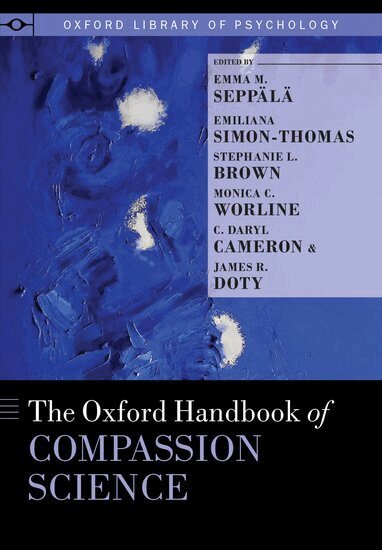
    The Oxford Handbook of Compassion Science

    AvSeppala,Emma M. Seppälä

    Inbunden, Engelska, 2017

    Del i serien Oxford Library of Psychology

    2 184 kr

    Beställningsvara. Skickas inom 5-8 vardagar. Fri frakt över 249 kr.

    Beskrivning

    How do we define compassion? Is it an emotional state, a motivation, a dispositional trait, or a cultivated attitude? How does it compare to altruism and empathy? Chapters in this Handbook present critical scientific evidence about compassion in numerous conceptions. All of these approaches to thinking about compassion are valid and contribute importantly to understanding how we respond to others who are suffering. Covering multiple levels of our lives and self-concept, from the individual, to the group, to the organization and culture, The Oxford Handbook of Compassion Science gathers evidence and models of compassion that treat the subject of compassion science with careful scientific scrutiny and concern. It explores the motivators of compassion, the effect on physiology, the co-occurrence of wellbeing, and compassion training interventions. Sectioned by thematic approaches, it pulls together basic and clinical research ranging across neurobiological, developmental, evolutionary, social, clinical, and applied areas in psychology such as business and education. In this sense, it comprises one of the first multidisciplinary and systematic approaches to examining compassion from multiple perspectives and frames of reference.With contributions from well-established scholars as well as young rising stars in the field, this Handbook bridges a wide variety of diverse perspectives, research methodologies, and theory, and provides a foundation for this new and rapidly growing field. It should be of great value to the new generation of basic and applied researchers examining compassion, and serve as a catalyst for academic researchers and students to support and develop the modern world.

    Produktinformation

    • Utgivningsdatum:2017-11-16
    • Mått:180 x 257 x 35 mm
    • Vikt:1 139 g
    • Format:Inbunden
    • Språk:Engelska
    • Serie:Oxford Library of Psychology
    • Antal sidor:552
    • Förlag:OUP USA
    • ISBN:9780190464684

    Utforska kategorier

    • Kulturvetenskap inom Samhälle och politik
    • Psykologiska teorier och skolor inom Psykologi och pedagogik
    • Etiska frågor och debatter inom Samhälle och politik

    Mer om författaren

    Emma M. Seppälä, PhD, is Science Director of the Center for Compassion and Altruism Research and Education (CCARE) at Stanford University School of Medicine and Co-Director of the Yale College Emotional Intelligence Project at the Yale Center for Emotional Intelligence. She is the author of The Happiness Track: How to Apply the Science of Happiness to Accelerate Your Success (2016).Emiliana Simon-Thomas, PhD, is the Science Director at UC Berkeley's Greater Good Science Center (GGSC). Among other initiatives, she runs the GGSC Research Fellowship program and co-instructs GG101x: The Science of Happiness.Stephanie L. Brown, PhD, is an Associate Professor in the Department of Psychiatry and Behavioral Sciences at Stony Brook University. She was the lead editor on the edited volume Moving Beyond Self-Interest: Perspectives from Evolutionary Biology, Neuroscience, and the Social Sciences (OUP 2011).Monica C. Worline, PhD, is a research scientist at the Center for Compassion and Altruism Research and Education and Executive Director of CompassionLab. She is also the founder and CEO of EnlivenWork.Daryl Cameron, PhD, is an Assistant Professor in the Department of Psychology and the Rock Ethics Institute at Penn State University.James R. Doty, MD, is the founder and director of the Center for Compassion and Altruism Research and Education. He is a professor in the Department of Neurosurgery at Stanford University School of Medicine and the New York Times bestselling author of Into the Magic Shop: A Neurosurgeon's Quest to Discover the Mysteries of the Brain and the Secrets of the Heart (2016).

    Recensioner i media

    A comprehensive and brilliant collection of essays on the contours of compassion."

    Innehållsförteckning

    • PrefaceJames R. DotyPart One: Introduction Chapter 1: The Landscape of Compassion: Definitions and Scientific ApproachesJennifer L. Goetz and Emiliana Simon-ThomasChapter 2: Compassion in Context: Tracing the Buddhist Roots of Secular, Compassion-Based Contemplative ProgramsBrooke D. LavelleChapter 3: The Empathy-Altruism Hypothesis: What and So What?C. Daniel BatsonChapter 4: Is Global Compassion Achievable?Paul Ekman and Eve EkmanPart Two: Developmental Approaches Chapter 5: Compassion in ChildrenTracy L. Spinrad and Nancy EisenbergChapter 6: Parental Brain: The Crucible of CompassionJames E. Swain and S. Shaun HoChapter 7: Adult Attachment and Compassion: Normative and Individual Difference ComponentsMario Mikulincer and Phillip R. ShaverChapter 8: Compassion-Focused ParentingJames N. KirbyPart Three: Psychophysiological and Biological Approaches Chapter 9: The Compassionate BrainOlga M. Klimecki and Tania SingerChapter 10: Two Factors that Fuel Compassion: The Oxytocin System and the Social Experience of Moral ElevationSarina Rodrigues SaturnChapter 11: The Impact of Compassion Meditation Training on the Brain and Prosocial BehaviorHelen Y. Weng, Brianna Schuyler, and Richard J. DavidsonChapter 12: Cultural neuroscience of compassion and empathyJoan Y. ChiaoChapter 13: Compassionate Neurobiology and HealthStephanie L. Brown and R. Michael BrownChapter 14: The Roots of Compassion: An Evolutionary and Neurobiological PerspectiveC. Sue Carter, Inbal Ben-Ami Bartal, and Eric C. PorgesChapter 15: Vagal pathways: Portals to CompassionStephen W. PorgesPart Four: Compassion Interventions Chapter 16: Empathy Building Interventions: A Review of Existing Work and Suggestions for Future DirectionsErika Weisz and Jamil ZakiChapter 17: Studies of Training Compassion: What Have We Learned, What Remains Unknown?Alea C. Skwara, Brandon G. King, and Clifford D. SaronChapter 18: The Compassion Cultivation Training (CCT) ProgramPhilippe R. Goldin and Hooria JazaieriChapter 19: From Specific to General: The Biological Effects of Cognitively-Based Compassion TrainingJennifer Mascaro, Lobsang Tenzin Negi, and Charles L. RaisonPart Five: Social Psychological and Sociological Approaches Chapter 20: Compassion Collapse: Why We Are Numb to NumbersC. Daryl CameronChapter 21: The Cultural Shaping of CompassionBirgit Koopman-Holm and Jeanne L. TsaiChapter 22: Enhancing compassion: Social psychological perspectivesPaul Condon and David DeStenoChapter 23: Empathy, compassion, and social relationshipsMark H. DavisChapter 24: The Class-Compassion Gap: How Socioeconomic Factors Influence CompassionPaul K. Piff and Jake P. MoskowitzChapter 25: Changes Over Time in Compassion-Related Variables in the United StatesSasha Zarins and Sara KonrathChapter 26: To Help or Not to Help: Goal Commitment and the Goodness of CompassionMichael J. PoulinPart Six: Clinical Approaches Chapter 27: Self-Compassion and Psychological Well-beingKristin Neff and Christopher GermerChapter 28: Compassion Fatigue ResilienceCharles R. Figley and Kathleen Regan FigleyChapter 29: Compassion Fears, Blocks and Resistances: An Evolutionary InvestigationPaul Gilbert and Jennifer MascaroPart Seven: Applied CompassionChapter 30: Organizational Compassion: Manifestations Through OrganizationsKim CameronChapter 31: How Leaders Shape Compassion Processes in OrganizationsMonica C. Worline and Jane E. DuttonChapter 32: Compassion in HealthcareSue Shea and Christos LionisChapter 33: A Call for Compassion and Care in Education: Toward a More Comprehensive ProSocial Framework for the FieldBrooke D. Lavelle, Lisa Flook, and Dara G. GhahremaniChapter 34: Heroism: Social Transformation Through Compassion in ActionPhilip G. Zimbardo, Emma Seppälä, and Zeno FrancoChapter 35: Social Dominance and Leadership: The mediational effect of Compassion Daniel Martin and Yotam HeinebergIndex