• Fri frakt över 249 kr
  • •
  • Snabba leveranser
  • •
  • Billiga böcker
Kundservice

Du är på sajten för privatpersoner.

Företag, bibliotek eller offentlig verksamhet?

Du handlar på classic.bokus.com, där alla dina funktioner finns intakta.
Till classic.bokus.com
Bokus logotyp. Gå till startsidan.
  • Erbjudanden
  • Nyheter
  • Student
  • Topplistor
  • Barn & ungdom
  • Bokus Play
  • E-böcker
  • Pocketböcker
  • Spel & pussel

10% rabatt på allt med kod: NYSTART10 →

Sidfot

Mina sidor

    Hjälp

    • Kundservice
    • Vanliga frågor och svar
    • Frakt och leverans
    • Retur vid ångerrätt
    • Reklamera vara
    • Betalning
    • Köpvillkor
    • Allmänna villkor
    • Information om webbplatsens tillgänglighet

    Om Bokus

    • Om oss
    • Pressrum
    • För studenter
    • För företag
    • För bibliotek och offentlig verksamhet
    • För leverantörer
    • Hållbarhet

    Populärt

    • Aktuella erbjudanden
    • Presentkort
    • Studentlitteratur
    • Nya böcker
    • Topplistor
    • Signerade böcker
    • Engelska böcker

    Inspiration

    • Boktips
    • BookTok
    • Populära bokserier
    • Barnbokskaraktärer
    • Populära författare
    Logotyp för Bokus
    Följ oss på Facebook (extern länk)Följ oss på Instagram (extern länk)Följ oss på YouTube (extern länk)Följ oss på TikTok (extern länk)
    bokus @ CookiesAnpassa cookiesIntegritetspolicyKöpvillkor
    Till Citymail hemsida (extern länk)Till Budbee hemsida (extern länk)Till Postnord hemsida (extern länk)Till Schenker hemsida (extern länk)Till Early Bird hemsida (extern länk)Till Walleys hemsida (extern länk)
    1. Historia och arkeologi
    2. Historia
    3. Historia: särskilda händelser och ämnen
    4. Socialhistoria och kulturhistoria

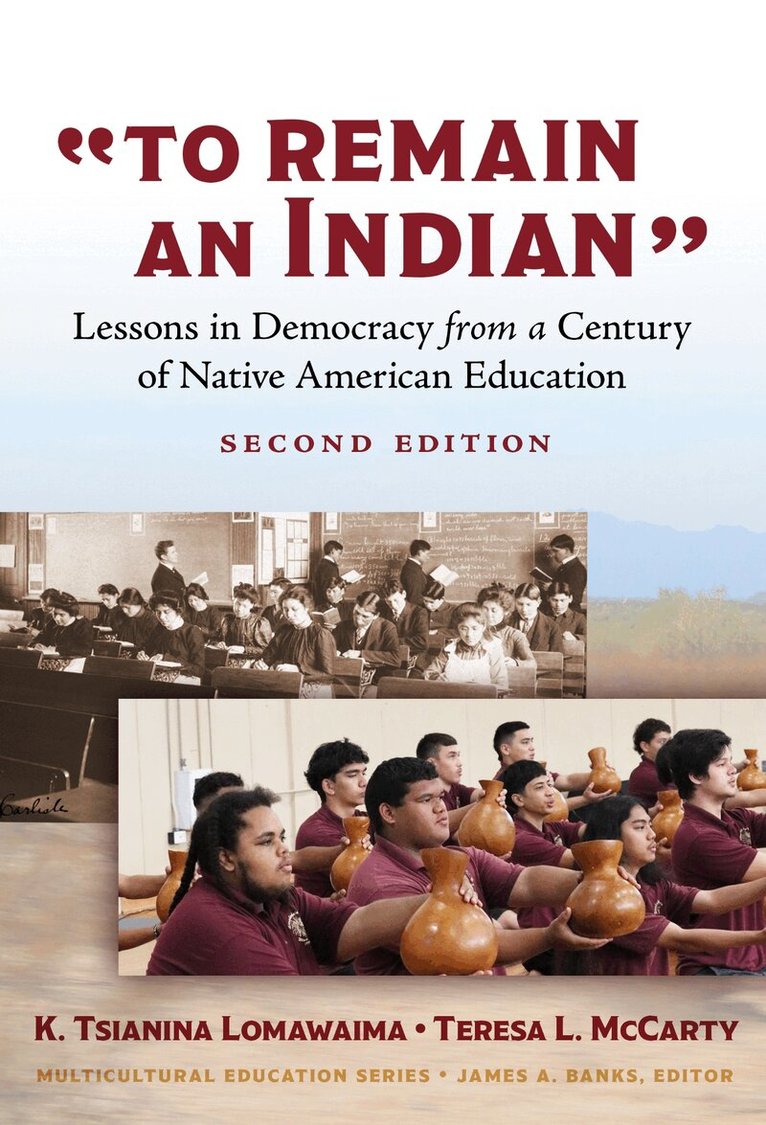
    To Remain an Indian

    Lessons in Democracy from a Century of Native American Education

    AvK. Tsianina Lomawaima,Teresa L. McCarty

    Häftad, Engelska, 2024

    Del i serien Multicultural Education Series

    514 kr

    Beställningsvara. Skickas inom 5-8 vardagar. Fri frakt över 249 kr.

    Fler format och utgåvor

    Inbunden

    1 529 kr

    Beskrivning

    "To Remain an Indian" traces the footprints of Indigenous education in what is now the United States. Native Peoples' educational systems are rooted in ways of knowing and being that have endured for millennia, despite the imposition of colonial schooling. In this second edition, the authors amplify their theoretical framework of settler colonial Safety Zones by adding Indigenous Sovereignty Zones. Safety Zones are designed to break Indigenous relationships and impose relations of domination while Sovereignty Zones foster Indigenous growth, nurture relationships, and support life. This fascinating portrait of Native American education highlights the genealogy of relationships across Peoples, places, and education initiatives in the 20th and 21st centuries. New scholarship re-evaluates early 20th-century "reforms" as less an endorsement of Indigenous self-determination and more a continuation of federal control. The text includes personal narratives from program architects and examines Indigenous language, culture, and education resurgence movements that reckon with the coloniality of U.S. schooling.Book Features:Enriched theoretical framework contrasting settler colonial Safety Zones designed to control with Indigenous Sovereignty Zones designed to nurture Indigenous futures.The voices of activists and educators who are linked together in a genealogy of Indigenous educational self-determination. Developments in Indigenous schooling contextualized within the Piper v. Big Pine and Brown v. Board desegregation cases.Empirically updated case studies of ongoing language, culture, and education resurgence movements.Recent scholarship highlighting Progressive Era continuities in federal powers over Native Peoples and the impact of the 1924 Indian Citizenship Act.Visual imagery, including historic and contemporary photos of people and programs, curricular materials, and schools.

    Produktinformation

    • Utgivningsdatum:2024-12-24
    • Mått:156 x 229 x 14 mm
    • Vikt:404 g
    • Format:Häftad
    • Språk:Engelska
    • Serie:Multicultural Education Series
    • Antal sidor:288
    • Upplaga:2
    • Förlag:Teachers' College Press
    • ISBN:9780807786123

    Utforska kategorier

    • Socialhistoria och kulturhistoria inom Historia och arkeologi
    • Utbildningsstrategier och utbildningspolitik inom Psykologi och pedagogik
    • Sociologi inom Samhälle och politik

    Mer om författaren

    K. Tsianina Lomawaima (Muscogee and German Mennonite descent) is a scholar of Indigenous studies and a retired professor.Teresa L. McCarty is Distinguished Professor and GF Kneller Chair in Education and Anthropology and faculty in American Indian studies at the University of California, Los Angeles.

    Recensioner i media

    “It offers a balm against despair (and) provides an inspiring theoretical frame for those who continue to fight for indigenous control.” - Tribal College Journal (for first edition)

    Innehållsförteckning

    • ContentsSeries Foreword  James A. Banks  xiAcknowledgments  xviiPreface to the Second Edition  xxiiiIndigenous Sovereignty: Lessons for Democracy and Much More  xxivIndigenous Nations and the United States  xxvLessons for Democracy  xxviiGoals for the Second Edition  xxviiiWhat Does “To Remain an Indian” Mean?  xxxWhere Do We Stand?  xxxiOverview of the Book  xxxiv1.  Illuminating Safety Zones and Sovereignty Zones in a History of Native American Education  1Schools as “Civilizing” and Homogenizing Institutions  5Safety Zone Theory: Explaining Policy and Its Development Over Time  8Methodological and Theoretical Approaches  132.  The Strengths of Indigenous Education: Overturning Myths About Native Learners  19Indigenous Education Versus U.S. Schooling  19How and Why Do Stereotypes Endure?  20Native Voices Teach Lessons of Shared Humanity  24Indigenous Knowledge Guides Human Societies  25Carefully Designed Educational Systems  29Language-Rich Contexts for Education  32Learning by Doing  38A Return to Choice and Local Control  413.  Women’s Arts and Children’s Songs: Domesticating Indigeneity, 1900–1928  44Indians as Children: “Insensible Wards”  46Boarding Schools Versus Day Schools  49A Political Economy of School Practices: The “Dignity of Labor”  50Race and the Safety Zone: Designating the Right Place  53Attempts to Domesticate Indigeneity  60An Unprecedented Possibility: “To Remain an Indian”  65Conclusion  684.  Power Struggles Over How “To Remain an Indian,” 1924–1940  69Indian Citizenship Act of June 2, 1924  71Piper v. Big Pine: An Early Ruling on School Desegregation  73The “New” Vocational Education  75Native Teachers in the Federal Schools  82The Revival of Arts and Crafts Instruction  86The Keystone of Control: Reforms Versus Business as Usual  90Conclusion  955.  Control of Culture: Federally Produced Curricular and Bilingual Materials, 1930–1954  96“Indian History and Lore” Courses  96The Bureau’s Indian Life Readers Series  100The Pueblo Life Readers  105The Sioux Life Readers  107The Navajo Life Readers  111The Hopi Life Readers  112Native Translators and Interpreters  115New Developments: Publication of Authentically Diné Stories  1206.  Carving Out Zones of Sovereignty: Bilingual-Bicultural Education and “Who Should Control the Schools”  123Contours of the Safety Zone, 1950–1960  124The Seeds of Transformation  126Rough Rock—A School “The People Made for Themselves”  129Rock Point Community School—Making the Most of a “Window of Opportunity”  135The Peach Springs Hualapai Bilingual-Bicultural Program—“A School of Choice”  139The Hard Labor of Sovereignty Zone Construction  1437.  “For the Benefit of My People”: Mobilizing Sovereignty Zones in Indigenous Language Reclamation  146Mohawk Language Resurgence: “Our People Have Latched Onto the Idea of Becoming Speakers of Their Own Language”  149Hawaiian Language Resurgence: “We Knew It Was Urgent and We Had People Willing to Take the Risk”  155Diné Language Resurgence: “Giving Students Access to the Goodness of Being and Speaking Navajo”  163Myaamia Language Resurgence: “We Must be Conscious Gardeners If We are Going to Have a Community Harvest”  168A Genealogy of Sovereignty Zone Builders  1738.  Landscapes of Sovereignty Zone Opportunity  178Landscapes of Opportunity in K–12 Schools  180Landscapes of Opportunity in Postsecondary Education  189Lessons in Democracy  197Notes  201References  207Index  233About the Authors  250