• Fri frakt över 249 kr
  • •
  • Snabba leveranser
  • •
  • Billiga böcker
Kundservice

Du är på sajten för privatpersoner.

Företag, bibliotek eller offentlig verksamhet?

Du handlar på classic.bokus.com, där alla dina funktioner finns intakta.
Till classic.bokus.com
Bokus logotyp. Gå till startsidan.
  • Erbjudanden
  • Nyheter
  • Student
  • Topplistor
  • Barn & ungdom
  • Bokus Play
  • E-böcker
  • Pocketböcker
  • Spel & pussel

10% studentrabatt med kod TERM26

Sidfot

Mina sidor

    Hjälp

    • Kundservice
    • Vanliga frågor och svar
    • Frakt och leverans
    • Retur vid ångerrätt
    • Reklamera vara
    • Betalning
    • Köpvillkor
    • Allmänna villkor
    • Information om webbplatsens tillgänglighet

    Om Bokus

    • Om oss
    • Pressrum
    • För studenter
    • För företag
    • För bibliotek och offentlig verksamhet
    • För leverantörer
    • Hållbarhet

    Populärt

    • Aktuella erbjudanden
    • Presentkort
    • Studentlitteratur
    • Nya böcker
    • Topplistor
    • Signerade böcker
    • Engelska böcker

    Inspiration

    • Boktips
    • BookTok
    • Populära bokserier
    • Barnbokskaraktärer
    • Populära författare
    Logotyp för Bokus
    Följ oss på Facebook (extern länk)Följ oss på Instagram (extern länk)Följ oss på YouTube (extern länk)Följ oss på TikTok (extern länk)
    bokus @ CookiesAnpassa cookiesIntegritetspolicyKöpvillkor
    Till Citymail hemsida (extern länk)Till Budbee hemsida (extern länk)Till Postnord hemsida (extern länk)Till Schenker hemsida (extern länk)Till Early Bird hemsida (extern länk)Till Walleys hemsida (extern länk)
    1. Ekonomi och Ledarskap
    2. Industrier och branscher
    3. Servicesektorn

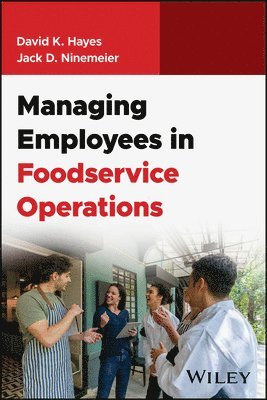
    Managing Employees in Foodservice Operations

    AvDavid K. Hayes,Jack D. Ninemeier

    Häftad, Engelska, 2024

    Del i serien Foodservice Operations: The Essentials

    795 kr

    Beställningsvara. Skickas inom 5-8 vardagar. Fri frakt över 249 kr.

    Beskrivning

    Managing Employees in Foodservice Operations Obtain and retain skilled, professional employees with this accessible guide A foodservice operation can only remain successful if its employees are served as well as its customers. Just as a business with no customers will fail for lack of revenue, one without skilled, professional, satisfied staff will be unable to provide service at the level customers demand. Attracting and retaining qualified staff is a critical challenge for the modern foodservice industry, and one which is only becoming more urgent in today’s market. Managing Employees in Foodservice Operations offers a uniquely foodservice-oriented guide to obtaining, training, and retaining employees in a fast-paced and highly competitive industry. The book provides: Content perfectly aligned with a two-year community college program courses in human resources, supervision, small business administration, or related subjectsDetailed discussion of topics including workplace health and safety, recruitment and retention, and many moreIdeas cultivated during the authors’ decades of combined experience in hospitality, foodservice, leadership, and researchMaterial to support instructors conducting courses, including PowerPoints, chapter-by-chapter exam questions, and case studiesManaging Employees in Foodservice Operations is ideal for students in foodservice-related courses, as well as professional business

    Produktinformation

    • Utgivningsdatum:2024-09-19
    • Mått:150 x 229 x 28 mm
    • Vikt:454 g
    • Format:Häftad
    • Språk:Engelska
    • Serie:Foodservice Operations: The Essentials
    • Antal sidor:352
    • Förlag:John Wiley & Sons Inc
    • ISBN:9781394208418

    Utforska kategorier

    • Servicesektorn inom Ekonomi och Ledarskap
    • Lantbruk, fiske och skogsbruk inom Ekonomi och Ledarskap
    • Reseguider inom Reseguider

    Mer om författaren

    David K. Hayes, PhD, has taught hospitality courses at Purdue University, Texas Tech University, The University of Houston, and Lansing Community College. He has served as the Vice President of Broadcast and Video Training for the American Hotel & Lodging Educational Institute. Jack D. Ninemeier, PhD, is an Emeritus Professor in the School of Hospitality Business at Michigan State University. He has many years’ experience developing and providing training and resource materials for commercial and non-commercial foodservice operations. He has also written several hundred articles for trade journals and created numerous training monographs. Part of Wiley’s Foodservice Operations: The Essentials series.

    Innehållsförteckning

    • Preface ixAcknowledgments xvDedication xvii1 Leading the Foodservice Team 1Foodservice Operators as Leaders 2Serving Guests and Employees 5Leadership Styles 6Mission Statements and Core Values 10Important Leadership Practices 12Act the Way Employees Should Act 12Share Mission Statement and Core Values with Staff Members 13Challenge Existing Processes and Procedures 13Enable Employees with Trust and Delegation 14Show Appreciation for Individual Excellence 14Special Concerns of Foodservice Leaders 15Employee Empowerment 15Employee Team Development 17Benefits of Effective Teamwork 18Characteristics of Effective Team Leaders 19Cross-Functional and Self-directed Work Teams 19Ethics 202 Legal Aspects of Employee Management 26Understanding Employment Law 27Federal Laws Affecting Employee Management 30Pre-1964 Federal Employment Legislation 31Post-1964 Federal Employment Legislation 33State Laws Affecting Employee Management 41Local Laws and Ordinances Affecting Employee Management 433 Workplace Health and Safety 48The Importance of Protecting Team Members 49Legal Aspects of Employee Protection 50Financial Aspects of Employee Protection 50Creating a Healthy Workplace 52Employee Assistance Programs 53Employee Wellness Programs 54Maintaining a Safe Workplace 54The Occupational Safety and Health Administration (OSHA) 55Safety Planning 59Maintaining a Secure Workplace 62Preventing Harassment 62Preventing Workplace Violence 674 Developing Policies and Procedures 73Creating Policies and Procedures 74Policy and Procedure Development 75Key Areas of Policy and Procedure Development 76Steps in Employee Policy and Procedure Development 82Reviewing for Legal Compliance 84Employee Handbooks 88Recordkeeping Requirements 915 Recruiting and Retaining Team Members 98Job Design and Job Creation 99The Impact of Job Design 100Effectively Designing and Creating Jobs 102Recruiting Team Members 109Internal Recruiting 111Traditional External Recruitment Methods 112Internet-based External Recruitment Methods 114Recruitment of Diverse Team Members 115Retaining Team Members 1176 Interviewing and Selecting Team Members 122Choosing Valuable Team Members 123Applications 124Interviews 126Pre-employment Testing 132Background Checks and References 133Negligent Hiring 136Making Job Offers 136Required Documentation for New Team Members 138Form I-9 (Federal Form) 138Form W-4 (Federal Form) 139State and Local Tax Forms 1407 Orienting and Onboarding New Team Members 144Importance of New Team Member Adaptation 145The Adaptation Process 146Steps in the Adaptation Process 147Formal Orientation Programs 149The Goals of Orientation Programs 150The Impact of Orientation Programs on New Team Members 151The Impact of Orientation Programs on Existing Team Members 152The Impact of Orientation Programs on Guests 152Key Elements of Orientation Programs 152Compliance with Government Regulations 153Communication of the Operation’s Mission and Culture 153Communication of All Employee Benefits 154Communication of Critical Policies 154Introduction to the Operation and Other Team Members 158Detailed Explanation of the New Team Member’s Job Duties 158Documentation 158Successful Onboarding of New Team Members 1618 Planning for Employee Training 166The Importance of Training 167Benefits of Training 168Training Obstacles and Myths 169Training Principles 172Characteristics of Effective Trainers 177Steps in Creating Effective Training Programs 179Step 1: Identify Training Needs 180Step 2: Develop Training Objectives 182Step 3: Develop Training Plans 184Step 4: Create Training Lessons 185Step 5: Develop (and Up-date) Training Handbooks 186Technology and User-Generated Content (UGC) Scores 1889 Delivering and Evaluating Training 194On-Job Training 195On-Job Training Steps 198Step 1: Preparation 198Step 2: Presentation 199Step 3: Practice and Demonstration 201Step 4: Coaching 202Other Individual Training Methods 203Group Training 206Preparing for Group Training 207Delivering Group Training 208Special Training Considerations 210Evaluating Training Efforts 212Evaluation Before Training 215Evaluation During Training 216Evaluation After Training 21610 Compensating and Scheduling Staff 222The Importance of Compensation 223The Business Owner’s View of Compensation 224The Foodservice Operator’s View of Compensation 225The Staff Member’s View of Compensation 226Compensation of Team Members 230Legal Aspects of Compensation 231Payment of Salaries 231Payment of Hourly Wages 233Compensation of Tipped Employees 233Benefit Payments 236Scheduling Team Members 241Legal Aspects of Scheduling 242Schedule Development and Distribution 24311 Appraising and Managing Staff 250Performance Appraisal Programs 251The Importance of Regular Performance Appraisal 252The Characteristics of Effective Performance Appraisal 254Benefits of Performance Appraisal Programs 255Popular Performance Appraisal Methods 257Absolute Standards 257Relative Standards 259Targeted Outcomes 260Progressive Discipline Programs 262Documented Oral Warning 264Written Warning 264Suspension 265Dismissal 266Staff Separation 267Voluntary Separation 268Involuntary Separation 268Exit Interviews 27112 Managing Labor- Related Costs 276The Importance of Labor Cost Control 277Factors Affecting Total Labor Costs 278Total Labor Costs Reported on the Income Statement 283Managing and Controlling Total Labor Costs 289Types of Labor Costs 290Controlling Total Labor Costs 290Assessment of Total Labor Costs 294Sales per Labor Hour 296Labor Dollars per Guest Served 297Labor Cost Percentage 298Glossary G-1Index I-1