• Fri frakt över 249 kr
  • •
  • Snabba leveranser
  • •
  • Billiga böcker
Kundservice

Du är på sajten för privatpersoner.

Företag, bibliotek eller offentlig verksamhet?

Du handlar på classic.bokus.com, där alla dina funktioner finns intakta.
Till classic.bokus.com
Bokus logotyp. Gå till startsidan.
  • Erbjudanden
  • Nyheter
  • Student
  • Topplistor
  • Barn & ungdom
  • Bokus Play
  • E-böcker
  • Pocketböcker
  • Spel & pussel

10% studentrabatt med kod TERM26

Sidfot

Mina sidor

    Hjälp

    • Kundservice
    • Vanliga frågor och svar
    • Frakt och leverans
    • Retur vid ångerrätt
    • Reklamera vara
    • Betalning
    • Köpvillkor
    • Allmänna villkor
    • Information om webbplatsens tillgänglighet

    Om Bokus

    • Om oss
    • Pressrum
    • För studenter
    • För företag
    • För bibliotek och offentlig verksamhet
    • För leverantörer
    • Hållbarhet

    Populärt

    • Aktuella erbjudanden
    • Presentkort
    • Studentlitteratur
    • Nya böcker
    • Topplistor
    • Signerade böcker
    • Engelska böcker

    Inspiration

    • Boktips
    • BookTok
    • Populära bokserier
    • Barnbokskaraktärer
    • Populära författare
    Logotyp för Bokus
    Följ oss på Facebook (extern länk)Följ oss på Instagram (extern länk)Följ oss på YouTube (extern länk)Följ oss på TikTok (extern länk)
    bokus @ CookiesAnpassa cookiesIntegritetspolicyKöpvillkor
    Till Citymail hemsida (extern länk)Till Budbee hemsida (extern länk)Till Postnord hemsida (extern länk)Till Schenker hemsida (extern länk)Till Early Bird hemsida (extern länk)Till Walleys hemsida (extern länk)
    1. Ekonomi och Ledarskap
    2. Industrier och branscher
    3. Servicesektorn

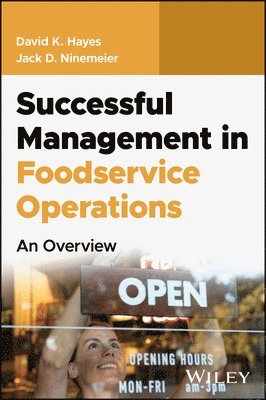
    Successful Management in Foodservice Operations

    An Overview

    AvDavid K. Hayes,Jack D. Ninemeier

    Häftad, Engelska, 2024

    Del i serien Foodservice Operations: The Essentials

    1 099 kr

    Beställningsvara. Skickas inom 5-8 vardagar. Fri frakt över 249 kr.

    Beskrivning

    Comprehensive resource covering key ‘need-to-know’ aspects of how to run a food service operation, with unique perspective from restaurant managers Successful Management in Foodservice Operations is a single volume book addressing the overall operation of a successful food service business, including planning for success, ensuring excellence in production and service, and generating optimal levels of operating profits. The purpose of this book is to teach foodservice operators what they must know, and do, in order to achieve their own definitions of success. The book covers the major changes to food delivery processes and systems forced by the COVID pandemic, changes to the Uniform System of Accounts for Restaurants (USAR), flexibility of employee management due to COVID-enforced changes, and more. Each chapter ends with features to enable reader comprehension and practical application of concepts. These include: ‘A Manager’s 10-Point Effectiveness Checklist’ offering ideas for management actions, and mini-case studies entitled ‘What Would You Do?’ with suggested answers. Successful Management in Foodservice Operations also discusses: Reading a USAR income statement, identifying a target market, and creating an effective proprietary website Managing marketing on third-party operated websites, controlling labor costs, and preparing and monitoring an operating budget Creating a profitable menu, successfully pricing menu items, recruiting, selecting, and training team members, and controlling food and beverage production costs Running food trucks and ‘ghost’ restaurants, where no customers actually visit the ‘restaurant’ in person other than to pick-up pre-ordered foodSuccessful Management in Foodservice Operations is an authoritative, accessible, up-to-date, and easy-to-understand reference for introductory students in programs of study related to hospitality management and food service operations. It also appeals to individuals interested in running their own restaurant or other type of foodservice operation. Part of Wiley’s Foodservice Operations: The Essentials series.

    Produktinformation

    • Utgivningsdatum:2024-06-11
    • Mått:150 x 226 x 18 mm
    • Vikt:408 g
    • Format:Häftad
    • Språk:Engelska
    • Serie:Foodservice Operations: The Essentials
    • Antal sidor:368
    • Förlag:John Wiley & Sons Inc
    • ISBN:9781394208494

    Utforska kategorier

    • Servicesektorn inom Ekonomi och Ledarskap
    • Kokböcker inom Mat och dryck
    • Lantbruk, fiske och skogsbruk inom Ekonomi och Ledarskap

    Mer om författaren

    David K. Hayes, PhD, has taught hospitality courses at Purdue University, Texas Tech University, The University of Houston, and Lansing Community College. He has served as the Vice President of Broadcast and Video Training for the American Hotel & Lodging Educational Institute. Jack D. Ninemeier, PhD, is an Emeritus Professor in the School of Hospitality Business at Michigan State University. He has many years’ experience developing and providing training and resource materials for commercial and non-commercial foodservice operations. He has also written several hundred articles for trade journals and created training monographs.

    Innehållsförteckning

    • Preface ixAcknowledgments xiiiDedication xv1 The Operator’s Role in Successful Foodservice Management 1Keys to Success in Foodservice Operations 3Serving High-quality Products 4Providing High-quality Service 6Generating Optimal Levels of Operating Profits 9Foodservice Operators’ Essential Tasks 11Planning 12Organizing 12Directing and Leading 13Controlling 13Evaluating 13Serving Food Safely 14Serving Nutritious Food 17Nutrition Essentials for Back-of-House Staff 19Nutrition Essentials for Front-of-House Staff 202 Accounting and Financial Management in Foodservice Operations 26Professional Accounting 28Accounting for Successful Financial Management 28The Mechanics of Accounting 30Summary Accounting 31Financial Analysis 33The Uniform System of Accounts for Restaurants (USAR) 34Sales (Revenue) 39Total Cost of Sales 41Total Labor 42Prime Cost 43Other Controllable Expenses 43Noncontrollable Expenses 45Profits (Income) 483 Successful Marketing in Foodservice Operations 56The Importance of Successful Marketing 57The 4 Ps of Marketing 58Product 58Place 60Price 60Promotion 61The Importance of Target Markets 63Why Target Markets Must Be Identified 64How Target Markets Can Be Identified 65How to Identify the Needs of a Target Market 68Marketing Plans 71Creating the Marketing Plan 73Implementing the Marketing Plan 77Evaluating Marketing Plan Results 794 Web-Based Marketing on Proprietary Sites 83Choosing the Primary Domain Name 84Choosing the Website Host 87The Proprietary Website 90Website Design 92Website Content 94Website Traffic Tracking 98Search Engine Optimization 99How Search Engines Work 99Choosing Keywords and Phrases 100Social Media Sites 1025 Web- Based Marketing on Third- Party Operated Sites 107Marketing on Third-Party-Operated Websites 108Partnering with Third-Party Delivery Apps 115Advantages of Third-Party Delivery App Partnerships 115Disadvantages of Third-Party Delivery App Partnerships 117Importance of User-Generated Content (UGC) Sites 120Improving Scores on User-Generated Content (UGC) Review Sites 121Increasing the Number of User Reviews 122Increasing the Scores on User Reviews 124Responding to Negative User-Generated Content (UGC) Site Reviews 126Evaluating Marketing Efforts 128Assessment of Marketing Strategies 129Assessment of Marketing Tactics 1306 Creating and Managing the Menu 136The Importance of the Menu 137The Menu as a Communications Tool 138Types of Menus 138The Menu Development Team 140Legal Aspects of Menu Design 141Creating the Food Menu 143Identifying Menu Categories 143Selecting Individual Menu Items 144Writing Menu Copy 145Key Factors in Successful Food Menu Design 146Beer Menus 148Wine Lists 149Spirits Menus 150On-Site Digital Menus 153On-User Device Digital Menus 154Choosing Takeaway Menu Items 157Packaging Takeaway Menu Items 158Holding Takeaway Menu Items for Pickup or Delivery 1597 Successful Menu Pricing 164Pricing Menu Items 165The Importance of Price 166The Operator’s View of Price 166The Guest’s View of Price 167Factors Affecting Menu Pricing 169Economic Conditions 170Local Competition 170Level of Service 170Type of Guest 171Product Quality 171Unique Alternatives 172Portion Size 172Meal Period 174Location 175Bundling 175Methods of Food and Beverage Pricing 177Cost-based Pricing 177Contribution Margin-based Pricing 180Evaluation of Pricing Efforts 183Menu Modifications 1868 Successful Employee Staffing and Training 191Recruiting Team Members 192Internal Recruiting 197Traditional External Recruitment Methods 198Internet-based External Recruitment Methods 199Choosing Team Members 200Applications 201Interviews 204Pre-employment Testing 205Background Checks and References 206Required Documentation for New Team Members 207Form I-9 (Federal Form) 207Form W-4 (Federal Form) 208State and Local Tax Forms 209Training Team Members 209Benefits of Training 209Characteristics of Successful Trainers 211Steps In Creating Effective Training Programs 212Evaluation of Training Efforts 2169 Managing Food and Beverage Production and Service 223Successful Production Management 224Managing Food Production 225Managing Beverage Production 227Controlling Production Costs 229The Importance of Standardized Recipes 229Calculating Cost of Sales 231Successful Service Management 235The Guest’s View of Quality Service 236The Operator’s View of Quality Service 237Controlling Service Costs 239On-Site Service 240Drive-Thru and Off-Site Delivery Service 240Managing Service Recovery 243On-Site Service Recovery 244Off-Site Service Recovery 24510 Managing the Cost of Labor and Other Foodservice Expense 248The Importance of Labor Cost Controls 249Total Labor Costs 250Factors Affecting Total Labor Costs 251Assessment of Total Labor Costs 254Sales per Labor Hour 255Labor Dollars per Guest Served 257Labor Cost Percentage 258The Importance of Controlling Other Operating Expenses 263Calculating Other Expense Costs 267Other Expense Cost Percentage 268Other Expense Cost per Guest 26811 Revenue Control 272The Importance of Revenue Control 273External Threats to Revenue Security 275Internal Threats to Revenue Security 276Developing a Revenue Security Program 280Objectives of Internal Revenue Control Systems 281Elements of Internal Revenue Control Systems 281Implementing and Monitoring a Revenue Security Program 283Verification of Receivable Revenue 284Verification of Guest Charges 286Verification of Sales Receipts 287Verification of Sales Deposits 287Verification of Accounts Payable (AP) 28912 Planning and Budgeting for Success 294The Importance of Operating Budgets 295Types of Operating Budgets 295Advantages of Operating Budgets 296Creating an Operating Budget 297Revenue Forecasts 299Expense Forecasts 301Monitoring the Operating Budget 303Comparing Planned Results to Actual Results 305Modifying the Operating Budget 316Glossary G-1Index I-1