• Fri frakt över 249 kr
  • •
  • Snabba leveranser
  • •
  • Billiga böcker
Kundservice

Du är på sajten för privatpersoner.

Företag, bibliotek eller offentlig verksamhet?

Du handlar på classic.bokus.com, där alla dina funktioner finns intakta.
Till classic.bokus.com
Bokus logotyp. Gå till startsidan.
  • Erbjudanden
  • Nyheter
  • Student
  • Topplistor
  • Barn & ungdom
  • Bokus Play
  • E-böcker
  • Pocketböcker
  • Spel & pussel

10% rabatt på allt med kod NYSTART10 →

Sidfot

Mina sidor

    Hjälp

    • Kundservice
    • Vanliga frågor och svar
    • Frakt och leverans
    • Retur vid ångerrätt
    • Reklamera vara
    • Betalning
    • Köpvillkor
    • Allmänna villkor
    • Information om webbplatsens tillgänglighet

    Om Bokus

    • Om oss
    • Pressrum
    • För studenter
    • För företag
    • För bibliotek och offentlig verksamhet
    • För leverantörer
    • Hållbarhet

    Populärt

    • Aktuella erbjudanden
    • Presentkort
    • Studentlitteratur
    • Nya böcker
    • Topplistor
    • Signerade böcker
    • Engelska böcker

    Inspiration

    • Boktips
    • BookTok
    • Populära bokserier
    • Barnbokskaraktärer
    • Populära författare
    Logotyp för Bokus
    Följ oss på Facebook (extern länk)Följ oss på Instagram (extern länk)Följ oss på YouTube (extern länk)Följ oss på TikTok (extern länk)
    bokus @ CookiesAnpassa cookiesIntegritetspolicyKöpvillkor
    Till Citymail hemsida (extern länk)Till Budbee hemsida (extern länk)Till Postnord hemsida (extern länk)Till Schenker hemsida (extern länk)Till Early Bird hemsida (extern länk)Till Walleys hemsida (extern länk)
    1. Kultur
    2. Konstböcker
    3. Konstformer
    4. Övrig bildkonst

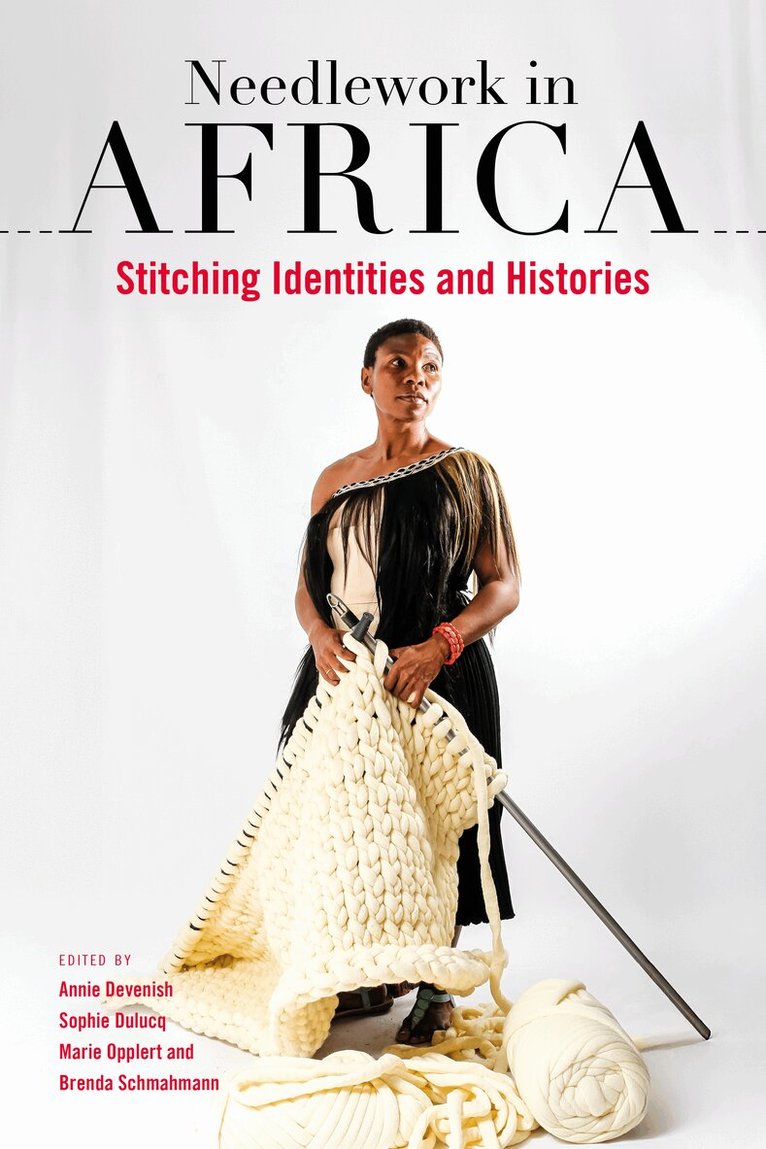
    Needlework in Africa

    Stitching Identities and Histories

    AvAnnie Devenish,Sophie Dulucq

    Häftad, Engelska, 2026

    469 kr

    Kommande

    Beskrivning

    This beautifully crafted book explores needlework; encompassing sewing, embroidery, weaving, quilting, tattooing and more; as a lens for understanding gendered and marginalised histories and identities. Through case studies from across Africa, it highlights the work of fashion designers, weavers, seamstresses, LGBTQI activists and artists. Their work reveals how needlework shapes and challenges identities, gender roles and social structures, offering a platform for selfexpression and historical storytelling. This collection also shows how embroidery, specifically, has enabled economic agency.Far from trivial, needlework serves as an alternative archive, uncovering voices often sidelined. The book examines how practices like beadwork, tapestry and crochet reflect complex ideas of gender, identity and belonging in African contexts. Each chapter illustrates how these crafts empower makers to tell their stories, blending artistry with cultural and historical significance.With striking visuals, this volume invites readers to see needlework anew; not as mere craft, but as a vital tool for documenting and reimagining history. It challenges assumptions about its importance, showing how these everyday acts of creation amplify marginalised perspectives. Needlework in Africa is an engaging read for those interested in how textiles and craftsmanship weave powerful narratives of identity and resilience.

    Produktinformation

    • Utgivningsdatum:2026-10-01
    • Mått:156 x 234 x undefined mm
    • Format:Häftad
    • Språk:Engelska
    • Antal sidor:308
    • Förlag:Wits University Press
    • ISBN:9781997461005

    Utforska kategorier

    • Övrig bildkonst inom Kultur
    • Textil konst inom Kultur
    • Modedesign och textilformgivning inom Kultur

    Mer om författaren

    Annie Devenish (Editor) Senior lecturer in the Department of History at the University of the Witwatersrand, Johannesburg.Sophie Dulucq (Editor) Professor of History at the University of Toulouse and a former director of IFAS-Recherche in Johannesburg (Institut Français d'Afrique du Sud).Marie Opplert (Editor) Research project manager at the French Research Centre of South Africa, IFAS-Research.Brenda Schmahmann (Editor) Brenda Schmahmann is Professor in the Faculty of Art, Design and Architecture at the University of Johannesburg.Jonathan Botes (Editor) PhD candidate at the University of the Witwatersrand, Johannesburg.Linda Chernis (Editor) South African archivist and heritage practitioner who has worked in museums and archives for the past 20 years. She is the archivist at the GALA Queer Archives in Johannesburg.Francisca Gigante Godinho da Silva (Editor) PhD candidate in Art History at Universidade Nova de Lisboa and an independent curator of international solo and group exhibitions and performances across Portugal, Spain, Italy, and Japan.Laurence Douny (Editor) Social anthropologist and Research Associate at Humboldt University, Berlin.Patricia Gérimont (Editor) Independent researcher, author and director of two documentary films, Images en bibliothèques (2014) and Pères blancs, Prêtres noirs (2018).Philippa Hobbs (Editor) Senior research associate with the SARChI Chair in South African Art and Visual Culture at the University of Johannesburg.Rachel Dixon Kabukala (Editor) Associate Curator of African Art at The Nelson-Atkins Museum of Art in Kansas City, Missouri, and a PhD candidate in the Department of Art History and African Studies Program at Indiana University.Nessa Leibhammer (Editor) Independent researcher, writer and curator with a particular interest in material culture approached from an interdisciplinary position.Fatima Leveque (Editor) Master craftswoman specialising in textile design who was born in Morocco and worked between Morocco and France. She founded her company, La Métisse, in 1999.Myriem Naji (Editor) Social anthropologist and Honorary Fellow at University College London specialising in North-African textiles, dress, the body and gender.Shonisani Netshia (Editor) Lecturer in painting in the Department of Visual Art, Faculty Art, Design & Architecture at the University of Johannesburg.Line Relisieux (Editor) PhD candidate at the London School of Economics' Department of Geography and Environment.Christopher Richards (Editor) Director of Women's and Gender Studies and an Associate Professor of African Art History at Brooklyn College, New York. He is the author of Cosmopolitanism and Women's Fashion in Ghana (2022).Elisha Renne (Editor) Professor Emerita at the University of Michigan. She is the author of Cloth that Does Not Die (1995) and co-editor of Textile Ascendancies: Aesthetics, Production, and Trade in Northern Nigeria (2020).Salif Sawadogo (Editor) Research assistant and research affiliate at Humboldt University, Berlin.Bonke Sonjani (Editor) Heritage practitioner and human rights activist at the human rights organisation, Iranti.Natalie Swanepoel (Editor) Natalie Swanepoel is an archaeologist at the University of South Africa, Pretoria.Vanessa Tembane (Editor) South African-born artist with a Mozambican heritage who currently resides and works in Johannesburg.

    Innehållsförteckning

    • Introduction – Annie Devenish, Sophie Dulucq, Marie Opplert and Brenda SchmahmannPart I: Histories of clothChapter 1 Threads of Life: Women and Spinning in West Africa 1000–2000 CE – Natalie SwanepoelChapter 2 The Shape of Cloth: Assembling Social Relations among Marka-Dafing Cloth Makers in Burkina Faso – Laurence Douny, Myriem Naji and Salif Sawadogo Part II: Clothing and gender politicsChapter 3 Which Are Better? The Gender Politics of the Embroidery and Sewing of Robes in Zaria, Nigeria – Elisha RenneChapter 4 Needle Resists in Traditional Dyeing in Mali: A Woman’s Art? – Patricia GérimontChapter 5 ‘A Lion Does Not Need to Roar’: The Enacted Feminisms of Chez Julie’s Fashions – Christopher RichardsChapter 6 Wearing Pride: Queer Activist T-shirts from the 1990s to the 2020s – Jonathan Botes, Annie Devenish, Linda Chernis and Bonke SonjaniPart III: Diasporic narrativesChapter 7 Interwoven Narratives: Migration, Diaspora and Local Weaving Stories in the Works of Zarina Bhimji, Otobong Nkanga, and Michael Armitage – Francisca Gigante Godinho da SilvaChapter 8 Graça and Vanessa Tembane: Capulanas and a Refabrication of History – Vanessa Tembane and Philippa HobbsChapter 9 Contemporary Art and ‘Ouvrages de Dames’: Or How to Fight Social Hierarchies and Gender Inequalities as a Diasporic Artist – Fatima Leveque and Sophie DulucqPart IV: Between private and public histories Chapter 10 Fact within Fable: Historical References in the Tapestries of Allina Khumalo Ndebele – Nessa LeibhammerChapter 11 From Trepidation to Hope: Representations of Covid-19 by the Mapula Embroidery Project in South Africa – Brenda SchmahmannPart V: Gender, identity and agencyChapter 12 ‘Embroideresses of Kasai’: Agency and Identity Among Kuba Women Textile Artists, Past and Present – Rachel Dixon KabukalaChapter 13 Performing Disrespectability: Kuhlonipha Challenged in Sanelisiwe Nkonyane’s Work – Shonisani NetshiaChapter 14 A Collective Self Expression? How Prison Tattoos Challenge Double Standards in Post-Apartheid South Africa – Line RelisieuxContributors Index