Board on Agriculture – författare
1 702 kr
Skickas
1 615 kr
Skickas inom 3-6 vardagar
652 kr
Läs direkt efter köp
How safe is our food supply? Each year the media report what appears to be growing concern related to illness caused by the food consumed by Americans. These food borne illnesses are caused by pathogenic microorganisms, pesticide residues, and food additives. Recent actions taken at the federal, state, and local levels in response to the increase in reported incidences of food borne illnesses point to the need to evaluate the food safety system in the United States. This book assesses the effectiveness of the current food safety system and provides recommendations on changes needed to ensure an effective science-based food safety system. Ensuring Safe Food discusses such important issues as:
What are the primary hazards associated with the food supply? What gaps exist in the current system for ensuring a safe food supply? What effects do trends in food consumption have on food safety? What is the impact of food preparation and handling practices in the home, in food services, or in production operations on the risk of food borne illnesses? What organizational changes in responsibility or oversight could be made to increase the effectiveness of the food safety system in the United States?
Current concerns associated with microbiological, chemical, and physical hazards in the food supply are discussed. The book also considers how changes in technology and food processing might introduce new risks. Recommendations are made on steps for developing a coordinated, unified system for food safety. The book also highlights areas that need additional study. Ensuring Safe Food will be important for policymakers, food trade professionals, food producers, food processors, food researchers, public health professionals, and consumers.
584 kr
Läs direkt efter köp
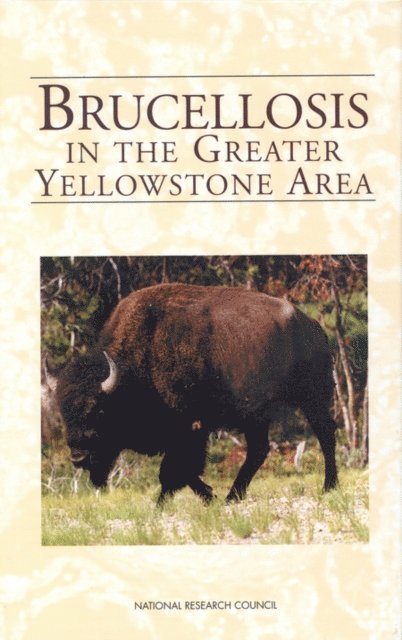
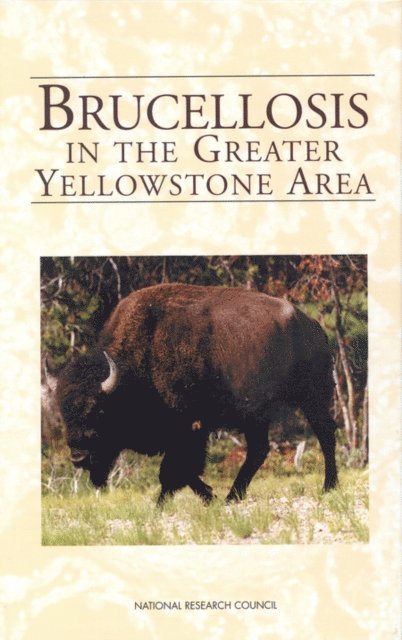
Brucellosis, a bacterial disease, was first noted in the Greater Yellowstone Area in 1917 and has been a chronic presence there since then. This book reviews existing scientific knowledge regarding brucellosis transmission among wildlife, particularly bison, elk, and cattle, in the Greater Yellowstone Area. It examines the mechanisms of transmission, risk of infection, and vaccination strategies. The book also assesses the actual infection rate among bison and elk and describes what is known about the prevalence of Brucella abortus among other wildlife.
468 kr
Läs direkt efter köp
The American feed industry manufactures tons of dietary supplements and additives each year for inclusion in the diets of food-producing animals. Some scientists have suggested that chromium should be a key ingredient in nutritional supplements. Controversy exists, however, over whether chromium sources should be approved as feed additives and whether enough data exist to establish dietary requirements. Chromium use has been suggested to have positive impacts on farm profitability, and many animal health benefits have been attributed to chromium supplementation, including increased longevity; enhanced reproduction; decreased incidence of metabolic disorders, stress effects, and disease; reduced need for antibiotic usage; improved immune response; and lean carcass quality.
This book addresses recent research on chromium in animal diets; metabolic interactions between chromium and other nutrients; assessments of form and species interactions; supplementation effects; bioavailability of chromium forms and sources; and effects of diet composition, stressors, and animal physiological status on chromium utilization. It also provides recommendations on the essentiality of dietary chromium in domestic animal species and guidelines for use of dietary chromium.
649 kr
Läs direkt efter köp
The United States produces 25% of the world''s wood output, and wood supports a major segment of the U.S. industrial base. Trees provide fiber, resins, oils, pulp, food, paper, pharmaceuticals, fuel, many products used in home construction, and numerous other products. The use of wood as a raw material must consider production efficiencies and natural resource conservation as well as efficient, profitable use of solid wood, its residues, and by-products.
To better assess the use of wood as a raw material, the U.S. Department of Agriculture''s Forest Service asked the National Research Council''s Board on Agriculture to bring together experts to review the analytical techniques used to follow the life-cycle of wood production—from tree to product—and assess the environmental impacts. This resulting book provides a base of current knowledge, identifying what data are lacking, where future efforts should be focused, and what is known about the methodologies used to assess environmental impacts. The book also focuses on national and international efforts to develop integrated environmental, economic, and energy accounting methologies.
802 kr
Läs direkt efter köp
The use of drugs in food animal production has resulted in benefits throughout the food industry; however, their use has also raised public health safety concerns.
The Use of Drugs in Food Animals provides an overview of why and how drugs are used in the major food-producing animal industries—poultry, dairy, beef, swine, and aquaculture. The volume discusses the prevalence of human pathogens in foods of animal origin. It also addresses the transfer of resistance in animal microbes to human pathogens and the resulting risk of human disease.
The committee offers analysis and insight into these areas:
Monitoring of drug residues. The book provides a brief overview of how the FDA and USDA monitor drug residues in foods of animal origin and describes quality assurance programs initiated by the poultry, dairy, beef, and swine industries. Antibiotic resistance. The committee reports what is known about this controversial problem and its potential effect on human health.The volume also looks at how drug use may be minimized with new approaches in genetics, nutrition, and animal management.
714 kr
Läs direkt efter köp
Widespread use of broad-spectrum chemical pesticides has revolutionized pest management. But there is growing concern about environmental contamination and human health risks—and continuing frustration over the ability of pests to develop resistance to pesticides. In Ecologically Based Pest Management, an expert committee advocates the sweeping adoption of ecologically based pest management (EBPM) that promotes both agricultural productivity and a balanced ecosystem. This volume offers a vision and strategies for creating a solid, comprehensive knowledge base to support a pest management system that incorporates ecosystem processes supplemented by a continuum of inputs—biological organisms, products, cultivars, and cultural controls. The result will be safe, profitable, and durable pest management strategies.
The book evaluates the feasibility of EBPM and examines how best to move beyond optimal examples into the mainstream of agriculture. The committee stresses the need for information, identifies research priorities in the biological as well as socioeconomic realm, and suggests institutional structures for a multidisciplinary research effort. Ecologically Based Pest Management addresses risk assessment, risk management, and public oversight of EBPM. The volume also overviews the history of pest management—from the use of sulfur compounds in 1000 B.C. to the emergence of transgenic technology. Ecologically Based Pest Management will be vitally important to the agrichemical industry; policymakers, regulators, and scientists in agriculture and forestry; biologists, researchers, and environmental advocates; and interested growers.
568 kr
Läs direkt efter köp
Since their inception in 1862, the U.S. land grant colleges have evolved to become the training ground for the nation''s and the world''s agriculturists. In this book, the committee examines the future of the colleges of agriculture in light of changing national priorities for the agricultural, food, and natural resource system. The effects of federal funding constraints also are examined, as are opportunities for growth presented by developments in science. The committee''s preceding volume, Colleges of Agriculture at the Land Grant Universities: A Profile, is a compilation of the data that helped formulate the specific questions to be addressed. Colleges of Agriculture at the Land Grant Univerisities: Public Service and Public Policy is the deliberative report, rating conclusions and recommendations for institutional innovation and public policy. It addresses these and other questions:
What education mission should colleges of agriculture adopt—and what strategies should they use—in light of significant changes in the agricultural complex? Research in agriculture is expected to respond to consumer demands, environmental concerns, world population growth, and increasing pressure on agricultural lands. Is the century-old structure of land grant university-based research up to the task? What is the role of extension in light of today''s smaller farming communities and larger farming conglomerates?This volume is the culmination of a landmark evaluation of land grant colleges of agriculture, an American institution. This document will be of value to policymakers, administrators, and others involved in agricultural science and education.
615 kr
Läs direkt efter köp
Although few Americans work as farmers these days, agriculture on the whole remains economically important—playing a key role in such contemporary issues as consumer health and nutrition, worker safety and animal welfare, and environmental protection. This publication provides a comprehensive picture of the primary education system for the nation''s agriculture industry: the land grant colleges of agriculture.
Colleges of Agriculture at the Land Grant Universities informs the public debate about the challenges that will shape the future of these colleges and serves as a foundation for a second volume, which will present recommendations for policy and institutional changes in the land grant system.
This book reviews the legislative history of the land grant system from its establishment in 1862 to the 1994 act conferring land grant status on Native American colleges. It describes trends that have shaped agriculture and agricultural education over the decades—the shift of labor from farm to factory, reasons for and effects of increased productivity and specialization, the rise of the corporate farm, and more.
The committee reviews the system''s three-part mission—education, research, and extension service—and through this perspective documents the changing nature of funding and examines the unique structure of the U.S. agricultural research and education system. Demographic data on faculties, students, extension staff, commodity and funding clusters, and geographic specializations profile the system and identify similarities and differences among the colleges of agriculture, trends in funding, and a host of other issues.
The tables in the appendix provide further itemization about general population distribution, student and educator demographics, types of degree programs, and funding allocations. Concise commentary and informative graphics augment the detailed statistical presentations. This book will be important to policymakers, administrators, educators, researchers, and students of agriculture.
503 kr
Läs direkt efter köp
Widespread use of broad-spectrum chemical pesticides has revolutionized pest management. But there is growing concern about environmental contamination and human health risks—and continuing frustration over the ability of pests to develop resistance to pesticides. In Ecologically Based Pest Management, an expert committee advocates the sweeping adoption of ecologically based pest management (EBPM) that promotes both agricultural productivity and a balanced ecosystem. This volume offers a vision and strategies for creating a solid, comprehensive knowledge base to support a pest management system that incorporates ecosystem processes supplemented by a continuum of inputs—biological organisms, products, cultivars, and cultural controls. The result will be safe, profitable, and durable pest management strategies.
The book evaluates the feasibility of EBPM and examines how best to move beyond optimal examples into the mainstream of agriculture. The committee stresses the need for information, identifies research priorities in the biological as well as socioeconomic realm, and suggests institutional structures for a multidisciplinary research effort. Ecologically Based Pest Management addresses risk assessment, risk management, and public oversight of EBPM. The volume also overviews the history of pest management—from the use of sulfur compounds in 1000 B.C. to the emergence of transgenic technology. Ecologically Based Pest Management will be vitally important to the agrichemical industry; policymakers, regulators, and scientists in agriculture and forestry; biologists, researchers, and environmental advocates; and interested growers.
463 kr
Läs direkt efter köp
The United States produces 25% of the world''s wood output, and wood supports a major segment of the U.S. industrial base. Trees provide fiber, resins, oils, pulp, food, paper, pharmaceuticals, fuel, many products used in home construction, and numerous other products. The use of wood as a raw material must consider production efficiencies and natural resource conservation as well as efficient, profitable use of solid wood, its residues, and by-products.
To better assess the use of wood as a raw material, the U.S. Department of Agriculture''s Forest Service asked the National Research Council''s Board on Agriculture to bring together experts to review the analytical techniques used to follow the life-cycle of wood production—from tree to product—and assess the environmental impacts. This resulting book provides a base of current knowledge, identifying what data are lacking, where future efforts should be focused, and what is known about the methodologies used to assess environmental impacts. The book also focuses on national and international efforts to develop integrated environmental, economic, and energy accounting methologies.
326 kr
Läs direkt efter köp
The American feed industry manufactures tons of dietary supplements and additives each year for inclusion in the diets of food-producing animals. Some scientists have suggested that chromium should be a key ingredient in nutritional supplements. Controversy exists, however, over whether chromium sources should be approved as feed additives and whether enough data exist to establish dietary requirements. Chromium use has been suggested to have positive impacts on farm profitability, and many animal health benefits have been attributed to chromium supplementation, including increased longevity; enhanced reproduction; decreased incidence of metabolic disorders, stress effects, and disease; reduced need for antibiotic usage; improved immune response; and lean carcass quality.
This book addresses recent research on chromium in animal diets; metabolic interactions between chromium and other nutrients; assessments of form and species interactions; supplementation effects; bioavailability of chromium forms and sources; and effects of diet composition, stressors, and animal physiological status on chromium utilization. It also provides recommendations on the essentiality of dietary chromium in domestic animal species and guidelines for use of dietary chromium.
187 kr
Läs direkt efter köp
426 kr
Läs direkt efter köp
536 kr
Läs direkt efter köp
The federal role in the management of nonfederal U.S. forests was once relatively simple: to assist in the prevention and control of wildfires. The administrative structure to carry out this role was similarly uncomplicated, with most programs under the aegis of the U.S. Department of Agriculture. In recent years, however, both the management and administrative landscapes have changed dramatically. Responsibility for the federal role in nonfederal forests has been expanded to include a number of cabinet departments and independent agencies, which must address critical issues such as reforestation, wetlands disruption, and biodiversity protection. With two-thirds of all U.S. forests on nonfederal lands, these issues are becoming increasingly more important. Now, a first-of-its-kind examination of the federal role in nonfederal forest management, Forested Landscapes in Perspective presents a comprehensive look at the current landscape and recommends improvements that best serve public and private interests. This timely volume includes an insightful description of the current situation and recent trends, followed by a thorough examination of major policy and program issues affecting nonfederal forests. Among these are emerging environmental concerns such as forest fragmentation and large-scale climate change, as well as issues of economic importance, such as the availability of timber supplies.
644 kr
Läs direkt efter köp
The use of drugs in food animal production has resulted in benefits throughout the food industry; however, their use has also raised public health safety concerns.
The Use of Drugs in Food Animals provides an overview of why and how drugs are used in the major food-producing animal industries—poultry, dairy, beef, swine, and aquaculture. The volume discusses the prevalence of human pathogens in foods of animal origin. It also addresses the transfer of resistance in animal microbes to human pathogens and the resulting risk of human disease.
The committee offers analysis and insight into these areas:
Monitoring of drug residues. The book provides a brief overview of how the FDA and USDA monitor drug residues in foods of animal origin and describes quality assurance programs initiated by the poultry, dairy, beef, and swine industries. Antibiotic resistance. The committee reports what is known about this controversial problem and its potential effect on human health.The volume also looks at how drug use may be minimized with new approaches in genetics, nutrition, and animal management.
601 kr
Läs direkt efter köp
187 kr
Läs direkt efter köp
This new volume is the first independent analysis of an important national data base, the National Resources Inventory. It cites potential uses of the NRI in controlling soil erosion; determining land use; deciding conservation treatment; classifying soils; and protecting groundwater quality. Methods for soil conservation activities, ranging from the ranking of the lands most susceptible to erosion to the measurement and prediction of both wind and water erosion, are recommended throughout the volume.
385 kr
Läs direkt efter köp
This lively book examines recent trends in animal product consumption and diet; reviews industry efforts, policies, and programs aimed at improving the nutritional attributes of animal products; and offers suggestions for further research. In addition, the volume reviews dietary and health recommendations from major health organizations and notes specific target levels for nutrients.
252 kr
Läs direkt efter köp
This book provides an analysis of funding for agricultural research in the United States and presents a proposal to strengthen this system. Its premise is that a judicious but substantial increase in research funding through competitive grants is the best way to sustain and strengthen the U.S. agricultural, food, and environmental system. The proposal calls for an increased public investment in research; a broadened scientific scope and expanded program areas of research; and four categories of competitively awarded grants, with an emphasis on multidisciplinary research.
426 kr
Läs direkt efter köp
Although few Americans work as farmers these days, agriculture on the whole remains economically important—playing a key role in such contemporary issues as consumer health and nutrition, worker safety and animal welfare, and environmental protection. This publication provides a comprehensive picture of the primary education system for the nation''s agriculture industry: the land grant colleges of agriculture.
Colleges of Agriculture at the Land Grant Universities informs the public debate about the challenges that will shape the future of these colleges and serves as a foundation for a second volume, which will present recommendations for policy and institutional changes in the land grant system.
This book reviews the legislative history of the land grant system from its establishment in 1862 to the 1994 act conferring land grant status on Native American colleges. It describes trends that have shaped agriculture and agricultural education over the decades—the shift of labor from farm to factory, reasons for and effects of increased productivity and specialization, the rise of the corporate farm, and more.
The committee reviews the system''s three-part mission—education, research, and extension service—and through this perspective documents the changing nature of funding and examines the unique structure of the U.S. agricultural research and education system. Demographic data on faculties, students, extension staff, commodity and funding clusters, and geographic specializations profile the system and identify similarities and differences among the colleges of agriculture, trends in funding, and a host of other issues.
The tables in the appendix provide further itemization about general population distribution, student and educator demographics, types of degree programs, and funding allocations. Concise commentary and informative graphics augment the detailed statistical presentations. This book will be important to policymakers, administrators, educators, researchers, and students of agriculture.
844 kr
Läs direkt efter köp
349 kr
Läs direkt efter köp
News reports concerning decline of the world''s forests are becoming sadly familiar. Most losses are measured in square kilometers, but a more profound loss cannot be measured. As forests disappear, so do their genetic resources. The genes they possess can no longer aid in their adaptation to a changing environment, nor can they be used to develop improved varieties or products.
This book assesses the status of the world''s tree genetic resources and management efforts. Strategies for meeting future needs and alternatives to harvesting natural forests are presented. The book also outlines methods and technologies for management, evaluates activities now under way, and makes specific recommendations for a global strategy for forest management.
430 kr
Läs direkt efter köp
Brucellosis, a bacterial disease, was first noted in the Greater Yellowstone Area in 1917 and has been a chronic presence there since then. This book reviews existing scientific knowledge regarding brucellosis transmission among wildlife, particularly bison, elk, and cattle, in the Greater Yellowstone Area. It examines the mechanisms of transmission, risk of infection, and vaccination strategies. The book also assesses the actual infection rate among bison and elk and describes what is known about the prevalence of Brucella abortus among other wildlife.
1 493 kr
Läs direkt efter köp
Based on a symposium sponsored by the Board on Agriculture, this comprehensive book explores the problem of pesticide resistance; suggests new approaches to monitor, control, or prevent resistance; and identifies the changes in public policy necessary to protect crops and human health from the ravages of pests. The volume synthesizes the most recent information from a wide range of disciplines, including entomology, genetics, plant pathology, biochemistry, economics, and public policy. It also suggests research avenues that would indicate how to counter future problems. A glossary provides the reader with additional guidance.
479 kr
Läs direkt efter köp
In the past decade, animal scientists have learned that administering recombinantly derived somatotropin (growth hormone) to cows improves milk production and that giving beta-adrenergic agonists to meat animals improves productivity and leanness.
In order for these metabolic modifiers to yield benefits, however, sound management of the animals'' nutrition is necessary. This volume reports on how these substances work in the animals'' metabolism, what effects they might have on nutrient requirements of domestic livestock, and what information should be developed further by investigators.
The book explores the current understanding of the biology, structure, mechanisms of action, and treatment effects of somatotropin, beta-adrenergic agonists, and anabolic steroids.
A companion volume to the Nutrient Requirements of Domestic Animals series, this authoritative volume will be required reading for animal scientists, researchers, veterinarians, livestock farmers, and faculty and students in university animal veterinary science programs.
584 kr
Läs direkt efter köp
Agricultural techniques used to increase production of cattle, sheep, and other major species have actually threatened the future genetic diversity of livestock populations, particularly in the Third World. This volume explores the importance of animal genetic diversity and presents a blueprint for national and international efforts to conserve animal genetic resources. It also evaluates genetic techniques useful in conservation programs and provides specific recommendations for establishing data bases and conducting research.
471 kr
Läs direkt efter köp
Authored by an integrated committee of plant and animal scientists, this review of newer molecular genetic techniques and traditional research methods is presented as a compilation of high-reward opportunities for agricultural research. Directed to the Agricultural Research Service and the agricultural research community at large, the volume discusses biosciences research in genetic engineering, animal science, plant science, and plant diseases and insect pests. An optimal climate for productive research is discussed.
690 kr
Läs direkt efter köp
Rangelands comprise between 40 and 50 percent of all U.S. land and serve the nation both as productive areas for wildlife, recreational use, and livestock grazing and as watersheds. The health and management of rangelands have been matters for scientific inquiry and public debate since the 1880s, when reports of widespread range degradation and livestock losses led to the first attempts to inventory and classify rangelands.
Scientists are now questioning the utility of current methods of rangeland classification and inventory, as well as the data available to determine whether rangelands are being degraded. These experts, who are using the same methods and data, have come to different conclusions.
This book examines the scientific basis of methods used by federal agencies to inventory, classify, and monitor rangelands; it assesses the success of these methods; and it recommends improvements. The book''s findings and recommendations are of interest to the public; scientists; ranchers; and local, state, and federal policymakers.