858 kr
Skickas inom 10-15 vardagar
858 kr
Skickas inom 10-15 vardagar
2 939 kr
Skickas inom 10-15 vardagar
1 004 kr
Läs direkt efter köp
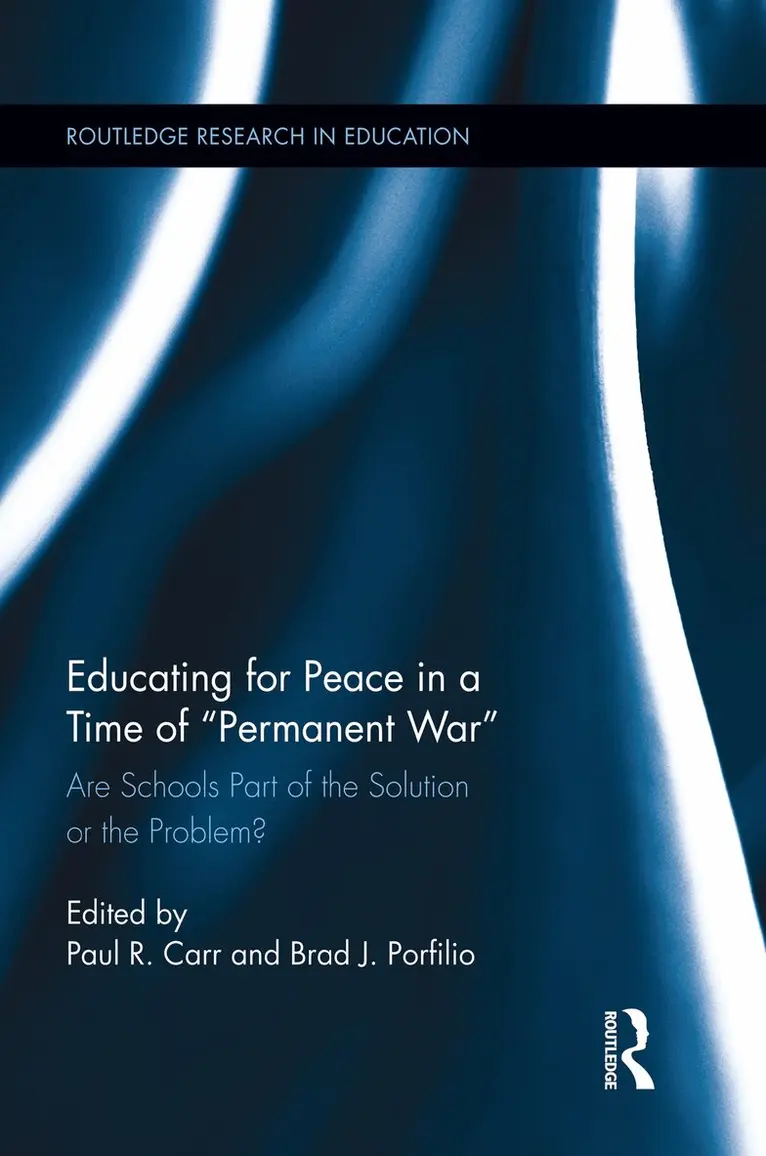
What is the meaning of peace, why should we study it, and how should we achieve it? Although there are an increasing number of manuscripts, curricula and initiatives that grapple with some strand of peace education, there is, nonetheless, a dearth of critical, cross-disciplinary, international projects/books that examine peace education in conjunction with war and conflict. Within this volume, the authors contend that war/military conflict/violence are not a nebulous, far-away, mysterious venture; rather, they argue that we are all, collectively, involved in perpetrating and perpetuating militarization/conflict/violence inside and outside of our own social circles. Therefore, education about and against war can be as liberating as it is necessary. If war equates killing, can our schools avoid engaging in the examination of what war is all about? If education is not about peace, then is it about war? Can a society have education that willfully avoids considering peace as its central objective? Can a democracy exist if pivotal notions of war and peace are not understood, practiced, advocated and ensconced in public debate? These questions, according to Carr and Porfilio and the contributors they have assembled, merit a critical and extensive reflection. This book seeks to provide a range of epistemological, policy, pedagogical, curriculum and institutional analyses aimed at facilitating meaningful engagement toward a more robust and critical examination of the role that schools play (and can play) in framing war, militarization and armed conflict and, significantly, the connection to peace.
1 004 kr
Läs direkt efter köp
What is the meaning of peace, why should we study it, and how should we achieve it? Although there are an increasing number of manuscripts, curricula and initiatives that grapple with some strand of peace education, there is, nonetheless, a dearth of critical, cross-disciplinary, international projects/books that examine peace education in conjunction with war and conflict. Within this volume, the authors contend that war/military conflict/violence are not a nebulous, far-away, mysterious venture; rather, they argue that we are all, collectively, involved in perpetrating and perpetuating militarization/conflict/violence inside and outside of our own social circles. Therefore, education about and against war can be as liberating as it is necessary. If war equates killing, can our schools avoid engaging in the examination of what war is all about? If education is not about peace, then is it about war? Can a society have education that willfully avoids considering peace as its central objective? Can a democracy exist if pivotal notions of war and peace are not understood, practiced, advocated and ensconced in public debate? These questions, according to Carr and Porfilio and the contributors they have assembled, merit a critical and extensive reflection. This book seeks to provide a range of epistemological, policy, pedagogical, curriculum and institutional analyses aimed at facilitating meaningful engagement toward a more robust and critical examination of the role that schools play (and can play) in framing war, militarization and armed conflict and, significantly, the connection to peace.
439 kr
Skickas inom 10-15 vardagar
1 458 kr
Skickas inom 10-15 vardagar
511 kr
Läs direkt efter köp
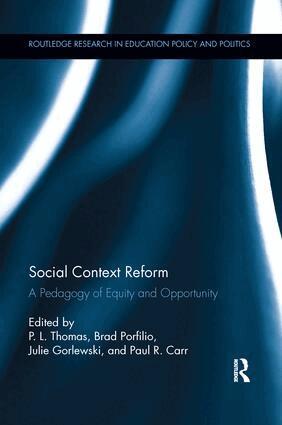
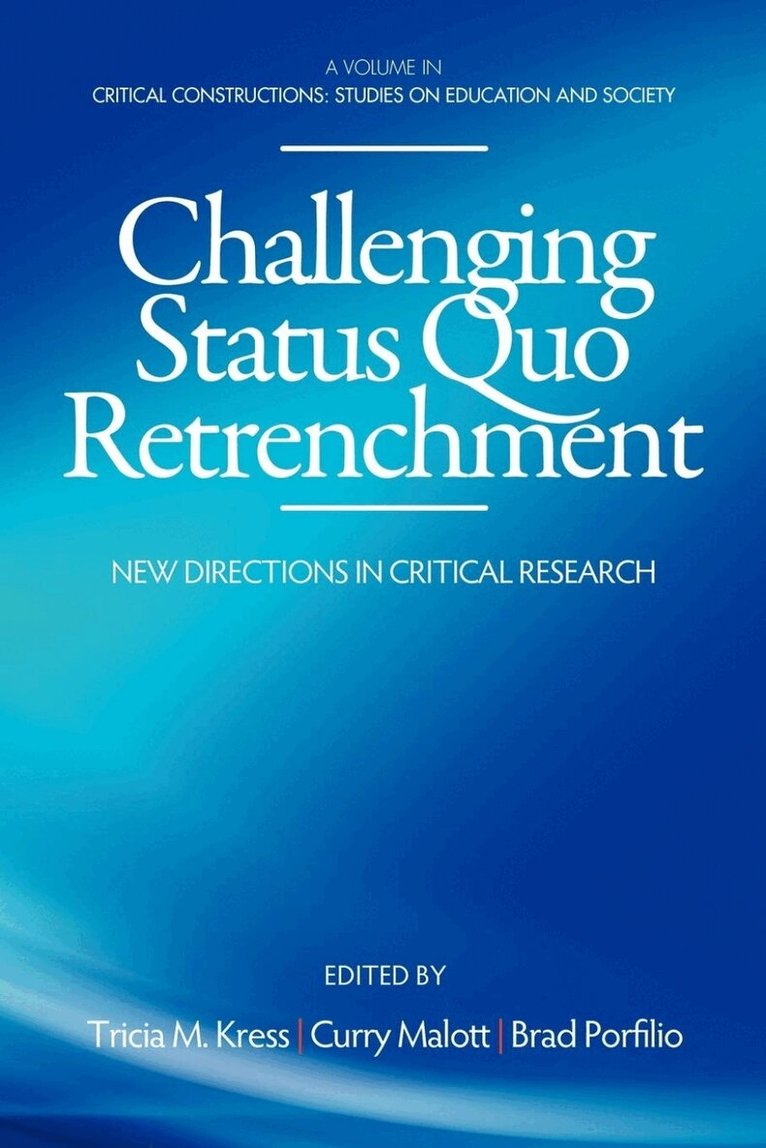
Currently, both the status quo of public education and the "No Excuses" Reform policies are identical. The reform offers a popular and compelling narrative based on the meritocracy and rugged individualism myths that are supposed to define American idealism. This volume will refute this ideology by proposing Social Context Reform, a term coined by Paul Thomas which argues for educational change within a larger plan to reform social inequity—such as access to health care, food, higher employment, better wages and job security.
Since the accountability era in the early 1980s, policy, public discourse, media coverage, and scholarly works have focused primarily on reforming schools themselves. Here, the evidence that school-only reform does not work is combined with a bold argument to expand the discourse and policy surrounding education reform to include how social, school, and classroom reform must work in unison to achieve goals of democracy, equity, and opportunity both in and through public education.
This volume will include a wide variety of essays from leading critical scholars addressing the complex elements of social context reform, all of which address the need to re-conceptualize accountability and to seek equity and opportunity in social and education reform.
511 kr
Läs direkt efter köp
Currently, both the status quo of public education and the "No Excuses" Reform policies are identical. The reform offers a popular and compelling narrative based on the meritocracy and rugged individualism myths that are supposed to define American idealism. This volume will refute this ideology by proposing Social Context Reform, a term coined by Paul Thomas which argues for educational change within a larger plan to reform social inequity—such as access to health care, food, higher employment, better wages and job security.
Since the accountability era in the early 1980s, policy, public discourse, media coverage, and scholarly works have focused primarily on reforming schools themselves. Here, the evidence that school-only reform does not work is combined with a bold argument to expand the discourse and policy surrounding education reform to include how social, school, and classroom reform must work in unison to achieve goals of democracy, equity, and opportunity both in and through public education.
This volume will include a wide variety of essays from leading critical scholars addressing the complex elements of social context reform, all of which address the need to re-conceptualize accountability and to seek equity and opportunity in social and education reform.
457 kr
Skickas inom 5-8 vardagar
1 565 kr
Skickas inom 5-8 vardagar
751 kr
Skickas inom 5-8 vardagar
1 225 kr
Skickas inom 5-8 vardagar
529 kr
Läs direkt efter köp
684 kr
Skickas inom 5-8 vardagar
1 157 kr
Skickas inom 5-8 vardagar
485 kr
Läs direkt efter köp
This volume, offering a critical perspective on studies on education and society is a valuable resource to instructors who teach in the fields of teacher education, social studies, educational leadership, social work, social, cultural and philosophical foundations of education, sociology, political science, and global studies as well as their students.
548 kr
Skickas inom 5-8 vardagar
1 022 kr
Skickas inom 5-8 vardagar
388 kr
Läs direkt efter köp
This year (2012) marks ten years of No Child Left Behind and the U.S. federal government’s official designation of what qualifies as “scientifically based research” (SBR) in education. Combined, these two policies have resulted in a narrowing of education via standardization and high stakes testing (Au, 2007) as well as the curtailment of forms of inquiry that are deemed legitimate for examining education (Wright, 2006). While there has been much debate about the benefits and limitations of the NCLB legislation (e.g., Au, 2010) and SBR (e.g., Eisenhart & Towne, 2003), critical researchers have held strong to their position: The reductionistic narrowing of education curricula and educational research cannot solve the present and historical inequities in society and education (Shields, 2012). Contrarily, reductionism (via standardization and/or methodological prescription) exacerbates the challenges we face because it effectively erases the epistemological, ontological, and axiological diversity necessary for disrupting hegemonic social structures that lie at the root of human suffering (Kincheloe, 2004). Not only has NCLB proven incapable of overcoming inequalities, but there seems to be sufficient evidence to suggest it was never really intended to eliminate poverty and human suffering. That is, it seems NCLB, despite its lofty title and public discourse, is actually designed to advance the agenda of handing public education over to for-profit corporations to manage and privatize thereby intensifying the capitalist class’ war on those who rely on a wage to survive (Malott, 2010). In the present ethos, reductionism upholds and retrenches the status quo (i.e. the basic structures of power), and it puts at risk education and educational research as means of working toward social justice (Biesta, 2007). Because social justice can be interpreted in multiple ways, we might note that we understand critical social justice as oriented toward action and social change. Thus, critical education and research may have potential to contribute to a number of social justice imperatives, such as: redistributing land from the neo-colonizing settler-state to Indigenous peoples, halting exploitative labor relations and hazardous working conditions for wage-earners, and engaging in reparations with formerly enslaved communities.
616 kr
Skickas inom 5-8 vardagar
1 090 kr
Skickas inom 5-8 vardagar
432 kr
Läs direkt efter köp
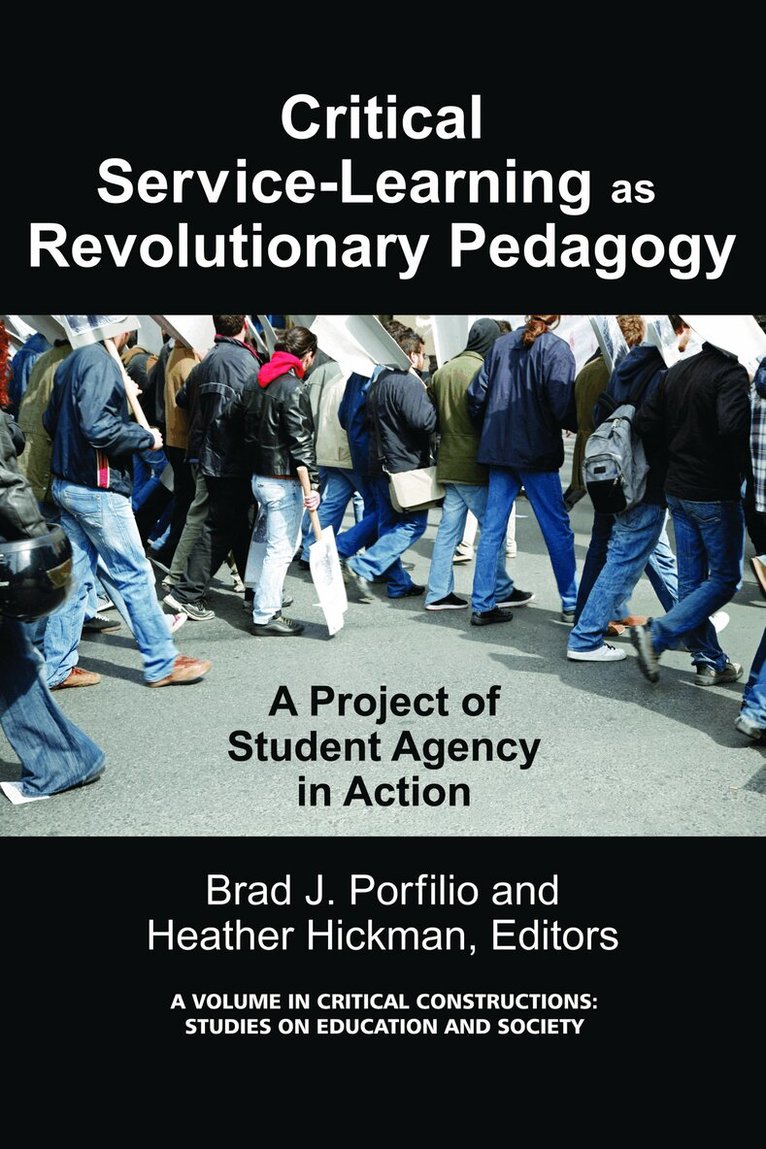
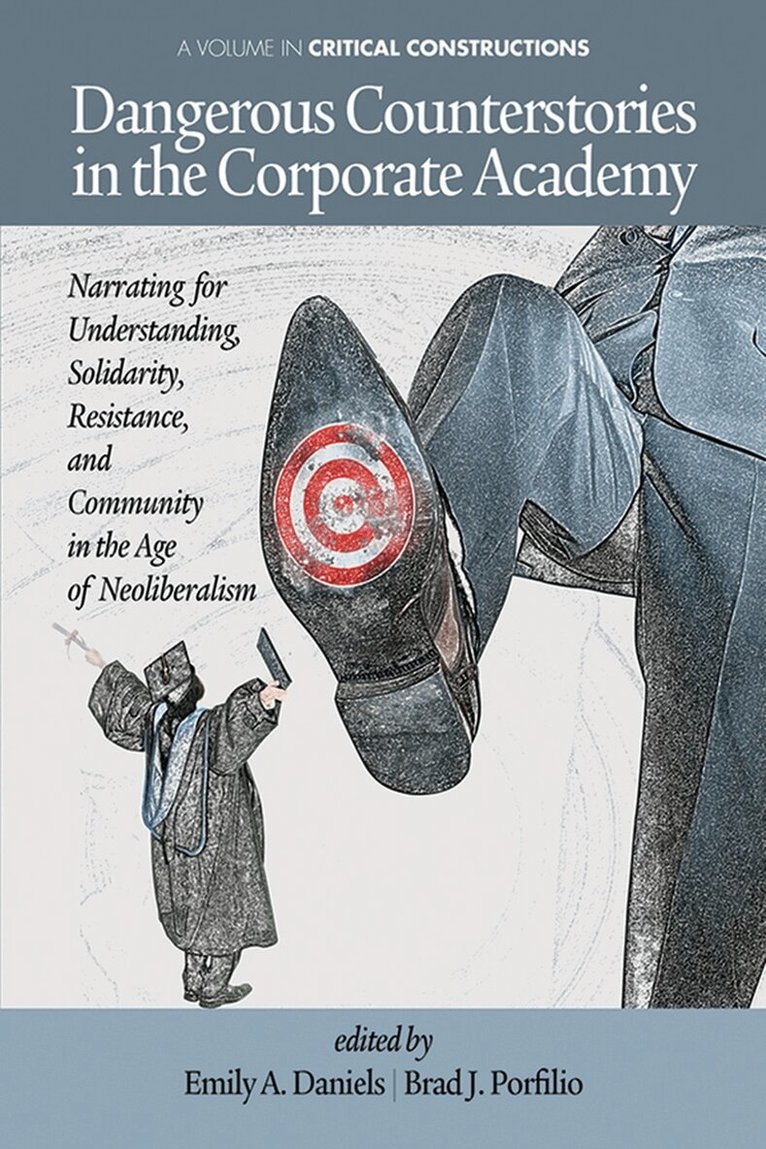
Although the social reality is stark for progressive scholars who engage in scholarly activities or are committed to guiding their students to develop a social-just praxis in the circles of higher education, some scholars have found fissures amid the alienating, often hostile academic world to learn, grow, and create transformative communities. Up to this date, however, their stories have not been captured. Therefore, the purpose of this volume is to highlight alternative narratives generated by transformative scholars who have maintained their oppositional identity to the structures that oppress the vast majority of citizens. By bringing together these narratives, we focus on those who have joined with likeminded colleagues to teach, engage in activism, and conduct emancipatory forms of research, learning to negotiate and survive academic and corporate realities in spite of restrictive climates.
Not only are these stories vital for helping students, academics, and the wider community understand how commercialized forces are impacting the professional lives of critical scholars in the academy, they have the power to help current and future critical pedagogues define (and redefine) themselves in a social world which is continually ''promoting a narrow and intellectually stifling agenda for the role of education and turning the public against the very idea of a critical education'' (McLaren, 2006). As stated by Bruner (1986) stories give ''a map of possible roles and possible worlds in which action, thought, and self-definition are possible (or desirable)'' (p. 2, cited in Collins & Cooper, 2005). These possibilities for definition and redefinition are what we seek to present, explore and understand.
345 kr
Skickas inom 5-8 vardagar
846 kr
Skickas inom 5-8 vardagar
243 kr
Läs direkt efter köp
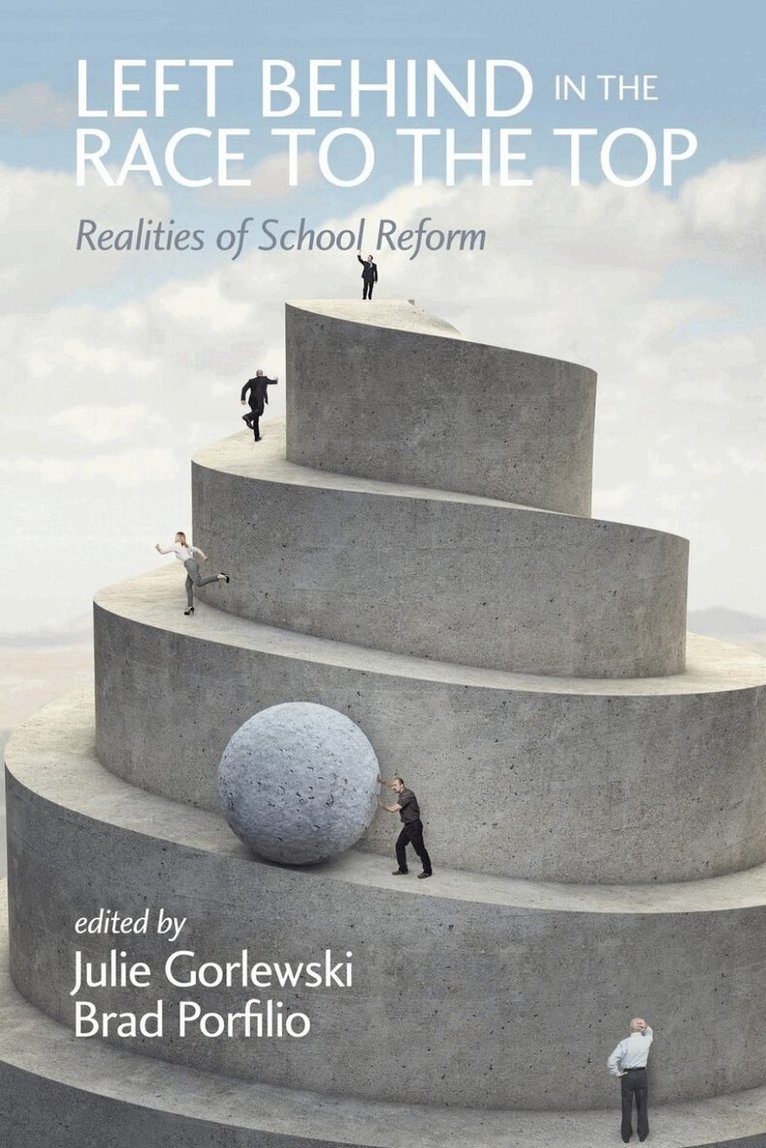
Public education is suffering attacks that are well funded and extraordinarily complex and multifaceted. These conditions make it difficult for educators and citizens to gather the information they need to mount meaningful resistance, especially since mainstream media tends to be uncritically supportive of neoliberal reforms. The Orwellian language of reforms is adopted and promoted through news outlets, politicians, and film; thus, arguments against these reforms must bubble up through social media and alternative outlets. By providing a coherent, comprehensive description of contemporary neoliberal initiatives and analyzing their effects on students, teachers, administrators, and teacher education, this book will allow educators, parents, students, and citizens to strengthen their resolve to save public education and, potentially, work to preserve the promise of democracy.
This book examines and uncovers the effects of standardization and privatization on public education. Contributors consider the how of standardized curriculum and assessment, coupled with philanthropic and corporate pressure, have influenced the experiences of students, parents, and teachers. Divided in sections entitled Testing, Testing; Privatization and Militarization: Redefining Schools; Alienation: Displacing Students and Teachers; and Resistance: Opting Out and Hope for Change, this text offers a combination of information and inspiration for teachers, teacher educators, policymakers, parents and anyone interested in understanding the current state of public education.
684 kr
Skickas inom 5-8 vardagar
1 157 kr
Skickas inom 5-8 vardagar
485 kr
Läs direkt efter köp
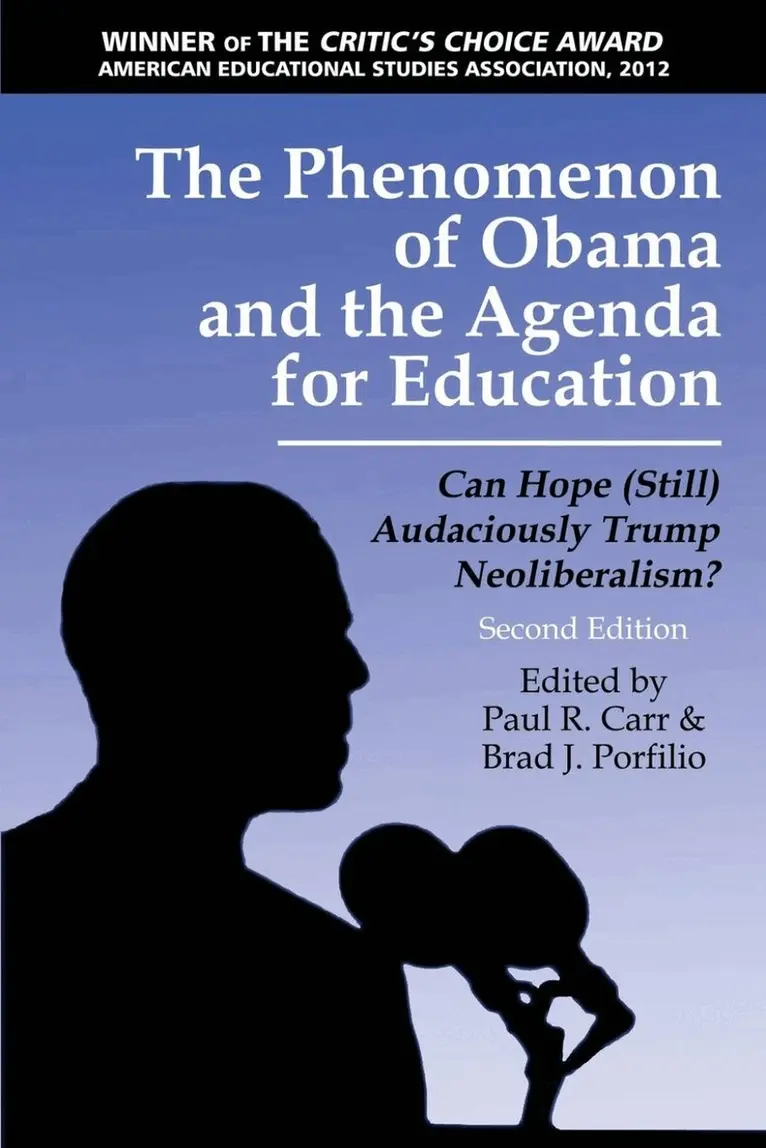
Anyone who is touched by public education – teachers, administrators, teacher-educators, students, parents, politicians, pundits, and citizens – ought to read this book, a revamped and updated second edition. It will speak to educators, policymakers and citizens who are concerned about the future of education and its relation to a robust, participatory democracy. The perspectives offered by a wonderfully diverse collection of contributors provide a glimpse into the complex, multilayered factors that shape, and are shaped by, education institutions today. The analyses presented in this text are critical of how globalization and neoliberalism exert increasing levels of control over the public institutions meant to support the common good. Readers of this book will be well prepared to participate in the dialogue that will influence the future of public education in United States, and beyond – a dialogue that must seek the kind of change that represents hope for all students.
As for the question contained in the title of the book – The Phenomenon of Obama and the Agenda for Education: Can Hope (Still) Audaciously Trump Neoliberalism? (Second Edition) –, Carr and Porfilio develop a framework that integrates the work of the contributors, including Christine Sleeter and Dennis Carlson, who wrote the original forward and afterword respectively, and the updated ones written by Paul Street, Peter Mclaren and Dennis Carlson, which problematize how the Obama administration has presented an extremely constrained, conservative notion of change in and through education. The rhetoric has not been matched by meaningful, tangible, transformative proposals, policies and programs aimed at transformative change, and now fully into a second mandate this second edition of the book is able to more substantively provide a vigorous critique of the contemporary educational and political landscape. There are many reasons for this, and, according to the contributors to this book, it is clear that neoliberalism is a major obstacle to stimulating the hope that so many have been hoping for. Addressing systemic inequities embedded within neoliberalism, Carr and Porfilio argue, is key to achieving the hope so brilliantly presented by Obama during the campaign that brought him to the presidency.
684 kr
Skickas inom 5-8 vardagar
1 157 kr
Skickas inom 5-8 vardagar