
Häftad, Engelska, 2018
89 kr
Skickas inom 5-8 vardagar
89 kr
Skickas inom 5-8 vardagar
149 kr
Skickas inom 5-8 vardagar
267 kr
Skickas inom 5-8 vardagar
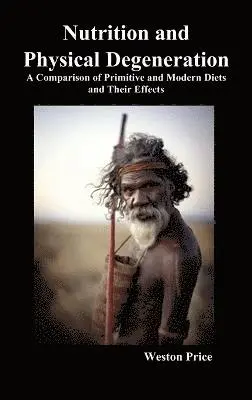
"Dr Price might well be called 'The Charles Darwin of Nutrition'." - The Laryngoscope, 1950.
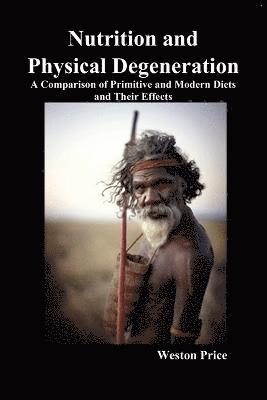
Nutrition and Physical Degeneration, a compendium of ancestral wisdom, is a ground-breaking work in nutrition. Price liberally included illustrations and wrote in non-technical language to make the book as accessible as possible.
Weston Price, a dentist with an interest in nutrition and health, travelled the globe, and observed the dietary habits of several diverse cultures, including the isolated Lötscher in Switzerland, Native Americans, Polynesians, Pygmies, and Australian Aboriginals. He observed that various diseases endemic to Western industrial societies of the 1920s and 1930s were rarely present in the indigenous populations he visited, but that as these groups abandoned their ancestral diet and adopted Western diets, they showed increases in typical Western diseases. He concluded that the modern Western diet, and, in particular, sugar, flour, and processed vegetable oils are responsible for these diseases and that Western methods of commercially preparing and storing foods stripped away vitamins and minerals necessary to prevent disease.
Initially, the medical and scientific communities vigorously rejected this controversial work as lacking scientific precision; nevertheless, research has confirmed his conclusions and modern medical orthodoxy is slowly accepting that lifestyle and diet are a major factor, perhaps the major factor, in the degenerative diseases that have beset the developed world. A plethora of health-promoting diets have sprung from his observations including Paleo, keto, primal blueprint and the ancestral diet movement. Many have credited this book with greatly improving their health.
This edition
Is Weston Price's original edition.Contains 134 original images and additional maps.Is set in an easy to read 11-point font.Weston A. Price (1870 -1948) was a Canadian-born dentist. While practicing in the United States, he conducted research, developed new dental techniques and equipment and published research papers and a textbook. He soon came to believe that nutritional deficiencies are largely responsible for dental caries. To investigate this, he visited the isolated people of Lötschental in Switzerland in 1931. He saw that they had excellent teeth but, more than that, they enjoyed outstanding general health and vigour, and soon he was travelling the globe cataloguing indigenous people's diets and comparing the health of those who had maintained their ancestral diet and those who had starting consuming modern Western foods. He published this now famous work in 1939. Travelling the world, observing and recording, like Darwin, he made a revolutionary discovery that is slowly percolating into medical science.
129 kr
Skickas inom 5-8 vardagar
249 kr
Skickas inom 5-8 vardagar
259 kr
Skickas inom 5-8 vardagar
112 kr
Skickas inom 5-8 vardagar
433 kr
Skickas inom 5-8 vardagar
292 kr
Skickas inom 5-8 vardagar
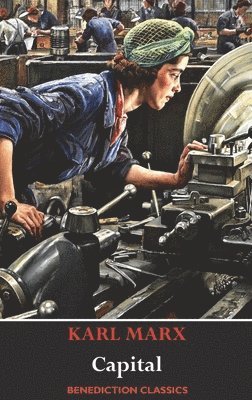
English edition.
Das Kapital is "a groundbreaking work of economic analysis, but also an unfinished literary masterpiece which, with its multi-layered structure, can be read as a Gothic novel, a Victorian melodrama, a Greek tragedy or a Swiftian satire." Francis Wheen, The Guardian.
Though he died in 1883, Karl Marx's Das Kapital, "the Bible of the working class," has been the book that most shaped twentieth-century history. His theories divided much of the world into two blocs, one embracing communism and the other fearing it, and cast a shadow into the twenty-first century.
Although Marx writes as a philosopher and economist presenting an analysis of an economic system, the book is surprisingly readable. It reads like a Gothic novel "whose heroes are enslaved and consumed by the monster they created."
Though many disagree with Marx's conclusions, his analysis has been almost universally respected. Surprisingly, it is Marx, and not Adam Smith who understood the central role of capital. The historian Gareth Stedman Jones wrote:
"What is extraordinary about Das Kapital is that it offers a still-unrivalled picture of the dynamism of capitalism and its transformation of societies on a global scale. Das Kapital has now emerged as one of the great landmarks of nineteenth century thought."
Das Kapital is a revolutionary book; forged during the political and industrial revolutions of the nineteenth century, it became the keystone of many Communist revolutions of the twentieth century. In this comprehensive analysis of capitalist economics and articulation of his theory of class conflict, Karl Marx (1818-1883) relentlessly argues that the accumulation of capital can only be achieved by bourgeoisie exploitation of the working classes. Das Kapital has not only changed history, but also human thought, becoming a foundational text in materialist philosophy, economics and politics.
This volume includes The Communist Manifesto, written with his friend and colleague, Frederick Engels, which not only envisions a wholly equal society in which neither property nor money exist, but suggests that this will be a natural and inevitable consequence of the class struggle that dominates human history.
Karl Heinrich Marx (1818 - 1883) was a German-born philosopher, economist, historian, sociologist. He lived in poverty with his wife and four young children in a two-room flat in Soho, London, while writing Das Kapital. In 1845, he wrote, "Philosophers have hitherto only interpreted the world in various ways; the point is to change it," words that capture his spirit and are inscribed on his grave. Later in 1848, in The Manifesto of the Communist Party, with Engels, he famously wrote: "Let the ruling classes tremble at a Communist revolution. The proletarians have nothing to lose but their chains. They have a world to win. Workers of the world, unite!"
Had he lived to see the Russian and Chinese Revolutions, he would have felt vindicated!
362 kr
Skickas inom 5-8 vardagar
129 kr
Skickas inom 5-8 vardagar
189 kr

179 kr
Skickas inom 5-8 vardagar
133 kr
Skickas inom 5-8 vardagar
157 kr
Skickas inom 5-8 vardagar
418 kr
Skickas inom 5-8 vardagar
373 kr
Skickas inom 5-8 vardagar
504 kr
Skickas inom 5-8 vardagar

173 kr
Skickas inom 5-8 vardagar
217 kr
Skickas inom 5-8 vardagar
292 kr
Skickas inom 5-8 vardagar
217 kr
Skickas inom 5-8 vardagar
354 kr
Skickas inom 5-8 vardagar
317 kr
Skickas inom 5-8 vardagar
485 kr
Skickas inom 5-8 vardagar
462 kr
Skickas inom 3-6 vardagar
362 kr
Skickas inom 5-8 vardagar
993 kr
Skickas inom 5-8 vardagar

1 141 kr
Skickas inom 5-8 vardagar
487 kr
Skickas inom 5-8 vardagar
English edition.
Das Kapital is "a groundbreaking work of economic analysis, but also an unfinished literary masterpiece which, with its multi-layered structure, can be read as a Gothic novel, a Victorian melodrama, a Greek tragedy or a Swiftian satire." Francis Wheen, The Guardian.
Though he died in 1883, Karl Marx's Das Kapital, "the Bible of the working class," has been the book that most shaped twentieth-century history. His theories divided much of the world into two blocs, one embracing communism and the other fearing it, and cast a shadow into the twenty-first century.
Although Marx writes as a philosopher and economist presenting an analysis of an economic system, the book is surprisingly readable. It reads like a Gothic novel "whose heroes are enslaved and consumed by the monster they created."
Though many disagree with Marx's conclusions, his analysis has been almost universally respected. Surprisingly, it is Marx, and not Adam Smith who understood the central role of capital. The historian Gareth Stedman Jones wrote:
"What is extraordinary about Das Kapital is that it offers a still-unrivalled picture of the dynamism of capitalism and its transformation of societies on a global scale. Das Kapital has now emerged as one of the great landmarks of nineteenth century thought."
Das Kapital is a revolutionary book; forged during the political and industrial revolutions of the nineteenth century, it became the keystone of many Communist revolutions of the twentieth century. In this comprehensive analysis of capitalist economics and articulation of his theory of class conflict, Karl Marx (1818-1883) relentlessly argues that the accumulation of capital can only be achieved by bourgeoisie exploitation of the working classes. Das Kapital has not only changed history, but also human thought, becoming a foundational text in materialist philosophy, economics and politics.
This volume includes The Communist Manifesto, written with his friend and colleague, Frederick Engels, which not only envisions a wholly equal society in which neither property nor money exist, but suggests that this will be a natural and inevitable consequence of the class struggle that dominates human history.
Karl Heinrich Marx (1818 - 1883) was a German-born philosopher, economist, historian, sociologist. He lived in poverty with his wife and four young children in a two-room flat in Soho, London, while writing Das Kapital. In 1845, he wrote, "Philosophers have hitherto only interpreted the world in various ways; the point is to change it," words that capture his spirit and are inscribed on his grave. Later in 1848, in The Manifesto of the Communist Party, with Engels, he famously wrote: "Let the ruling classes tremble at a Communist revolution. The proletarians have nothing to lose but their chains. They have a world to win. Workers of the world, unite!"
Had he lived to see the Russian and Chinese Revolutions, he would have felt vindicated!