Contemporary Studies in Idealism – serie
Visar alla böcker i serien Contemporary Studies in Idealism. Handla med fri frakt och snabb leverans.
18 produkter
18 produkter
Inbunden, Engelska, 2022
1 368 kr
Skickas inom 10-15 vardagar
Positive philosophy is the name that Friedrich Schelling (1775–1854) gave to a new type of philosophizing that stands in contrast to the so-called negative philosophy that is predominant in modern rationalism. But what exactly is positive philosophy? Schelling on Truth and Person: The Meaning of Positive Philosophy argues that its meaning lies in a distinctive view of the human person as a seeker of truth. Truth is presented as historically woven in the movement of life with the phenomena of mythology and religion that reveal the human being's falling away from and return to the truth. Nikolaj Zunic demonstrates that this novel understanding of truth accompanies the development and expression of positive philosophy itself. The anthropological dimension of truth relates to self-knowledge, the soul, spirit, and personality, and Schelling’s positive philosophy sheds light on the grand themes of the meaning of life, the ontological question (why is there something rather than nothing?), the enigma of knowledge and reason, and the affirmation of the existence of God. This book will appeal to students and scholars interested in Schelling's late philosophy as well as broader questions in philosophy concerning meaning, truth, human nature, and rationality.
Inbunden, Engelska, 2026
1 300 kr
Skickas inom 10-15 vardagar
In Over-Measure in Kant, Hegel, and Shakespeare: Putting the Principles Into Play, four Shakespeare plays become the experiential-dramatic playground where operations of “principled virtues” and their informing categories are meticulously tested.Jennifer Ann Bates begins with Hegel’s logic of measure and Shakespeare’s Measure for Measure, showing essential measure is indeterminable. She then combines Kant’s Pure Principles of the Understanding with Shakespearean Roman tragedy, exploring principles of measure through over-measure. Bookended by Hegel’s Phenomenology of Spirit, she investigates over-measures of quantity in Antony and Cleopatra, quality in Titus Andronicus, and relation and modality in Julius Caesar.She turns to Kant for epistemic measures that make experience possible, highlighting his warnings against exceeding those limits. Putting Kant’s Principles into play produces “principled virtues,” which are epistemic principles made practical and differ from Kant’s Doctrine of Virtues, not just from Aristotle’s virtues. Read through Shakespeare’s plays, principled virtues are tragic: they miss the mark, and they are executed in both senses. The reason is that their over-measures are not grasped dialectically. The author finds a solution in Hegel’s Phenomenology of Spirit, which she calls his book of over-measures. In it, Hegel reveals the necessity of overmeasures in experience, thus providing the measure for measure.
Häftad, Engelska, 2027
620 kr
Kommande
In Over-Measure in Kant, Hegel, and Shakespeare: Putting the Principles Into Play, four Shakespeare plays become the experiential-dramatic playground where operations of “principled virtues” and their informing categories are meticulously tested.Jennifer Ann Bates begins with Hegel’s logic of measure and Shakespeare’s Measure for Measure, showing essential measure is indeterminable. She then combines Kant’s Pure Principles of the Understanding with Shakespearean Roman tragedy, exploring principles of measure through over-measure. Bookended by Hegel’s Phenomenology of Spirit, she investigates over-measures of quantity in Antony and Cleopatra, quality in Titus Andronicus, and relation and modality in Julius Caesar.She turns to Kant for epistemic measures that make experience possible, highlighting his warnings against exceeding those limits. Putting Kant’s Principles into play produces “principled virtues,” which are epistemic principles made practical and differ from Kant’s Doctrine of Virtues, not just from Aristotle’s virtues. Read through Shakespeare’s plays, principled virtues are tragic: they miss the mark, and they are executed in both senses. The reason is that their over-measures are not grasped dialectically. The author finds a solution in Hegel’s Phenomenology of Spirit, which she calls his book of over-measures. In it, Hegel reveals the necessity of overmeasures in experience, thus providing the measure for measure.
Inbunden, Engelska, 2026
1 164 kr
Skickas inom 10-15 vardagar
Resituating Kant's work within the Western modern historical tradition provides insight into the originality of his views against the background of pervasive intellectual discussions in the 18th century.Catalina González embeds essential aspects of Kant's epistemology, metaphysics, morals, and aesthetics into philosophical debates and discussions that, although central to modernity, have not been sufficiently explored by Kantian scholarship. These contexts include disputes between skeptics and anti-skeptics, debates over deism and natural theology, controversies about animal minds, discussions on the foundations of morality, and aesthetic conversations regarding the sublime.The book's historical perspective is further supplied by a set of methodological reflections drawn from the heterogeneous field of studies of “intellectual history.” It intertwines insights from the Cambridge School of Political Thought or the German Begriffsfgeschichte, and from a wide variety of historians of philosophy, with the analysis of Kant’s texts and Kantian scholarship to provide a novel and rigorous account of the historical formation of specific aspects of Kant's thought.
Inbunden, Engelska, 2026
1 386 kr
Kommande
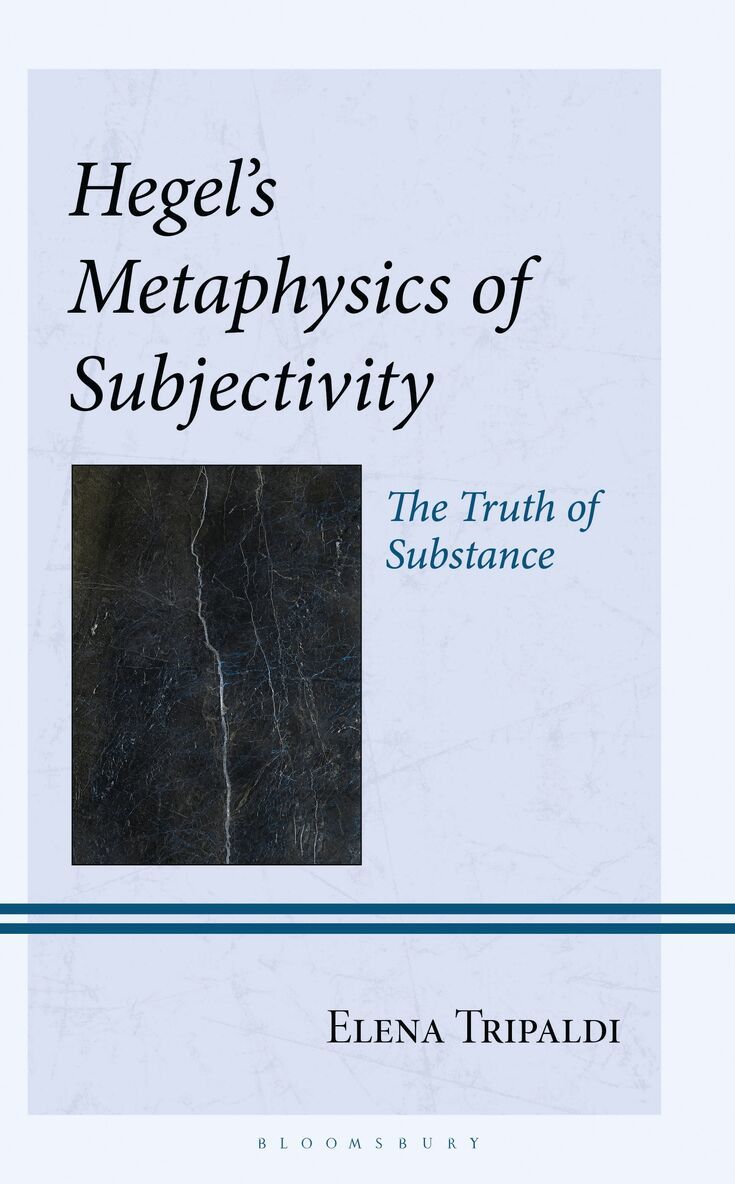
What is the scope and justification of Hegel’s Science of Logic? What is the meaning of Hegel’s identification of Logic and metaphysics? What relation connects Hegel’s Logic to traditional metaphysics and to Kant’s transcendental philosophy?Offering a unique and innovative reading of Hegel’s metaphysics, this book provides in-depth and original textual analysis of key passages of Hegel’s Logic. It combines close reading with conceptual and meta-metaphysical awareness of the different notions of “metaphysics” at play in the contemporary landscape, not only to produce a more faithful understanding of what Hegel exactly meant by metaphysics, but also to assess whether Hegel could give a contribution to contemporary debates in realism and in analytic metaphysics. Suggesting that Hegel’s understanding of essence as “absolute negativity” presents the fundamental structure of the absolute understood as “subjectivity,” Elena Tripaldi argues that Hegel’s Logic does not renounce the ambitions of traditional metaphysics, but rather fully realizes them. Moreover, Tripaldi demonstrates that Hegel’s metaphysics consists of a peculiar form of ontological monism, in which the ontological consistency of particulars is not only preserved but exalted.
Inbunden, Engelska, 2023
1 182 kr
Skickas inom 10-15 vardagar
Kant in Context: The Historical Primacy of the Transcendental Dialectic examines the introduction of Kant’s critical philosophy through the lens of historical contextualization. Daniel Patrick Kelly argues that Kant’s seismic Copernican epistemic turn must be adequately positioned and understood within the German philosophical landscape that developed in Spinoza’s wake. This necessary historical analysis illuminates the development and comparative strength of Kant’s emergent transcendental idealism. However, in order to render the introduction of Kant’s critical system sufficient to this historical task, this book heuristically organizes the contents of the Critique of Pure Reason to highlight the work’s meta-philosophical historical conclusions. In this revised take on Kant’s Critique, Kelly argues that the "Transcendental Aesthetic" and subsequent "Transcendental Dialectic" emerge as foundational in understanding Kant’s Critique as a profound historical-methodological development, as they justify and ground the call for his new and supporting science of cognition, placing the "Transcendental Analytic" as inherently secondary in this heuristic reading of the Critique. The author’s overarching contention is that Kant’s identification of the dialectical limitations of metaphysical reasoning provides a more solid justification for Kant’s transcendental idealism than that of the novel postulates of the "Analytic."
Inbunden, Engelska, 2026
1 398 kr
Kommande
In order to solve the perceptual time-gap problem, this book embraces Idealism and acknowledges the existence of sense-data at the root of perceiving physical objects.Of all the multiple arguments for introducing sense-data as objects of sensory awareness, the Time-Gap Argument remains persistently puzzling. Since the Middle Ages, scholars have wondered about phenomena such as the light we see from stars far away, and the time-gap problem has resisted a definitive solution. Examining most of the arguments advanced since the beginning of the twentieth century both for and against the admission of sense-data, Mykolas J. Drunga argues that the problem cannot be solved by denying that the things we see must exist at the time we see them or by claiming we can see deeply into the past. Instead, we will solve it by realizing that what keeps the universe in existence is an eternal spirit. This radical conclusion, in conversation with the Idealist philosophers Leibniz and Berkeley, requires taking a first indispensable step––acknowledging the existence of sense-data at the root of perceiving physical objects. Drunga vindicates a Direct Realist Subjective Idealism, which alone allows perception of the world to be both possible and understandable. If Subjective Idealism is thus a necessary condition for the possibility and intelligibility of sensory perception, we thereby have a strong proof of Idealism’s truth. Ultimately, to be just is to perceive (to be on the way toward coming to know something) or to be perceived (to be on the way toward becoming known to someone).
Inbunden, Engelska, 2024
1 164 kr
Skickas inom 10-15 vardagar
In a letter from May 10, 1852, to Adam von Doß, Arthur Schopenhauer declared himself to be a Buddhist. From 1825 until his death, he never stopped searching for more information on Buddhism, with his thirst for knowledge of it growing over time. Schopenhauer’s Buddhism: A Historical-Philosophical Inquiry is the first study to do justice to Schopenhauer’s passion for Buddhism, reconstructing the notions of Buddhism he acquired through his readings on Buddhism as well as their influence on his thought. Laura Langone examines what Buddhism meant for Schopenhauer, what kind of Buddhism Schopenhauer had in mind, and how Buddhism shaped his philosophy. This book examines how the assimilation of Buddhist tenets through his Buddhist sources led him to incorporate the Buddhist concept of palingenesis into his philosophical system, which introduced a radically new metaphysical framework. Ultimately, Schopenhauer’s incorporation of Buddhist palingenesis illustrates how Buddhism deeply spurred him to develop new and innovative ideas previously unthinkable in Western philosophy.
Inbunden, Engelska, 2025
1 110 kr
Skickas inom 10-15 vardagar
Kant’s critical philosophy emerged within a philosophical landscape ripe for change, and it provided an unprecedented blueprint for how to scientifically, ethically, and spiritually reconcile subjective experience within the unique realities of modernity. Nevertheless, Kant’s critical system encountered numerous challenges along its path toward influence. Drawing upon key texts from the Golden Age of philosophical scholarship from Kant to Hegel, Kant and the Path of German Idealism illuminates the trajectory of Kant’s critical foundation as it was initially received, developed, and ostensibly usurped. What emerges from Daniel Patrick Kelly’s reading of this philosophical period is the fundamental centrality of Kant’s discursive account of cognition. Kelly contends that the early and steady erosion of the Kantian discursive foundation—which is theoretically central to the strength, integrity, and applicability of the Kantian system—was largely due to persistent Neo-Spinozist developments, misunderstandings of Kant’s radical ideas, and the inability of Kant himself to sufficiently defend and further explicate his epistemology. This book also examines the revisionist developments of the immanent systems of Kant’s German Idealist successors, presenting their systematic efforts as cautionary tales in their coice to reject Kant’s epistemic wisdom.
Häftad, Engelska, 2022
497 kr
Skickas inom 10-15 vardagar
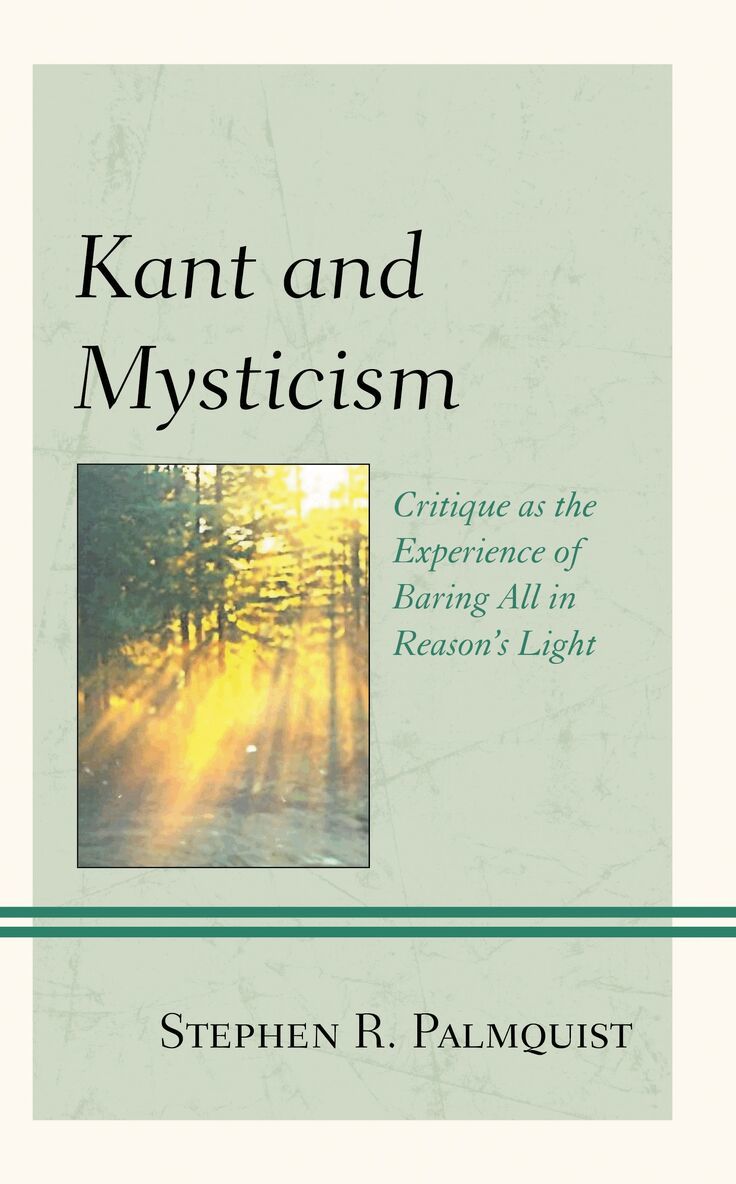
What is happening when someone has a mystical experience, such as “feeling at one with the universe” or “hearing God’s voice?” Does philosophy provide tools for assessing such claims? Which claims can be dismissed as delusions and which ones convey genuine truths that might be universally meaningful? Valuable insights into such pressing questions can be found in the writings of Immanuel Kant, though few philosophical commentators have appreciated the implications beyond his famous “Copernican hypothesis.” In Kant and Mysticism, Stephen R. Palmquist corrects this skewed view of Kant once and for all. Beginning with a detailed analysis of Kant’s 1766 work Dreams of a Spirit-Seer, Palmquist demonstrates that in Dreams Kant first discovers and explains his plan to write a new, “critical” philosophy that will revolutionize metaphysics by laying bare the limits of human reason. Palmquist shows how the same metaphorical relationship—between reason’s dreams (metaphysics) and sensibility’s dreams (mysticism)—permeates Kant’s mature writings. Clarifying how Kant’s final (unfinished) book, Opus Postumum, completes this dual project, Palmquist explains how the “critical mysticism” entailed by Kant’s position has profound implications for contemporary understandings of religious and mystical experience, both by religious individuals and by philosophers seeking to understand such experiences.
Inbunden, Engelska, 2019
1 096 kr
Skickas inom 10-15 vardagar
Hypotyposis is for Kant the a priori presentation of some concept, or, a presentation of an a priori concept. The focused discussion of hypotyposis and associated themes in Hypotyposis in Kant’s Metaphysics of Judgment leads to an exploration of: (1) the idea of a priori presentation--the idea of something being represented in thought which is not found in the world, but found in us, in the structure of our thought----and, correlatively, (2) the idea of our taking something to be presented in the world which symbolizes something found in us. Byron Ashley Clugston’s analysis takes as its central concern the structure of thought, though his exploration of this topic is not conventional to the extent that it does not adhere strictly, and only, to Kant’s own pronouncements. Clugston focuses instead on extending and connecting certain major themes in Kant’s thinking: the idea of an inner and outer to thought; the idea of limit cases and best cases which guide our thinking; the idea of our thinking being constrained or shaped by certain conditions; the idea of there being something which is unconditioned, or hidden from us; and the idea of our being inaccessible to ourselves.
Inbunden, Engelska, 2021
1 339 kr
Skickas inom 10-15 vardagar
Nietzsche and Adorno on Philosophical Praxis, Language, and Reconciliation: Towards an Ethics of Thinking offers a philosophical notion of an “ethics of thinking,” a kind of thinking that is receptive to the non-identical character of the world of human and non-human objects. Paolo A. Bolaños experiments with the ideas of Friedrich Nietzsche and Theodor W. Adorno, who are presented as contemporary proponents of the Frühromantik tradition. Bolaños offers a reconstruction of the respective philosophies of language of Nietzsche and Adorno, as well as a rehearsal of their critique of metaphysics and identity thinking, in order to develop a notion of philosophical praxis that is grounded in the ethical dimension of thinking. Via Nietzsche and Adorno, Bolaños argues that thinking’s performative participation in uncertainty broadens the domain of reason, thereby also broadening our conceptual capacities and our receptivity to new possibilities of thinking. As an ethical praxis, thinking guards itself from the error of solidification, thereby opening philosophy to a reconciliatory, as opposed to domineering, reception of the world.
Inbunden, Engelska, 2022
1 164 kr
Skickas inom 10-15 vardagar
Happiness in Kant’s Practical Philosophy: Morality, Indirect Duties, and Welfare Rights examines the role and normative implications of Kant's understanding of happiness for his moral, political, and legal philosophy. Kant’s underlying assumptions about happiness are rarely overtly discussed or given much detail in his works. By bringing these assumptions to the fore, Alice Pinheiro Walla sheds light on some puzzling claims and on the scattered, sometimes contradictory remarks Kant makes about happiness. The book shows that happiness shapes or indirectly influences Kant’s methodology and many of his conclusions, including his views on the nature of practical rationality, meta-ethics, the role of the state, and of political justification. The challenge with happiness is that it is impossible to know for certain what will make us happy, and what we take to be happiness changes over our lifetime. The book argues that Kant offers a distinctive strategy for dealing with this indeterminacy of happiness, one rooted in understanding our duties to ourselves and others. Happiness in Kant’s Practical Philosophy provides a map of the areas in which the concept of happiness or considerations about the happiness of individuals appear in Kant’s practical works and analyses the way they relate to central themes of his practical theory.
Häftad, Engelska, 2024
443 kr
Skickas inom 10-15 vardagar
Happiness in Kant’s Practical Philosophy: Morality, Indirect Duties, and Welfare Rights examines the role and normative implications of Kant's understanding of happiness for his moral, political, and legal philosophy. Kant’s underlying assumptions about happiness are rarely overtly discussed or given much detail in his works. By bringing these assumptions to the fore, Alice Pinheiro Walla sheds light on some puzzling claims and on the scattered, sometimes contradictory remarks Kant makes about happiness. The book shows that happiness shapes or indirectly influences Kant’s methodology and many of his conclusions, including his views on the nature of practical rationality, meta-ethics, the role of the state, and of political justification. The challenge with happiness is that it is impossible to know for certain what will make us happy, and what we take to be happiness changes over our lifetime. The book argues that Kant offers a distinctive strategy for dealing with this indeterminacy of happiness, one rooted in understanding our duties to ourselves and others. Happiness in Kant’s Practical Philosophy provides a map of the areas in which the concept of happiness or considerations about the happiness of individuals appear in Kant’s practical works and analyses the way they relate to central themes of his practical theory.
Inbunden, Engelska, 2023
1 300 kr
Skickas inom 10-15 vardagar
In Kant’s Struggle for Autonomy: On the Structure of Practical Reason, Raef Zreik presents an original synoptic view of Kant’s practical philosophy, uncovering the relatively hidden architectonics of Kant’s system and critically engaging with its broad implications. He begins by investigating the implicit strategy that guides Kant in making the distinctions that establish the autonomous spheres: happiness, morality, justice, public order-legitimacy. The organizing principle of autonomy sets these spheres apart, assuming there is self-sufficiency for each sphere. Zreik then develops a critique of this strategy, showing its limits, its costs, and its inherent instability. He questions self-sufficiency and argues that autonomy is a matter of ongoing struggle between the forces of separation and unification. Zreik proceeds to suggest that we “read Kant backward,” reading early Kant in light of late Kant. This reading reveals Kant's strategy of both taking things apart and putting them together, focusing on the joints, transitions, and metastructures of the system. The image emanating from this account of Kant’s legal and moral philosophy is of an intimate yet tragic conflict within Kant’s thought—one that leaves us to our own judgment as to where to draw the boundaries between spheres, opening the door for politicizing Kant's practical philosophy.
Inbunden, Engelska, 2021
1 164 kr
Skickas inom 10-15 vardagar
What is philosophy? What can philosophy offer us? What brings us to think philosophically? Arthur Schopenhauer’s writings offer fascinating answers to these questions that have largely been overlooked until now. In Schopenhauer and the Nature of Philosophy, Jonathan Head explores the surprisingly rich and compelling metaphilosophy that underlies Schopenhauer’s work and argues that it offers a vital key to unlocking many of the mysteries that surround his ideas. Schopenhauer understands philosophy as grounded in a deep wonder about life and the world that is universal to the human experience, as well as meeting a fundamental need for both explanation and consolation. This account of the nature of philosophy leads to further important discussions concerning the relationship between philosophy and religion, the value of mysticism, and the possibility of social progress. Through examining Schopenhauer’s account of how and why philosophy is done, this book sheds crucial new light on a thinker whose ideas continue to both provoke and inspire.
Inbunden, Engelska, 2025
1 164 kr
Skickas inom 10-15 vardagar
The German philosopher Karl Jaspers was moved by the possibilities of global understanding throughout his life and penetrated it more deeply than any other thinker before him. Anton Hügli argues that Jaspers' petition to not proclaim a new doctrine,—but to continue thinking along the path taken by the great philosophers of the past,—is itself an expression of his unconditional will to communicate. The limits of communication that Jaspers shows us are not accidental psychological and sociological obstacles to understanding, but limits that we humans encounter as humans: we want to communicate what cannot be communicated. Instead of an understanding based on a truth that can be understood by all, there is a struggle between the powers of faith. How we can communicate with one another and work for peace and unity in the world? This ultimate question requires a twofold clarification: on the one hand, of the nature of the objects that have always been considered inexpressible, the human’s individual existence and God as the ultimate One, and on the other hand, of the faculty in us that allows us to think things that cannot be thought.
Inbunden, Engelska, 2027
1 637 kr
Kommande
Against the received view of Kant’s theory of religion, this collection explores a hermeneutic tradition that interprets Kant's moral vision as affirming a legitimate role for non-moral features of religion. Edited by Meredith Trexler Drees and Stephen R. Palmquist, the book explores a new way of interpreting Kant's theory of religion that has gradually gained traction among Kant scholars over the past half century, to the extent that in the past twenty years it has arguably overtaken the traditional way of reading Kant's theory of religion as the dominant hermeneutic paradigm. Throughout much of the 19th and 20th centuries, scholars read Kant's writings on religion as an attempt to reduce religion to nothing but morality. Following this view, one can dispose of any and all actual religious traditions and beliefs, as long as one lives a morally good life. During the past two decades the alternative new paradigm has come to be called the "affirmative" way of interpreting Kant's theology and philosophy of religion. Although past work on different aspects of the affirmative reading of Kant's theory of religion has been voluminous, only a few edited volumes have focused on affirmative interpretations. The contributors to this volume examine historical and methodological issues in interpreting Kant's theory of religion, investigatedifferent aspects of Kant's theory of rational faithand the role of the highest good in it, interpret specific theories in Kant’s Religion, and discuss the implications of Kant’s theory for religious faith. Together, the contributors to this edited collection provide an overview of the affirmative approach as a tool Kantians can use when explicating Kant’s philosophy of religion, while highlighting the variety of affirmative interpretations.