Interactive Technologies - Böcker
598 kr
Skickas inom 7-10 vardagar
785 kr
Skickas inom 7-10 vardagar
User Interface Design and Evaluation provides an overview of the user-centered design field. It illustrates the benefits of a user-centered approach to the design of software, computer systems, and websites.
The book provides clear and practical discussions of requirements gathering, developing interaction design from user requirements, and user interface evaluation. The book's coverage includes established HCI topics-for example, visibility, affordance, feedback, metaphors, mental models, and the like-combined with practical guidelines for contemporary designs and current trends, which makes for a winning combination. It provides a clear presentation of ideas, illustrations of concepts, using real-world applications. This book will help readers develop all the skills necessary for iterative user-centered design, and provides a firm foundation for user interface design and evaluation on which to build.
It is ideal for seasoned professionals in user interface design and usability engineering (looking for new tools with which to expand their knowledge); new people who enter the HCI field with no prior educational experience; and software developers, web application developers, and information appliance designers who need to know more about interaction design and evaluation.
Co-published by the Open University, UK. Covers the design of graphical user interfaces, web sites, and interfaces for embedded systems. Full color production, with activities, projects, hundreds of illustrations, and industrial applications.Effective Prototyping with Excel
A Practical Handbook for Developers and Designers
522 kr
Skickas inom 7-10 vardagar
Although recognized as a key to the design process, prototyping often falls victim to budget cuts, deadlines, or lack of access to sophisticated tools. This can lead to sloppy and ineffective prototypes or the abandonment of them altogether. Rather than lose this important step, people are turning to Microsoft Excel� to create effective, simple, and inexpensive prototypes. Conveniently, the software is available to nearly everyone, and most are proficient in its basic functionality.
Effective Prototyping with Excel offers how-to guidance on how everyone can use basic Excel skills to create prototypes - ranging from narrative wire frames to hi-fidelity prototypes. A wide array of software design problems and business demands are solved via practical step-by-step examples and illustrations.
Step-by-step guide to prototyping with a simple and affordable tool nearly everyone already has on their desktop Quickly and easily allows web and software designers to explore usability, design alternatives, and test theories prior to starting production Perfect companion to Effective Prototyping for Software Makers - with the same author team and full-color treatment, useful case studies, and hands-on exercises836 kr
Skickas inom 7-10 vardagar
You just know that an improvement of the user interface will reap rewards, but how do you justify the expense and the labor and the time-guarantee a robust ROI!-ahead of time? How do you decide how much of an investment should be funded? And what is the best way to sell usability to others?
In this completely revised and new edition of Cost-Justifying Usability, Randolph G. Bias (University of Texas at Austin, with 25 years' experience as a usability practitioner and manager) and Deborah J. Mayhew (internationally recognized usability consultant and author of two other seminal books including The Usability Engineering Lifecycle) tackle these and many other problems. It has been updated to cover cost-justifying usability for Web sites and intranets, for the complex applications we have today, and for a host of products-offering techniques, examples, and cases that are unavailable elsewhere. No matter what type of product you build, whether or not you are a cost-benefit expert or a born salesperson, this book has the tools that will enable you to cost-justify the appropriate usability investment.
Includes contributions by a host of experts involved in this work, including Aaron Marcus, Janice Rohn, Chauncey Wilson, Nigel Bevan, Dennis Wixon, Clare-Marie Karat, Susan Dray, Charles Mauro, and many others Includes actionable ideas for every phase of the software development process Includes case studies from inside a variety of companies Includes ideas from "the other side of the table," software executives who hold the purse strings, who offer thoughts on which proposals for usability support they've funded, and which ones they've declinedRapid Contextual Design
A How-to Guide to Key Techniques for User-Centered Design
560 kr
Skickas inom 7-10 vardagar
Is it impossible to schedule enough time to include users in your design process? Is it difficult to incorporate elaborate user-centered design techniques into your own standard design practices? Do the resources needed seem overwhelming?
This handbook introduces Rapid CD, a fast-paced, adaptive form of Contextual Design. Rapid CD is a hands-on guide for anyone who needs practical guidance on how to use the Contextual Design process and adapt it to tactical projects with tight timelines and resources.
Rapid Contextual Design provides detailed suggestions on structuring the project and customer interviews, conducting interviews, and running interpretation sessions. The handbook walks you step-by-step through organizing the data so you can see your key issues, along with visioning new solutions, storyboarding to work out the details, and paper prototype interviewing to iterate the design-all with as little as a two-person team with only a few weeks to spare!
Includes real project examples with actual customer data that illustrate how a CD project actually works Covers the entire scope of a project, from deciding on the number and type of interviews, to interview set up and analyzing collected data. Sample project schedules are also included for a variety of different types of projects Provides examples of how-to write affinity notes and affinity labels, build an affinity diagram, and step-by-step instructions for consolidating sequence models Shows how to use consolidated data to define a design within tight time frames with examples of visions, storyboards, and paper prototypes Introduces CDToolsT, the first application designed to support customer-centered design673 kr
Skickas inom 7-10 vardagar
User-Centered Design Stories is the first user-centered design casebook with cases covering the key tasks and issues facing UCD practitioners today. Intended for both students and practitioners, this book follows the Harvard Case study method, where the reader is placed in the role of the decision-maker in a real-life professional situation.
In this book, the reader is asked to analyze dozens of UCD work situations and propose solutions for the problem set. The problems posed in the cases cover a wide variety of key tasks and issues faced by practitioners, including those related to organizational/managerial topics, UCD methods and processes, and technical/ project issues.
The benefit of the casebook and its organization is that it offers new practitioners (as well as experienced practitioners working in new settings) valuable practice in decision-making that cannot be obtained by simply reading a book or attending a seminar.
The first User-Centered Design Casebook, with cases covering the key tasks and issues facing UCD practitioners today. Each chapter based on real world cases with complex problems, giving readers as close to a real-world experience as possible. Offers "the things you don't learn in school," such as innovative and hybrid solutions that were actually used on the problems discussed.421 kr
Skickas inom 7-10 vardagar
GUI Bloopers 2.0, Second Edition, is the completely updated and revised version of GUI Bloopers. It looks at user interface design bloopers from commercial software, Web sites, Web applications, and information appliances, explaining how intelligent, well-intentioned professionals make these mistakes - and how you can avoid them. GUI expert Jeff Johnson presents the reality of interface design in an entertaining, anecdotal, and instructive way while equipping readers with the minimum of theory.
This updated version reflects the bloopers that are common today, incorporating many comments and suggestions from first edition readers. It covers bloopers in a wide range of categories including GUI controls, graphic design and layout, text messages, interaction strategies, Web site design - including search, link, and navigation, responsiveness issues, and management decision-making.
Organized and formatted so information needed is quickly found, the new edition features call-outs for the examples and informative captions to enhance quick knowledge building.
This book is recommended for software engineers, web designers, web application developers, and interaction designers working on all kinds of products.
Updated to reflect the bloopers that are common today, incorporating many comments and suggestions from first edition readers Takes a learn-by-example approach that teaches how to avoid common errors Covers bloopers in a wide range of categories: GUI controls, graphic design and layout, text messages, interaction strategies, Web site design -- including search, link, and navigation, responsiveness issues, and management decision-making Organized and formatted so information needed is quickly found, the new edition features call-outs for the examples and informative captions to enhance quick knowledge building Hundreds of illustrations: both the DOs and the DON'Ts for each topic covered, with checklists and additional bloopers on www.gui-bloopers.com485 kr
Skickas inom 7-10 vardagar
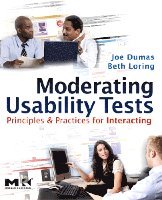
Moderating Usability Tests provides insight and guidance for usability testing. To a large extent, successful usability testing depends on the skills of the person facilitating the test. However, most usability specialists still learn how to conduct tests through an apprentice system with little formal training.
This book is the resource for new and experienced moderators to learn about the rules and practices for interacting. Authors Dumas and Loring draw on their combined 40 years of usability testing experience to develop and present the most effective principles and practices - both practical and ethical - for moderating successful usability tests. The videos are available from the publisher's companion web site.
Presents the ten "golden rules� that maximize every session's value Offers targeted advice on how to maintain objectivity Discusses the ethical considerations that apply in all usability testing Explains how to reduce the stress that participants often feel Considers the special requirements of remote usability testing Demonstrates good and bad moderating techniques with laboratory videos accessible from the publisher's companion web siteHCI Beyond the GUI
Design for Haptic, Speech, Olfactory, and Other Nontraditional Interfaces
573 kr
Skickas inom 7-10 vardagar
510 kr
Sketching User Experiences approaches design and design thinking as something distinct that needs to be better understood-by both designers and the people with whom they need to work- in order to achieve success with new products and systems. So while the focus is on design, the approach is holistic. Hence, the book speaks to designers, usability specialists, the HCI community, product managers, and business executives. There is an emphasis on balancing the back-end concern with usability and engineering excellence (getting the design right) with an up-front investment in sketching and ideation (getting the right design). Overall, the objective is to build the notion of informed design: molding emerging technology into a form that serves our society and reflects its values.
Grounded in both practice and scientific research, Bill Buxton's engaging work aims to spark the imagination while encouraging the use of new techniques, breathing new life into user experience design.
Covers sketching and early prototyping design methods suitable for dynamic product capabilities: cell phones that communicate with each other and other embedded systems, "smart" appliances, and things you only imagine in your dreams Thorough coverage of the design sketching method which helps easily build experience prototypes-without the effort of engineering prototypes which are difficult to abandon Reaches out to a range of designers, including user interface designers, industrial designers, software engineers, usability engineers, product managers, and others Full of case studies, examples, exercises, and projects, and access to video clips that demonstrate the principles and methodsEvaluating Children's Interactive Products
Principles and Practices for Interaction Designers
535 kr
Skickas inom 7-10 vardagar
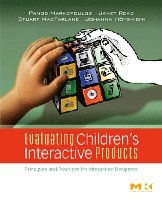
Evaluating Children's Interactive Products directly addresses the need to ensure that interactive products designed for children - whether toys, games, educational products, or websites - are safe, effective, and entertaining. It presents an essential background in child development and child psychology, particularly as they relate to technology; captures best practices for observing and surveying children, training evaluators, and capturing the child user experience using audio and visual technology; and examines ethical and legal issues involved in working with children and offers guidelines for effective risk management.
Based on the authors' workshops, conference courses, and own design experience and research, this highly practical book reads like a handbook, while being thoroughly grounded in the latest research. Throughout, the authors illustrate techniques and principles with numerous mini case studies and highlight practical information in tips and exercises and conclude with three in-depth case studies.
This book is recommended for usability experts, product developers, and researchers in the field.
Presents an essential background in child development and child psychology, particularly as they relate to technology Captures best practices for observing and surveying children, training evaluators, and capturing the child user experience using audio and visual technology Examines ethical and legal issues involved in working with children and offers guidelines for effective risk management560 kr
Skickas inom 7-10 vardagar
510 kr
Skickas inom 7-10 vardagar
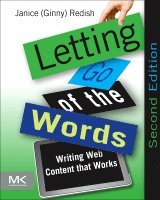
Web site design and development continues to become more sophisticated. An important part of this maturity originates with well-laid-out and well-written content. Ginny Redish is a world-renowned expert on information design and how to produce clear writing in plain language for the web. All of the invaluable information that she shared in the first edition is included with numerous new examples. New information on content strategy for web sites, search engine optimization (SEO), and social media make this once again the only book you need to own to optimize your writing for the web.
New material on content strategy, search engine optimization, and social media Lots of new and updated examples More emphasis on new hardware like tablets, iPads, and iPhones536 kr
Skickas inom 7-10 vardagar
598 kr
Skickas inom 7-10 vardagar
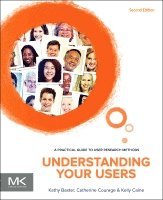
This new and completely updated edition is a comprehensive, easy-to-read, "how-to" guide on user research methods. You'll learn about many distinct user research methods and also pre- and post-method considerations such as recruiting, facilitating activities or moderating, negotiating with product developments teams/customers, and getting your results incorporated into the product. For each method, you'll understand how to prepare for and conduct the activity, as well as analyze and present the data - all in a practical and hands-on way.
Each method presented provides different information about the users and their requirements (e.g., functional requirements, information architecture). The techniques can be used together to form a complete picture of the users' needs or they can be used separately throughout the product development lifecycle to address specific product questions. These techniques have helped product teams understand the value of user experience research by providing insight into how users behave and what they need to be successful. You will find brand new case studies from leaders in industry and academia that demonstrate each method in action.
This book has something to offer whether you are new to user experience or a seasoned UX professional. After reading this book, you'll be able to choose the right user research method for your research question and conduct a user research study. Then, you will be able to apply your findings to your own products.
Completely new and revised edition includes 30+% new content! Discover the foundation you need to prepare for any user research activity and ensure that the results are incorporated into your products Includes all new case studies for each method from leaders in industry and academia799 kr
Skickas inom 7-10 vardagar
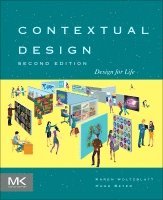
Contextual Design: Design for Life, Second Edition, describes the core techniques needed to deliberately produce a compelling user experience. Contextual design was first invented in 1988 to drive a deep understanding of the user into the design process. It has been used in a wide variety of industries and taught in universities all over the world. Until now, the basic CD approach has needed little revision, but with the wide adoption of handheld devices, especially smartphones, the way technology is integrated into people's lives has fundamentally changed. Contextual Design V2.0 introduces both the classic CD techniques and the new techniques needed to "design for life", fulfilling core human motives while supporting activities.
This completely updated and revised edition is written in a clear, informal style without excessive jargon, and is the must-have book for any UX Design library. Users will find coverage of mobile devices and consumer and business products, all illustrated with new examples, case studies, and discussions on how to use CD with the agile development and other project requirements methods.
Provides tactics on how to gather detailed data on how people live, work, and use products Helps develop a coherent picture of a whole user population Presents tactics on how to use the seven "Cool Concepts" to support core human motives and generate new product concepts guided by user data, ideation techniques, and principles key to producing a compelling user experience Explains how to structure the system and user interface to best support the user across place, time, and platform719 kr
Skickas inom 5-8 vardagar
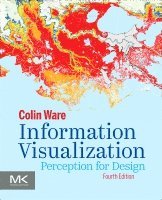
Information Visualization: Perception for Design, Fourth Edition explores the art and science of why we see objects the way we do. Based on the science of perception and vision, the author presents the key principles at work for a wide range of applications--resulting in visualization of improved clarity, utility and persuasiveness. This new edition has been revised and updated to include the latest relevant research findings. Content has been updated in areas such as the cognitive neuroscience of maps and navigation, the neuroscience of pattern perception, and the hierarchy of learned patterns.
New changes to the book make it easier to apply perceptual lessons to design decisions. In addition, the book offers practical guidelines that can be applied by anyone, including interaction designers and graphic designers of all kinds.
Includes the latest research findings in visualization and perception Provides a new chapter on designing for perception to help bridge the gap between specific perception-based guidelines and common design decisions Presents over 400 informative, full color illustrations that are key to an understanding of the subject565 kr
Skickas inom 5-8 vardagar
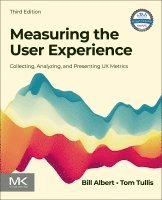
*Textbook and Academic Authors Association (TAA) Textbook Excellence Award Winner, 2024*Measuring the User Experience: Collecting, Analyzing, and Presenting UX Metrics, Third Edition provides the quantitative analysis training that students and professionals need. This book presents an update on the first resource that focused on how to quantify user experience. Now in its third edition, the authors have expanded on the area of behavioral and physiological metrics, splitting that chapter into sections that cover eye-tracking and measuring emotion. The book also contains new research and updated examples, several new case studies, and new examples using the most recent version of Excel.
Helps readers learn which metrics to select for every case, including behavioral, physiological, emotional, aesthetic, gestural, verbal and physical, as well as more specialized metrics such as eye-tracking and clickstream dataProvides a vendor-neutral examination on how to measure the user experience with websites, digital products, and virtually any other type of product or systemContains new and in-depth global case studies that show how organizations have successfully used metrics, along with the information they revealedIncludes a companion site, www.measuringux.com, that has articles, tools, spreadsheets, presentations and other resources that help readers effectively measure user experience974 kr
Skickas inom 7-10 vardagar
The Usability Engineering Lifecycle
A Practitioner's Handbook for User Interface Design
924 kr
Skickas inom 7-10 vardagar
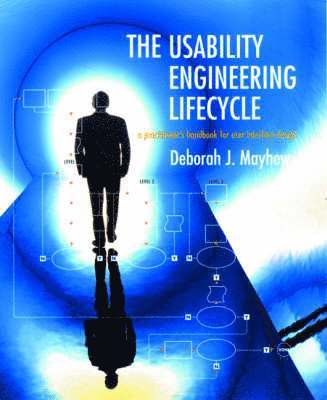
A commitment to usability in user interface design and development offers enormous benefits, including greater user productivity, more competitive products, lower support costs, and a more efficient development process. But what does it mean to be committed to usability? Inside, a twenty-year expert answers this question in full, presenting the techniques of Usability Engineering as a series of product lifecycle tasks that result directly in easier-to-learn, easier-to-use software.You'll learn to perform a complete requirements analysis and then incorporate the resulting goals and constraints in a highly structured, iterative design and development process. This process doesn't end with installation but instead begins anew with the collection of user feedback that will guide further development. Also covered are organizational issues related to the implementation of Usability Engineering, including cost justification, project planning, and organizational structures.* Unites all current UE techniques in a single, authoritative resource, presenting a coherent lifecycle process in which each clearly defined task leads directly the next.* Teaches concrete, immediately usable skills to practitioners in all kinds of product development organizations-from internal departments to commercial developers to consultants.* Contains examples of actual software development projects and the ways in which they have benefited from Usability Engineering.* Deals in specifics, not generalities-provides detailed templates and instructions for every phase of the Usability Engineering lifecycle.* Pays special attention to Web site development and explains how Usability Engineering principles can be applied to the development of any interactive product.
560 kr
Skickas inom 7-10 vardagar
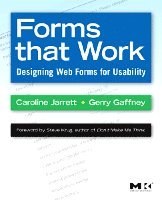
Forms that Work: Designing Web Forms for Usability clearly explains exactly how to design great forms for the web. The book provides proven and practical advice that will help you avoid pitfalls, and produce forms that are aesthetically pleasing, efficient and cost-effective. It features invaluable design methods, tips, and tricks to help ensure accurate data and satisfied customers. It includes dozens of examples - from nitty-gritty details (label alignment, mandatory fields) to visual designs (creating good grids, use of color).
This book isn't just about colons and choosing the right widgets. It's about the whole process of making good forms, which has a lot more to do with making sure you're asking the right questions in a way that your users can answer than it does with whether you use a drop-down list or radio buttons. In an easy-to-read format with lots of examples, the authors present their three-layer model - relationship, conversation, appearance. You need all three for a successful form - a form that looks good, flows well, asks the right questions in the right way, and, most important of all, gets people to fill it out. Liberally illustrated with full-color examples, this book guides readers on how to define requirements, how to write questions that users will understand and want to answer, and how to deal with instructions, progress indicators and errors.
This book is essential reading for HCI professionals, web designers, software developers, user interface designers, HCI academics and students, market research professionals, and financial professionals.
Provides proven and practical advice that will help you avoid pitfalls, and produce forms that are aesthetically pleasing, efficient and cost-effectiveFeatures invaluable design methods, tips, and tricks to help ensure accurate data and satisfied customersIncludes dozens of examples -- from nitty-gritty details (label alignment, mandatory fields) to visual designs (creating good grids, use of color)Foreword by Steve Krug, author of the best selling Don't Make Me Think!Usability Engineering
Scenario-Based Development of Human-Computer Interaction
784 kr
Skickas inom 7-10 vardagar
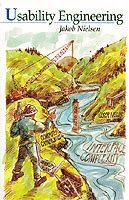
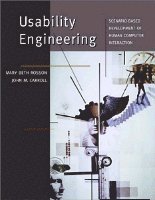
You don't need to be convinced. You know that usability is key to the success of any interactive system-from commercial software to B2B Web sites to handheld devices. But you need skills to make usability part of your product development equation. How will you assess your users' needs and preferences? How will you design effective solutions that are grounded in users' current practices? How will you evaluate and refine these designs to ensure a quality product?Usability Engineering: Scenario-Based Development of Human-Computer Interaction is a radical departure from traditional books that emphasize theory and address experts. This book focuses on the realities of product development, showing how user interaction scenarios can make usability practices an integral part of interactive system development. As you'll learn, usability engineering is not the application of inflexible rules; it's a process of analysis, prototyping, and problem solving in which you evaluate tradeoffs, make reasoned decisions, and maximize the overall value of your product.
Written by prominent HCI educators who understand how to teach usability practices to students and professional developers. Interleaves HCI theory and concepts with a running case study demonstrating their application. Gradually elaborates the case study to introduce increasingly sophisticated usability engineering techniques. Analyzes usability issues in realistic scenarios that describe existing or envisioned systems from the perspective of one or more users. Emphasizes the real world of usability engineering-a world in which tradeoffs must be weighed and difficult decisions made to achieve desired results.698 kr
Skickas inom 7-10 vardagar
1 164 kr
Skickas inom 5-8 vardagar
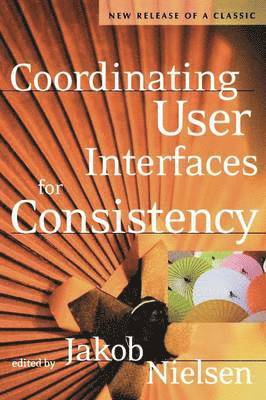
In the years since Jakob Nielsen's classic collection on interface consistency first appeared, much has changed, and much has stayed the same. On the one hand, there's been exponential growth in the opportunities for following or disregarding the principles of interface consistency-more computers, more applications, more users, and of course the vast expanse of the Web. On the other, there are the principles themselves, as persistent and as valuable as ever.
In these contributed chapters, you'll find details on many methods for seeking and enforcing consistency, along with bottom-line analyses of its benefits and some warnings about its possible dangers. Most of what you'll learn applies equally to hardware and software development, and all of it holds real benefits for both your organization and your users.
Begins with a new preface by the collection's distinguished editor Details a variety of methods for attaining interface consistency, including central control, user definitions, exemplary applications, shared code, and model analysis Presents a cost-benefits analysis of organizational efforts to promote and achieve consistency Examines and appraises the dimensions of consistency-consistency within an application, across a family of applications, and beyond Makes the case for some unexpected benefits of interface consistency while helping you avoid the risks it can sometimes entail Considers the consistency of interface elements other than screen design Includes case studies of major corporations that have instituted programs to ensure the consistency of their productsInteraction Design for Complex Problem Solving
Developing Useful and Usable Software
698 kr
Skickas inom 7-10 vardagar
406 kr
Skickas inom 7-10 vardagar
690 kr
Skickas inom 7-10 vardagar
434 kr
Skickas inom 7-10 vardagar