MIT Press – serie
Visar alla böcker i serien MIT Press. Handla med fri frakt och snabb leverans.
1 188 produkter
1 188 produkter
Häftad, Engelska, 2020
279 kr
Skickas inom 3-6 vardagar
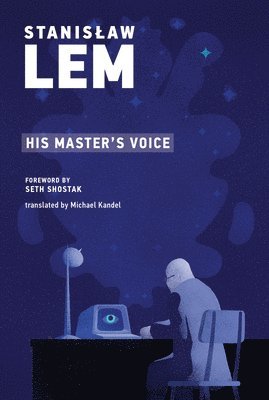
Scientists attempt to decode what may be a message from intelligent beings in outer space.By pure chance, scientists detect a signal from space that may be communication from rational beings. How can people of Earth understand this message, knowing nothing about the senders—even whether or not they exist? Written as the memoir of a mathematician who participates in the government project (code name: His Master's Voice) attempting to decode what seems to be a message from outer space, this classic novel shows scientists grappling with fundamental questions about the nature of reality, the confines of knowledge, the limitations of the human mind, and the ethics of military-sponsored scientific research.
Häftad, Engelska, 2020
202 kr
Skickas
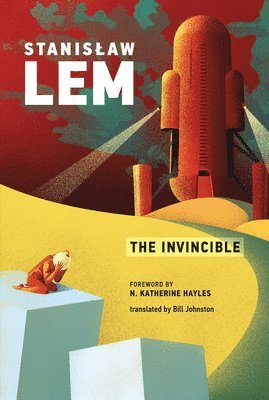
A space cruiser, in search of its sister ship, encounters beings descended from self-replicating machines.In the grand tradition of H. G. Wells and Jules Verne, Stanislaw Lem's The Invincible tells the story of a space cruiser sent to an obscure planet to determine the fate of a sister spaceship whose communication with Earth has abruptly ceased. Landing on the planet Regis III, navigator Rohan and his crew discover a form of life that has apparently evolved from autonomous, self-replicating machines—perhaps the survivors of a “robot war.” Rohan and his men are forced to confront the classic quandary: what course of action can humanity take once it has reached the limits of its knowledge? In The Invincible, Lem has his characters confront the inexplicable and the bizarre: the problem that lies just beyond analytical reach.
Häftad, Engelska, 2016
260 kr
Skickas
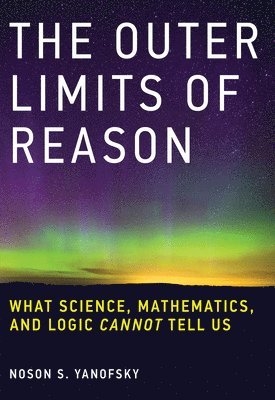
An exploration of the scientific limits of knowledge that challenges our deep-seated beliefs about our universe, our rationality, and ourselves.Many books explain what is known about the universe. This book investigates what cannot be known. Rather than exploring the amazing facts that science, mathematics, and reason have revealed to us, this work studies what science, mathematics, and reason tell us cannot be revealed. In The Outer Limits of Reason, Noson Yanofsky considers what cannot be predicted, described, or known, and what will never be understood. He discusses the limitations of computers, physics, logic, and our own thought processes.Yanofsky describes simple tasks that would take computers trillions of centuries to complete and other problems that computers can never solve; perfectly formed English sentences that make no sense; different levels of infinity; the bizarre world of the quantum; the relevance of relativity theory; the causes of chaos theory; math problems that cannot be solved by normal means; and statements that are true but cannot be proven. He explains the limitations of our intuitions about the world—our ideas about space, time, and motion, and the complex relationship between the knower and the known.Moving from the concrete to the abstract, from problems of everyday language to straightforward philosophical questions to the formalities of physics and mathematics, Yanofsky demonstrates a myriad of unsolvable problems and paradoxes. Exploring the various limitations of our knowledge, he shows that many of these limitations have a similar pattern and that by investigating these patterns, we can better understand the structure and limitations of reason itself. Yanofsky even attempts to look beyond the borders of reason to see what, if anything, is out there.
Häftad, Engelska, 2017
286 kr
Skickas
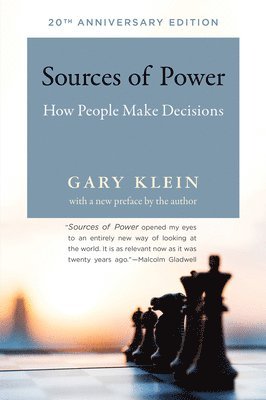
A modern classic about how people really make decisions: drawing on prior experience, using a combination of intuition and analysis.Since its publication twenty years ago, Sources of Power has been enormously influential. The book has sold more than 50,000 copies, has been translated into six languages, has been cited in professional journals that range from Journal of Marketing Research to Journal of Nursing, and is mentioned by Malcolm Gladwell in Blink. Author Gary Klein has collaborated with Nobel laureate Daniel Kahneman and served on a team that redesigned the White House Situation Room to support more effective decision making. The model of decision making Klein proposes in the book has been adopted in fields including law enforcement training and petrochemical plant operation. What is the groundbreaking new way to approach decision making described in this modern classic? We have all seen images of firefighters rescuing people from burning buildings and paramedics treating bombing victims. How do these individuals make the split-second decisions that save lives? Most studies of decision making, based on artificial tasks assigned in laboratory settings, view people as biased and unskilled. Klein proposes a naturalistic approach to decision making, which views people as gaining experience that enables them to use a combination of intuition and analysis to make decisions. To illustrate this approach, Klein tells stories of people—from pilots to chess masters—acting under such real-life constraints as time pressure, high stakes, personal responsibility, and shifting conditions.
Inbunden, Engelska, 2015
268 kr
Skickas
The first complete English translation of Nadar's intelligent and witty memoir, a series of vignettes that capture his experiences in the early days of photography.Celebrated nineteenth-century photographer—and writer, actor, caricaturist, inventor, and balloonist—Félix Nadar published this memoir of his photographic life in 1900 at the age of eighty. Composed as a series of vignettes (we might view them as a series of “written photographs”), this intelligent and witty book offers stories of Nadar's experiences in the early years of photography, memorable character sketches, and meditations on history. It is a classic work, cited by writers from Walter Benjamin to Rosalind Krauss. This is its first and only complete English translation.In When I Was a Photographer (Quand j'étais photographe), Nadar tells us about his descent into the sewers and catacombs of Paris, where he experimented with the use of artificial lighting, and his ascent into the skies over Paris in a hot air balloon, from which he took the first aerial photographs. He recounts his “postal photography” during the 1870-1871 Siege of Paris—an amazing scheme involving micrographic images and carrier pigeons. He describes technical innovations and important figures in photography, and offers a thoughtful consideration of society and culture; but he also writes entertainingly about such matters as Balzac's terror of being photographed, the impact of a photograph on a celebrated murder case, and the difference between male and female clients. Nadar's memoir captures, as surely as his photographs, traces of a vanished era.
Häftad, Engelska, 2020
179 kr
Skickas
An argument that what makes science distinctive is its emphasis on evidence and scientists' willingness to change theories on the basis of new evidence.Attacks on science have become commonplace. Claims that climate change isn't settled science, that evolution is “only a theory,” and that scientists are conspiring to keep the truth about vaccines from the public are staples of some politicians' rhetorical repertoire. Defenders of science often point to its discoveries (penicillin! relativity!) without explaining exactly why scientific claims are superior. In this book, Lee McIntyre argues that what distinguishes science from its rivals is what he calls “the scientific attitude”—caring about evidence and being willing to change theories on the basis of new evidence. The history of science is littered with theories that were scientific but turned out to be wrong; the scientific attitude reveals why even a failed theory can help us to understand what is special about science. McIntyre offers examples that illustrate both scientific success (a reduction in childbed fever in the nineteenth century) and failure (the flawed “discovery” of cold fusion in the twentieth century). He describes the transformation of medicine from a practice based largely on hunches into a science based on evidence; considers scientific fraud; examines the positions of ideology-driven denialists, pseudoscientists, and “skeptics” who reject scientific findings; and argues that social science, no less than natural science, should embrace the scientific attitude. McIntyre argues that the scientific attitude—the grounding of science in evidence—offers a uniquely powerful tool in the defense of science.
Häftad, Engelska, 2015
734 kr
Skickas inom 5-8 vardagar
Häftad, Engelska, 1984
556 kr
Skickas inom 5-8 vardagar
Häftad, Engelska, 2014
691 kr
Skickas inom 5-8 vardagar
Häftad, Engelska, 2015
248 kr
Skickas
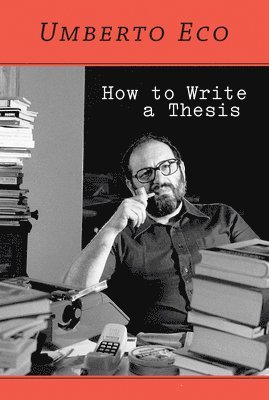
Umberto Eco's wise and witty guide to researching and writing a thesis, published in English for the first time. By the time Umberto Eco published his best-selling novel The Name of the Rose, he was one of Italy's most celebrated intellectuals, a distinguished academic and the author of influential works on semiotics. Some years before that, in 1977, Eco published a little book for his students, How to Write a Thesis, in which he offered useful advice on all the steps involved in researching and writing a thesis—from choosing a topic to organizing a work schedule to writing the final draft. Now in its twenty-third edition in Italy and translated into seventeen languages, How to Write a Thesis has become a classic. Remarkably, this is its first, long overdue publication in English. Eco's approach is anything but dry and academic. He not only offers practical advice but also considers larger questions about the value of the thesis-writing exercise. How to Write a Thesis is unlike any other writing manual. It reads like a novel. It is opinionated. It is frequently irreverent, sometimes polemical, and often hilarious. Eco advises students how to avoid “thesis neurosis” and he answers the important question “Must You Read Books?” He reminds students “You are not Proust” and “Write everything that comes into your head, but only in the first draft.” Of course, there was no Internet in 1977, but Eco's index card research system offers important lessons about critical thinking and information curating for students of today who may be burdened by Big Data.How to Write a Thesis belongs on the bookshelves of students, teachers, writers, and Eco fans everywhere. Already a classic, it would fit nicely between two other classics: Strunk and White and The Name of the Rose.ContentsThe Definition and Purpose of a Thesis • Choosing the Topic • Conducting Research • The Work Plan and the Index Cards • Writing the Thesis • The Final Draft
Häftad, Engelska, 2019
503 kr
Skickas
Inbunden, Engelska, 2019
1 161 kr
Skickas
Häftad, Engelska, 2014
404 kr
Skickas
Häftad, Engelska, 2018
184 kr
Tillfälligt slut
Häftad, Engelska, 2017
230 kr
Tillfälligt slut
Häftad, Engelska, 2011
422 kr
Skickas
How the twenty-one-layer Apollo spacesuit, made by Playtex, was a triumph of intimacy over engineering.When Neil Armstrong and Buzz Aldrin stepped onto the lunar surface in July of 1969, they wore spacesuits made by Playtex: twenty-one layers of fabric, each with a distinct yet interrelated function, custom-sewn for them by seamstresses whose usual work was fashioning bras and girdles. This book is the story of that spacesuit. It is a story of the triumph over the military-industrial complex by the International Latex Corporation, best known by its consumer brand of "Playtex"—a victory of elegant softness over engineered hardness, of adaptation over cybernetics. Playtex's spacesuit went up against hard armor-like spacesuits designed by military contractors and favored by NASA's engineers. It was only when those attempts failed—when traditional engineering firms could not integrate the body into mission requirements—that Playtex, with its intimate expertise, got the job. In Spacesuit, Nicholas de Monchaux tells the story of the twenty-one-layer spacesuit in twenty-one chapters addressing twenty-one topics relevant to the suit, the body, and the technology of the twentieth century. He touches, among other things, on eighteenth-century androids, Christian Dior's New Look, Atlas missiles, cybernetics and cyborgs, latex, JFK's carefully cultivated image, the CBS lunar broadcast soundstage, NASA's Mission Control, and the applications of Apollo-style engineering to city planning. The twenty-one-layer spacesuit, de Monchaux argues, offers an object lesson. It tells us about redundancy and interdependence and about the distinctions between natural and man-made complexity; it teaches us to know the virtues of adaptation and to see the future as a set of possibilities rather than a scripted scenario.
Inbunden, Engelska, 2011
507 kr
Skickas inom 3-6 vardagar
Inbunden, Engelska, 2012
1 220 kr
Skickas
Inbunden, Engelska, 2013
1 245 kr
Skickas
Inbunden, Engelska, 2014
1 319 kr
Skickas
Häftad, Engelska, 2008
247 kr
Skickas
An attempt to free architecture from site and program constraints and to counter the profusion of ever bigger architecture books with ever smaller content.Some may call it the first manifesto of the twenty-first century, for it lays down a new way to think about architecture. Others may think of it as the last architectural treatise, for it provides a discursive container for ideas that would otherwise be lost. Whatever genre it belongs to, SITELESS is a new kind of architecture book that seems to have come out of nowhere. Its author, a young French architect practicing in Tokyo, admits he “didn't do this out of reverence toward architecture, but rather out of a profound boredom with the discipline, as a sort of compulsive reaction.” What would happen if architects liberated their minds from the constraints of site, program, and budget? he asks. The result is a book that is saturated with forms, and as free of words as any architecture book the MIT Press has ever published.The 1001 building forms in SITELESS include structural parasites, chain link towers, ball bearing floors, corrugated corners, exponential balconies, radial facades, crawling frames, forensic housing—and other architectural ideas that may require construction techniques not yet developed and a relation to gravity not yet achieved. SITELESS presents an open-ended compendium of visual ideas for the architectural imagination to draw from. The forms, drawn freehand (to avoid software-specific shapes) but from a constant viewing angle, are presented twelve to a page, with no scale, order, or end to the series. After setting down 1001 forms in siteless conditions and embryonic stages, Blanciak takes one of the forms and performs a “scale test,” showing what happens when one of these fantastic ideas is subjected to the actual constraints of a site in central Tokyo. The book ends by illustrating the potential of these shapes to morph into actual building proportions.
Inbunden, Engelska, 2014
327 kr
Skickas inom 3-6 vardagar
Inbunden, Engelska, 2014
354 kr
Skickas
Inbunden, Engelska, 2014
434 kr
Skickas
The evolution of the surfboard, from traditional Hawaiian folk designs to masterpieces of mathematical engineering to mass-produced fiberglass. Surfboards were once made of wood and shaped by hand, objects of both cultural and recreational significance. Today most surfboards are mass-produced with fiberglass and a stew of petrochemicals, moving (or floating) billboards for athletes and their brands, emphasizing the commercial rather than the cultural. Surf Craft maps this evolution, examining surfboard design and craft with 150 color images and an insightful text. From the ancient Hawaiian alaia, the traditional board of the common people, to the unadorned boards designed with mathematical precision (but built by hand) by Bob Simmons, to the store-bought longboards popularized by the 1959 surf-exploitation movie Gidget, board design reflects both aesthetics and history. The decline of traditional alaia board riding is not only an example of a lost art but also a metaphor for the disintegration of traditional culture after the Republic of Hawaii was overthrown and annexed in the 1890s.In his text, Richard Kenvin looks at the craft and design of surfboards from a historical and cultural perspective. He views board design as an exemplary model of mingei, or art of the people, and the craft philosophy of Soetsu Yanagi. Yanagi believed that a design's true beauty and purpose are revealed when it is put to its intended use. In its purest form, the craft of board building, along with the act of surfing itself, exemplifies mingei. Surf Craft pays particular attention to Bob Simmons's boards, which are striking examples of this kind of functional design, mirroring the work of postwar modern California designers.Surf Craft is published in conjunction with an exhibition at San Diego's Mingei International Museum.
Inbunden, Engelska, 2016
812 kr
Skickas
Inbunden, Engelska, 2016
295 kr
Skickas inom 3-6 vardagar
Inbunden, Engelska, 2016
584 kr
Skickas
Inbunden, Engelska, 2017
315 kr
Skickas
Inbunden, Engelska, 2017
1 060 kr
Skickas
Inbunden, Engelska, 2017
899 kr
Skickas