Board on International Scientific Organizations – författare
244 kr
Läs direkt efter köp
America is endowed with places that embody a rich geoheritage, from sites where indigenous people subsisted for millennia, to mines that furnished the raw materials that built U.S. industry, to mountain ranges and river gorges with unparalleled recreational opportunities, to field sites where students can truly understand a geological process, to places of aesthetic or spiritual value, and many more across all states and territories. In order to assess the status of geoheritage and the activities of its practitioners in the United States in light of social, political, and environmental changes over the past ten years, the National Academies of Sciences Engineering and Medicine convened a series of virtual webinars and a workshop. From September to December 2020, a Distinguished Speakers Webinar Program composed of eight webinars provided an overview of geoheritage initiatives, as well as focused presentations on geoheritage related to federal and state lands, cultural heritage, education, research, and economic development and geotourism. In January 2021, 101 land managers, state geologists, educators, researchers, and members and staff of professional societies and nongovernmental organizations participated in a virtual writing workshop to aggregate and organize community input on strategies and best practices in developing geoheritage sites across the United States. The participants were divided into focus groups that roughly aligned with the topics explored in the fall 2020 workshops. The groups worked synchronously and asynchronously over the course of a week, then presented their ideas in a plenary session. This publication summarizes the presentations and discussion of the webinars and workshop.
349 kr
Läs direkt efter köp
471 kr
Läs direkt efter köp
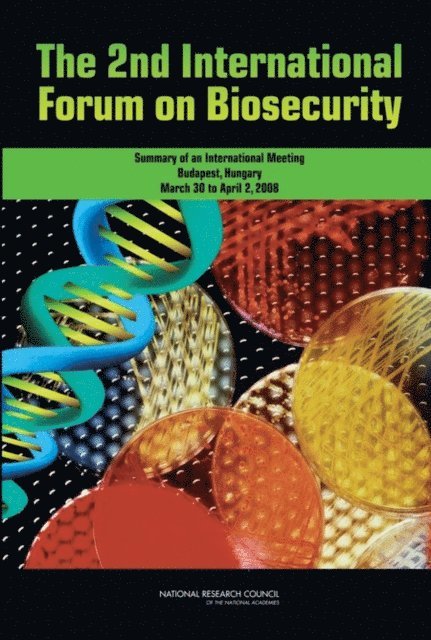
The 2nd International Forum on Biosecurity, held in Budapest, Hungary on March 30 - April 2, 2008, represents the efforts of a number of individuals and organizations, over the last five years, to engage the international community of life scientists in addressing how to reduce the risk that the results of their work could be used for hostile purposes by terrorists and states.The participants who gathered in Budapest were already engaged in this challenging task, and, therefore, the focus of the meeting was on what had been accomplished and what challenges remained. There was no attempt to achieve consensus, since there exist real and important differences among those involved concerning the appropriate policies and actions to be undertaken. But there was a serious effort to identify a range of potential next steps, and also an effort to identify opportunities where international scientific organizations could make substantive contributions and offer their advice and expertise to policy discussions. The Forum''s presentations, discussions, and results are summarized in this book.
268 kr
Läs direkt efter köp
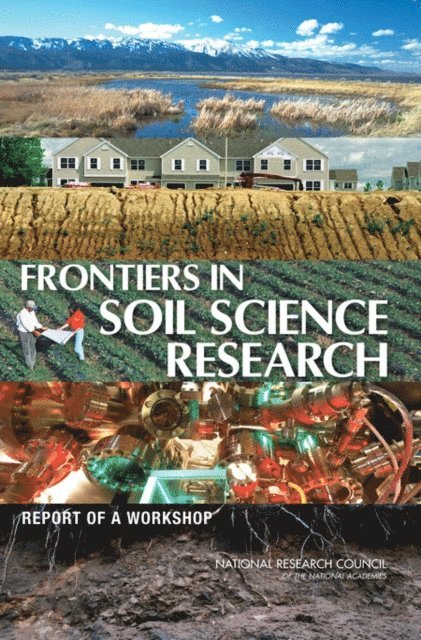
There has been renewed interest in soil and soil science in recent years as the recognition that biogeochemical processes that occur at the Earth''s surface influence global climate change, land degradation and remediation, the fate and transport of nutrients and contaminants, soil and water conservation, soil and water quality, food sufficiency and safety, and many other issues pertinent to the stewardship and conservation of land and water resources. In some areas of the Earth we have approached near irreversible soil conditions that may threaten the existence of future generations. Understanding the long-term implications of decreased soil quality and addressing the aforementioned challenges will require new information based on advances and breakthroughs in soil science research that need to be effectively communicated to stakeholders, policy makers, and the general public.On December 12-14, 2005, the National Academies convened the Frontiers in Soil Science Research Workshop, summarized in this volume, to identify emerging areas for research in soil science by addressing the interaction of soil science subdisciplines, collaborative research with other disciplines, and the use of new technologies in research. The workshop focused around seven key questions addressing research frontiers for the individual soil science disciplines, and also addressing the need for integration across soil science with other disciplines.
390 kr
Läs direkt efter köp
There has been renewed interest in soil and soil science in recent years as the recognition that biogeochemical processes that occur at the Earth''s surface influence global climate change, land degradation and remediation, the fate and transport of nutrients and contaminants, soil and water conservation, soil and water quality, food sufficiency and safety, and many other issues pertinent to the stewardship and conservation of land and water resources. In some areas of the Earth we have approached near irreversible soil conditions that may threaten the existence of future generations. Understanding the long-term implications of decreased soil quality and addressing the aforementioned challenges will require new information based on advances and breakthroughs in soil science research that need to be effectively communicated to stakeholders, policy makers, and the general public.On December 12-14, 2005, the National Academies convened the Frontiers in Soil Science Research Workshop, summarized in this volume, to identify emerging areas for research in soil science by addressing the interaction of soil science subdisciplines, collaborative research with other disciplines, and the use of new technologies in research. The workshop focused around seven key questions addressing research frontiers for the individual soil science disciplines, and also addressing the need for integration across soil science with other disciplines.
261 kr
Läs direkt efter köp
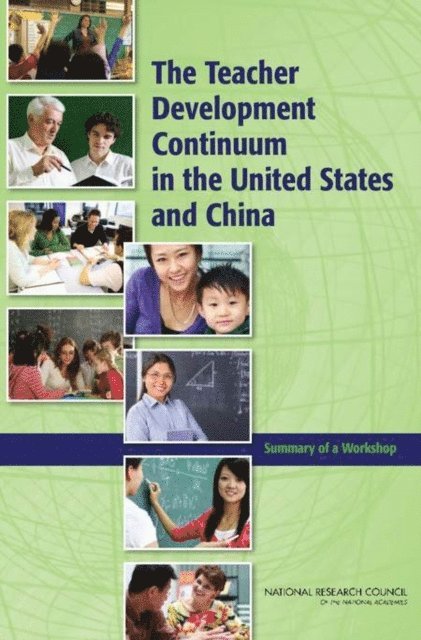
In 1999, Liping Ma published her book Knowing and Teaching Elementary Mathematics: Teachers'' Understanding of Fundamental Mathematics in the United States and China, which probed the kinds of knowledge that elementary school teachers need to convey mathematical concepts and procedures effectively to their students. Later that year, Roger Howe, a member of the U.S. National Commission on Mathematics Instruction (USNC/MI), reviewed the book for the Notices of the American Mathematical Society, concluding that it ''has lessons for all educational policymakers.'' Intrigued by the idea of superrank teachers, the USNC/MI sponsored a workshop entitled ''The Teacher Development Continuum in the United States and China''. The purpose of the workshop was to examine the structure of the mathematics teaching profession in the United States and China. The main presentations and discussion from the workshop are summarized in this volume.
379 kr
Läs direkt efter köp
In 1999, Liping Ma published her book Knowing and Teaching Elementary Mathematics: Teachers'' Understanding of Fundamental Mathematics in the United States and China, which probed the kinds of knowledge that elementary school teachers need to convey mathematical concepts and procedures effectively to their students. Later that year, Roger Howe, a member of the U.S. National Commission on Mathematics Instruction (USNC/MI), reviewed the book for the Notices of the American Mathematical Society, concluding that it ''has lessons for all educational policymakers.'' Intrigued by the idea of superrank teachers, the USNC/MI sponsored a workshop entitled ''The Teacher Development Continuum in the United States and China''. The purpose of the workshop was to examine the structure of the mathematics teaching profession in the United States and China. The main presentations and discussion from the workshop are summarized in this volume.
Role of Scientific and Technical Data and Information in the Public Domain
Proceedings of a Symposium
919 kr
Läs direkt efter köp
This symposium brought together leading experts and managers from the public and private sectors who are involved in the creation, dissemination, and use of scientific and technical data and information (STI) to: (1) describe and discuss the role and the benefits and costs—both economic and other—of the public domain in STI in the research and education context, (2) to identify and analyze the legal, economic, and technological pressures on the public domain in STI in research and education, (3) describe and discuss existing and proposed approaches to preserving the public domain in STI in the United States, and (4) identify issues that may require further analysis.
773 kr
Läs direkt efter köp
665 kr
Läs direkt efter köp
The 2nd International Forum on Biosecurity, held in Budapest, Hungary on March 30 - April 2, 2008, represents the efforts of a number of individuals and organizations, over the last five years, to engage the international community of life scientists in addressing how to reduce the risk that the results of their work could be used for hostile purposes by terrorists and states.The participants who gathered in Budapest were already engaged in this challenging task, and, therefore, the focus of the meeting was on what had been accomplished and what challenges remained. There was no attempt to achieve consensus, since there exist real and important differences among those involved concerning the appropriate policies and actions to be undertaken. But there was a serious effort to identify a range of potential next steps, and also an effort to identify opportunities where international scientific organizations could make substantive contributions and offer their advice and expertise to policy discussions. The Forum''s presentations, discussions, and results are summarized in this book.
503 kr
Läs direkt efter köp
668 kr
Läs direkt efter köp
Preservation of and open access to digital scientific resources are essential to global research, yet the challenges in storing and maintaining access to these collections are substantial. China faces major hurdles in this regard. A workshop held in June 2004 in Beijing convened scientific information managers, digital archiving experts, national science policy and funding officials, and representatives of development organizations to explore the scientific and technical, legal and policy, institutional and economic, and management aspects of creating sustainable and accessible archives of digital health and environmental data in China.
802 kr
Läs direkt efter köp
390 kr
Läs direkt efter köp
Scientific databases relating to the environment, natural resources, and public health on the African continent are, for various reasons, difficult to create and manage effectively. Yet the creation of these and other types of databases—and their subsequent use to produce new information and knowledge for decision-makers—is essential to advancing scientific and technical progress in that region and to its sustainable development. The U.S. National Committee for CODATA collaborated with the Senegalese National CODATA Committee to convene a "Workshop on Scientific Data for Decision-Making Toward Sustainable Development: Senegal River Basin Case Study," which was held on 11-15 March 2002, in Dakar, Senegal. The workshop examined multidisciplinary data sources and data handling in the West Africa region, using the Senegal River Basin as a case study, to determine how these data are or can be better used in decision making related to sustainable development.
519 kr
Läs direkt efter köp
The two hundredth anniversary of the birth of Charles Darwin, February 12, 2009, occurred at a critical time for the United States and the world. In honor of Darwin''s birthday, the National Research Council appointed a committee under the auspices of the U.S. National Committee (USNC) for DIVERSITAS to plan a Symposium on Twenty-first Century Ecosystems. The purpose of the symposium was to capture some of the current excitement and recent progress in scientific understanding of ecosystems, from the microbial to the global level, while also highlighting how improved understanding can be applied to important policy issues that have broad biodiversity and ecosystem effects. The aim was to help inform new policy approaches that could satisfy human needs while also maintaining the integrity of the goods and services provided by biodiversity and ecosystems over both the short and the long terms.
This report summarizes the views expressed by symposium participants; however, it does not provide a session-by-session summary of the presentations at the symposium. Instead, the symposium steering committee identified eight key themes that emerged from the lectures, which were addressed in different contexts by different speakers. The focus here is on general principles rather than specifics. These eight themes provide a sharp focus on a few concepts that enable scientists, environmental NGOs, and policy makers to engage more effectively around issues of central importance for biodiversity and ecosystem management.
602 kr
Läs direkt efter köp
The theme of this international symposium is the promotion of greater sharing of scientific data for the benefit of research and broader development, particularly in the developing world. This is an extraordinarily important topic. Indeed, I have devoted much of my own career to matters related to the concept of openness. I had the opportunity to promote and help build the open courseware program at the Massachusetts Institute of Technology (MIT). This program has made the teaching materials for all 2,000 subjects taught at MIT available on the Web for anyone, anywhere, to use anytime at no cost. In countries where basic broadband was not available, we shipped it in on hard drives and compact disks. Its impact has been worldwide, but it has surely had the greatest impact on the developing world. I am also a trustee of a nonprofit organization named Ithaca that operates Journal Storage (JSTOR) and other entities that make scholarly information available at very low cost.
The culture of science has been international and open for centuries. Indeed, the scientific enterprise can only work when all information is open and accessible, because science works through critical analysis and replication of results. In recent years, as some scientific data, and especially technological data, have increased in economic value frequently has caused us to be far less open with information than business and free enterprise require us to be. Indeed, the worldwide shift to what is known as open innovation is strengthening every day.
Finally, since the end of World War II, the realities of modern military conflict and now terrorism have led governments to restrict information through classification. This is important, but I believe that we classify far too much information. The last thing we need today, at the beginning of the twenty-first century, is further arbitrary limitations on the free flow of scientific information, whether by policies established by governments and businesses, or by lack of information infrastructure. For all these reasons, the international sharing of scientific data is one of the topics of great interest here at the National Academies and has been the subject of many of our past reports. This is the primary reason why this symposium has been co-organized by the NRC''s Policy and Global Affairs Division—the Board on International Scientific Organizations (BISO) and the Board on Research Data and Information (BRDI). The Case for International Sharing of Scientific Data: A Focus on Developing Countries: Proceedings of a Symposium summarizes the symposium.
451 kr
Skickas inom 3-6 vardagar
390 kr
Läs direkt efter köp
In recent years, as science becomes increasingly international and collaborative, the importance of projects that involve research teams and research subjects from different countries has grown markedly. Such teams often cross disciplinary, cultural, geographic and linguistic borders as well as national ones. Successfully planning and carrying out such efforts can result in substantial advantages for both science and scientists. The participating researchers, however, also face significant intellectual, bureaucratic, organizational and interpersonal challenges.
Building Infrastructure for International Collaborative Research in the Social and Behavioral Sciences is the summary of a workshop convened by the National Research Council''s Committee on International Collaborations in Social and Behavioral Sciences in September 2013 to identify ways to reduce impediments and to increase access to cross-national research collaborations among a broad range of American scholars in the behavioral and social sciences (and education), especially early career scholars. Over the course of two and a half days, individuals from universities and federal agencies, professional organizations, and other parties with interests in international collaboration in the behavior and social sciences and education made presentations and participated in discussions. They came from diverse fields including cognitive psychology, developmental psychology, comparative education, educational anthropology, sociology, organizational psychology, the health sciences, international development studies, higher education administration, and international exchange.
568 kr
Läs direkt efter köp
On July 15-17, 2012 the United States National Commission on Mathematics Instruction and Seoul National University held a joint Korea-U.S. workshop on Mathematics Teaching and Curriculum. The workshop was organized to address questions and issues related to math teaching and curriculum that were generated by each country, including the following: What are the main concerns in the development of the curriculum? What issues have been discussed or debated among curriculum developers, teachers, teacher educators, and scholars regarding the curriculum? How have textbooks been developed for the curriculum? How are curricular tasks designed and what criteria are used? What is the role of learning trajectories in the development of curriculum? This report summarizes the presentations and discussions at the workshop.
633 kr
Läs direkt efter köp
Additive manufacturing (AM) methods have great potential for promoting transformative research in many fields across the vast spectrum of engineering and materials science. AM is one of the leading forms of advanced manufacturing which enables direct computer-aided design (CAD) to part production without part-specific tooling. In October 2015 the National Academies of Sciences, Engineering, and Medicine convened a workshop of experts from diverse communities to examine predictive theoretical and computational approaches for various AM technologies. While experimental workshops in AM have been held in the past, this workshop uniquely focused on theoretical and computational approaches and involved areas such as simulation-based engineering and science, integrated computational materials engineering, mechanics, materials science, manufacturing processes, and other specialized areas. This publication summarizes the presentations and discussions from the workshop.
710 kr
Läs direkt efter köp
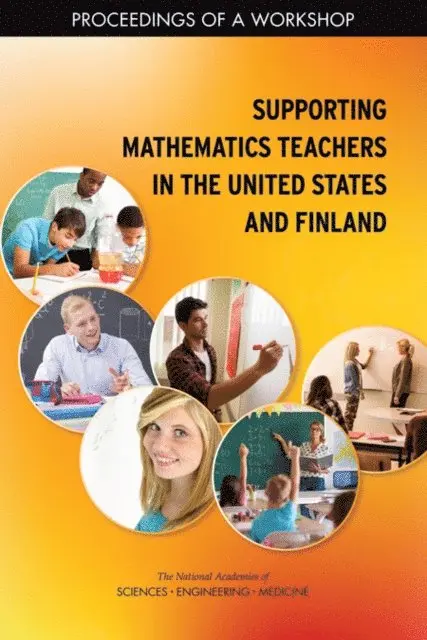
For the past 17 years, the U.S. National Commission on Mathematics Instruction (USNC/MI) has held workshops with mathematics educators from countries that typically perform well on international assessments and have a history of strong mathematics education programs, such as Japan, China, and South Korea. Finland is among this group. Even though its mathematics education system has some common characteristics with other top-performing nations, such as a great social respect for the teaching profession, it also has unique characteristics.
The USNC/MI, a standing committee of the National Academies of Sciences, Engineering, and Medicine, planned a workshop at which U.S. and Finnish mathematics educators could exchange information and ideas about the preparation of new mathematics teachers and the means of providing them with support and professional development throughout their careers. While this is not the first time U.S. and Finnish mathematics educators have discussed educational practices, this workshop focused primarily on teacher development in both nations in the context of mathematics education. This publication summarizes the presentations and discussions from the workshop.
536 kr
Läs direkt efter köp
As a living substrate, soil is critical to the function of Earth''s geophysical and chemical properties. Soil also plays a major role in several human activities, including farming, forestry, and environmental remediation. Optimizing those activities requires a clear understanding of different soils, their function, their composition and structure, and how they change over time and from place to place. Although the importance of soil to Earth''s biogeochemical cycles and to human activities is recognized, the current systems in place for monitoring soil properties - including physical, chemical, and, biological characteristics - along with measures of soil loss through erosion, do not provide an accurate picture of changes in the soil resource over time. Such an understanding can only be developed by collecting comprehensive data about soils and the various factors that influence them in a way that can be updated regularly and made available to researchers and others who wish to understand soils and make decisions based on those data.
The National Academies of Sciences, Engineering, and Medicine convened key stakeholders in a workshop on March 2-4, 2021, to discuss the development of a dynamic soil information system. Workshop discussions explored possiblities to dynamically and accurately monitor soil resources nationally with the mutually supporting goals of (1) achieving a better understanding of causal influences on observed changes in soil and interactions of soil cycling of nutrients and gases with earth processes, and (2) providing accessible, useful, and actionable information to land managers and others. This publication summarizes the presentation and discussion of the workshop.
544 kr
Läs direkt efter köp
Role of Scientific and Technical Data and Information in the Public Domain
Proceedings of a Symposium
660 kr
Läs direkt efter köp
This symposium brought together leading experts and managers from the public and private sectors who are involved in the creation, dissemination, and use of scientific and technical data and information (STI) to: (1) describe and discuss the role and the benefits and costs—both economic and other—of the public domain in STI in the research and education context, (2) to identify and analyze the legal, economic, and technological pressures on the public domain in STI in research and education, (3) describe and discuss existing and proposed approaches to preserving the public domain in STI in the United States, and (4) identify issues that may require further analysis.
268 kr
Läs direkt efter köp
Scientific databases relating to the environment, natural resources, and public health on the African continent are, for various reasons, difficult to create and manage effectively. Yet the creation of these and other types of databases—and their subsequent use to produce new information and knowledge for decision-makers—is essential to advancing scientific and technical progress in that region and to its sustainable development. The U.S. National Committee for CODATA collaborated with the Senegalese National CODATA Committee to convene a "Workshop on Scientific Data for Decision-Making Toward Sustainable Development: Senegal River Basin Case Study," which was held on 11-15 March 2002, in Dakar, Senegal. The workshop examined multidisciplinary data sources and data handling in the West Africa region, using the Senegal River Basin as a case study, to determine how these data are or can be better used in decision making related to sustainable development.
468 kr
Läs direkt efter köp
Preservation of and open access to digital scientific resources are essential to global research, yet the challenges in storing and maintaining access to these collections are substantial. China faces major hurdles in this regard. A workshop held in June 2004 in Beijing convened scientific information managers, digital archiving experts, national science policy and funding officials, and representatives of development organizations to explore the scientific and technical, legal and policy, institutional and economic, and management aspects of creating sustainable and accessible archives of digital health and environmental data in China.
730 kr
Tillfälligt slut
477 kr
Tillfälligt slut
Role of Scientific and Technical Data and Information in the Public Domain
Proceedings of a Symposium
827 kr
Tillfälligt slut
751 kr
Tillfälligt slut