539 kr
Duncan Pritchard – författare
- Häftad, Engelska, 2023What is knowledge? Where does it come from? What kinds of knowledge are there? Can we know anything at all? What is the practical relevance of learning about epistemology?This lucid and engaging introduction grapples with these central questions in the theory of knowledge, offering a clear, non-partisan view of the main themes of epistemology. Both traditional issues and contemporary ideas are discussed in 22 easily digestible chapters, each of which concludes with a useful summary of the main ideas discussed, study questions, annotated further reading, and a guide to internet resources.Each chapter also features text boxes providing bite-sized summaries of key concepts and major philosophers, and clear and interesting examples are used throughout. The book concludes with an annotated guide to general introductions to epistemology, a glossary of key terms, and a summary of the main examples used in epistemology. This is an ideal first textbook in the theory of knowledge for undergraduates coming to philosophy for the first time.This fifth edition has been revised throughout and features a new part devoted to social epistemology. In addition, the text as a whole has been refreshed to keep it up-to-date with current developments.
- E-bokEngelska, 2023
644 kr
Läs direkt efter köp
What is knowledge? Where does it come from? What kinds of knowledge are there? Can we know anything at all? What is the practical relevance of learning about epistemology?
This lucid and engaging introduction grapples with these central questions in the theory of knowledge, offering a clear, non-partisan view of the main themes of epistemology. Both traditional issues and contemporary ideas are discussed in 22 easily digestible chapters, each of which concludes with a useful summary of the main ideas discussed, study questions, annotated further reading, and a guide to internet resources.
Each chapter also features text boxes providing bite-sized summaries of key concepts and major philosophers, and clear and interesting examples are used throughout. The book concludes with an annotated guide to general introductions to epistemology, a glossary of key terms, and a summary of the main examples used in epistemology. This is an ideal first textbook in the theory of knowledge for undergraduates coming to philosophy for the first time.
This fifth edition has been revised throughout and features a new part devoted to social epistemology. In addition, the text as a whole has been refreshed to keep it up-to-date with current developments.
- Häftad, Engelska, 2019
111 kr
Skickas inom 5-8 vardagar
Throughout history scepticism and the urge to question accepted truths has been a powerful force for change and growth. Today, as we are bombarded by adverts, scientific studies praising the latest superfoods, and political rhetoric, a healthy amount of scepticism is widely encouraged. But when is such scepticism legitimate - for example, as a driver of new ideas - and when is it problematic? And what role might adopting a sceptical outlook play in leading an intellectually virtuous life?In this Very Short Introduction Duncan Pritchard explores both the advantages of scepticism, in challenging outdated notions, and also how it can have unhelpful social consequences, in generating distrust. He considers the role of scepticism at the source of contemporary social and political movements such as climate change denial, post-truth politics, and fake news. Pritchard also examines the philosophical arguments for a radical form of scepticism which maintains that knowledge is impossible, and explores some of the main responses to these arguments. Finally, he considers the part scepticism might play in applying better thinking and learning to achieve a more meaningful life. ABOUT THE SERIES: The Very Short Introductions series from Oxford University Press contains hundreds of titles in almost every subject area. These pocket-sized books are the perfect way to get ahead in a new subject quickly. Our expert authors combine facts, analysis, perspective, new ideas, and enthusiasm to make interesting and challenging topics highly readable. - E-bokPDF, Engelska, 2018
779 kr
Läs direkt efter köp
One of the most important research programmes in contemporary cognitive science is that of extended cognition, whereby features of a subject''s cognitive environment can in certain conditions become constituent parts of the cognitive process itself. The aim of this volume is to explore the epistemological ramifications of this idea. The volume brings together a range of distinguished and emerging academics, from a variety of different perspectives, to investigate the very idea of an extended epistemology. The first part of the volume explores foundational issues with regard to an extended epistemology, including from a critical perspective. The second part of the volume examines the applications of extended epistemology and the new theoretical directions that it might take us. These include its ethical ramifications, its import to the epistemology of education and emerging digital technologies, and how this idea might dovetail with certain themes in Chinese philosophy. - E-bokPDF, Engelska, 2009
1 238 kr
Läs direkt efter köp
Recent epistemology has reflected a growing interest in issues about the value of knowledge and the values informing epistemic appraisal. Is knowledge more valuable that merely true belief or even justified true belief? Is truth the central value informing epistemic appraisal or do other values enter the picture? Epistemic Value is a collection of previously unpublished articles on such issues by leading philosophers in the field. It will stimulatediscussion of the nature of knowledge and of directions that might be taken by the theory of knowledge. The contributors are Jason Baehr, Michael Brady, Berit Brogaard, Michael DePaul, Pascal Engel, Catherine Elgin, Alvin Goldman, John Greco, Stephen Grimm, Ward Jones, Martin Kusch, Jonathan Kvanvig, Michael Lynch,Erik Olsson, Wayne Riggs and Matthew Weiner. - E-bokPDF, Engelska, 2009
495 kr
Läs direkt efter köp
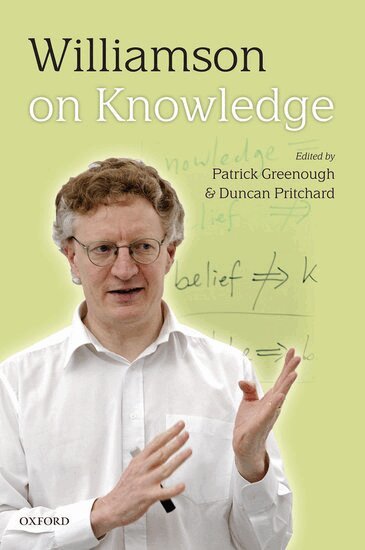
Timothy Williamson''s 2000 book Knowledge and Its Limits is perhaps the most important work of philosophy of the decade. Eighteen leading philosophers have now joined forces to give a critical assessment of ideas and arguments in this work, and the impact it has had on contemporary philosophy. They discuss epistemological issues concerning evidence, defeasibility, scepticism, testimony, assertion, and perception, and debate Williamson''s central claim that knowledge is a mental state. - E-bokPDF, Engelska, 2010
463 kr
Läs direkt efter köp
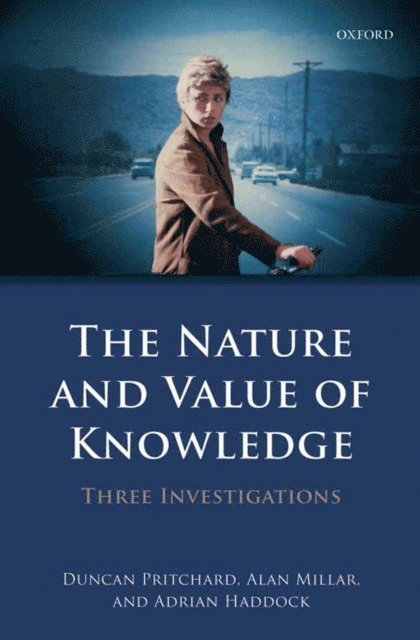
This volume comprises three distinct investigations into the relationship between the nature and the value of knowledge. Each is written by one of the authors in consultation with the other two. ''Knowledge and Understanding'' (by Duncan Pritchard) critically examines virtue-theoretic responses to the problem of the value of knowledge, and argues that the finally valuable cognitive state is not knowledge but understanding. ''Knowledge and Recognition'' (by Alan Millar)develops an account of knowledge in which the idea of a recognitional ability plays a prominent role, and argues that this account enables us better to understand knowledge and its value. ''Knowledge and Action'' (by Adrian Haddock) argues for an account of knowledge and justification which explainswhy knowledge is valuable, and enables us to make sense of the knowledge we have of our intentional actions. - E-bokEngelska, 2010
463 kr
Läs direkt efter köp
This volume comprises three distinct investigations into the relationship between the nature and the value of knowledge. Each is written by one of the authors in consultation with the other two. ''Knowledge and Understanding'' (by Duncan Pritchard) critically examines virtue-theoretic responses to the problem of the value of knowledge, and argues that the finally valuable cognitive state is not knowledge but understanding. ''Knowledge and Recognition'' (by Alan Millar)develops an account of knowledge in which the idea of a recognitional ability plays a prominent role, and argues that this account enables us better to understand knowledge and its value. ''Knowledge and Action'' (by Adrian Haddock) argues for an account of knowledge and justification which explainswhy knowledge is valuable, and enables us to make sense of the knowledge we have of our intentional actions. - E-bokPDF, Engelska, 2012
239 kr
Läs direkt efter köp
Duncan Pritchard offers an original defence of epistemological disjunctivism. This is an account of perceptual knowledge which contends that such knowledge is paradigmatically constituted by a true belief that enjoys rational support which is both factive and reflectively accessible to the agent. In particular, in a case of paradigmatic perceptual knowledge that p, the subject''s rational support for believing that p is that she sees that p, where this rational support is both reflectively accessible and factive (i.e., it entails p). Such an account of perceptual knowledge poses a radical challenge to contemporary epistemology, since by the lights of standard views in epistemology this proposal is simply incoherent. Pritchard''s aim in Epistemological Disjunctivism is to show that this proposal is theoretically viable (i.e., that it does not succumb to the problems that it appears to face), and also to demonstrate that this is an account of perceptual knowledge which we would want to endorse if it were available on account of its tremendous theoretical potential. In particular, he argues that epistemological disjunctivism offers a way through the impasse between epistemic externalism and internalism, and also provides the foundation for a distinctive response to the problem of radical scepticism. - E-bokPDF, Engelska, 2018
779 kr
Läs direkt efter köp
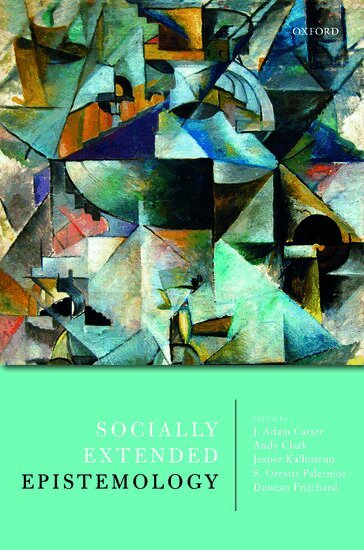
Socially Extended Epistemology explores the epistemological ramifications of one of the most important research programmes in contemporary cognitive science: distributed cognition. In certain conditions, according to this programme, groups of people can generate distributed cognitive systems that consist of all participating members. This volume brings together a range of distinguished and early career academics, from a variety of different perspectives, to investigate the very idea of socially extended epistemology. They ask, for example: can distributed cognitive systems generate knowledge in a similar way to individuals? And if so, how, if at all, does this kind of knowledge differ from normal, individual knowledge? The first part of the volume examines foundational issues, including from a critical perspective. The second part of the volume turns to applications of this idea, and the new theoretical directions that it might take us. These include the ethical ramifications of socially extended epistemology, its societal impact, and its import for emerging digital technologies. - E-bokEngelska, 2018
779 kr
Läs direkt efter köp
Socially Extended Epistemology explores the epistemological ramifications of one of the most important research programmes in contemporary cognitive science: distributed cognition. In certain conditions, according to this programme, groups of people can generate distributed cognitive systems that consist of all participating members. This volume brings together a range of distinguished and early career academics, from a variety of different perspectives, to investigate the very idea of socially extended epistemology. They ask, for example: can distributed cognitive systems generate knowledge in a similar way to individuals? And if so, how, if at all, does this kind of knowledge differ from normal, individual knowledge? The first part of the volume examines foundational issues, including from a critical perspective. The second part of the volume turns to applications of this idea, and the new theoretical directions that it might take us. These include the ethical ramifications of socially extended epistemology, its societal impact, and its import for emerging digital technologies. - E-bokEngelska, 2018
779 kr
Läs direkt efter köp
One of the most important research programmes in contemporary cognitive science is that of extended cognition, whereby features of a subject''s cognitive environment can in certain conditions become constituent parts of the cognitive process itself. The aim of this volume is to explore the epistemological ramifications of this idea. The volume brings together a range of distinguished and emerging academics, from a variety of different perspectives, to investigate the very idea of an extended epistemology. The first part of the volume explores foundational issues with regard to an extended epistemology, including from a critical perspective. The second part of the volume examines the applications of extended epistemology and the new theoretical directions that it might take us. These include its ethical ramifications, its import to the epistemology of education and emerging digital technologies, and how this idea might dovetail with certain themes in Chinese philosophy. - E-bokPDF, Engelska, 2019
54 kr
Läs direkt efter köp
Throughout history scepticism and the urge to question accepted truths has been a powerful force for change and growth. Today, as we are bombarded by adverts, scientific studies praising the latest superfoods, and political rhetoric, a healthy amount of scepticism is widely encouraged. But when is such scepticism legitimate - for example, as a driver of new ideas - and when is it problematic? And what role might adopting a sceptical outlook play in leading an intellectually virtuous life?In this Very Short Introduction Duncan Pritchard explores both the advantages of scepticism, in challenging outdated notions, and also how it can have unhelpful social consequences, in generating distrust. He considers the role of scepticism at the source of contemporary social and political movements such as climate change denial, post-truth politics, and fake news. Pritchard also examines the philosophical arguments for a radical form of scepticism which maintains that knowledge is impossible, and explores some of the main responses to these arguments. Finally, he considers the part scepticism might play in applying better thinking and learning to achieve a more meaningful life. ABOUT THE SERIES: The Very Short Introductions series from Oxford University Press contains hundreds of titles in almost every subject area. These pocket-sized books are the perfect way to get ahead in a new subject quickly. Our expert authors combine facts, analysis, perspective, new ideas, and enthusiasm to make interesting and challenging topics highly readable. - E-bokEngelska, 2019
54 kr
Läs direkt efter köp
Throughout history scepticism and the urge to question accepted truths has been a powerful force for change and growth. Today, as we are bombarded by adverts, scientific studies praising the latest superfoods, and political rhetoric, a healthy amount of scepticism is widely encouraged. But when is such scepticism legitimate - for example, as a driver of new ideas - and when is it problematic? And what role might adopting a sceptical outlook play in leading an intellectually virtuous life?In this Very Short Introduction Duncan Pritchard explores both the advantages of scepticism, in challenging outdated notions, and also how it can have unhelpful social consequences, in generating distrust. He considers the role of scepticism at the source of contemporary social and political movements such as climate change denial, post-truth politics, and fake news. Pritchard also examines the philosophical arguments for a radical form of scepticism which maintains that knowledge is impossible, and explores some of the main responses to these arguments. Finally, he considers the part scepticism might play in applying better thinking and learning to achieve a more meaningful life. ABOUT THE SERIES: The Very Short Introductions series from Oxford University Press contains hundreds of titles in almost every subject area. These pocket-sized books are the perfect way to get ahead in a new subject quickly. Our expert authors combine facts, analysis, perspective, new ideas, and enthusiasm to make interesting and challenging topics highly readable. - Häftad, Engelska, 2014
426 kr
Skickas inom 5-8 vardagar
Duncan Pritchard offers an original defence of epistemological disjunctivism. This is an account of perceptual knowledge which contends that such knowledge is paradigmatically constituted by a true belief that enjoys rational support which is both factive and reflectively accessible to the agent. In particular, in a case of paradigmatic perceptual knowledge that p, the subject's rational support for believing that p is that she sees that p, where this rational support is both reflectively accessible and factive (i.e., it entails p). Such an account of perceptual knowledge poses a radical challenge to contemporary epistemology, since by the lights of standard views in epistemology this proposal is simply incoherent. Pritchard's aim in Epistemological Disjunctivism is to show that this proposal is theoretically viable (i.e., that it does not succumb to the problems that it appears to face), and also to demonstrate that this is an account of perceptual knowledge which we would want to endorse if it were available on account of its tremendous theoretical potential. In particular, he argues that epistemological disjunctivism offers a way through the impasse between epistemic externalism and internalism, and also provides the foundation for a distinctive response to the problem of radical scepticism. - Inbunden, Engelska, 2018
1 758 kr
Skickas inom 3-6 vardagar
One of the most important research programmes in contemporary cognitive science is that of extended cognition, whereby features of a subject's cognitive environment can in certain conditions become constituent parts of the cognitive process itself. The aim of this volume is to explore the epistemological ramifications of this idea. The volume brings together a range of distinguished and emerging academics, from a variety of different perspectives, to investigate the very idea of an extended epistemology. The first part of the volume explores foundational issues with regard to an extended epistemology, including from a critical perspective. The second part of the volume examines the applications of extended epistemology and the new theoretical directions that it might take us. These include its ethical ramifications, its import to the epistemology of education and emerging digital technologies, and how this idea might dovetail with certain themes in Chinese philosophy. - Inbunden, Engelska, 2018
1 688 kr
Skickas inom 3-6 vardagar
Socially Extended Epistemology explores the epistemological ramifications of one of the most important research programmes in contemporary cognitive science: distributed cognition. In certain conditions, according to this programme, groups of people can generate distributed cognitive systems that consist of all participating members. This volume brings together a range of distinguished and early career academics, from a variety of different perspectives, to investigate the very idea of socially extended epistemology. They ask, for example: can distributed cognitive systems generate knowledge in a similar way to individuals? And if so, how, if at all, does this kind of knowledge differ from normal, individual knowledge? The first part of the volume examines foundational issues, including from a critical perspective. The second part of the volume turns to applications of this idea, and the new theoretical directions that it might take us. These include the ethical ramifications of socially extended epistemology, its societal impact, and its import for emerging digital technologies. - Inbunden, Engelska, 2024
1 179 kr
Skickas inom 5-8 vardagar
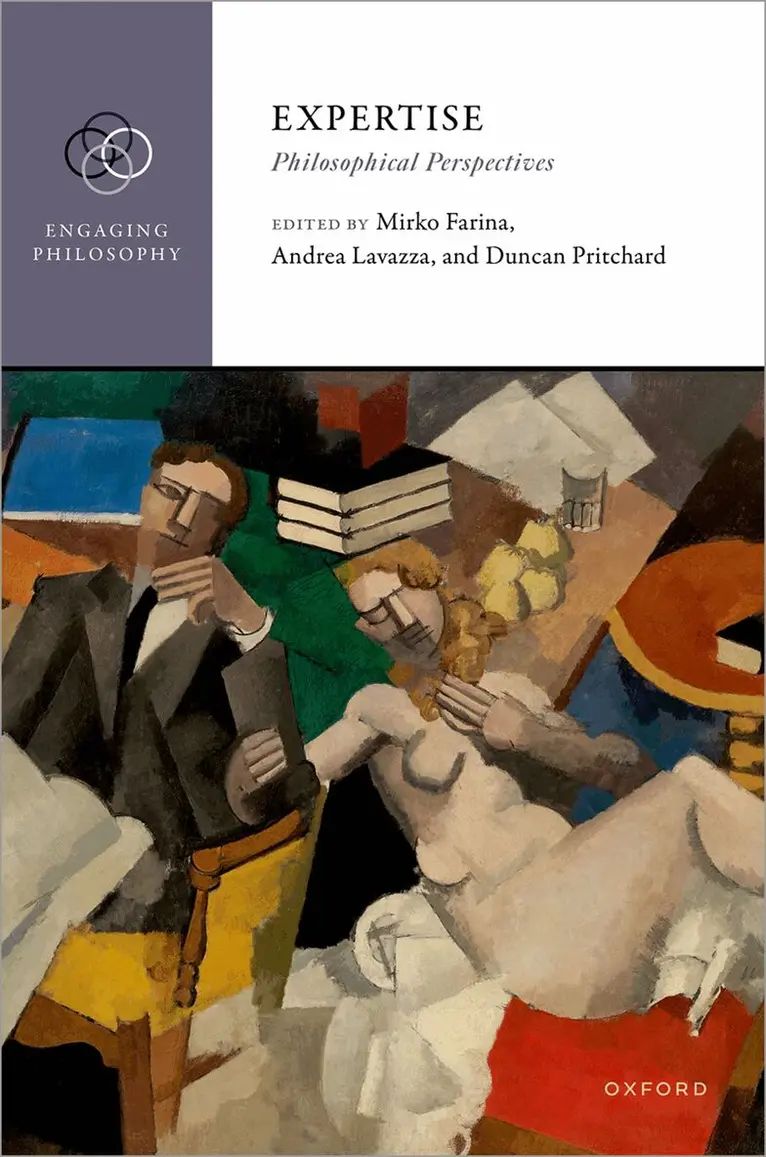
This book offers a collective study of issues to do with experts and expertise, a topic of tremendous contemporary significance. The perspectives are philosophical but draw on relevant work from the sciences and social sciences. In addition, in keeping with other volumes in Oxford University Press's Engaging Philosophy series, many of the papers in the volume have an applied dimension, in that they examine the issues in practical settings. The questions discussed include the following: What is an expert? Who decides who the experts are? Should we always defer to experts? How should expertise inform public policy? What happens when the experts disagree? Must experts be unbiased? Should all experts be treated the same, or does it matter what the source of the expertise is? How should the testimony of experts be reported by the media? The chapters in the volume are organized into six sections: expertise and trust; situated and group expertise; expertise and public policy; expertise and virtue; expertise about value; and new directions. This volume will be of interest to scholars in such fields as philosophy, sociology, political theory, psychology, cognitive science, and bioethics. It will also be of relevance to policy-makers interested in the role that expertise plays in public policy. - E-bokPDF, Engelska, 2024
1 077 kr
Läs direkt efter köp
This book offers a collective study of issues to do with experts and expertise, a topic of tremendous contemporary significance. The perspectives are philosophical but draw on relevant work from the sciences and social sciences. In addition, in keeping with other volumes in Oxford University Press''s Engaging Philosophy series, many of the papers in the volume have an applied dimension, in that they examine the issues in practical settings. The questions discussed include the following: What is an expert? Who decides who the experts are? Should we always defer to experts? How should expertise inform public policy? What happens when the experts disagree? Must experts be unbiased? Should all experts be treated the same, or does it matter what the source of the expertise is? How should the testimony of experts be reported by the media? The chapters in the volume are organized into six sections: expertise and trust; situated and group expertise; expertise and public policy; expertise and virtue; expertise about value; and new directions. This volume will be of interest to scholars in such fields as philosophy, sociology, political theory, psychology, cognitive science, and bioethics. It will also be of relevance to policy-makers interested in the role that expertise plays in public policy. - E-bokEngelska, 2024
1 077 kr
Läs direkt efter köp
This book offers a collective study of issues to do with experts and expertise, a topic of tremendous contemporary significance. The perspectives are philosophical but draw on relevant work from the sciences and social sciences. In addition, in keeping with other volumes in Oxford University Press''s Engaging Philosophy series, many of the papers in the volume have an applied dimension, in that they examine the issues in practical settings. The questions discussed include the following: What is an expert? Who decides who the experts are? Should we always defer to experts? How should expertise inform public policy? What happens when the experts disagree? Must experts be unbiased? Should all experts be treated the same, or does it matter what the source of the expertise is? How should the testimony of experts be reported by the media? The chapters in the volume are organized into six sections: expertise and trust; situated and group expertise; expertise and public policy; expertise and virtue; expertise about value; and new directions. This volume will be of interest to scholars in such fields as philosophy, sociology, political theory, psychology, cognitive science, and bioethics. It will also be of relevance to policy-makers interested in the role that expertise plays in public policy. - Häftad, Engelska, 2007
938 kr
Skickas inom 5-8 vardagar
One of the key supposed 'platitudes' of contemporary epistemology is the claim that knowledge excludes luck. One can see the attraction of such a claim, in that knowledge is something that one can take credit for - it is an achievement of sorts - and yet luck undermines genuine achievement. The problem, however, is that luck seems to be an all-pervasive feature of our epistemic enterprises, which tempts us to think that either scepticism is true and that we don't know very much, or else that luck is compatible with knowledge after all. In this book, Duncan Pritchard argues that we do not need to choose between these two austere alternatives, since a closer examination of what is involved in the notion of epistemic luck reveals varieties of luck that are compatible with knowledge possession and varieties that aren't. Moreover, Pritchard shows that a more nuanced understanding of the relationship between luck and knowledge can cast light on many of the most central topics in contemporary epistemology. These topics include: the externalism/internalism distinction; virtue epistemology; the problem of scepticism; metaepistemological scepticism; modal epistemology; and the problem of moral luck. All epistemologists will need to come to terms with Pritchard's original and incisive contribution. - Inbunden, Engelska, 2009
2 167 kr
Skickas inom 5-8 vardagar
Recent epistemology has reflected a growing interest in issues about the value of knowledge and the values informing epistemic appraisal. Is knowledge more valuable that merely true belief or even justified true belief? Is truth the central value informing epistemic appraisal or do other values enter the picture? Epistemic Value is a collection of previously unpublished articles on such issues by leading philosophers in the field. It will stimulate discussion of the nature of knowledge and of directions that might be taken by the theory of knowledge. The contributors are Jason Baehr, Michael Brady, Berit Brogaard, Michael DePaul, Pascal Engel, Catherine Elgin, Alvin Goldman, John Greco, Stephen Grimm, Ward Jones, Martin Kusch, Jonathan Kvanvig, Michael Lynch, Erik Olsson, Wayne Riggs and Matthew Weiner. - Inbunden, Engelska, 2005
2 302 kr
Skickas inom 5-8 vardagar
One of the key supposed 'platitudes' of contemporary epistemology is the claim that knowledge excludes luck. One can see the attraction of such a claim, in that knowledge is something that one can take credit for - it is an achievement of sorts - and yet luck undermines genuine achievement. The problem, however, is that luck seems to be an all-pervasive feature of our epistemic enterprises, which tempts us to think that either scepticism is true and that we don't know very much, or else that luck is compatible with knowledge after all. In this book, Duncan Pritchard argues that we do not need to choose between these two austere alternatives, since a closer examination of what is involved in the notion of epistemic luck reveals varieties of luck that are compatible with knowledge possession and varieties that aren't. Moreover, Pritchard shows that a more nuanced understanding of the relationship between luck and knowledge can cast light on many of the most central topics in contemporary epistemology. These topics include: the externalism/internalism distinction; virtue epistemology; the problem of scepticism; metaepistemological scepticism; modal epistemology; and the problem of moral luck.All epistemologists will need to come to terms with Pritchard's original and incisive contribution. - Inbunden, Engelska, 2009
1 270 kr
Skickas inom 5-8 vardagar
Timothy Williamson's 2000 book Knowledge and Its Limits is perhaps the most important work of philosophy of the decade. Eighteen leading philosophers have now joined forces to give a critical assessment of ideas and arguments in this work, and the impact it has had on contemporary philosophy. They discuss epistemological issues concerning evidence, defeasibility, scepticism, testimony, assertion, and perception, and debate Williamson's central claim that knowledge is a mental state. - Häftad, Engelska, 2009
753 kr
Skickas inom 7-10 vardagar
Timothy Williamson's 2000 book Knowledge and Its Limits is perhaps the most important work of philosophy of the decade. Eighteen leading philosophers have now joined forces to give a critical assessment of ideas and arguments in this work, and the impact it has had on contemporary philosophy. They discuss epistemological issues concerning evidence, defeasibility, scepticism, testimony, assertion, and perception, and debate Williamson's central claim that knowledge is a mental state. - Inbunden, Engelska, 2012
1 143 kr
Skickas inom 3-6 vardagar
Duncan Pritchard offers an original defence of epistemological disjunctivism. This is an account of perceptual knowledge which contends that such knowledge is paradigmatically constituted by a true belief that enjoys rational support which is both factive and reflectively accessible to the agent. In particular, in a case of paradigmatic perceptual knowledge that p, the subject's rational support for believing that p is that she sees that p, where this rational support is both reflectively accessible and factive (i.e., it entails p). Such an account of perceptual knowledge poses a radical challenge to contemporary epistemology, since by the lights of standard views in epistemology this proposal is simply incoherent. Pritchard's aim in Epistemological Disjunctivism is to show that this proposal is theoretically viable (i.e., that it does not succumb to the problems that it appears to face), and also to demonstrate that this is an account of perceptual knowledge which we would want to endorse if it were available on account of its tremendous theoretical potential. In particular, he argues that epistemological disjunctivism offers a way through the impasse between epistemic externalism and internalism, and also provides the foundation for a distinctive response to the problem of radical scepticism. - Inbunden, Engelska, 2010
2 167 kr
Skickas inom 5-8 vardagar
The idea of approaching epistemological concerns from a social perspective is relatively new. For much of its history the epistemological enterprise -- and arguably philosophy more generally -- has been cast along egocentric lines. Where a non-egocentric approach has been taken, as in the recent work of naturalist epistemologists, the focus has been on individuals interacting with their environment rather than on the significance of social interaction for an understanding of the nature and value of knowledge. The fifteen new essays presented in this volume aim to show the fertility and variety of social epistemology and to set the agenda for future research. They examine not only the well-established topic of testimony, but also newer topics such as disagreement, comprehension, the norm of trust, epistemic value, and the epistemology of silence. Several contributors discuss metaphilosophical issues to do with the nature of social epistemology and what it can contribute to epistemology more generally. Social Epistemology will be essential reading for anyone interested in this fast-growing area of philosophy. - Inbunden, Engelska, 2010
1 828 kr
Skickas inom 3-6 vardagar
This volume comprises three distinct investigations into the relationship between the nature and the value of knowledge. Each is written by one of the authors in consultation with the other two. 'Knowledge and Understanding' (by Duncan Pritchard) critically examines virtue-theoretic responses to the problem of the value of knowledge, and argues that the finally valuable cognitive state is not knowledge but understanding. 'Knowledge and Recognition' (by Alan Millar) develops an account of knowledge in which the idea of a recognitional ability plays a prominent role, and argues that this account enables us better to understand knowledge and its value. 'Knowledge and Action' (by Adrian Haddock) argues for an account of knowledge and justification which explains why knowledge is valuable, and enables us to make sense of the knowledge we have of our intentional actions. - Häftad, Engelska, 2012
748 kr
Skickas inom 5-8 vardagar
This volume comprises three distinct investigations into the relationship between the nature and the value of knowledge. Each is written by one of the authors in consultation with the other two. 'Knowledge and Understanding' (by Duncan Pritchard) critically examines virtue-theoretic responses to the problem of the value of knowledge, and argues that the finally valuable cognitive state is not knowledge but understanding. 'Knowledge and Recognition' (by Alan Millar) develops an account of knowledge in which the idea of a recognitional ability plays a prominent role, and argues that this account enables us better to understand knowledge and its value. 'Knowledge and Action' (by Adrian Haddock) argues for an account of knowledge and justification which explains why knowledge is valuable, and enables us to make sense of the knowledge we have of our intentional actions. - Inbunden, Engelska, 2023
2 096 kr
Skickas inom 10-15 vardagar
Skepticism is one of the perennial problems of philosophy: from antiquity, to the early modern period of Descartes and Hume, and right through to the present day. It remains a fundamental and widely studied topic and, as Annalisa Coliva and Duncan Pritchard show in Skepticism, it presents us with a paradox with important ramifications not only for epistemology but also for many other core areas of philosophy.This book provides a thorough grounding in contemporary debates about skepticism, exploring the following key topics: the core skeptical arguments, with a particular focus on Cartesian and Humean radical skepticism the epistemic principles that are held to underlie skeptical arguments, such as the Closure and Underdetermination principlesthe content externalism of Putnam, Davidson, and Chalmers, and how it might help us respond to radical skepticism the epistemic externalism/internalism distinction and how it relates to the skeptical problematic contextualism in epistemology and its anti-skeptical import the various interpretations of a Wittgensteinian hinge epistemology the viability of epistemological disjunctivism, including whether it can be combined with hinge epistemology as part of a dual response to radical skepticism liberal and conservative responses to the Humean skeptical paradox. Both authors are prominent figures who work on skepticism, and so one novelty of the book is that it provides an insight into their own contrasting responses to this philosophical difficulty. With the addition of annotated further reading and a glossary, this is an ideal starting point for anyone studying the philosophy of skepticism, along with students of epistemology, metaphysics, and contemporary analytic philosophy.