Eric Racine – författare
Visar alla böcker från författaren Eric Racine. Handla med fri frakt och snabb leverans.
11 produkter
11 produkter
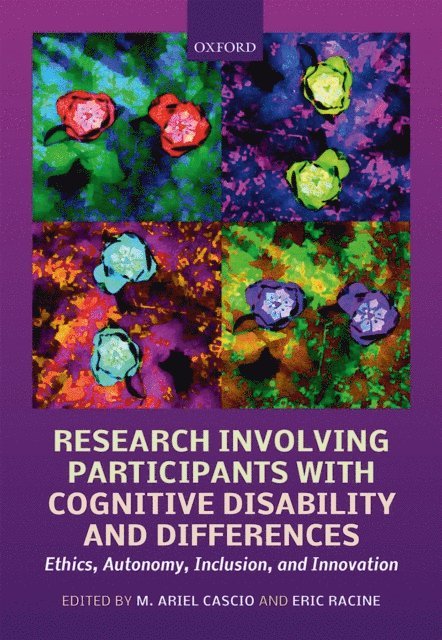
Inbunden, Engelska, 2019
729 kr
Skickas inom 5-8 vardagar
Research participants who have cognitive disability and difference may be considered a vulnerable population. At the same time, they should also be empowered to participate in research in order to foster the growth of knowledge and the improvement of practices that concern them. Participating in such research follows the Disability Rights Movement's call - "nothing about us without us."This volume provides timely, multidisciplinary insights into the ethical aspects of research that includes participants with cognitive disability and difference. These include conditions such as intellectual disability, autism, mild cognitive impairment (MCI), and psychiatric diagnoses. The chapters in this volume describe situations where difficulties arise, And explore strategies for empowerment and inclusion. They draw on both empirical and normative research to offer suggestions for research design, research ethics, and best practices that empower people with cognitive disabilities and differences to participate in research while respecting and managing potential coercion or undue influence.This interdisciplinary volume includes contributions from scholars in anthropology, sociology, ethics, child studies, health and rehabilitation sciences, philosophy, and law who address these issues in both clinical and social/behavioral research. It will be valuable for anyone conducting research involving these populations in the clinical, humanistic, or social sciences.
Häftad, Engelska, 2025
873 kr
Skickas
Inbunden, Engelska, 2025
2 151 kr
Skickas inom 10-15 vardagar
This volume advances a new approach to ethics: “living ethics”. As an ethical and philosophical orientation, living ethics offers a refreshing perspective on how difficult human situations become opportunities for co-learning and co-creative ethical thinking.Living ethics starts with the observation that moral problems are living and vital problems that affect our daily lives. It orients scholarship and practice by using theory in a pragmatic way to solve real-life problems, by fostering spaces for dialogical reflection on these problems, and by working closely together with stakeholders to co-imagine solutions. Central to living ethics are human flourishing, interconnectedness, dialogue, responsiveness, moral spaces, and epistemic justice and humility. The chapters in this volume are divided into three parts. The first part introduces and discusses ideas central to living ethics such as ethics as a way of life, co-learning, and epistemic humility. The second part features several examples of practices and projects informed by a living ethics stance in wide-ranging contexts such as public policy, substance use, healthcare, aging, and research. The third part features open-ended discussions and reflections on models of governance and implementation to propel ideas central to living ethics in areas such as international relationships, education, research ethics, and healthcare. Living Ethics in Theory and Practice will be of interest to a wide range of scholars, graduate students and practitioners working notably in ethics, philosophy and the humanities, social science, psychology, healthcare, and policy.
Häftad, Engelska, 2016
615 kr
Skickas inom 5-8 vardagar
Have you ever Wondered how to deal with a family that repeatedly fails to keep clinic appointments?Disagreed with colleagues over a proposed course of treatment for a child?Considered ways to 'bump' a child on a waiting to speed up their assessment?These are a few of the scenarios faced by clinicians in neurodisability on a daily basis. Ethics in Child Health explores the ethical dimensions of these issues that have either been ignored or not recognised. Each chapter is built around a scenario familiar to clinicians and is discussed with respect to how ethical principles can be utilised to inform decision-making. Useful "Themes for Discussion" are provided at the end of each chapter to help professionals and students develop practical ethical thinking. Ethics in Child Health offers a set of principles that clinicians, social workers and policy-makers can utilise in their respective spheres of influence.
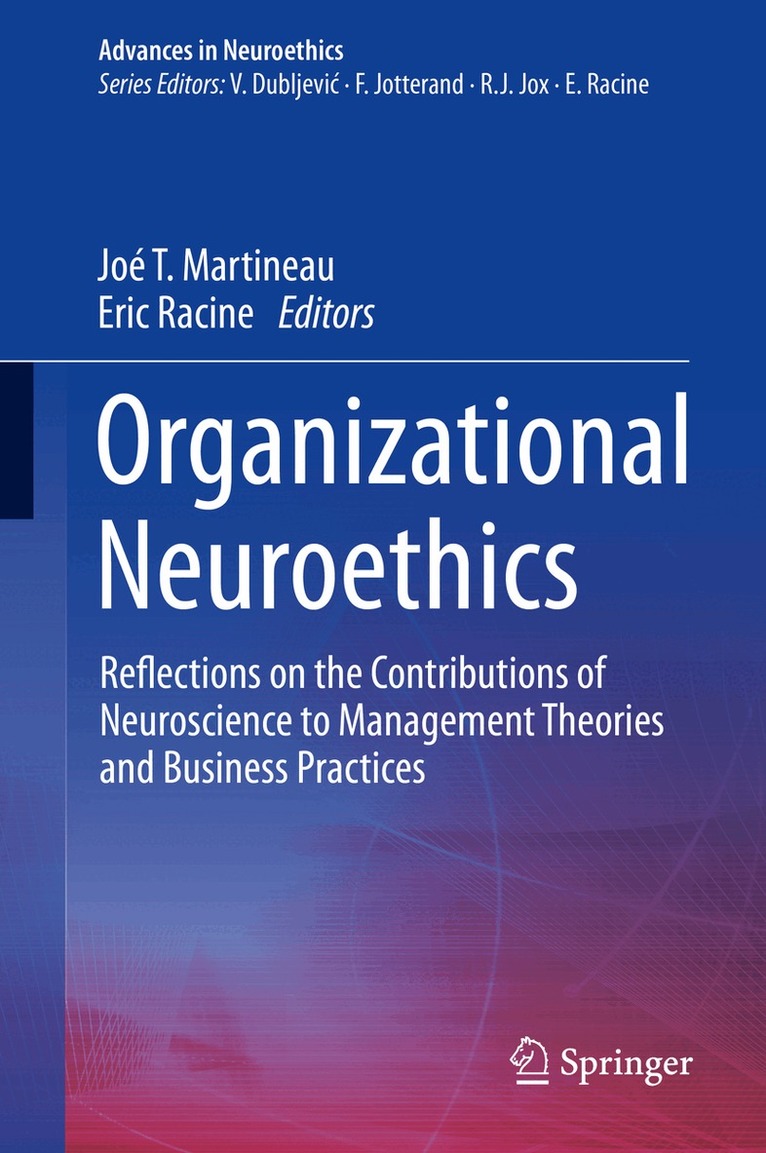
Inbunden, Engelska, 2019
1 727 kr
Skickas inom 10-15 vardagar
Understanding and improving how organizations work and are managed is the object of management research and practice, and this topic is of longstanding interest in the academia and in society at large. More recently, the contribution that the study of the brain could make to, notably, our understanding of decisions, emotional reactions, and behaviors has led to the emergence of the field of “organizational neuroscience”. Within the field of management, organizational neuroscience seeks to explore linkages between neuroscience research, theories, and methods and management research. Its primary goal is to incorporate findings on the cognitive processes underlying the thoughts, behaviors and attitudes of organizational actors in order to better inform management theories, and to assist in understanding, predicting and improving these behaviors in the workplace. As a result, we have seen in the last decade a flurry of research projects and publications in organizational neuroscience, as well as novel or rejuvenated innovations around neuromarketing, neuroleadership, and cognitive enhancement in the work place, to name a few. However, research and practical applications in organizational neuroscience pose profound ethical challenges about, for example, organizational responsibility in the responsible use of scientific innovation. Drawing on recent debates in the field, and in response to upcoming ethical challenges of organization neuroscience, this book introduces “organizational neuroethics” as an emerging interdisciplinary field that addresses the ethics of organizational neuroscience research and applications, as well as the neuroscience of organizational ethics. The first part focuses on the ethics of organizational neuroscience and several chapters tackle the ethics of neuromarketing or neuroleadership and discuss the ethical issues associated with neuroenhancement practice in the workplace. The second part of the book addresses cutting-edge topics in the neuroscience of organizational ethics.Written by international experts in the fields of management, neuroscience, ethics, and social science, this book will be of prime interest to practitioners, researchers and students in the various fields concerned with improving management research and practices, as well as organizational ethics.
Häftad, Engelska, 2021
1 243 kr
Skickas inom 10-15 vardagar
Drawing on recent debates in the field, and in response to upcoming ethical challenges of organization neuroscience, this book introduces “organizational neuroethics” as an emerging interdisciplinary field that addresses the ethics of organizational neuroscience research and applications, as well as the neuroscience of organizational ethics.
Inbunden, Engelska, 2021
2 371 kr
Skickas inom 10-15 vardagar
This diversified approach allows the book to explore the entire spectrum of philosophical, normative, legal and empirical dimensions of intelligent neurotechnologies.
Häftad, Engelska, 2022
1 673 kr
Skickas inom 10-15 vardagar
This diversified approach allows the book to explore the entire spectrum of philosophical, normative, legal and empirical dimensions of intelligent neurotechnologies.
Inbunden, Engelska, 2017
1 335 kr
Skickas inom 10-15 vardagar
This is the first book entirely dedicated to exploring issues associated with the nature of neuroethics. It reflects on some of the underlying assumptions in neuroethics, and the implications of those assumptions with respect to training and education programs, research activities, policy engagement, public discourse, teaching, ethics consultation and mentoring, to name but a few areas of interest. Internationally respected and emerging leaders in the area have taken up the pen to express and debate their views about the development, focus and future of neuroethics. They share their analyses and make recommendations regarding how neuroscience could more effectively explore and tackle its philosophical, ethical, and societal implications.
Häftad, Engelska, 2018
1 225 kr
Skickas inom 10-15 vardagar
It reflects on some of the underlying assumptions in neuroethics, and the implications of those assumptions with respect to training and education programs, research activities, policy engagement, public discourse, teaching, ethics consultation and mentoring, to name but a few areas of interest.
Inbunden, Engelska, 2010
192 kr
Tillfälligt slut