226 kr
Electronic Mediations – serie
- Häftad, Engelska, 2011Poised between hope and despair for a humanity facing an urgent communication crisis, this work by VilÉm Flusser forecasts either the first truly human, infinitely creative society in history or a society of unbearable, oppressive sameness, locked in a pattern it cannot change. First published in German in 1985 and now available in English for the first time, Into the Universe of Technical Images outlines the history of communication technology as a process of increasing abstraction. Flusser charts how communication evolved from direct interaction with the world to mediation through various technologies. The invention of writing marked one significant shift; the invention of photography marked another, heralding the current age of the technical image. The automation of the processing of technical images carries both promise and threat: the promise of freeing humans to play and invent and the threat for networks of automation to proceed independently of humans.
- Häftad, Engelska, 2016
287 kr
Skickas inom 5-8 vardagar
Digital objects, in their simplest form, are data. They are also a new kind of industrial object that pervades every aspect of our life today-as online videos, images, text files, e-mails, blog posts, Facebook events.Yet, despite their ubiquity, the nature of digital objects remains unclear.On the Existence of Digital Objects conducts a philosophical examination of digital objects and their organizing schema by creating a dialogue between Martin Heidegger and Gilbert Simondon, which Yuk Hui contextualizes within the history of computing. How can digital objects be understood according to individualization and individuation? Hui pursues this question through the history of ontology and the study of markup languages and Web ontologies; he investigates the existential structure of digital objects within their systems and milieux. With this relational approach toward digital objects and technical systems, the book addresses alienation, described by Simondon as the consequence of mistakenly viewing technics in opposition to culture.Interdisciplinary in philosophical and technical insights, with close readings of Husserl, Heidegger, and Simondon as well as the history of computing and the Web, Hui’s work develops an original, productive way of thinking about the data and metadata that increasingly define our world. - Häftad, Engelska, 2007
204 kr
Skickas inom 5-8 vardagar
“The Exploit is that rare thing: a book with a clear grasp of how networks operate that also understands the political implications of this emerging form of power. It cuts through the nonsense about how 'free' and 'democratic' networks supposedly are, and it offers a rich analysis of how network protocols create a new kind of control. Essential reading for all theorists, artists, activists, techheads, and hackers of the Net.” -McKenzie Wark, author of A Hacker Manifesto The network has become the core organizational structure for postmodern politics, culture, and life, replacing the modern era’s hierarchical systems. From peer-to-peer file sharing and massive multiplayer online games to contagion vectors of digital or biological viruses and global affiliations of terrorist organizations, the network form has become so invasive that nearly every aspect of contemporary society can be located within it. Borrowing their title from the hacker term for a program that takes advantage of a flaw in a network system, Alexander R. Galloway and Eugene Thacker challenge the widespread assumption that networks are inherently egalitarian. Instead, they contend that there exist new modes of control entirely native to networks, modes that are at once highly centralized and dispersed, corporate and subversive. In this provocative book-length essay, Galloway and Thacker argue that a whole new topology must be invented to resist and reshape the network form, one that is as asymmetrical in relationship to networks as the network is in relation to hierarchy. Alexander R. Galloway is associate professor of culture and communications at New York University and the author of Gaming: Essays on Algorithmic Culture (Minnesota, 2006) and Protocol: How Control Exists after Decentralization. Eugene Thacker is associate professor of new media at the Georgia Institute of Technology and the author of Biomedia (Minnesota, 2004) and The Global Genome: Biotechnology, Politics, and Culture. - Häftad, Engelska, 2024
308 kr
Skickas inom 5-8 vardagar
A groundbreaking critique of the digital world that analyzes its universal technological foundationsWhence that nagging sense that something in the digital is amiss-that, as wonderful as our devices are, time spent on smartphones and computers leaves us sour, enervated, alienated? The Digital and Its Discontents uniquely explains that worry and points us toward a more satisfying relationship between our digital lives and our nondigital selves, one that requires a radical change in the way we incorporate technology into our lives. Aden Evens analyzes universal technological principles-in particular, the binary logic-to show that they encourage certain ways of thinking while making others more challenging or impossible. What is out of reach for any digital machine is contingency, the ontological principle that refuses every rule. As humans engage ourselves and our world ever more through digital machines, we are losing touch with contingency and so banishing from our lives the accidental and unexpected that fuel our most creative and novel possibilities for living. Taking cues from philosophy rather than cultural or media theory, Evens argues that the consequences of this erosion of contingency are significant yet often overlooked because the same values that make the digital seem so desirable also make contingency seem unimportant-without contingency the digital is confined to what has already been thought, and yet the digital’s ubiquity has allowed it to disguise this inherent sterility. Responsive only to desires that meet the demands of its narrow logic, the digital requires its users to practice those same ideological dictates, instituting a hegemony of thought and value sustained by the pervasive presence of digital mechanisms. Interweaving technical and philosophical concepts, The Digital and Its Discontents advances a powerful and urgent argument about the digital and its impact on our lives. Retail e-book files for this title are screen-reader friendly. - Häftad, Engelska, 1999
303 kr
Skickas inom 5-8 vardagar
Considers the cultural and philosophical assumptions underlying virtual reality, and how the technology affects the real world.Virtual reality is in the news and in the movies, on TV and in the air. Why is the technology-or the idea-so prevalent precisely now? What does it mean-what does it do-to us? Digital Sensations looks closely at how the “lived” world is affected by representational forms generated by communication technologies, especially digital and optical virtual technologies.Virtual reality, or VR, is a technological reproduction of the process of perceiving the real, yet that process is filtered through the social realities and embedded cultural assumptions about human bodies and space held by the technology’s creators. Through critical histories of the technologies of vision, light, space, and embodiment, Ken Hillis traces the often contradictory intellectual and metaphysical impulses behind the Western transcendental wish to achieve an ever more perfect copy of the real. He advocates that current and proposed virtual technologies reflect a Western desire to escape the body. Because virtual technologies are new, these histories also address unintended and underconsidered consequences flowing from their rapid dissemination, such as commodifications and the alienation of new forms of surveillance. Exploring topics from VR and other, earlier visual technologies, Hillis’s penetrating perspective on the cultural power of place and space broadens our view of the interplay between social relations and technology. - Häftad, Engelska, 1999
303 kr
Skickas inom 5-8 vardagar
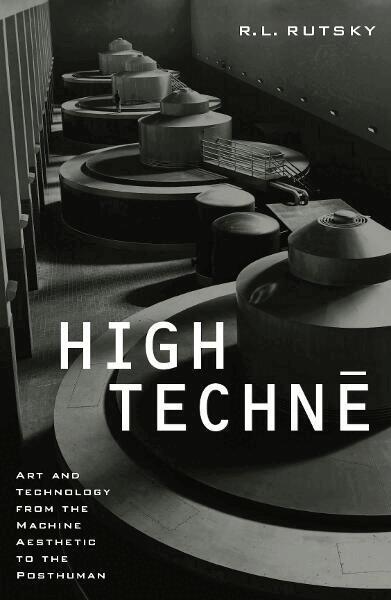
Explores our changing cultural perceptions of the relations between technology and art.In an age of high tech, our experience of technology has changed tremendously, yet the definition of technology has remained largely unquestioned. High Techne redresses this gap in thinking about technology, examining the shifting relations of technology, art, and culture from the beginnings of modernity to contemporary technocultures.Drawing on the Greek root of technology, (techne, generally translated as “art, skill, or craft”), R. L. Rutsky challenges both the modernist notion of technology as an instrument or tool and the conventional idea of a noninstrumental aesthetics. Today, technology and aesthetics have again begun to come together: even basketball shoes are said to exhibit a “high-tech style” and the most advanced technology is called “state of the art.” Rutsky charts the history and vicissitudes of this new high-tech techne up to our day-from Fritz Lang to Octavia Butler, Thomas Edison to Japanese Anime, constructivism to cyberspace.Progressing from the major art movements of modernism to contemporary science fiction and cultural theory, Rutsky provides clear and compelling evidence of a shift in the cultural conceptions of technology and art and demonstrates the centrality of technology to modernism and postmodernism. - Häftad, Engelska, 2008
312 kr
Skickas inom 5-8 vardagar
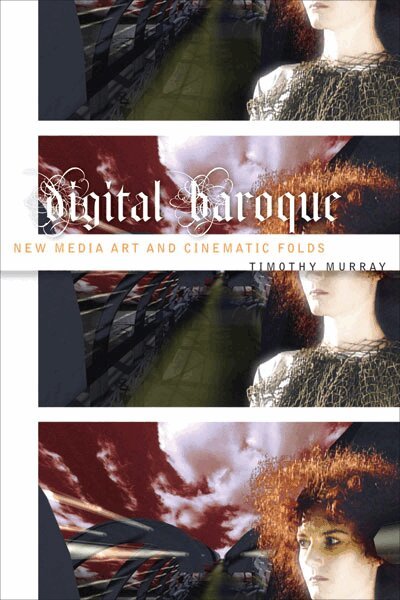
A surprising and original application of theories of new media artIn this intellectually groundbreaking work, Timothy Murray investigates a paradox embodied in the book’s title: What is the relationship between digital, in the form of new media art, and baroque, a highly developed early modern philosophy of art? Making an exquisite and unexpected connection between the old and the new, Digital Baroque analyzes the philosophical paradigms that inform contemporary screen arts. Examining a wide range of art forms, Murray reflects on the rhetorical, emotive, and social forces inherent in the screen arts’ dialogue with early modern concepts. Among the works discussed are digitally oriented films by Peter Greenaway, Jean-Luc Godard, and Chris Marker; video installations by Thierry Kuntzel, Keith Piper, and Renate Ferro; and interactive media works by Toni Dove, David Rokeby, and Jill Scott. Sophisticated readings reveal the electronic psychosocial webs and digital representations that link text, film, and computer. Murray puts forth an innovative Deleuzian psychophilosophical approach-one that argues that understanding new media art requires a fundamental conceptual shift from linear visual projection to nonlinear temporal folds intrinsic to the digital form. - Häftad, Engelska, 2005
284 kr
Skickas inom 10-15 vardagar
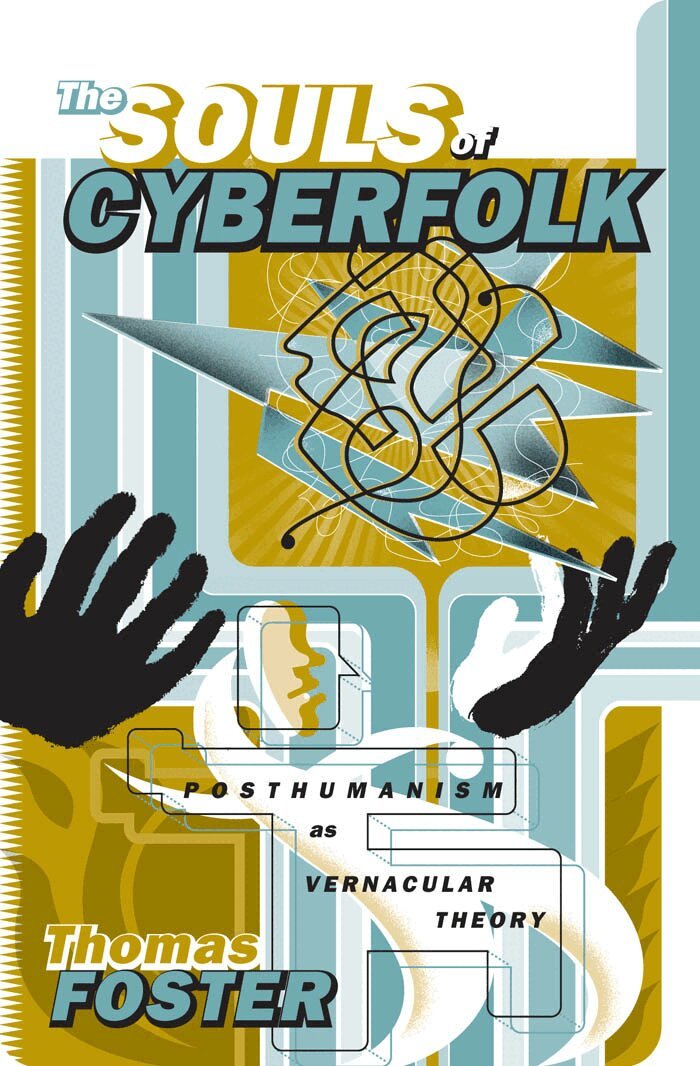
In The Souls of Cyberfolk, Thomas Foster traces the transformation of cyberpunk from a literary movement into a multimedia cultural phenomenon. He examines how cyberpunk defined a framework for thinking about the cultural implications of new technologies - a framework flexible enough to incorporate issues of gender, queer sexualities, and ethnic and racial differences as well as developments in nationalist models of citizenship and global economic flows. Beginning with William Gibson's paradigmatic text Neuromancer, and continuing through the works of Maureen McHugh, Melissa Scott, Neal Stephenson, Greg Egan, and Ken MacLeod, Foster measures cyberpunk's reach into social and philosophical movements (the Extropy Institute), commercial art (Hajime Sorayama's gynoids or sexy robot illustrations), comic books (Deathlok), film (Robocop), and music video (from Billy Idol's Cyberpunk album). The central challenge that cyberpunk poses for cultural critics, Foster argues, is to understand what happens when the technological denaturalization of physical embodiment becomes the norm. This question acquires urgency as the focus of his book moves beyond the typical technocultural concerns with gender and sexuality to consider race and models of citizenship - a shift that constitutes one of the book's most original contributions to scholarship on the topic. - Häftad, Engelska, 2002
293 kr
Skickas inom 10-15 vardagar
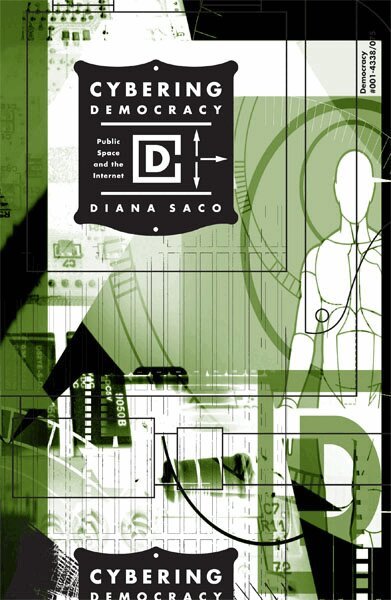
Reconceptualizes the relationship between participatory democracy, technology, and spaceThe Internet has been billed by some proponents as an "electronic agora" ushering in a "new Athenian age of democracy." That assertion assumes that cyberspace’s virtual environment is compatible with democratic practice. But the anonymous sociality that is intrinsic to the Internet seems at odds with theories of democracy that presuppose the possibility, at least, of face-to-face meetings among citizens. The Internet, then, raises provocative questions about democratic participation: Must the public sphere exist as a physical space? Does citizenship require a bodily presence?In Cybering Democracy, Diana Saco boldly reconceptualizes the relationship between democratic participation and spatial realities both actual and virtual. She argues that cyberspace must be viewed as a produced social space, one that fruitfully confounds the ordering conventions of our physical spaces. Within this innovative framework, Saco investigates recent and ongoing debates over cryptography, hacking, privacy, national security, information control, and Internet culture, focusing on how different online practices have shaped this particular social space. In the process, she highlights fundamental issues about the significance of corporeality in the development of civic-mindedness, the exercise of citizenship, and the politics of collective action. - Häftad, Engelska, 2002
338 kr
Skickas inom 5-8 vardagar
The first comprehensive look at the effect of new technologies on contemporary American fictionBringing together cognitive science and literary analysis to map a new "media ecology," Cognitive Fictions limns an evolutionary process in which literature must find its place in an artificial environment partly produced and thoroughly mediated by technological means. Joseph Tabbi provides a penetrating account of a developing consciousness emerging from the struggle between print and electronic systems of communication.Central to Tabbi’s work is the relation between the arrangement of communicating "modules" that cognitive science uses to describe the human mind and the arrangement of visual, verbal, and aural media in our technological culture. He looks at particular literary works by Thomas Pynchon, Richard Powers, David Markson, Lynne Tillman, Paul Auster, and others as both inscriptions of thought consistent with distributed cognitive models, and as self-creations out of the media environment. The first close reading of contemporary American writing in the light of systems theory and cognitive science, Cognitive Fictions makes needed sense of how the moment-by-moment operations of human thought find narrative form in a world increasingly defined by competing and often incompatible representations. - Häftad, Engelska, 2004
294 kr
Skickas inom 5-8 vardagar
Ten years after his death, Vilém Flusser's reputation as one of Europe's most original modern philosophers continues to grow. Increasingly influential in Europe and Latin America, the Prague-born intellectual's thought has until now remained largely unknown in the English-speaking world. His innovative writings theorize—and ultimately embrace—the epochal shift that humanity is undergoing from what he termed "linear thinking" (based on writing) toward a new form of multidimensional, visual thinking embodied by digital culture. For Flusser, these new modes and technologies of communication make possible a society (the "telematic" society) in which dialogue between people becomes the supreme value.The first English-language anthology of Flusser's work, this volume displays the extraordinary range and subtlety of his intellect. A number of the essays collected here introduce and elaborate his theory of communication, influenced by thinkers as diverse as Martin Buber, Edmund Husserl, and Thomas Kuhn. While taking dystopian, posthuman visions of communication technologies into account, Flusser celebrates their liberatory and humanizing aspects. For Flusser, existence was akin to being thrown into an abyss of absurd experience or "bottomlessness"; becoming human required creating meaning out of this painful event by consciously connecting with others, in part through such technologies. Other essays present Flusser's thoughts on the future of writing, the revolutionary nature of photography, the relationship between exile and creativity, and his unconventional concept of posthistory. Taken together, these essays confirm Flusser's importance and prescience within contemporary philosophy.Vilém Flusser (1920–1991) was born in Prague and taught philosophy in Brazil. Andreas Ströhl is director of the film department at the Goethe-Institut Inter Nationes in Munich. Erik Eisel works for a software technology company in Southern California. - Häftad, Engelska, 2001
267 kr
Skickas inom 5-8 vardagar
A clear explanation and provocative look at the impact of new technologies on world society.Needing guidance and seeking insight, the Council of Europe approached Pierre LÉvy, one of the world’s most important and well-respected theorists of digital culture, for a report on the state (and, frankly, the nature) of cyberspace. The result is this extraordinary document, a perfectly lucid and accessible description of cyberspace-from infrastructure to practical applications-along with an inspired, far-reaching exploration of its ramifications. A window on the digital world for the technologically timid, the book also offers a brilliant vision of the philosophical and social realities and possibilities of cyberspace for the adept and novice alike.In an overview, LÉvy discusses the distinguishing features of cyberspace and cyberculture from anthropological, philosophical, cultural, and sociological points of view. An optimist about the future potential of cyberspace, he eloquently argues that technology-and specifically the infrastructure of cyberspace, the Internet-can have a transformative effect on global society. Some of the issues he takes up are new art forms; changes in relationships to knowledge, education, and training; the preservation of linguistic and cultural differences; the emergence and implications of collective intelligence; the problems of social exclusion; and the impact of new technology on the city and democracy in general. In considerable detail, LÉvy describes the ways in which cyberspace will help promote the growth of democracy, primarily through the participation of individuals or groups. His analysis is enlivened by his own personal impressions of cyberculture-garnered from bulletin boards, mailing lists, virtual reality demonstrations, and simulations. Immediate in its details, visionary in its scope, deeply informed yet free of unnecessary technical language, Cyberculture is the book we require in our digital age. - Häftad, Engelska, 2001
275 kr
Skickas inom 5-8 vardagar
A provocative investigation into the social and cultural implications of the Internet by a leading cultural critic.As the Internet has become more and more a part of our daily lives, responses to its impact on culture and society have tended toward the extremes, hopeful or pessimistic. Fears that the Internet undermines community, inhibits social interaction, exacerbates economic and racial divisions, and facilitates greater state or corporate intrusion into our lives are balanced by excitement about the transformative qualities of the new medium and its potential to stimulate individual creativity, inspire new social forms, and further democratization.In What’s the Matter with the Internet?, leading cultural theorist Mark Poster offers a sophisticated and astute assessment of the potential the new medium has to redefine culture and politics. Avoiding the mindless hype and meaningless jargon that has characterized much of the debate about the future of the Web, he details what truly distinguishes the Internet from other media and the implications these novel properties have for such vital issues as authorship, national identity and global citizenship, the fate of ethnicity and race, and democracy. Arguing that the Internet demands a social and cultural theory appropriate to the specific qualities of cyberspace, Poster reformulates the ideas of thinkers associated with our understanding of postmodern culture and the media (including Foucault, Deleuze, Heidegger, Baudrillard, and Derrida) to account for and illuminate the virtual world, paying particular attention to its political dimensions and the nature of identity. In this innovative analysis, Poster acknowledges that although the colonization of the Internet by corporations and governments does threaten to retard its capacity to bring about genuine change, the new medium is still capable of transforming both contemporary social practices and the way we see the world and ourselves. - Häftad, Engelska, 2001
268 kr
Skickas inom 5-8 vardagar
An original exploration of the ways cyberspace affects human experience.New technologies suggest new ideas about embodiment: our "reach" extends to global sites through the Internet; we enter cyberspace through the engines of virtual reality. In this book, a leading philosopher of technology explores the meaning of bodies in technology-how the sense of our bodies and of our orientation in the world is affected by the various information technologies.Bodies in Technology begins with an analysis of embodiment in cyberspace, then moves on to consider ways in which social theorists have interpreted or overlooked these conditions. An astute and sensible judge of these theories, Don Ihde is a uniquely provocative and helpful guide through contemporary thinking about technology and embodiment, drawing on sources and examples as various as video games, popular films, the workings of e-mail, and virtual reality techniques.Charting the historical, philosophical, and practical territory between virtual reality and real life, this work is an important contribution to the national conversation on the impact technology-and information technology in particular-has on our lives in a wired, global age. - Häftad, Engelska, 2007
307 kr
Skickas inom 10-15 vardagar
Database Aesthetics examines the database as cultural and aesthetic form, explaining how artists have participated in network culture by creating data art. The essays in this collection look at how an aesthetic emerges when artists use the vast amounts of available information as their medium. Here, the ways information is ordered and organized become artistic choices, and artists have an essential role in influencing and critiquing the digitization of daily life. Contributors: Sharon Daniel, U of California, Santa Cruz; Steve Deitz, Carleton College; Lynn Hershman Leeson, U of California, Davis; George Legrady, U of California, Santa Barbara; Eduardo Kac, School of the Art Institute of Chicago; Norman Klein, California Institute of the Arts; John Klima; Lev Manovich, U of California, San Diego; Robert F. Nideffer, U of California, Irvine; Nancy Paterson, Ontario College of Art and Design; Christiane Paul, School of Visual Arts in New York; Marko Peljhan, U of California, Santa Barbara; Warren Sack, U of California, Santa Cruz; Bill Seaman, Rhode Island School of Design; Grahame Weinbren, School of Visual Arts, New York. Victoria Vesna is a media artist, and professor and chair of the Department of Design and Media Arts at the University of California, Los Angeles. - Häftad, Engelska, 2004
294 kr
Skickas inom 5-8 vardagar
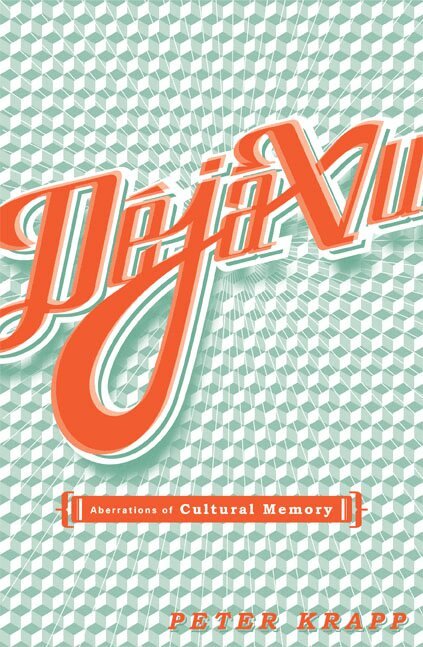
The pitfalls of cultural memory and forgetting, understood through the genealogy of the phenomenon called dÉjÀ vuReferring to a past that never was, dÉjÀ vu shares a structure not only with fiction, but also with the ever more sophisticated effects of media technology. Tracing the term from the end of the nineteenth century, when it was first popularized in the pages of the Revue philosophique, Peter Krapp examines the genealogy and history of the singular and unrepeatable experience of dÉjÀ vu. This provocative book offers a refreshing counterpoint to the clichÉd celebrations of cultural memory and forces us do a double take on the sanctimonious warnings against forgetting so common in our time.Disturbances of cultural memory-screen memories, false recognitions, premonitions-disrupt the comfort zone of memorial culture: strictly speaking, dÉjÀ vu is neither a failure of memory nor a form of forgetting. Krapp’s analysis of such disturbances in literature, art, and mass media introduces, historicizes, and theorizes what it means to speak of an economy of attention or distraction. Reaching from the early psychoanalytic texts of Sigmund Freud to the plays of Heiner MÜller, this exploration of the effects of dÉjÀ vu pivots around the work of Walter Benjamin and includes readings of kitsch and aura in Andy Warhol’s work, of cinematic violence and certain exaggerated claims about shooting and cutting, of the memorial character of architecture, and of the high expectations raised by the Internet. - Häftad, Engelska, 2004
284 kr
Skickas inom 10-15 vardagar
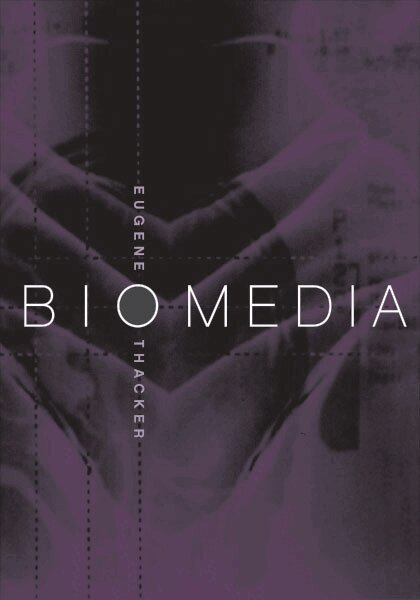
The merging of computer science and molecular biology, genetic codes and computer codesAs biotechnology defines the new millennium, genetic codes and computer codes increasingly merge-life understood as data, flesh rendered programmable. Where this trend will take us, and what it might mean, is what concerns Eugene Thacker in this timely book, a penetrating look into the intersection of molecular biology and computer science in our day and its likely ramifications for the future.Integrating approaches from science and media studies, Biomedia is a critical analysis of research fields that explore relationships between biologies and technologies, between genetic and computer “codes.” In doing so, the book looks beyond the familiar examples of cloning, genetic engineering, and gene therapy-fields based on the centrality of DNA or genes-to emerging fields in which “life” is often understood as “information.” Focusing especially on interactions between genetic and computer codes, or between “life” and “information,” Thacker shows how each kind of “body” produced-from biochip to DNA computer-demonstrates how molecular biology and computer science are interwoven to provide unique means of understanding and controlling living matter.Throughout, Thacker provides in-depth accounts of theoretical issues implicit in biotechnical artifacts-issues that arise in the fields of bioinformatics, proteomics, systems biology, and biocomputing. Research in biotechnology, Biomedia suggests, flouts our assumptions about the division between biological and technological systems. New ways of thinking about this division are needed if we are to understand the cultural, social, and philosophical dimensions of such research, and this book marks a significant advance in the coming intellectual revolution. - Häftad, Engelska, 2003
275 kr
Skickas inom 5-8 vardagar
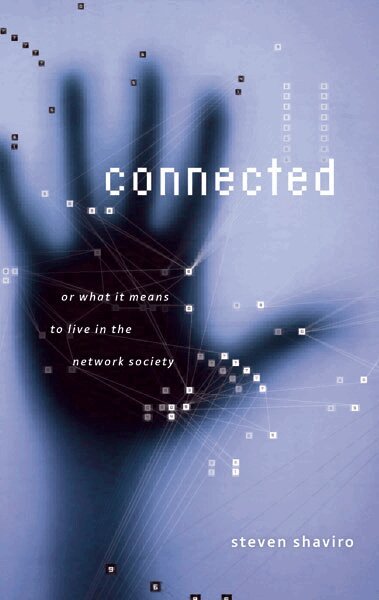
In the twenty-first century, a network society is emerging. Fragmented, visually saturated, characterized by rapid technological change and constant social upheavals, it is dizzying, excessive, and sometimes surreal. In this breathtaking work, Steven Shaviro investigates popular culture, new technologies, political change, and community disruption and concludes that science fiction and social reality have become virtually indistinguishable. Connected is made up of a series of mini-essays-on cyberpunk, hip-hop, film noir, Web surfing, greed, electronic surveillance, pervasive multimedia, psychedelic drugs, artificial intelligence, evolutionary psychology, and the architecture of Frank Gehry, among other topics. Shaviro argues that our strange new world is increasingly being transformed in ways, and by devices, that seem to come out of the pages of science fiction, even while the world itself is becoming a futuristic landscape. The result is that science fiction provides the most useful social theory, the only form that manages to be as radical as reality itself. Connected looks at how our networked environment has manifested itself in the work of J. G. Ballard, William S. Burroughs, Philip K. Dick, William Gibson, K. W. Jeter, and others. Shaviro focuses on science fiction not only as a form of cultural commentary but also as a prescient forum in which to explore the forces that are morphing our world into a sort of virtual reality game. Original and compelling, Connected shows how the continual experimentation of science fiction, like science and technology themselves, conjures the invisible social and economic forces that surround us. - Häftad, Engelska, 2005
198 kr
Skickas inom 5-8 vardagar
Since the game Tomb Raider was first released in 1996, its protagonist Lara Croft has become an international celebrity. The virtual archaeologist-adventuress has been featured in various sequels to the original game, a line of action figures, two Hollywood films starring Angelina Jolie, forty comic books, a series of novels, and a variety of clothing, merchandise, and ephemera. She has appeared on the covers of Time and Newsweek, spawned innumerable Internet fan sites and a library of adulatory fan fiction, become a pornographic sex symbol, and even inspired a look-alike beauty pageant. Astrid Deuber-Mankowsky's groundbreaking study examines Lara Croft as a cyber heroine - a female body ubiquitously inhabited by game players, an icon of both female strength and male objectification, and the virtual future of fame. Despite Croft's prominence there have been few critical inquiries into her bridging of the boundary between virtual and real worlds or the extent to which she reflects and influences the image of women in digital media. First published in German and revised for this English-language edition, this book is an innovative analysis of the multimedia heroine, tracing the top-down marketing strategies and bottom-up frenzy that precipitated the Lara Croft phenomenon. For girls and women, Croft is a symbol of empowerment, a tough and self-assured riot grrl who has opened up the overwhelmingly masculinized world of computer gaming to female participants. At the same time, she personifies both heterosexual male fantasies and the twinned processes of globalization and cultural imperialism. Drawing on feminist and cultural studies, Deuber-Mankowsky sees Croft as symptomatic of the new media environment and its tendency to erase all qualitative difference, even sexual difference. - Häftad, Engelska, 2005
276 kr
Skickas inom 10-15 vardagar
While corporations, governmental groups, and public relations firms debated the best way to memorialize the event of 9/11, sites of commemoration could be seen across the country and especially on the Internet. Greg Ulmer suggests that this reality points us to a new sense of monumentality, one that is collaborative in nature rather than iconic. From a do-it-yourself Mount Rushmore to an automated tribute to the devastating annual toll of traffic deaths in the United States, Electronic Monuments describes commemoration as a fundamental experience, joining individual and collective identity, and adapting both to the emerging apparatus of "electracy," or digital literacy. Concerns about the destruction of civic life caused by the society of the spectacle are refocused on the question of how a collectivity remembers who or what it is. Ulmer proposes that the Internet makes it possible for monumentality to become a primary site of self-knowledge, one that supports a new politics, ethics, and dimension of education. The Internet thus holds the promise of bringing citizens back into the political equation as witnesses and monitors. Gregory L. Ulmer is professor of English and media studies at the University of Florida, Gainesville. - Häftad, Engelska, 2007
243 kr
Skickas inom 10-15 vardagar
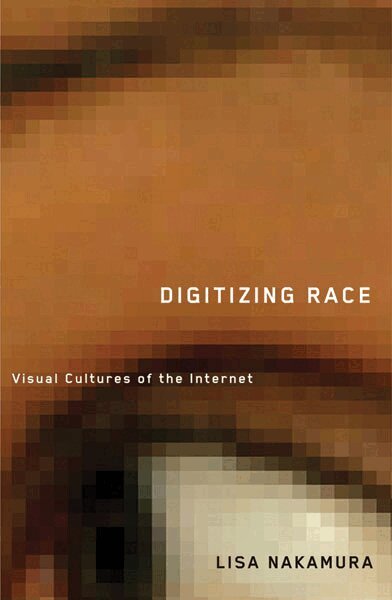
In the nineties, neoliberalism simultaneously provided the context for the Internet’s rapid uptake in the United States and discouraged public conversations about racial politics. At the same time many scholars lauded the widespread use of text-driven interfaces as a solution to the problem of racial intolerance. Today’s online world is witnessing text-driven interfaces such as e-mail and instant messaging giving way to far more visually intensive and commercially driven media forms that not only reveal but showcase people’s racial, ethnic, and gender identity. Lisa Nakamura, a leading scholar in the examination of race in digital media, uses case studies of popular yet rarely examined uses of the Internet such as pregnancy Web sites, instant messaging, and online petitions and quizzes to look at the emergence of race-, ethnic-, and gender-identified visual cultures. While popular media such as Hollywood cinema continue to depict nonwhite nonmales as passive audiences or consumers of digital media rather than as producers, Nakamura argues the contrary-with examples ranging from Jennifer Lopez music videos; films including the Matrix trilogy, Gattaca, and Minority Report; and online joke sites-that users of color and women use the Internet to vigorously articulate their own types of virtual community, avatar bodies, and racial politics. Lisa Nakamura is associate professor of speech communication and Asian American studies at the University of Illinois, Urbana-Champaign. She is the author of Cybertypes: Race, Ethnicity, and Identity on the Internet and coeditor, with Beth Kolko and Gilbert Rodman, of Race in Cyberspace. - Häftad, Engelska, 2006
275 kr
Skickas inom 5-8 vardagar
Since its inception, narratology has developed primarily as an investigation of literary narrative fiction. Linguists, folklorists, psychologists, and sociologists have expanded the inquiry toward oral storytelling, but narratology remains primarily concerned with language-supported stories. In Avatars of Story, Marie-Laure Ryan moves beyond literary works to examine other media, especially electronic narrative forms. By grappling with semiotic media other than language and technology other than print, she reveals how story, a form of meaning that transcends cultures and media, achieves diversity by presenting itself under multiple avatars. Ryan begins by considering, among other texts, a 1989 Cubs-Giants baseball broadcast, the reality television show Survivor, and the film The Truman Show. In all these texts, she sees a narrative that organizes meaning without benefit of hindsight, anticipating the real-time dimension of computer games. She then expands her inquiry to new media. In a discussion covering text-based interactive fiction such as Spider and Web and Galatea, hypertexts such as Califia and Patchwork Girl, multimedia works such as Juvenate, Web-based short narratives, and FaÇade, a multimedia, AI-supported project in interactive drama, she focuses on how narrative meaning is affected by the authoring software, such as the Infocom parser, the Storyspace hypertext-producing system, and the programs Flash and Director. She also examines arguments that have been brought up against considering computer games such as The Sims and EverQuest as a form of narrative, and responds by outlining an approach to computer games that reconciles their imaginative and strategic dimension. In doing so, Ryan distinguishes a wide spectrum of narrative modes, such as utilitarian, illustrative, indeterminate, metaphorical, participatory, emergent, and simulative. Ultimately, Ryan stresses the difficulty of reconciling narrativity with interactivity and anticipates the time when media will provide new ways to experience stories. Marie-Laure Ryan is an independent scholar and the author of, most recently, Narrative as Virtual Reality: Immersion and Interactivity in Literature and Electronic Media. - Häftad, Engelska, 2006
298 kr
Skickas inom 10-15 vardagar
Networks and computer-mediated communication now penetrate the spaces of everyday life at a fundamental level. We communicate, work, bank, date, check the weather, and fuel conspiracy theories online. In each instance, users interact with network technology as much more than a computational device. Cyberspaces of Everyday Life provides a critical framework for understanding how the Internet takes part in the production of social space. Mark Nunes draws on the spatial analysis work of Henri Lefebvre to make sense of cyberspace as a social product. Looking at online education, he explores the ways in which the Internet restructures the university. Nunes also examines social uses of the World Wide Web and illustrates the ways online communication alters the relation between the global and the local. He also applies Deleuzian theory to emphasize computer-mediated communications’ performative elements of spatial production. Addressing the social and cultural implications of spam and anti-spam legislation, as well as how the burst Internet stock bubble and the Patriot Act have affected the relationship between networked spaces and daily living, Cyberspaces of Everyday Life sheds new light on the question of virtual space and its role in the offline world. Mark Nunes is associate professor and chair of the English, Technical Communication, and Media Arts Department at Southern Polytechnic State University. - Häftad, Engelska, 2006
198 kr
Skickas inom 5-8 vardagar
Video games have been a central feature of the cultural landscape for over twenty years and now rival older media like movies, television, and music in popularity and cultural influence. Yet there have been relatively few attempts to understand the video game as an independent medium. Most such efforts focus on the earliest generation of text-based adventures (Zork, for example) and have little to say about such visually and conceptually sophisticated games as Final Fantasy X, Shenmue, Grand Theft Auto, Halo, and The Sims, in which players inhabit elaborately detailed worlds and manipulate digital avatars with a vast-and in some cases, almost unlimited-array of actions and choices. In Gaming, Alexander Galloway instead considers the video game as a distinct cultural form that demands a new and unique interpretive framework. Drawing on a wide range of disciplines, particularly critical theory and media studies, he analyzes video games as something to be played rather than as texts to be read, and traces in five concise chapters how the “algorithmic culture” created by video games intersects with theories of visuality, realism, allegory, and the avant-garde. If photographs are images and films are moving images, then, Galloway asserts, video games are best defined as actions. Using examples from more than fifty video games, Galloway constructs a classification system of action in video games, incorporating standard elements of gameplay as well as software crashes, network lags, and the use of cheats and game hacks. In subsequent chapters, he explores the overlap between the conventions of film and video games, the political and cultural implications of gaming practices, the visual environment of video games, and the status of games as an emerging cultural form. Together, these essays offer a new conception of gaming and, more broadly, of electronic culture as a whole, one that celebrates and does not lament the qualities of the digital age. Alexander R. Galloway is assistant professor of culture and communication at New York University and author of Protocol: How Control Exists after Decentralization. - Häftad, Engelska, 2008
212 kr
Skickas inom 5-8 vardagar
How open access can transform academia for the betterIn the sciences, the merits and ramifications of open access-the electronic publishing model that gives readers free, irrevocable, worldwide, and perpetual access to research-have been vigorously debated. Open access is now increasingly proposed as a valid means of both disseminating knowledge and career advancement. In Digitize This Book! Gary Hall presents a timely and ambitious polemic on the potential that open access publishing has to transform both “papercentric” humanities scholarship and the institution of the university itself.Hall, a pioneer in open access publishing in the humanities, explores the new possibilities that digital media have for creatively and productively blurring the boundaries that separate not just disciplinary fields but also authors from readers. Hall focuses specifically on how open access publishing and archiving can revitalize the field of cultural studies by making it easier to rethink academia and its institutions. At the same time, by unsettling the processes and categories of scholarship, open access raises broader questions about the role of the university as a whole, forcefully challenging both its established identity as an elite ivory tower and its more recent reinvention under the tenets of neoliberalism as knowledge factory and profit center.Rigorously interrogating the intellectual, political, and ethical implications of open access, Digitize This Book! is a radical call for democratizing access to knowledge and transforming the structures of academic and institutional authority and legitimacy. - Häftad, Engelska, 2008
298 kr
Skickas inom 10-15 vardagar
The essays in Small Tech investigate the cultural impact of digital tools and provide fresh perspectives on mobile technologies such as iPods, digital cameras, and PDAs and software functions like cut, copy, and paste and WYSIWYG. Together they advance new thinking about digital environments. Contributors: Wendy Warren Austin, Edinboro U; Jim Bizzocchi, Simon Fraser U; Collin Gifford Brooke, Syracuse U; Paul Cesarini, Bowling Green State U; Veronique Chance, U of London; Johanna Drucker, U of Virginia; Jenny Edbauer, Penn State U; Robert A. Emmons Jr., Rutgers U; Johndan Johnson-Eilola, Clarkson U; Richard Kahn, UCLA; Douglas Kellner, UCLA; Karla Saari Kitalong, U of Central Florida; Steve Mann, U of Toronto; Lev Manovich, U of California, San Diego; Adrian Miles, RMIT U; Jason Nolan, Ryerson U; Julian Oliver; Mark Paterson, U of the West of England, Bristol; Isabel Pedersen, Ryerson U; Michael Pennell, U of Rhode Island; Joanna Castner Post, U of Central Arkansas; Teri Rueb, Rhode Island School of Design; James J. Sosnoski; Lance State, Fordham U; Jason Swarts, North Carolina State U; Barry Wellman, U of Toronto; Sean D. Williams, Clemson U; Jeremy Yuille, RMIT U. Byron Hawk is assistant professor of English at George Mason University.David M. Rieder is assistant professor of English at North Carolina State University.Ollie Oviedo is associate professor of English at Eastern New Mexico University. - Häftad, Engelska, 2008
303 kr
Skickas inom 5-8 vardagar
A sophisticated consideration of technologies of reading in the digital age“Every reading is, strictly speaking, unrepeatable; something in it, of it, will vary. Recollections of reading accumulate in relation to this iterable specificity; each takes its predecessors as its foundation, each inflects them with its backward-looking futurity.” In Ex-foliations, Terry Harpold investigates paradoxes of reading’s backward glances in the theory and literature of the digital field.In original analyses of Vannevar Bush’s Memex and Ted Nelson’s Xanadu, and in innovative readings of early hypertext fictions by Michael Joyce and Shelley Jackson, Harpold asserts that we should return to these landmarks of new media scholarship with newly focused attention on questions of media obsolescence, changing user interface designs, and the mutability of reading. In these reading machines, Harpold proposes, we may detect traits of an unreadable surface-the real limit of the machines’ operations and of the reader’s memories-on which text and image are projected in the late age of print. - Häftad, Engelska, 2009
243 kr
Skickas inom 10-15 vardagar
The first book to focus exclusively on the tactics and goals of new media art activistsTactical media describes interventionist media art practices that engage and critique the dominant political and economic order. Rather than taking to the streets and staging spectacular protests, the practitioners of tactical media engage in an aesthetic politics of disruption, intervention, and education. From They Rule, an interactive map of the myriad connections between the world’s corporate and political elite created by Josh On and Futurefarmers, to Black Shoals, a financial market visualization that is intended to be both aesthetically and politically disruptive, they embrace a broad range of oppositional practices.In Tactical Media, Rita Raley provides a critical exploration of the new media art activism that has emerged out of, and in direct response to, postindustrialism and neoliberal globalization. Through close readings of projects by the DoEAT group, the Critical Art Ensemble, Electronic Civil Disobedience, and other tactical media groups, she articulates their divergent methods and goals and locates a virtuosity that is also boldly political. Contemporary models of resistance and dissent, she finds, mimic the decentralized and virtual operations of global capital and the post-9/11 security state to exploit and undermine the system from within. Emphasizing the profound shift from strategy to tactics that informs new media art-activism, Raley assesses the efficacy of its symbolic performances, gamings, visualizations, and hacks. With its cogent analyses of new media art and its social impact, Tactical Media makes a timely and much needed contribution to wider debates about political activism, contemporary art, and digital technology. - Häftad, Engelska, 2011
298 kr
Skickas inom 10-15 vardagar
From flight simulators and first-person shooters to MMPOG and innovative strategy games like 2008’s Spore, computer games owe their development to computer simulation and imaging produced by and for the military during the Cold War. To understand their place in contemporary culture, Patrick Crogan argues, we must first understand the military logics that created and continue to inform them. Gameplay Mode situates computer games and gaming within the contemporary technocultural moment, connecting them to developments in the conceptualization of pure war since the Second World War and the evolution of simulation as both a technological achievement and a sociopolitical tool.Crogan begins by locating the origins of computer games in the development of cybernetic weapons systems in the 1940s, the U.S. Air Force’s attempt to use computer simulation to protect the country against nuclear attack, and the U.S. military’s development of the SIMNET simulated battlefield network in the late 1980s. He then examines specific game modes and genres in detail, from the creation of virtual space in fight simulation games and the co-option of narrative forms in gameplay to the continuities between online gaming sociality and real-world communities and the potential of experimental or artgame projects like September 12th: A Toy World and Painstation, to critique conventional computer games. Drawing on critical theoretical perspectives on computer-based technoculture, Crogan reveals the profound extent to which today’s computer games-and the wider culture they increasingly influence-are informed by the technoscientific program they inherited from the military-industrial complex. But, Crogan concludes, games can play with, as well as play out, their underlying logic, offering the potential for computer gaming to anticipate a different, more peaceful and hopeful future. - Häftad, Engelska, 2009
294 kr
Skickas inom 5-8 vardagar
Revealing how networks reopen our understanding of political discourse todaySignificantly advancing our notion of what constitutes a network, Philip Armstrong proposes a rethinking of political public space that specifically separates networks from the current popular discussion of globalization and information technology.Analyzing a wide range of Jean-Luc Nancy’s works, Reticulations shows how his project of articulating the political in terms of singularities, pluralities, and multiplicities can deepen our understanding of networks and how they influence community and politics. Even more striking is the way Armstrong associates this general complex in Nancy’s writing with his concern for what Nancy calls the retreat of the political. Armstrong highlights what Nancy’s perspective on networks reveals about movement politics as seen in the 1999 protests in Seattle against the World Trade Organization, the impact of technology on citizenship, and finally how this perspective critiques the model of networked communism constructed by Hardt and Negri. Contesting the exclusive link between technology and networks, Reticulations ultimately demonstrates how network society creates an entirely new politics, one surprisingly rooted in community.