Media and Public Affairs – serie
Visar alla böcker i serien Media and Public Affairs. Handla med fri frakt och snabb leverans.
18 produkter
18 produkter
Häftad, Engelska, 2007
464 kr
Skickas inom 3-6 vardagar
Ever since the invention of the telegraph, journalists have sought to remove the barriers of time and space. Today, we readily accept that reporters can jet quickly to a distant location and broadcast instantly from a satellite-connected, video-enabled cell phone hanging from their belts. But now that live news coverage is possible from virtually anywhere, is foreign correspondence better? And what are the implications of recent changes in journalistic technology for policy makers and their constituents? In From Pigeons to News Portals, edited by David D. Perlmutter and John Maxwell Hamilton, scholars and journalists survey, probe, and demystify the new foreign correspondence that has emerged from rapidly changing media technology. These distinguished authors challenge long-held beliefs about foreign news coverage, not the least of which is whether, in our interconnected world, such a thing as ""foreign news"" even exists anymore. Essays explore the ways people have used new media technology - from satellites and cell phones to the Internet - to affect content, delivery modes, and amount and style of coverage. They examine the ways in which speedy reporting conflicts with in-depth reporting, the pros and cons of ""parachute"" journalism, the declining dominance of mainstream media as a source of foreign news, and the implications of this new foreign correspondence for foreign policy. Entertainment media such as film, television, and video gaming form worldwide opinions about America, often in negative ways. Meanwhile, live reporting abroad is both a blessing and curse for foreign policy makers. Because foreign news is so vital to effective policy making and citizenship, we imperil our future by failing to understand the changes technology brings and how we can wrest the best practice out of those changes. This provocative volume offers valuable insights and analyses to help us better understand the evolving state of foreign news.
Inbunden, Engelska, 2010
742 kr
Skickas inom 3-6 vardagar
Negotiating in the Press offers a new interpretation of an otherwise dark moment in American journalism. Rather than emphasise the familiar story of lost journalistic freedom during World War I, Joseph R. Hayden describes the press's newfound power in the war's aftermath - that seminal moment when journalists discovered their ability to help broker peace talks. He examines the role of the American press at the Paris Peace Conference of 1919, looking at journalists' influence on the peace process and their relationship to heads of state and other delegation members. Challenging prevailing historical accounts that assume the press was peripheral to the quest for peace, Hayden demonstrates that journalists instead played an integral part in the talks, by serving as ""public ambassadors."" During the late 1910s, as World War I finally came to a close, American journalists and diplomats found themselves working in unlikely proximity, with correspondents occasionally performing diplomatic duties and diplomats sometimes courting publicity. The efforts of both groups to facilitate the peace talks at Versailles arose amidst the vision of a ""new diplomacy,"" one characterized by openness, information sharing, and public accountability. Using evidence from memoirs, official records, and contemporary periodicals, Hayden reveals that participants in the Paris Peace Conference continually wrestled with ideas about the roles of the press and, through the press, the people. American journalists reported on an abundance of information in Paris, and negotiators could not resist the useful leverage that publicity provided. Peacemaking via publicity, a now-obscure dimension of progressive statecraft, provided a powerful ideological ethos. It hinted at dynamically altered roles for journalists and diplomats, offered hope for a world desperate for optimism and order, and, finally, suggested that the fruits of America's great age of reform might be shared with a Europe exhausted by war. The peace conference of 1919, Hayden demonstrates, marked a decisive stage in the history of American journalism, a coming of age for many news organisations. By detailing what journalists did before, during, and after the Paris talks, he tells us a great deal about how the negotiators and the Wilson administration worked throughout 1919. Ultimately, he provides a richer integrative view of peacemaking as a whole. An engaging analysis of diplomacy and the Fourth Estate, Negotiating in the Press offers a fascinating look at how leading nations democratized foreign policy a century ago and ushered in the dawn of public diplomacy.
Häftad, Engelska, 2011
266 kr
Skickas inom 5-8 vardagar
The 2008 presidential election provided a ""perfect storm"" for pollsters. A significant portion of the population had exchanged their landlines for cellphones, which made them harder to survey. Additionally, a potential Bradley effect - in which white voters misrepresent their intentions of voting for or against a black candidate - skewed predictions, and aggressive voter registration and mobilization campaigns by Barack Obama combined to challenge conventional understandings about how to measure and report public preferences. In the wake of these significant changes, Political Polling in the Digital Age, edited by Kirby Goidel, offers timely and insightful interpretations of the impact these trends will have on polling.In this groundbreaking collection, contributors place recent developments in public-opinion polling into a broader historical context, examine how to construct accurate meanings from public-opinion surveys, and analyse the future of public-opinion polling. Notable contributors include Mark Blumenthal, editor and publisher of Pollster.com; Anna Greenberg, a leading Democratic pollster; and Scott Keeter, director of survey research for the Pew Research Center.In an era of increasingly personalized and interactive communications, accurate political polling is more difficult and also more important. Political Polling in the Digital Age presents fresh perspectives and relevant tactics that demystify the variable world of opinion taking.
Häftad, Engelska, 2011
592 kr
Skickas inom 3-6 vardagar
A new era of political power has arrived, one in which the social media forces of Facebook, YouTube, and Twitter indisputably play a larger role in the political process. In this revised and expanded edition of Political Communication: The Manship School Guide, edited by Robert Mann and David D. Perlmutter, contributors discuss technological changes in the context of studies and techniques that remain unchallenged, resulting in a truly comprehensive manual of the world of political communication. This shift in communication began with Howard Dean's social media interaction between voters and candidates. Later, Barack Obama redefined these techniques during his march to the White House. This intriguing development in political campaigns focuses the impact of social media on political consultation and communication, and this volume provides an up-to-date and peerless guide to the events, methods, technologies, venues, theories, and applications of political dialogues.More than just a how-to primer, this new edition also expertly explains the process behind the political engine. Political Communication: The Manship School Guide includes individual essays that tackle the growing myths revolving around politics, such as the political money-monster and the ""Mr. Smith Goes to Washington""-candidate fantasy.Twenty-seven chapters from a variety of contributors - including academics, journalists, and political professionals - provide insightful, astute, and critical essays for a deeper understanding of political communication and the many roles the public has played in twenty-first-century politics.With this second edition, Political Communication: The Manship School Guide offers readers a valuable resource that clarifies the confusing world of politics.
Inbunden, Engelska, 2012
742 kr
Skickas inom 3-6 vardagar
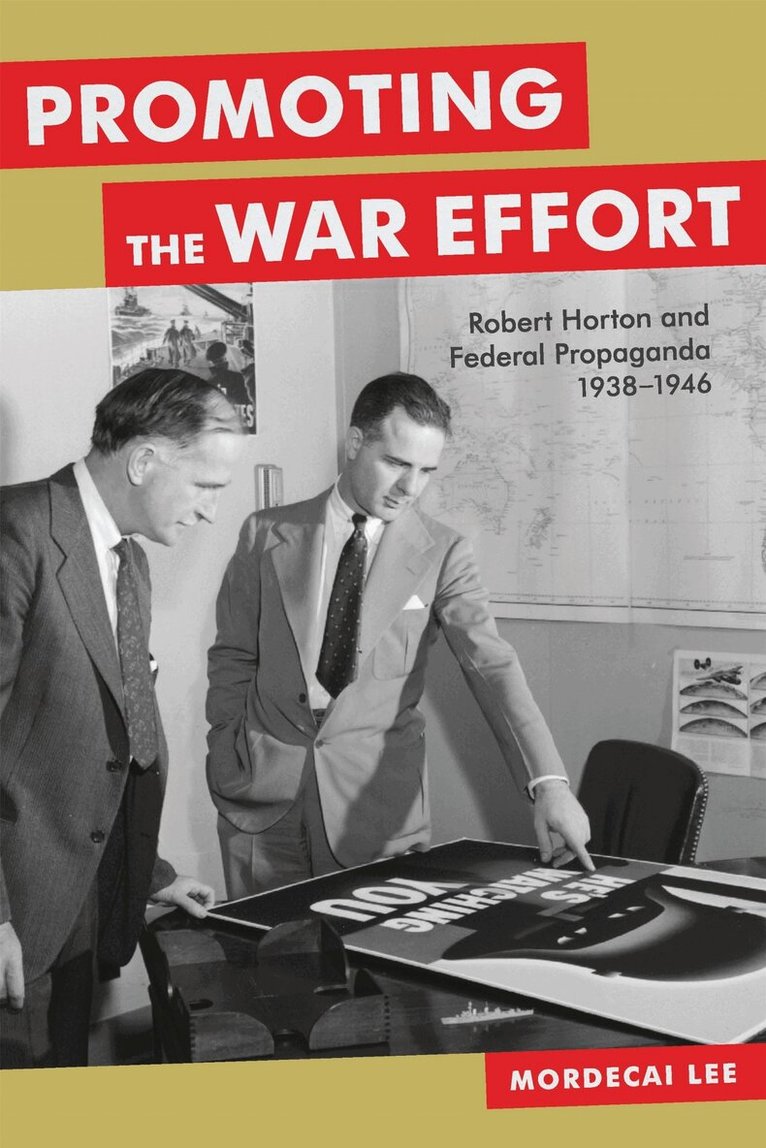
Though historians have largely overlooked Robert Horton, his public relations campaigns remain fixed in popular memory of the home front during World War II. Utilizing all media - including the nascent technology of television - to rally civilian support, Horton's work ranged from educational documentary shorts like Pots to Planes, which depicted the transformation of aluminum household items into aircraft, to posters employing scare tactics, such as a German soldier with large eyes staring forward with the tagline ""He's Watching You."" Iconic and calculated, Horton's campaigns raise important questions about the role of public relations in government agencies. When are promotional campaigns acceptable? Does war necessitate persuasive communication? What separates information from propaganda? Promoting the War Effort traces the career of Horton - the first book-length study to do so - and delves into the controversies surrounding federal public relations.A former reporter, Horton headed the public relations department for the U.S. Maritime Commission from 1938 to 1940. Then - until Pearl Harbor in December 1941 - he directed the Division of Information (DOI) in the Executive Office of the President, where he played key roles in promoting the New Deal, President Franklin D. Roosevelt's unprecedented third-term reelection campaign, and the prewar arms-production effort. After Pearl Harbor, Horton's DOI encouraged support for the war, primarily focusing on raising civilian and workforce morale. But the DOI under Horton assumed a different wartime tone than its World War I predecessor, the Committee on Public Information. Rather than whipping up prowar hysteria, Horton focused on developing campaigns for more practical purposes, such as conservation and production. In mid-1942, Roosevelt merged the Division and several other agencies into the Office of War Information. Horton stayed in government, working as the PR director for several agencies. He retired in mid-1946, during the postwar demobilization.Promoting the War Effort recovers this influential figure in American politics and contributes to the ongoing public debate about government public relations during a time when questions about how facts are disseminated - and spun - are of greater relevance than ever before.
Häftad, Engelska, 2014
325 kr
Skickas inom 10-15 vardagar
A thoughtful, provocative, and timely account of the meaning of a free press in the United States."" - American Journal of Political ScienceMost Americans consider a free press essential to democratic society - either as an independent watchdog against governmental abuse of power or as a wide-open marketplace of ideas. But few understand that far-reaching public policies have shaped the news citizens receive. With contributions from leading scholars in the fields of history, legal scholarship, political science, and communications, this revised and updated edition of Freeing the Presses offers an in-depth inquiry into the theory and practice of journalistic freedom. In addition to a new foreword by Regina G. Lawrence and afterword by Laura Stein, Freeing the Presses presents fresh and timely analyses of the complexities of news media and politics.
Häftad, Engelska, 2014
325 kr
Skickas inom 10-15 vardagar
Have campaign finance reform laws actually worked? Is money less influential in electing candidates today than it was thirty years ago when legislation was first enacted? Absolutely not, argues Rodney A. Smith in this passionately written, fact-filled, and provocative book. According to Smith, the laws have had exactly the opposite of their intended effect. They have increased the likelihood that incumbents in the House and Senate will be reelected, and they have greatly diminished the chances that candidates who are not wealthy will be elected. Smith's claims are supported by convincing data; he collected and analysed information about all federal elections since 1920. These data show clearly that money matters now more than ever. Smith thinks that reform legislation has created a new inequality for candidates that, if left unchecked, threatens to destroy the American electoral process by obliterating the foundational principle of free speech. He argues that ""money buys speech"" and when candidates lack money to buy media time and space they are effectively silenced. Their inability to ""speak freely"" violates the most significant intentions of our nation's founders: that a sovereign citizenry elect its own leaders based on a free exchange of ideas. For Smith, campaign finance reform has unwittingly unbalanced the checks and balances created by the Framers of the Constitution. After presenting a detailed historical overview of how we have reached the present crisis, Smith proposes a simple solution: institute a process that completely discloses relevant information about campaign donors and recipients of donations. All disclosures would be available to the media, which would be able to investigate and report them fully. Only then, Smith believes, will the United States have the opportunity to be the democratic republic that its founders intended.
Häftad, Engelska, 2014
286 kr
Skickas inom 3-6 vardagar
In 1964, as the polarizing Civil Rights Act made its way through the House and Senate, and Congress navigated one of the most tumultuous eras in American history, a Harris Poll put the institution's approval rating at 60 percent. Why then, fifty years later, has the public's approval of Congress eroded to an all-time low of 10 percent? Working Congress: A Guide for Senators, Representatives, and Citizens seeks to isolate the reasons for Congress's staggering decline in public opinion, and to propose remedies to reverse the grave dysfunction in America's most important political institution.Aided by the input of retired members of Congress from both major parties, editor Robert Mann and his fellow contributors identify paralyzing partisan rancor as perhaps the most significant reason for the American public's declining support of its main representative body. The lack of mutual trust within Congress reflects (and creates) the suspicion and animosity of the great majority of Americans. Working Congress argues that members of Congress must find a path to cooperation if they are to function as the representative institution the Founders intended.Trenchant chapters by Mickey Edwards, Ross K. Baker, Frances E. Lee, Brian L. Fife, Susan Herbst, and Mark Kennedy analyse the problems and challenges facing Congress and suggest solutions to counteract partisan gridlock. Though these scholars and former members share a conviction that men and women of good will can and should work together, they do not assume that their solutions will herald a bipartisan utopia. Instead, they recognise that Congress is, and will always be, a work in progress.
Inbunden, Engelska, 2015
512 kr
Skickas inom 5-8 vardagar
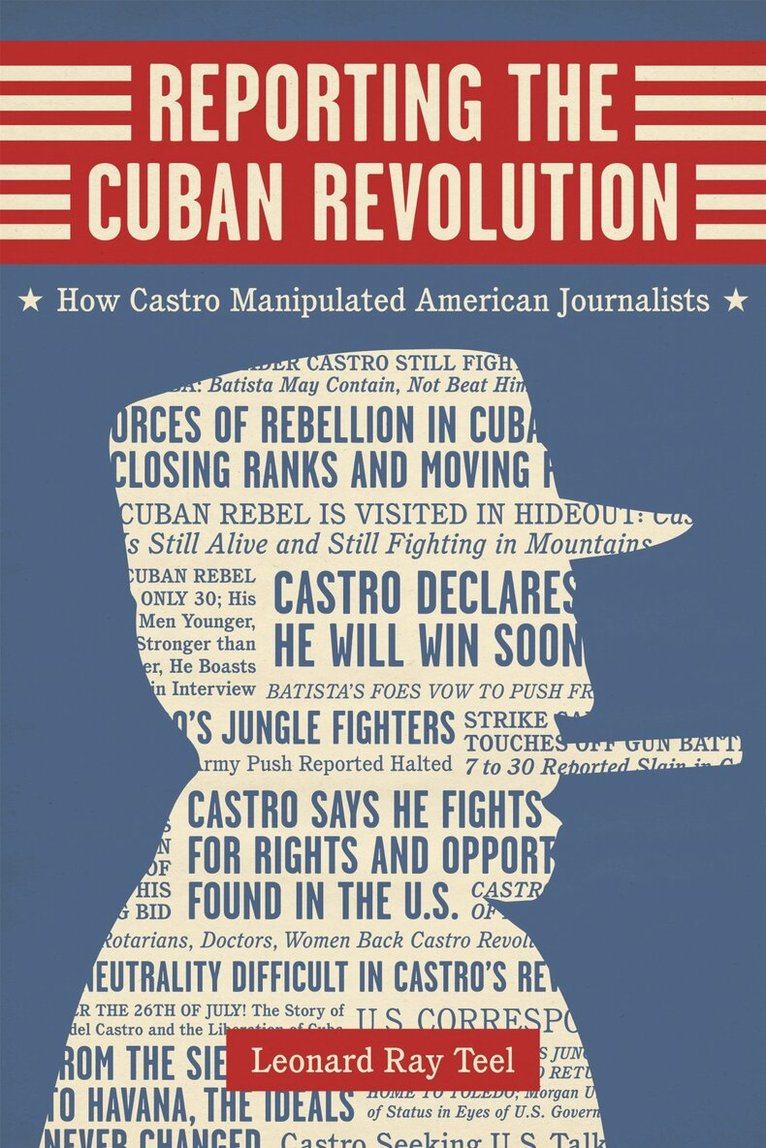
Reporting the Cuban Revolution reveals the untold story of thirteen American journalists in Cuba whose stories about Fidel Castro's revolution changed the way Americans viewed the conflict and altered U.S. foreign policy in Castro's favour.Between 1956 and 1959, the thirteen correspondents worked underground in Cuba, evading the repressive censorship of Fulgencio Batista's dictatorship in order to report on the rebellion led by Fidel Castro. The journalists' stories appeared in major newspapers and magazines and on national television and radio, influencing Congress to abruptly cut off shipments of arms to Batista in 1958. Castro was so appreciative of the journalists' efforts to publicize his rebellion that on his first visit to the United States as premier of Cuba, he invited the reporters to a private reception at the Cuban Embassy in Washington, where he presented them with engraved gold medals. While the medals revealed Castro's perception of the correspondents as like-minded partisans, the journalists themselves had no such intentions. Some had journeyed to Cuba in pursuit of scoops that could rejuvenate or jump-start their careers; others sought to promote press freedom in Latin America; still others were simply carrying out assignments from their editors. Bringing to light the disparate motives and experiences of the thirteen journalists who reported on this crucial period in Cuba's history, Reporting the Cuban Revolution is both a masterwork of narrative nonfiction and a deft analysis of the tension between propaganda and objectivity in the work of American foreign correspondents.
Häftad, Engelska, 2019
380 kr
Skickas inom 10-15 vardagar
How Public Policy Impacts Racial Inequality, edited by Josh Grimm and Jaime Loke, brings together scholars of political science, sociology, and mass communication to provide an in-depth analysis of race in the United States through the lens of public policy. This vital collection outlines how issues such as profiling, wealth inequality, and housing segregation relate to race and policy decisions at both the local and national levels. Each chapter explores the inherent conflict between policy enactment, perception, and enforcement. Contributors examine topics ranging from the American justice system's role in magnifying racial and ethnic disparities to the controversial immigration policies enacted by the Trump administration, along with pointed discussions of how the racial bias of public policy decisions historically impacts emerging concerns such as media access, health equity, and asset poverty. By presenting nuanced case studies of key topics, How Public Policy Impacts Racial Inequality offers a timely and wide-ranging collection on major social and political issues unfolding in twenty-first-century America.
Inbunden, Engelska, 2020
568 kr
Skickas inom 5-8 vardagar
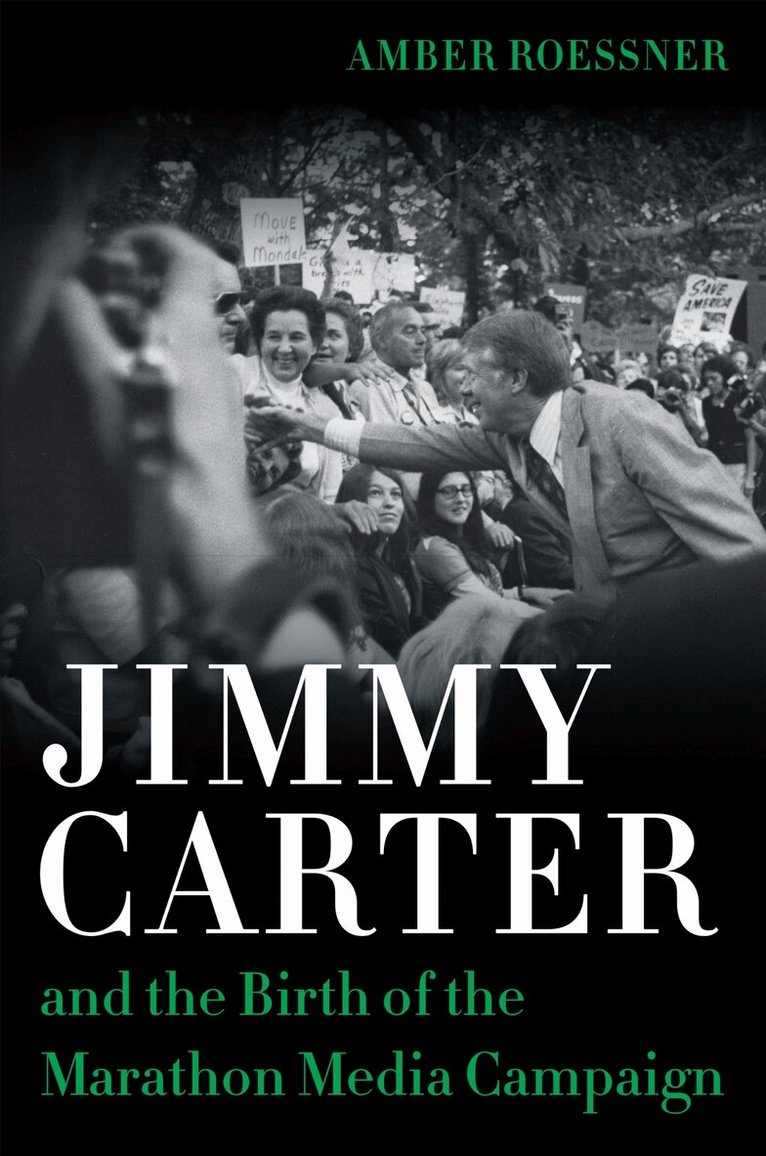
With the rise of Jimmy Carter, a former Georgia governor and a relative newcomer to national politics, the 1976 presidential election proved a transformative moment in U.S. history, heralding a change in terms of how candidates run for public office and how the news media cover their campaigns.Amber Roessner's Jimmy Carter and the Birth of the Marathon Media Campaign chronicles a change in the negotiation of political image-craft and the role it played in Carter's meteoric rise to the presidency. She contends that Carter's underdog victory signaled a transition from an older form of party politics focused on issues and platforms to a newer brand of personality politics driven by the manufacture of a political image.Roessner offers a new perspective on the production and consumption of media images of the peanut farmer from Plains who became the thirty-ninth president of the United States. Carter's miraculous win transpired in part because of carefully cultivated publicity and advertising strategies that informed his official political persona as it evolved throughout the Democratic primary and general-election campaigns. To understand how media relations helped shape the first post-Watergate presidential election, Roessner examines the practices and working conditions of the community of political reporters, public relations agents, and advertising specialists associated with the Carter bid. She draws on materials from campaign files and strategic memoranda; radio and TV advertisements; news and entertainment broadcasts; newspaper and magazine coverage; and recent interviews with Carter, prominent members of his campaign staff, and over a dozen journalists who reported on the 1976 election and his presidency.With its focus on the inner workings of the bicentennial election, Jimmy Carter and the Birth of the Marathon Media Campaign offers an incisive view of the transition from the yearlong to the permanent campaign, from New Deal progressivism to New Right conservatism, from issues to soundbites, and from objective news analysis to partisan commentary.
Häftad, Engelska, 2020
380 kr
Skickas inom 10-15 vardagar
Whether used as a political tactic to discredit news stories and media outlets, or as a description of false information manufactured and circulated for profit, the term ""fake news"" holds a particularly caustic sway in twenty-first-century society. A frequent subject of cable news broadcasts, periodical coverage, and social media chatter, and a constant talking point for political pundits, its impact spans from shaping minor differences in partisanship to influencing elections. In Fake News! Josh Grimm gathers a range of critical approaches to provide an essential resource for readers, students, and teachers interested in understanding this ever-present feature of today's media and political landscape. The opening section surveys the long history of fake news, with examples ranging from seventeenth-century satires of early newspapers to propaganda efforts in Nazi Germany, and then traces the evolution of the term over time. The following section explores how exposure to fake news impacts individuals, with particular emphasis on changes in popular discourse and the ability to assess sources critically. Essays in this section also highlight approaches developed by newsrooms and other organisations, including Facebook and Google, to fight the widespread dissemination of fake news. The volume pairs original research with articles from prominent scholarly journals, offering a wide-ranging and accessible discussion of debates central to the current post-truth era, covering topics such as social media, the Onion, InfoWars, media literacy, and the radicalization of white men.By highlighting key components and practical methods for examining misinformation in the media, Fake News! presents in-depth analysis of a topic that remains more timely than ever.
Inbunden, Engelska, 2021
369 kr
Skickas inom 3-6 vardagar
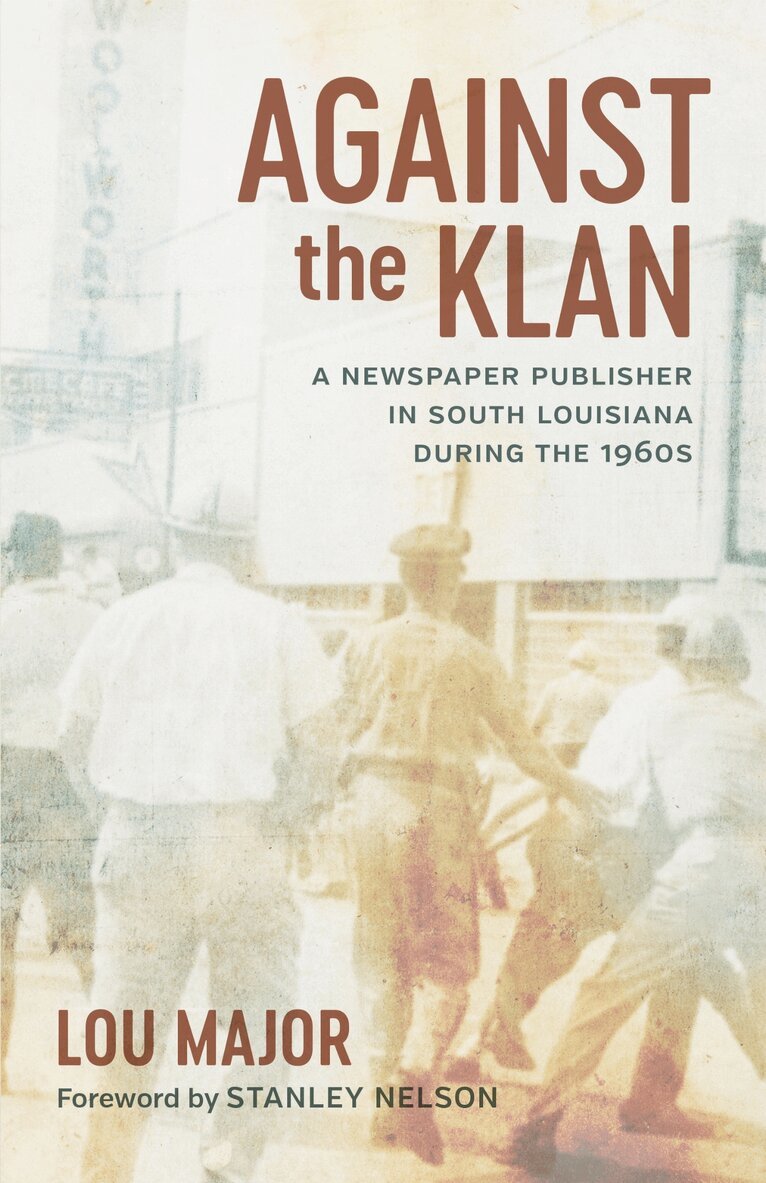
In 1964, less than one year into his tenure as publisher of the Bogalusa Daily News, New Orleans native Lou Major found himself guiding the newspaper through a turbulent period in the history of American civil rights. Bogalusa, Louisiana, became a flashpoint for clashes between African Americans advocating for equal treatment and white residents who resisted this change, a conflict that generated an upsurge in activity by the Ku Klux Klan. Local members of the KKK stepped up acts of terror and intimidation directed against residents and institutions they perceived as sympathetic to civil rights efforts. During this turmoil, the Daily News took a public stand against the Klan and its platform of hatred and white supremacy.Against the Klan, Major's memoir of those years, recounts his attempts to balance the good of the community, the health of the newspaper, and the safety of his family. He provides an in-depth look at the stance the Daily News took in response to the city's civil rights struggles, including the many fiery editorials he penned condemning the KKK's actions and urging peaceful relations in Bogalusa. Major's richly detailed personal account offers a ground-level view of the challenges local journalists faced when covering civil rights campaigns in the Deep South and of the role played by the press in exposing the nefarious activities of hate groups such as the Klan.
Häftad, Engelska, 2024
352 kr
Skickas inom 10-15 vardagar
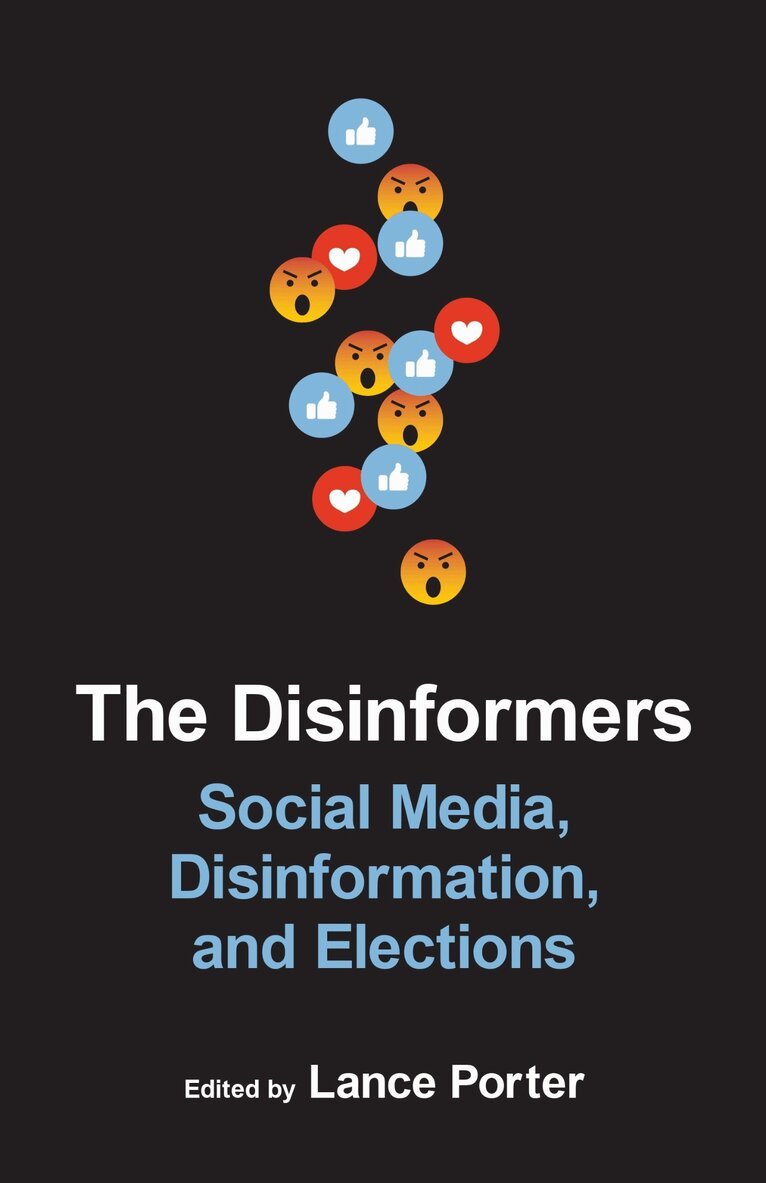
The Disinformers uncovers the people and the organizations behind the disinformation campaigns that began on social media with the 2016 U.S. presidential election and reached a violent crescendo with the storming of the U.S. Capitol on January 6, 2020. Edited by social media researcher Lance Porter, this vital collection of interdisciplinary scholarship analyzes how foreign interference destabilized political conversations, stoked racial tensions, and spread disinformation across social media platforms to produce increasing friction among voters. With a new presidential election cycle in motion, members of the voting public continue questioning both the security of the nation's election systems and the validity of its media networks. The 2016 election thrust the vulnerability of voting technology to the forefront of conversations in the United States and sparked discussions about the use of social media to distribute divisive and false information. While Donald Trump's claims of fraud in the 2016 and 2020 elections were verifiably false, disinformation undoubtedly roiled the nation's media systems and spurred on the insurrection of January 6. Presenting seven essays of original research, The Disinformers focuses on the turning point of 2016 and how disinformation campaigns continued in the following years. The contributors examine organizations such as Russia's Internet Research Agency and its connections with a conservative network across social media, including Facebook and Twitter, that disseminated incendiary content. Essays from political scientists, media scholars, computer scientists, and cybersecurity experts reveal the ways in which disinformation permeates social media, the platform policies and chronic inaction that enable disinformation to circulate, and the effects of disinformation on young people as well as on historically repressed groups. At a critical time in the U.S. political cycle, The Disinformers provides in-depth analysis of issues essential to understanding the role disinformation can play in elections across the world.
Inbunden, Engelska, 2026
657 kr
Skickas inom 3-6 vardagar
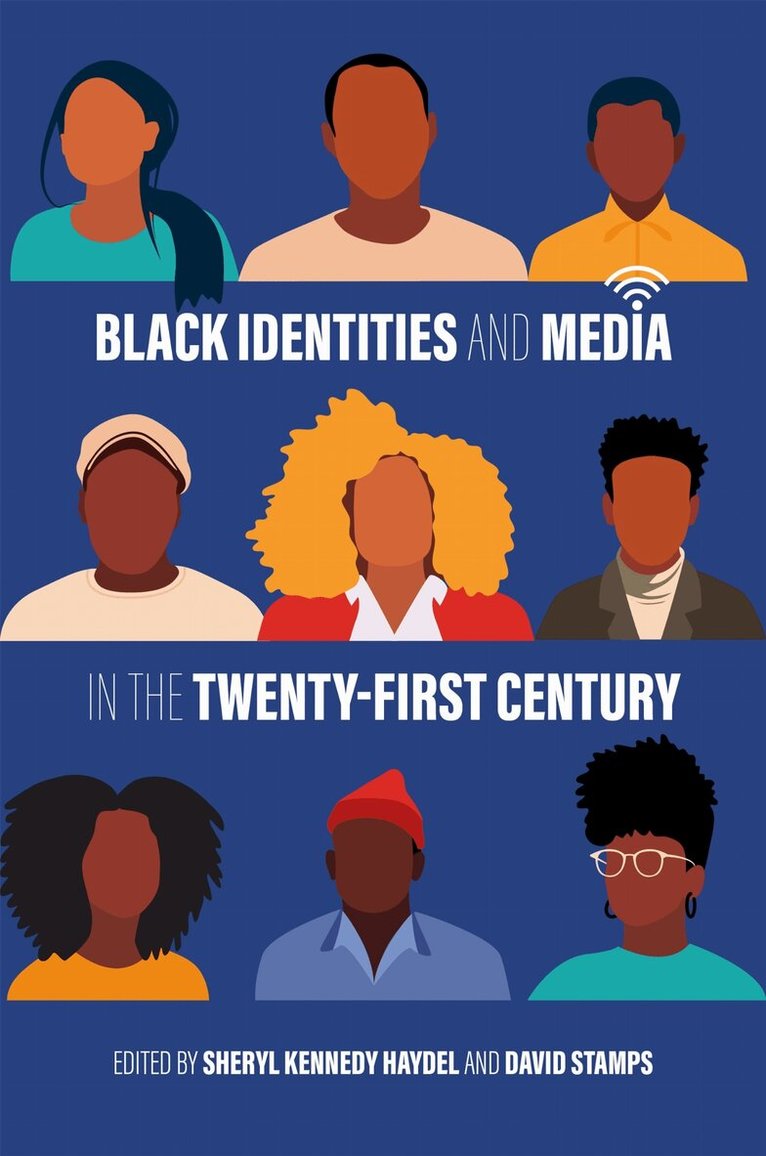
Black Identities and Media in the Twenty-First Century presents original scholarly essays, drawn from a range of theory-based applications and methodologies, that analyze media representations, effects, and practices relating to Black communities and their varying identities, with particular attention to attributes such as gender, sexuality, class, and ability status. By surveying newsprint, television, social media, podcasts, and more, this innovative collection explores intersections of identities and perspectives while centering the role of Black media creators, including producers, journalists, and influencers, to highlight Black representation across genres of mass media. With a commitment to elevating marginalized voices, Black Identities and Media in the Twenty-First Century advocates for the historical, present, and future value of Black media creators as intellectuals, workers, innovators, thought brokers, and champions of change in the United States.
Häftad, Engelska, 2026
369 kr
Skickas inom 3-6 vardagar
Black Identities and Media in the Twenty-First Century presents original scholarly essays, drawn from a range of theory-based applications and methodologies, that analyze media representations, effects, and practices relating to Black communities and their varying identities, with particular attention to attributes such as gender, sexuality, class, and ability status. By surveying newsprint, television, social media, podcasts, and more, this innovative collection explores intersections of identities and perspectives while centering the role of Black media creators, including producers, journalists, and influencers, to highlight Black representation across genres of mass media. With a commitment to elevating marginalized voices, Black Identities and Media in the Twenty-First Century advocates for the historical, present, and future value of Black media creators as intellectuals, workers, innovators, thought brokers, and champions of change in the United States.
Inbunden, Engelska, 2026
522 kr
Kommande
A giant of political journalism, Lou Cannon rose to prominence as state bureau chief for the San Jose Mercury News in the late 1960s, covering then-governor of California Ronald Reagan. In 1972, he became a political reporter for The Washington Post, one of the top newspapers in the United States, where he would remain until 2008. Best known for his coverage of Reagan's presidency, he also notably covered the brutal beating of Rodney King at the hands of the Los Angeles police department in 1991. From Ronald Reagan to Rodney King recounts Cannon's lengthy career as a newspaperman during a period when newspapers of record were the most important source of current events. He had extraordinary access to top newsmakers, and his work had a rippling impact—influencing other journalists, sparking coverage on television, and appearing in newspapers around the globe. Some of the stories he covered—such as the end of the Cold War—changed the world. His journalistic influence in the latter half of the twentieth century was deep and wide-ranging. Cannon is the primary source of his stories, but he was a careful reporter then and a careful historian now. He had the benefit of a written record of every story he covered, and he clearly refreshed his memory when necessary to check the facts. Rather than revealing his own opinions or feelings, Cannon narrates straightforward accounts of what he witnessed on the job. From Ronald Reagan to Rodney King will appeal to historians of twentieth-century journalism, the Cold War, Ronald Reagan, race relations, and policing.
Häftad, Engelska, 2026
369 kr
Skickas inom 3-6 vardagar
Though African Americans have served as foreign reporters for almost two centuries, their work remains virtually unstudied. In this seminal volume, Jinx Coleman Broussard traces the history of black participation in international newsgathering. Beginning in the mid-1800s with Frederick Douglass and Mary Ann Shadd Cary—the first black woman to edit a North American newspaper—African American Foreign Correspondents highlights the remarkable individuals and publications that brought an often-overlooked black perspective to world reporting. Broussard focuses on correspondents from 1840 to modern day, including reporters such as William Worthy Jr., who helped transform the role of modern foreign correspondence by gaining the right for journalists to report from anywhere in the world unimpeded; Leon Dash, a professor of journalism and African American studies at the University of Illinois at Urbana-Champaign who reported from Africa for the Washington Post in the 1970s and 1980s; and Howard French, a professor in Columbia University's journalism school and a globetrotting foreign correspondent. African American Foreign Correspondents provides insight into how and why African Americans reported the experiences of blacks worldwide. In many ways, black correspondents upheld a tradition of filing objective stories on world events, yet some African American journalists in the mainstream media, like their predecessors in the black press, had a different mission and perspective. They adhered primarily to a civil rights agenda, grounded in advocacy, protest, and pride. Accordingly, some of these correspondents—not all of them professional journalists—worked to spur social reform in the United States and force policy changes that would eliminate oppression globally. Giving visibility and voice to the marginalized, correspondents championed an image of people of color that combatted the negative and racially construed stereotypes common in the American media. By examining how and why blacks reported information and perspectives from abroad, African American Foreign Correspondents contributes to a broader conversation about navigating racial, societal, and global problems, some of which we continue to contend with today.