Carolina Lowcountry and the Atlantic World – serie
Visar alla böcker i serien Carolina Lowcountry and the Atlantic World. Handla med fri frakt och snabb leverans.
21 produkter
21 produkter
Inbunden, Engelska, 2001
635 kr
Skickas inom 10-15 vardagar
Reflecting the burgeoning interest of colonial historians in South Carolina and its role as the economic and cultural center of the Lower South, Money, Trade, and Power is a comprehensive exploration of the colony's slave system, economy, and complex social and cultural life. The first six chapters of this essay collection focus on the formative decades of South Carolina's history, from 1670 through the 1730s. Contributors Meaghan N. Duff, Bertrand Van Ruymbeke, and Gary L. Hewitt explore the colony's early settlement. R. C. Nash, Stephen G. Hardy, and Eirlys M. Barker investigate the rapidly expanding economy. Turning to the colony's reliance on slave labor, William L. Ramsay analyzes the institution and abandonment of Indian slavery; Jennifer Lyle Morgan examines the reproductive capabilities of slave women; and S. Max Edelson looks at the distinctive social position of skilled slaves. Robert Olwell considers how South Carolina public officials adapted the office of justice of the peace to the needs of a slave society, while Matthew Mulcahy shows how calamities of fires and hurricanes exacerbated the problem of slave control. Finally, Edward Pearson describes the ways in which South Carolina's emerging elite asserted their new status; G. Winston Lane and Elizabeth M. Pruden review the surprising economic independence of women; and Thomas Little examines the colony's religious life and spread of evangelicalism.
Inbunden, Engelska, 2002
492 kr
Skickas inom 10-15 vardagar
The slave revolution that two hundred years ago created the state of Haiti alarmed and excited public opinion on both sides of the Atlantic. Its repercussions ranged from the world commodity markets to the imagination of poets, from the council chambers of the great powers to slave quarters in Virginia and Brazil and most points in between. Sharing attention with such tumultuous events as the French Revolution and the Napoleonic War, Haiti's fifteen-year struggle for racial equality, slave emancipation, and colonial independence challenged notions about racial hierarchy that were gaining legitimacy in an Atlantic world dominated by Europeans and the slave trade. The Impact of the Haitian Revolution in the Atlantic World explores the multifarious influence - from economic to ideological to psychological - that a revolt on a small Caribbean island had on the continents surrounding it. Fifteen international scholars, including eminent historians David Brion Davis, Seymour Drescher, and Robin Blackburn, explicate such diverse ramifications as the spawning of slave resistance and the stimulation of slavery's expansion, the opening of economic frontiers, and the formation of black and white diasporas. They show how the Haitian Revolution embittered contemporary debates about race and abolition and inspired poetry, plays, and novels. Seeking to disentangle its effects from those of the French Revolution, they demonstrate that its impact was ambiguous, complex, and contradictory.
Inbunden, Engelska, 2007
589 kr
Skickas inom 10-15 vardagar
Saints and Their Cults in the Atlantic World traces the changing significance of a dozen saints and holy sites from the fourth century to the twentieth and from Africa, Sicily, Wales, and Iceland to Canada, Boston, Mexico, Brazil, and the Caribbean. Scholars representing the fields of history, art history, religious studies, and communications contribute their perspectives in this interdisciplinary collection, also notable as the first English language study of many of the saints treated in the volume. Several chapters chart the changing images and meanings of holy people as their veneration traveled from the Old World to the New; others describe sites and devotions that developed in the Americas. The ways that a group feels connected to the holy figure by ethnicity or regionalism proves to be a critical factor in a saint's reception, and many contributors discuss the tensions that develop between ecclesiastical authorities and communities of devotees. Exploring the fluid boundaries between pilgrimage and tourism, ritual and knowledge, articles assess the importance of place in saint veneration and shed new light on the relationship between a saint's popularity and his or her association with holy relics, healing waters, and keepsakes purchased at a pilgrimage site. In addition to St. Benedict the Moor, medieval Irish pilgrimage art, and Ponce de Leon's ""Fountain of Youth"", the authors discuss figures such as the Holy Child of Atocha, St. Winefride of Wales, Father Patrick Power, St. Amico of Italy and Louisiana, Our Lady of Prompt Succor, and the Icelandic bishop Gumundr Arason.
Inbunden, Engelska, 2007
682 kr
Skickas inom 5-8 vardagar
On the banks of the lower Savannah River, the military objectives of South Carolina officials, the ambitions of Swiss entrepreneur Jean Pierre Purry, and the dreams of Protestants from Switzerland, France, Germany, Italy, and England converged in a planned settlement named Purrysburg. This examination of the first South Carolina township in Governor Robert Johnson's strategic plan to populate and defend the colonial backcountry offers the clearest picture to date of the settlement of the colony's Southern frontier by ethnically diverse and contractually obligated immigrants. Arlin C. Migliazzo contends that the story of Purrysburg Township, founded in 1732 and set in the forbidding environment bounded by the Savannah River and the Coosawhatchie swamps, challenges the notion that white colonists shed their ethnic distinctions to become a monolithic culture. He views Purrysburg as a laboratory in which to observe ethnic phenomena in the colonial and antebellum South. Separated by linguistic, religious, and cultural barriers, the emigres adapted familiar social processes from their homelands to create a workable sense of community and identity. His work is one of only a handful of examples of what has been deemed the ""new social history"" methodology as applied to a South Carolina subject. Initially devastated by privation and a high mortality rate, Purrysburg residents also suffered the vicissitudes of an indifferent provincial elite, the encroachment of lowcountry rice planters, Prevost's invasion in 1779, and ultimate destruction of the settlement by Sherman's army. Migliazzo details the community's changing military and economic fortunes, the gradual displacement of its residents to neighboring communities, the role of African Americans in the region, the complex religious life of township settlers, and the quirky contributions of Purry's climatological speculations to the fateful siting of this first township.
Inbunden, Engelska, 2008
1 319 kr
Skickas inom 10-15 vardagar
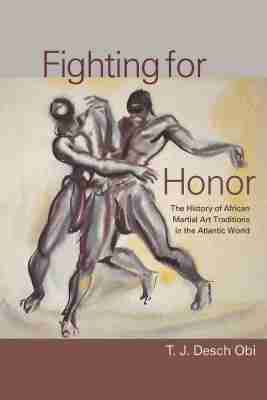
Desch Obi explores a cultural continuity originating in Africa and that is as old as early slave settlements in South America and as contemporary as hip-hop culture in this thorough survey of the history of African martial arts techniques. He maps the translation of numerous physical combat techniques across three continents and several centuries to illustrate how these practices evolved over time and are still recognizable in American culture today. Some of these art traditions were part of African military training while others were for self-defense and personal discipline. Desch Obi, himself a practitioner of mgba wrestling and engolo kick-fighting, also explores the spiritual dimensions of these combat arts.Grounded in historical and cultural anthropological methodologies, Desch Obi's investigation traces the influence of well-delineated African traditions on long-observed but misunderstood African and African American cultural activities in North America, Brazil, and the Caribbean. He links the Brazilian martial art capoeira to reports of slave activities recorded in colonial and antebellum North America. Likewise, Desch Obi locates images of the African stick-fighting techniques of kalenda in slave depictions. His study takes on more modern subjects when he links movements from this same wellspring of traditions to break dancing and clown dancing techniques that have peppered urban culture in recent decades. Throughout the study Desch Obi examines the ties between physical mastery of these arts and changing perceptions of honor.
Inbunden, Engelska, 2009
710 kr
Skickas inom 5-8 vardagar
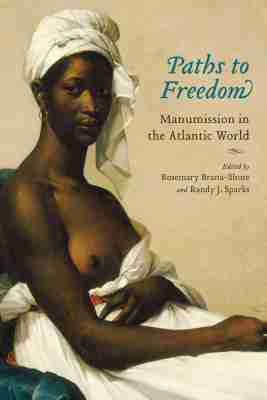
This book presents an international comparative study of a mode of emancipation that worked to reinforce the institution of slavery. Manumission - the act of freeing a slave while the institution of slavery continues - has received relatively little scholarly attention as compared to other aspects of slavery and emancipation. To address this gap, editors Rosemary Brana-Shute and Randy J. Sparks present a volume of essays that comprise the first-ever comparative study of manumission as it affected slave systems on both sides of the Atlantic. In this landmark volume, an international group of scholars consider the history and implications of manumission from the medieval period to the late nineteenth century as the phenomenon manifested itself in the Old World and the New. The contributors demonstrate that although the means of manumission varied greatly across the Atlantic world, in every instance the act served to reinforce the sovereign power structures inherent in the institution of slavery. In some societies only a master had the authority to manumit slaves, while in others the state might grant freedom or it might be purchased. Regardless of the source of manumission, the result was viewed by its society as a benevolent act intended to bind the freed slave to his or her former master through gratitude if no longer through direct ownership. The possibility of manumission worked to inspire faithful servitude among slaves while simultaneously solidifying the legitimacy of their ownership. The essayists compare the legacy of manumission in medieval Europe; the Jewish communities of Levant, Europe, and the New World; the Dutch, French, and British colonies; and the antebellum United States, while exploring wider patterns that extended beyond a single location or era. They also document the fates of manumitted slaves, some of whom were accepted into freed segments of their societies; while others were expected to vacate their former communities entirely. The contributors investigate the cultural consequences of manumission as well as the changing economic conditions that limited the practice by the eighteenth century to understand better the social implications of this multifaceted aspect of the system of slavery.
Häftad, Engelska, 2008
353 kr
Skickas inom 10-15 vardagar
This book offers a thoroughly international study of the Huguenot migration.Traditionally known as le Refuge, the Huguenot diaspora is one of the most important dispersions of a religious minority in early modern Europe. This migration led to the exodus of nearly two hundred thousand Protestants out of France in 1685 at the time of the Revocation of the Edict of Nantes. ""Memory and Identity"" offers a comparative perspective on this event and its repercussions by an international group of historians. This collection is the first look at the Huguenot diaspora in a broad Atlantic context rather than as a narrowly European or colonial American phenomenon and sheds new light on the Protestant experience both in and outside of France.Revealing how minority status at home affected the creation of refugee communities outside France, scholars trace the Huguenots' eventual integration into different host societies. Comparing Huguenot diasporic experiences on both sides of the Atlantic, essays focus on Britain, Germany, the Netherlands, British North America, the French Caribbean, New France, and Dutch South Africa. Finally, several essays study the long-term impact of le Refuge in examining nineteenth-century Huguenot memory in France and in the diaspora and the maintenance of a Huguenot identity.
Inbunden, Engelska, 2013
692 kr
Skickas inom 10-15 vardagar
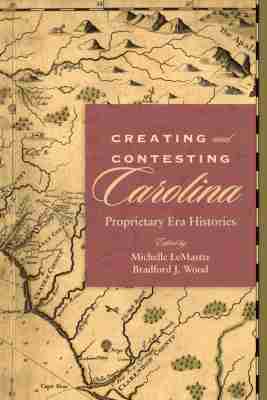
The essays in Creating and Contesting Carolina shed new light on how the various peoples of the Carolinas responded to the tumultuous changes shaping the geographic space that the British called Carolina during the Proprietary period (1663-1719). In doing so, the essays focus attention on some of the most important and dramatic watersheds in the history of British colonisation in the New World. These years brought challenging and dramatic changes to the region, such as the violent warfare between British and Native Americans or British and Spanish, the no-less dramatic development of the plantation system, and the decline of proprietary authority. All involved contestation, whether through violence or debate. The very idea of a place called Carolina was challenged by Native Americans, and many colonists and metropolitan authorities differed in their visions for Carolina. The stakes were high in these contests because they occurred in an early American world often characterised by brutal warfare, rigid hierarchies, enslavement, cultural dislocation, and transoceanic struggles for power. While Native Americans and colonists shed each other's blood to define the territory on their terms, colonists and officials built their own version of Carolina on paper and in the discourse of early modern empires. But new tensions also provided a powerful incentive for political and economic creativity. The peoples of the early Carolinas reimagined places, reconceptualised cultures, realigned their loyalties, and adapted in a wide variety of ways to the New World. Three major groups of peoples--European colonists, Native Americans, and enslaved Africans--shared these experiences of change in the Carolinas, but their histories have usually been written separately. These disparate but closely related strands of scholarship must be connected to make the early Carolinas intelligible. Creating and Contesting Carolina brings together work relating to all three groups in this unique collection.
Inbunden, Engelska, 2014
1 009 kr
Skickas inom 10-15 vardagar
Jewish Sanctuary in the Atlantic World is a unique blend of cultural and architectural history that considers Jewish heritage as it expanded among the continents and islands linked by the Atlantic Ocean between the mid-fifteenth and early nineteenth centuries. Barry L. Stiefel achieves a powerful synthesis of material culture research and traditional historical research in his examination of the early modern Jewish diaspora in the New World. Through this generously illustrated work, Stiefel examines forty-six synagogues built in Europe, South America, the Caribbean Islands, colonial and antebellum North America, and Gibraltar to discover what liturgies, construction methods, and architectural styles were transported from the Old World to the New World. Some are famous--Touro in Newport, Rhode Island; Bevis Marks in London; and Mikve Israel in Curaçao--while others had short-lived congregations whose buildings were lost. The two great traditions of Judaism--Sephardic and Ashkenazic--found homes in the Atlantic World. Examining buildings and congregations that survive, Stiefel offers valuable insights on their connections and commonalities. If both the congregations and buildings are gone, the author re-creates them by using modern heritage preservation tools that have expanded the heuristic repertoire, tools from such diverse sources as architectural studies, archaeology, computer modelling and rendering, and geographic information systems. When combined these bring a richer understanding of the past than incomplete, uncertain traditional historical resources. Buildings figure as key indicators in Stiefel's analysis of Jewish life and social experience, while the author's immersion in the faith and practice of Judaism invigorates every aspect of his work.
Inbunden, Engelska, 2014
598 kr
Skickas inom 5-8 vardagar
In an attempt to counter the insular narratives of much of the sesquicentennial commemorations of the Civil War in the United States, editors David T. Gleeson and Simon Lewis present this collection of essays that examine the war as more than a North American conflict, one with transnational concerns. The book, while addressing the origins of the Civil War, places the struggle over slavery and sovereignty in the United States in the context of other conflicts in the Western hemisphere. Additionally Gleeson and Lewis offer an analysis of the impact of the war and its results overseas. Although the Civil War was the bloodiest conflict in U.S. history and arguably its single most defining event, this work underscores the reality that the war was by no means the only conflict that ensnared the global imperial powers in the mid-nineteenth century. In some ways the Civil War was just another part of contemporary conflicts over the definitions of liberty, democracy, and nationhood. The editors have successfully linked numerous provocative themes and convergences of time and space to make the work both coherent and cogent. Subjects include such disparate topics as Florence Nightingale, Gone with the Wind, war crimes and racial violence, and choices of allegiance made by immigrants to the United States. While we now take for granted the nation's values of freedom and democracy, we cannot understand the impact of the Civil War and the victorious ""new birth of freedom"" without thinking globally.The contributors to The Civil War as Global Conflict reveal that Civil War-era attitudes toward citizenship and democracy were far from fixed or stable. Race, ethnicity, nationhood, and slavery were subjects of fierce controversy. Examining the Civil War in a global context requires us to see the conflict as a seminal event in the continuous struggles of people to achieve liberty and fulfill the potential of human freedom. The book concludes with a coda that reconnects the global with the local and provides ways for Americans to discuss the war and its legacy more productively.
Inbunden, Engelska, 2015
1 319 kr
Skickas inom 10-15 vardagar
Working on the Dock of the Bay explores the history of waterfront labor and laborers - black and white, enslaved and free, native and immigrant - in Charleston, South Carolina, between the American Revolution and Civil War. Michael D. Thompson explains how a predominantly enslaved workforce laid the groundwork for the creation of a robust and effectual association of dockworkers, most of whom were black, shortly after emancipation. In revealing these wharf laborers’ experiences, Thompson’s book contextualizes the struggles of contemporary southern working people.Like their postbellum and present-day counterparts, stevedores and draymen laboring on the wharves and levees of antebellum cities - whether in Charleston or New Orleans, New York or Boston, or elsewhere in the Atlantic World - were indispensable to the flow of commodities into and out of these ports. Despite their large numbers and the key role that waterfront workers played in these cities’ premechanized, labor-intensive commercial economies, too little is known about who these laborers were and the work they performed.Though scholars have explored the history of dockworkers in ports throughout the world, they have given little attention to waterfront laborers and dock work in the pre–Civil War American South or in any slave society. Aiming to remedy that deficiency, Thompson examines the complicated dynamics of race, class, and labor relations through the street-level experiences and perspectives of workingmen and sometimes workingwomen. Using this workers’-eye view of crucial events and developments, Working on the Dock of the Bay relocates waterfront workers and their activities from the margins of the past to the center of a new narrative, reframing their role from observers to critical actors in nineteenth-century American history. Organized topically, this study is rooted in primary source evidence including census, tax, court, and death records; city directories and ordinances; state statutes; wills; account books; newspapers; diaries; letters; and medical journals.
Inbunden, Engelska, 2018
635 kr
Skickas inom 10-15 vardagar
The first comparative treatment of settlers' trading, pirating, and colonizing activities in the CaribbeanBrimming with new perspectives and cuttingedge research, the essays collected in The Torrid Zone explore colonization and cultural interaction in the Caribbean from the late 1600s to the early 1800s—a period known as the “long” seventeenth century—a time when these encounters varied widely and the diverse actors were not yet fully enmeshed in the culture and power dynamics of master-slave relations. The events of this era would profoundly affect the social and political development of both the colonies that Europeans established in the Caribbean and the wider world.This book is the first to offer comparative treatments of Danish, Dutch, English, and French trading, pirating, and colonizing activities in the Caribbean and analysis of the corresponding interactions among people of African, European, and Native origin. The contributions range from an investigation of the indigenous colonization of the Lesser Antilles by the Kalinago to a look at how the Anglo-Dutch wars in Europe affected relations between the English inhabitants and the Dutch government of Suriname. Among the other essays are incisive examinations of the often-neglected history of Danish settlement in the Virgin Islands, attempts to establish French colonial authority over the pirates of Saint-Domingue, and how the Caribbean blueprint for colonization manifested itself in South Carolina through enslavement of Amerindians and the establishment of plantation agriculture.The extensive geographic, demographic, and thematic concerns of this collection shed a clear light on the socioeconomic character of the “Torrid Zone” before and during the emergence and extension of the sugar-and-slaves complex that came to define this region. The book is an invaluable contribution to our understanding of the social, political, and economic sensibilities to which the operators around the Caribbean subscribed as well as to our understanding of their actions, offering in turn a better comprehension of the consequences of their behavior.
Inbunden, Engelska, 2020
513 kr
Skickas inom 5-8 vardagar
For centuries the Atlantic world has been a site of encounter and exchange, a rich point of transit where one could remake one's identity or find it transformed. Through this interdisciplinary collection of essays, Laura R. Prieto and Stephen R. Berry offer vivid new accounts of how individuals remapped race, gender, and sexuality through their lived experience and in the cultural imagination. Crossings and Encounters is the first single volume to address these three intersecting categories across the Atlantic world and beyond the colonial period.The Atlantic world offered novel possibilities to and exposed vulnerabilities of many kinds of people, from travelers to urban dwellers, native Americans to refugees. European colonial officials tried to regulate relationships and impose rigid ideologies of gender, while perceived distinctions of culture, religion, and ethnicity gradually calcified into modern concepts of race. Amid the instabilities of colonial settlement and slave societies, people formed cross-racial sexual relationships, marriages, families, and households. These not only afforded some women and men with opportunities to achieve stability; they also furnished ways to redefine one's status. Crossings and Encounters spans broadly from early contact zones in the seventeenth-century Americas to the postcolonial present, and it covers the full range of the Atlantic world, including the Caribbean, North America, and Latin America. The essays examine the historical intersections between race and gender to illuminate the fluid identities and the dynamic communities of the Atlantic world.
Häftad, Engelska, 2020
390 kr
Skickas
The Atlantic Economy during the Seventeenth and Eighteenth Centuries is a collection of essays focusing on the expansion, elaboration, and increasing integration of the economy of the Atlantic basin--comprising parts of Europe, West Africa, and the Americas--during the seventeenth and eighteenth centuries. In thirteen essays, the contributors examine the complex and variegated processes by which markets were created in the Atlantic basin and how they became integrated.While a number of the contributors focus on the economic history of a specific European imperial system, others, mirroring the realities of the world they are writing about, transcend imperial boundaries and investigate topics shared throughout the region. In the latter case, the contributors focus either on processes occurring along the margins or interstices of empires, or on ""breaches"" in the colonial systems established by various European powers. Taken together, the essays shed much-needed light on the organization and operation of both the European imperial orders of the early modern era and the increasingly integrated economy of the Atlantic basin challenging these orders over the course of the same period.
Inbunden, Engelska, 2020
1 301 kr
Skickas inom 5-8 vardagar
Prior to the abolition of slavery, thousands of African-descended people in the Americas lived in freedom. Their efforts to navigate daily life and negotiate the boundaries of racial difference challenged the foundations of white authority--and linked the Americas together. In Black Freedom in the Age of Slavery John Garrison Marks examines how these individuals built lives in freedom for themselves and their families in two of the Atlantic World's most important urban centers: Cartagena, along the Caribbean coast of modern-day Colombia, and Charleston, in the lowcountry of North America's Atlantic coast. Marks reveals how skills, knowledge, reputation, and personal relationships helped free people of color improve their fortunes and achieve social distinction in ways that undermined whites' claims to racial superiority.Built upon research conducted on three continents, this book takes a comparative approach to understanding the contours of black freedom in the Americas. It reveals in new detail the creative and persistent attempts of free black people to improve their lives and that of their families. It examines how various paths to freedom, responses to the Haitian Revolution, opportunities to engage in skilled labor, involvement with social institutions, and the role of the church all helped shape the lived experience of free people of color in the Atlantic World.As free people of color worked to improve their individual circumstances, staking claims to rights, privileges, and distinctions not typically afforded to those of African descent, they engaged with white elites and state authorities in ways that challenged prevailing racial attitudes. While whites across the Americas shared common doubts about the ability of African-descended people to survive in freedom or contribute meaningfully to society, free black people in Cartagena, Charleston, and beyond conducted themselves in ways that exposed cracks in the foundations of American racial hierarchies. Their actions represented early contributions to the long fight for recognition, civil rights, and racial justice that continues today.
Häftad, Engelska, 2020
387 kr
Skickas inom 5-8 vardagar
Prior to the abolition of slavery, thousands of African-descended people in the Americas lived in freedom. Their efforts to navigate daily life and negotiate the boundaries of racial difference challenged the foundations of white authority--and linked the Americas together. In Black Freedom in the Age of Slavery John Garrison Marks examines how these individuals built lives in freedom for themselves and their families in two of the Atlantic World's most important urban centers: Cartagena, along the Caribbean coast of modern-day Colombia, and Charleston, in the lowcountry of North America's Atlantic coast. Marks reveals how skills, knowledge, reputation, and personal relationships helped free people of color improve their fortunes and achieve social distinction in ways that undermined whites' claims to racial superiority.Built upon research conducted on three continents, this book takes a comparative approach to understanding the contours of black freedom in the Americas. It reveals in new detail the creative and persistent attempts of free black people to improve their lives and that of their families. It examines how various paths to freedom, responses to the Haitian Revolution, opportunities to engage in skilled labor, involvement with social institutions, and the role of the church all helped shape the lived experience of free people of color in the Atlantic World.As free people of color worked to improve their individual circumstances, staking claims to rights, privileges, and distinctions not typically afforded to those of African descent, they engaged with white elites and state authorities in ways that challenged prevailing racial attitudes. While whites across the Americas shared common doubts about the ability of African-descended people to survive in freedom or contribute meaningfully to society, free black people in Cartagena, Charleston, and beyond conducted themselves in ways that exposed cracks in the foundations of American racial hierarchies. Their actions represented early contributions to the long fight for recognition, civil rights, and racial justice that continues today.
Häftad, Engelska, 2021
331 kr
Skickas inom 5-8 vardagar
The presence of African influence and tradition in the Americas has long been recognized in art, music, language, agriculture, and religion. T. J. Desch Obi explores another cultural continuity that is as old as eighteenth-century slave settlements in South America and as contemporary as hip-hop culture. In this thorough survey of the history of African martial arts techniques, Obi maps the translation of numerous physical combat techniques across three continents and several centuries to illustrate how these practices evolved over time and are still recognizable in American culture today. Some of these art traditions were part of African military training while others were for self-defense and spiritual discipline.Grounded in historical and cultural anthropological methodologies, Obi's investigation traces the influence of well-delineated African traditions on long-observed but misunderstood African and African American cultural activities in North America, Brazil, and the Caribbean. He links the Brazilian martial art capoeira to reports of slave activities recorded in colonial and antebellum North America. Likewise Obi connects images of the kalenda African stick-fighting techniques to the Haitian Revolution. Throughout the study Obi examines the ties between physical mastery of these arts and changing perceptions of honor.Including forty-five illustrations, this rich history of the arrival and dissemination of African martial arts in the Atlantic world offers a new vantage for furthering our understanding of the powerful influence of enslaved populations on our collective social history.
Inbunden, Engelska, 2021
457 kr
Skickas inom 5-8 vardagar
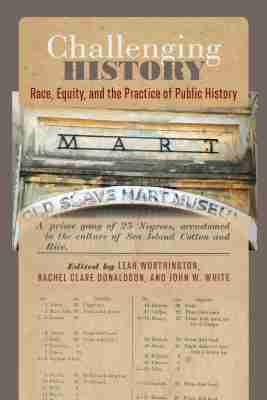
For decades racism and social inequity have stayed at the center of the national conversation in the United States, sustaining the debate around public historic places and monuments and what they represent. These conversations are a reminder of the crucial role that public history professionals play in engaging public audiences on subjects of race and slavery. This "difficult history" has often remained un- or underexplored in our public discourse, hidden from view by the tourism industry, or even by public history professionals themselves, as they created historic sites, museums, and public squares based on white-centric interpretations of history and heritage.Challenging History, through a collection of essays by a diverse group of scholars and practitioners, examines how difficult histories, specifically those of slavery and race in the United States, are being interpreted and inserted at public history sites and in public history work. Several essays explore the successes and challenges of recent projects, while others discuss gaps that public historians can fill at sites where Black history took place but is absent in the interpretation. Through case studies, the contributors reveal the entrenched false narratives that public history workers are countering in established public history spaces and the work they are conducting to reorient our collective understanding of the past.History practitioners help the public better understand the world. Their choices help to shape ideas about heritage and historical remembrances and can reform, even transform, worldviews through more inclusive and ethically narrated histories. Challenging History invites public historians to consider the ethical implications of the narratives they choose to share and makes the case that an inclusive, honest, and complete portrayal of the past has the potential to reshape collective memory and ideas about the meaning of American history and citizenship.
Inbunden, Engelska, 2022
513 kr
Skickas inom 5-8 vardagar
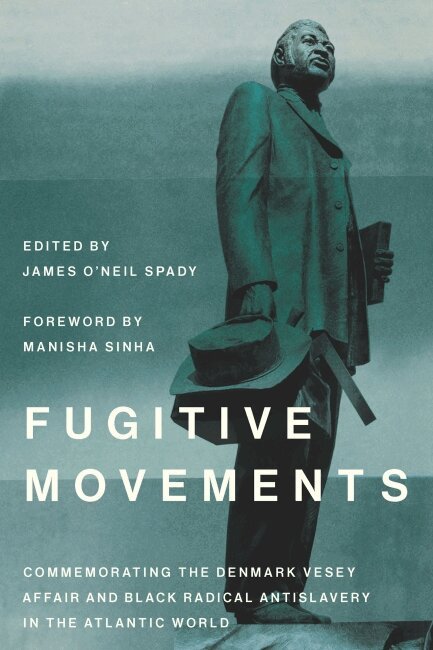
In 1822, White authorities in Charleston, South Carolina, learned of plans among the city's enslaved population to lead an armed antislavery rebellion. Among the leaders was a free Black carpenter named Denmark Vesey. After a brief investigation and what many considered a dubious trial, Vesey and 35 others were convicted of attempted insurrection and hanged. To this day, activists, politicians, writers, and scholars have questioned and debated the historical significance of the conspiracy, its commemoration, and the integrity of the archival records left behind.James O'Neil Spady has collected essays by 14 outstanding scholars, who reframe the Vesey affair as part of the broader development of Black Radical antislavery movements in the Atlantic World. Essays focus on Vesey and several other rebellion events, including the forcible rescue of African Americans being trafficked within the United States.Manisha Sinha, James L. and Shirley A. Draper Chair in American History at the University of Connecticut and author of The Slave's Cause: A History of Abolition, provides the foreword.
Häftad, Engelska, 2025
376 kr
Skickas inom 5-8 vardagar
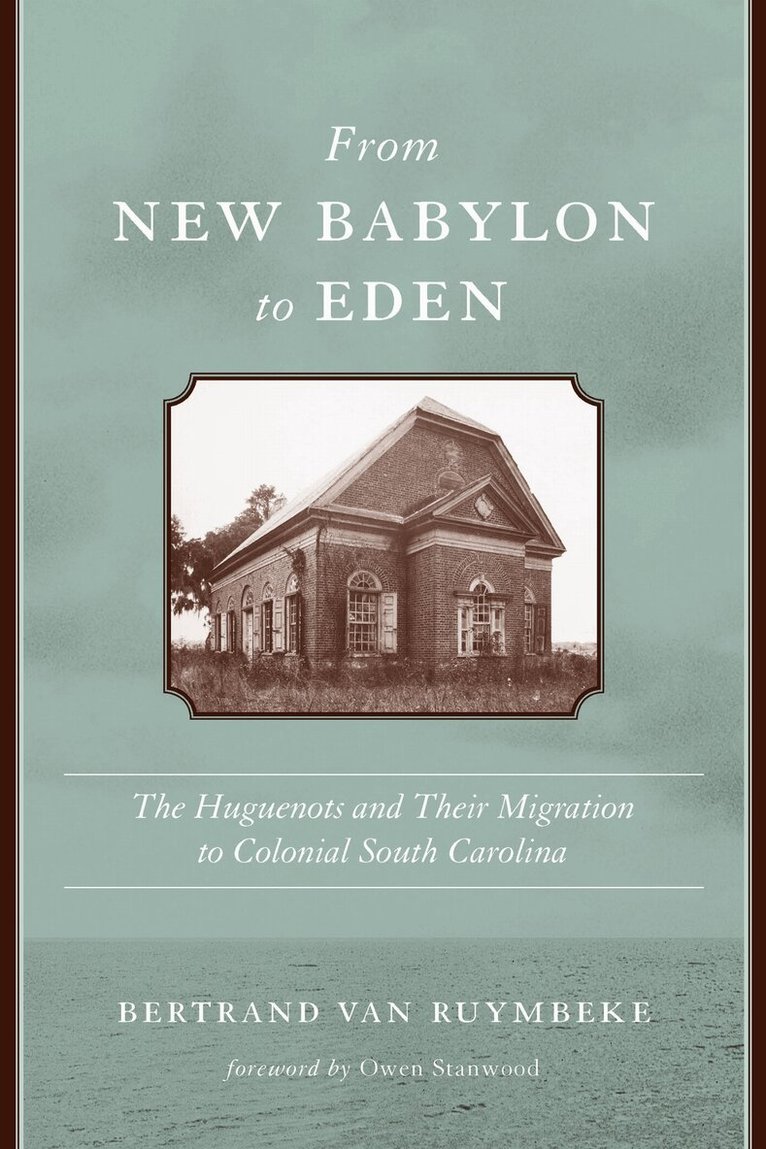
A revealing account of the choices French immigrants faced as they settled in South Carolina Winner of the National Huguenot Society's 2007 Book of the Year award, From New Babylon to Edentraces the persecution of Huguenots in France and the eventual immigration of a small bloc of the French Calvinist population to proprietary South Carolina. Placing the Carolina migration in the context of the larger Huguenot diaspora, Van Ruymbeke proffers an account that challenges accepted history. Describing their settlement as a process of acculturation and creolization rather than simply assimilation, he contends that most of these French Calvinists sought to create their own churches but were thwarted by an Anglicized elite eager to dominate Anglo-Carolinian society. He also reveals that most members of the initial generation were only moderately prosperous and that it was their descendants who acquired the wealth often associated with lowcountry Huguenots. A new foreword by Owen Stanwood and preface from the author consider the continuing significance of the book nearly twenty years after its original publication.
Inbunden, Engelska, 2023
576 kr
Skickas inom 11-20 vardagar
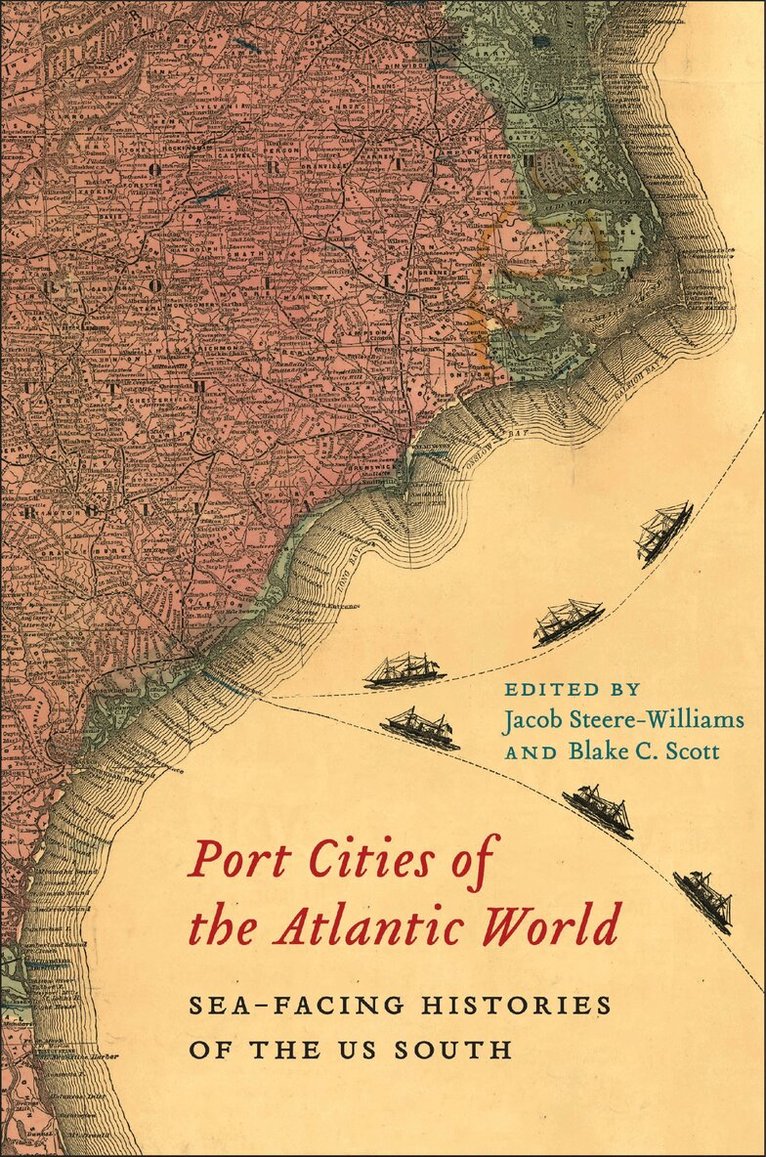
Traces the maritime routes and the historical networks that link port cities around the Atlantic worldPort Cities of the Atlantic World brings together a collection of essays that examine the centuries-long trans-Altlantic transportation of people, goods, and ideas with a focus on the impact of that trade on what would become the American South. Employing a wide temporal range and broad geographic scope, the scholars contributing to this volume call for a sea-facing history of the South, one that connects that terrestrial region to this expansive maritime history. By bringing the study up to the 20th century in the collection's final section, the editors, Jacob Steere-Williams and Blake C. Scott, make the case for the lasting influence of these port cities—and Atlantic world history—on the economy, society, and culture of the contemporary South.