Sneh Punia Bangar – författare
3 258 kr
Skickas inom 10-15 vardagar
1 100 kr
Skickas inom 10-15 vardagar
2 367 kr
Läs direkt efter köp
1 871 kr
Skickas inom 10-15 vardagar
1 871 kr
Skickas inom 10-15 vardagar
Adding Value to Fruit Wastes: Extraction, Properties, and Industrial Applications provides the latest technologies used in fruit waste to extract, isolate, and characterize functional, active compounds and their diversified pharmacological, food, agricultural, and industrial applications. Divided in three sections, the book explores emerging technologies for the extraction of functional components, discusses value-added components, and works as a guide to its applications. The book also covers fruit wastes for extracting starch to provide more cereal crops available as food, besides supporting the efficient utilization of fruit wastes to bring opportunities for extraction of functional components in a sustainable manner for food applications.Written by a team of experts in the field, this book provides technicians, researchers, food technology experts, food industry personnel, and academia with value addition to the fruit waste and a lot more opportunities for extraction of functional components in a sustainable manner for food applications.
Covers valorization approaches of fruit waste for starch, protein, fibers, and phenolicsIncludes novel green techniques for the extraction of the functional compoundsBrings industrial applications of value-added functional compounds2 367 kr
Läs direkt efter köp
1 390 kr
Skickas inom 10-15 vardagar
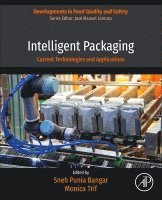
Intelligent Packaging: Current Technologies and Applications, Volume Six in the Developments in Food Quality and Safety series is the most up-to-date resource on topics such as Advances in the analysis of toxic compounds and control of food poisoning; Food fraud, traceability and authenticity; Revalorization of agrifood industry; Natural antimicrobial compounds and application to improve the preservation of food; Non-thermal processing technologies in the food industry; Nanotechnology in food production; and Intelligent packaging and sensors. This updated volume covers intelligent packaging by discussing the aspects of emerging technologies and strategies to obtain such packaging relevant to the development of traceable food products.Topics such as indicators, sensors, tracing devices, and intelligent packaging used in various food products, such as dairy, meat, fruits and vegetables are also explored. The series is edited by Dr. Jos� Manuel Lorenzo and authored by a team of global experts in the fields of Food Quality and Safety, providing comprehensive knowledge to food industry personals and scientists.
Provides fundamentals and the latest developments for emerging technologies in food packagingCovers the main novel and modern intelligent and sensors technologies and strategies to obtain intelligent packagingExplores utilization, optimization, and the development of technologies per se on the developments of intelligent packaging1 431 kr
Skickas inom 10-15 vardagar
Valorization of Fruit Seed Waste from Food Processing Industry: Insights on Nutritional Profile, Biological Functions, and Applications, Volume Five in the Developments in Food Quality and Safety series, provides comprehensive information regarding different aspects of fruit seed waste which can be of great help to students, research scholars, professors, and food industries for both theoretical and practical work. The book covers the composition of different types of fruit seed waste, including their biological and functional characteristics, applications, and extraction/valorization methods for the production of value-added products.This series is the most up-to-date resource covering trend topics such as Advances in the analysis of toxic compounds and control of food poisoning; Food fraud, traceability and authenticity; Revalorization of agrifood industry; Natural antimicrobial compounds and application to improve the preservation of food; Non-thermal processing technologies in the food industry; Nanotechnology in food production; and Intelligent packaging and sensors for food applications.
Covers the fundamentals and latest developments in valorization methods for different fruit seed wasteProvides a comprehensive view of the recovery of valuable ingredients from fruit seed wasteThoroughly explores extraction methods for obtaining bioactive components, characterization methods, and phytochemical profile of the seed2 034 kr
Läs direkt efter köp
1 991 kr
Skickas inom 10-15 vardagar
2 834 kr
Läs direkt efter köp
1 666 kr
Skickas inom 10-15 vardagar
2 370 kr
Läs direkt efter köp
1 293 kr
Läs direkt efter köp
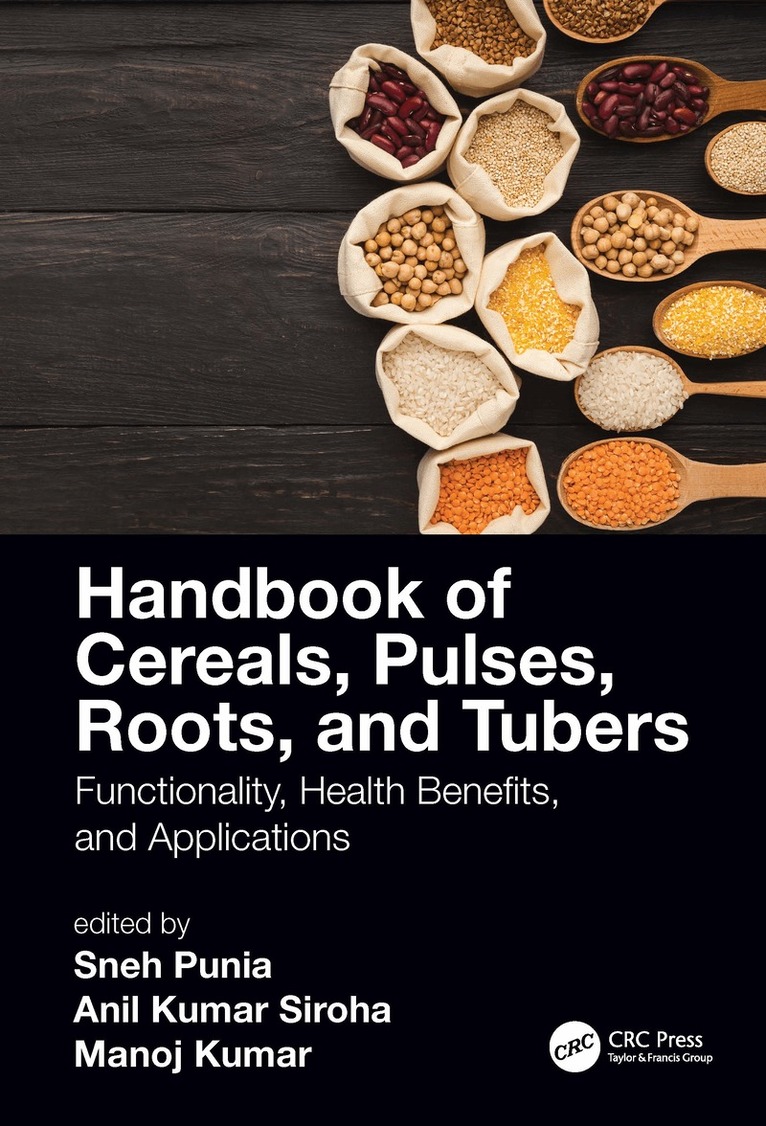
Cereals, pulses, roots, and tubers are major food sources worldwide and make a substantial contribution to the intake of carbohydrates, protein, and fiber, as well as vitamin E and B. The Handbook of Cereals, Pulses, Roots, and Tubers: Functionality, Health Benefits, and Applications provides information about commercial cereals, pulses, and their nutritional profile, as well as health benefits and their food and non-food applications. Split into four sections, this handbook covers all the recent research about the related crops and outlines matters needing further research in the field of agriculture sciences.
Both qualitative and quantitative analysis of nutrients and bio-actives, and their beneficial effects on human health, are highlighted in this book. The conclusions drawn and future perspectives proposed in each chapter will also help researchers to take more focused approaches.
FEATURES
Covers the full spectrum of cereals, pulses, roots, and tubers grain production, processing, and their use for foods, feeds, fuels, and industrial materials, and other uses
Contains the latest information from grain science professionals and food technologists alike
Provides comprehensive knowledge on the nutritional and non-nutritional aspects of cereals, pulses, and tubers
Discusses the latest development in modification of native starch
Provides information in enhancing shelf life and its utilization in phytochemical rich product development
The result of various well-versed researchers across the globe sharing their knowledge and experience, this handbook will be a valuable resource for students, researchers, and industrial practioners who wish to enhance their knowledge and insights on cereals, pulses, roots, and tubers.
1 282 kr
Läs direkt efter köp
Cereals, pulses, roots, and tubers are major food sources worldwide and make a substantial contribution to the intake of carbohydrates, protein, and fiber, as well as vitamin E and B. The Handbook of Cereals, Pulses, Roots, and Tubers: Functionality, Health Benefits, and Applications provides information about commercial cereals, pulses, and their nutritional profile, as well as health benefits and their food and non-food applications. Split into four sections, this handbook covers all the recent research about the related crops and outlines matters needing further research in the field of agriculture sciences.
Both qualitative and quantitative analysis of nutrients and bio-actives, and their beneficial effects on human health, are highlighted in this book. The conclusions drawn and future perspectives proposed in each chapter will also help researchers to take more focused approaches.
FEATURES
Covers the full spectrum of cereals, pulses, roots, and tubers grain production, processing, and their use for foods, feeds, fuels, and industrial materials, and other uses
Contains the latest information from grain science professionals and food technologists alike
Provides comprehensive knowledge on the nutritional and non-nutritional aspects of cereals, pulses, and tubers
Discusses the latest development in modification of native starch
Provides information in enhancing shelf life and its utilization in phytochemical rich product development
The result of various well-versed researchers across the globe sharing their knowledge and experience, this handbook will be a valuable resource for students, researchers, and industrial practioners who wish to enhance their knowledge and insights on cereals, pulses, roots, and tubers.
1 119 kr
Läs direkt efter köp
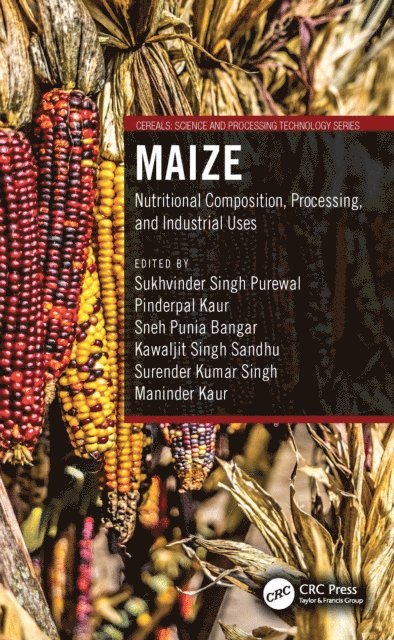
Maize is widely cultivated throughout the world due to its high-yield potential. The economic and nutritional value of maize grains is associated with its starch content, protein, fibre, bioactive compounds, and minerals. Maize is used worldwide in the preparation of health-benefiting, antioxidant-rich, fortified products and dietary supplements.
Maize: Nutritional Composition, Processing, and Industrial Uses explores the status of maize in terms of its production, nutritional composition, biofortification, processing methods, health benefits, maize-based products and storage. This book also emphasizes the key features of maize grains which make it an ideal crop for industrial use. It covers all aspects of recent research about the maize and provides updated information.
Features:
Discusses information related to chemistry of maize components Highlights comprehensive information on the physical and milling properties of maize Explains the structure, functional, and antioxidant properties of maize flour Provides the latest scientific development in the modification of maize starch Explores various maize-based food products and their storage Examines maize protein, scenarios, and quality improvement through bio-fortificationIn-depth information is provided regarding various health-benefiting nutrient components of maize flour, offering meaningful information for product formulation. This book unfolds the potential of maize grains for industrial use.
1 119 kr
Läs direkt efter köp
Maize is widely cultivated throughout the world due to its high-yield potential. The economic and nutritional value of maize grains is associated with its starch content, protein, fibre, bioactive compounds, and minerals. Maize is used worldwide in the preparation of health-benefiting, antioxidant-rich, fortified products and dietary supplements.
Maize: Nutritional Composition, Processing, and Industrial Uses explores the status of maize in terms of its production, nutritional composition, biofortification, processing methods, health benefits, maize-based products and storage. This book also emphasizes the key features of maize grains which make it an ideal crop for industrial use. It covers all aspects of recent research about the maize and provides updated information.
Features:
Discusses information related to chemistry of maize components Highlights comprehensive information on the physical and milling properties of maize Explains the structure, functional, and antioxidant properties of maize flour Provides the latest scientific development in the modification of maize starch Explores various maize-based food products and their storage Examines maize protein, scenarios, and quality improvement through bio-fortificationIn-depth information is provided regarding various health-benefiting nutrient components of maize flour, offering meaningful information for product formulation. This book unfolds the potential of maize grains for industrial use.
1 119 kr
Läs direkt efter köp
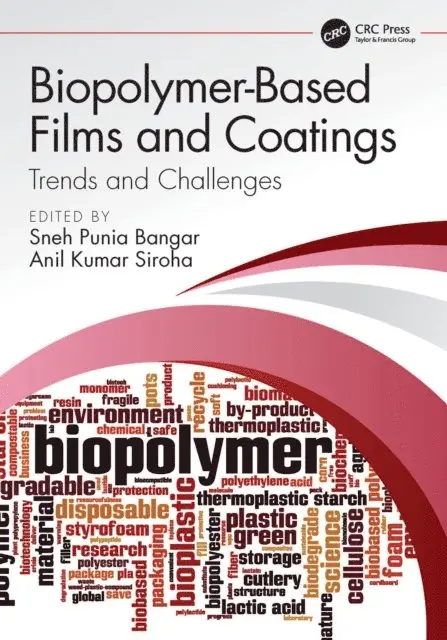
With the growing concern for the environment and the rising price of crude oil, there is increasing demand for non-petroleum-based polymers from renewable resources. Biopolymer films have been regarded as potential replacements for synthetic films in food packaging due to a strong marketing trend toward environmentally friendly materials. Biopolymer-based films and coatings display good barrier properties, flexibility, transparency, economic profitability, and environmental compatibility. Therefore, they have successfully been used for packaging various food products.
Biopolymer-Based Films and Coatings: Trends and Challenges elaborates on the recent methods and ingredients for making biodegradable films and coatings, as well as the current requirements for food security and environmental issues. This book also explores films and coatings prepared with essential oils, antimicrobial substances, and bioactive components that make up this active packaging. Films and coating chapters are based on biopolymers used to prepare films and coatings, that is, carbohydrates, lipids, proteins, and so on. This book provides a platform for researchers and industrialists on the basic and advanced concepts of films and coatings.
Key Features
Provides a comprehensive analysis of recent findings on biopolymers (carbohydrate-, protein-, and lipid-) based films and coatings
Contains a wealth of new information on the properties, functionality, and applications of films and coatings
Presents possible active and functional components and ingredients for developing films and coatings.
Guides start-up researchers on where to start the latest research work in packaging
It has been estimated that the global production of bioplastics is set to hike from ~2.11 in 2020 to ~2.87 million tonnes in 2025. Further, the demand for fresh, ready-to-eat, or semi-finished foods is increasing, and the need to maintain food safety and quality further exacerbates the challenges in the supply chain, especially with the globalization of food trade and the use of centralized processing facilities for food distribution. It is an urgent requirement to increase shelf life and reduce food product loss. Considering the great market demand for biodegradable material-based packaging systems, this book comes at an opportune time to enable researchers and food scientists to develop suitable solutions considering the sustainability and economic feasibility of the process.
1 119 kr
Läs direkt efter köp
With the growing concern for the environment and the rising price of crude oil, there is increasing demand for non-petroleum-based polymers from renewable resources. Biopolymer films have been regarded as potential replacements for synthetic films in food packaging due to a strong marketing trend toward environmentally friendly materials. Biopolymer-based films and coatings display good barrier properties, flexibility, transparency, economic profitability, and environmental compatibility. Therefore, they have successfully been used for packaging various food products.
Biopolymer-Based Films and Coatings: Trends and Challenges elaborates on the recent methods and ingredients for making biodegradable films and coatings, as well as the current requirements for food security and environmental issues. This book also explores films and coatings prepared with essential oils, antimicrobial substances, and bioactive components that make up this active packaging. Films and coating chapters are based on biopolymers used to prepare films and coatings, that is, carbohydrates, lipids, proteins, and so on. This book provides a platform for researchers and industrialists on the basic and advanced concepts of films and coatings.
Key Features
Provides a comprehensive analysis of recent findings on biopolymers (carbohydrate-, protein-, and lipid-) based films and coatings
Contains a wealth of new information on the properties, functionality, and applications of films and coatings
Presents possible active and functional components and ingredients for developing films and coatings.
Guides start-up researchers on where to start the latest research work in packaging
It has been estimated that the global production of bioplastics is set to hike from ~2.11 in 2020 to ~2.87 million tonnes in 2025. Further, the demand for fresh, ready-to-eat, or semi-finished foods is increasing, and the need to maintain food safety and quality further exacerbates the challenges in the supply chain, especially with the globalization of food trade and the use of centralized processing facilities for food distribution. It is an urgent requirement to increase shelf life and reduce food product loss. Considering the great market demand for biodegradable material-based packaging systems, this book comes at an opportune time to enable researchers and food scientists to develop suitable solutions considering the sustainability and economic feasibility of the process.
2 618 kr
Skickas inom 10-15 vardagar
955 kr
Skickas inom 10-15 vardagar
2 428 kr
Skickas inom 10-15 vardagar
961 kr
Skickas inom 10-15 vardagar
2 704 kr
Skickas inom 10-15 vardagar
961 kr
Skickas inom 10-15 vardagar
2 497 kr
Skickas inom 10-15 vardagar
966 kr
Kommande
2 773 kr
Skickas inom 10-15 vardagar
3 163 kr
Läs direkt efter köp
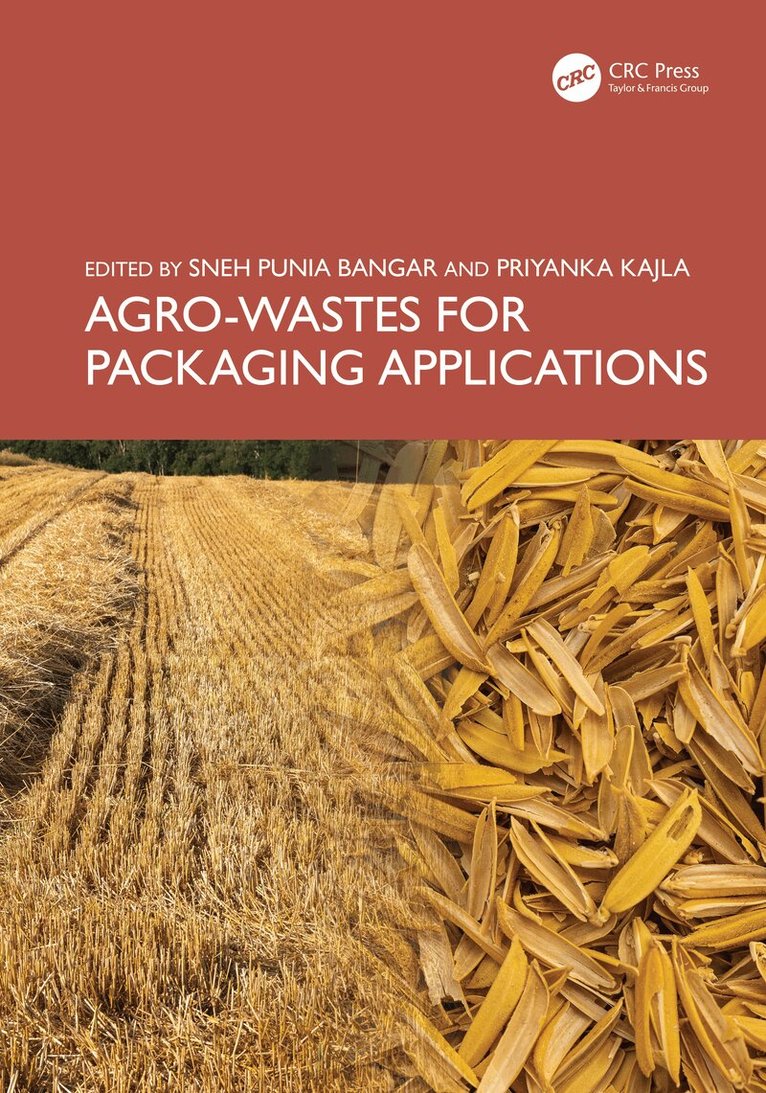
Food and agricultural waste is a huge global issue that has detrimental effects on society, the economy, and the environment. Plant leaves, stems, roots and peels (outer leaves and stems) are among the wastes and by-products from agriculture and the food business, along with residues from oil production, fruit and vegetable peels, and seeds. High concentrations of dietary fiber, phytochemicals, cellulose, and hemicellulose are typically found in these residues. As the next environmentally conscious step of waste valorization, research from recent years has demonstrated that employing organic ingredients/biodegradable fibers generated from waste and by-products in the food packaging business may be an efficient strategy to reduce the quantity of food waste and by-products. In recent years, there has been a lot of interest in finding alternative polymer materials as high-value novel packaging materials through the valorization of agricultural waste. Thus, utilizing agricultural wastes and by-products as raw materials for food packaging could help cut down on the amount of waste produced.
Agro-Wastes for Packaging Applications provides an update on the strategies for valuing agricultural waste and how these might be used in packaging. It also includes recent research on these approaches and presents an innovative strategy for developing sustainable, green, and biodegradable packaging options. A detailed overview of the packaging application of valorized agricultural waste materials is discussed, and concept clarification is achieved using flowcharts and figures supported by the latest research investigations. These agricultural leftovers are abundant sources of polysaccharides, such as cellulose, hemicellulose, and lignin, which can be processed further utilizing various physicochemical techniques and other unconventional techniques to create nanocellulose fibers or crystals. The main goal of this book is to provide food experts and the general public with superior, environmentally friendly, sustainable packaging materials that can be used in place of plastic polymers.
Key Features
Contains abundant information on advanced valorization techniques for different types of agricultural wastes Provides information on possible applications of component/constituents obtained by the valorization Discusses the impact of the incorporation of these valorized components in different packaging systems Reviews the legal standards and future trends in the commercialization of these derived polymers in food packaging industries3 163 kr
Läs direkt efter köp
Food and agricultural waste is a huge global issue that has detrimental effects on society, the economy, and the environment. Plant leaves, stems, roots and peels (outer leaves and stems) are among the wastes and by-products from agriculture and the food business, along with residues from oil production, fruit and vegetable peels, and seeds. High concentrations of dietary fiber, phytochemicals, cellulose, and hemicellulose are typically found in these residues. As the next environmentally conscious step of waste valorization, research from recent years has demonstrated that employing organic ingredients/biodegradable fibers generated from waste and by-products in the food packaging business may be an efficient strategy to reduce the quantity of food waste and by-products. In recent years, there has been a lot of interest in finding alternative polymer materials as high-value novel packaging materials through the valorization of agricultural waste. Thus, utilizing agricultural wastes and by-products as raw materials for food packaging could help cut down on the amount of waste produced.
Agro-Wastes for Packaging Applications provides an update on the strategies for valuing agricultural waste and how these might be used in packaging. It also includes recent research on these approaches and presents an innovative strategy for developing sustainable, green, and biodegradable packaging options. A detailed overview of the packaging application of valorized agricultural waste materials is discussed, and concept clarification is achieved using flowcharts and figures supported by the latest research investigations. These agricultural leftovers are abundant sources of polysaccharides, such as cellulose, hemicellulose, and lignin, which can be processed further utilizing various physicochemical techniques and other unconventional techniques to create nanocellulose fibers or crystals. The main goal of this book is to provide food experts and the general public with superior, environmentally friendly, sustainable packaging materials that can be used in place of plastic polymers.
Key Features
Contains abundant information on advanced valorization techniques for different types of agricultural wastes Provides information on possible applications of component/constituents obtained by the valorization Discusses the impact of the incorporation of these valorized components in different packaging systems Reviews the legal standards and future trends in the commercialization of these derived polymers in food packaging industries