Food Science and Technology - Böcker
1 471 kr
Skickas inom 7-10 vardagar
Drawing together literature from a variety of fields, Food Texture and Viscosity, Second Edition, includes a brief history of this area and its basic principles. It reviews how texture and viscosity are measured, including the physical interactions between the human body and food, objective methods of texture measurements, the latest advances in texture-measuring instruments, various types of liquid flow, and more.
This revised edition contains approximately 30% new material, including two new chapters on physics and texture and the correlation between physical measurements and sensory assessments. It now includes two-color illustrations and includes a current list of equipment suppliers.
Completely revised with approximately 30% new material Includes two new chapters on physics and texture and the correlation between physical measurements and sensory assessments Provides a list of suppliers of texture-measuring equipment Features two-color illustrations and text throughout Written by an award-winning authorThe Nutrition Transition
Diet and Disease in the Developing World
1 276 kr
Skickas inom 7-10 vardagar
This book deals with the dramatic changes in diet and lifestyle that are occurring in the developing world as a result of globalization, and their impact on human healt. The Editors have assembled a leading group of scientists in teh fields of economics, population sciences, international health, medicine, nutrition and food sciences, to address each of the key issues related to the changes in demographic trends, food production and marketing, and disease patterns in the developing world.
The Nutrition Transition provides essential information to understand the far-reaching effects that global economic, social and cultural trends are having on diet-related disease patersin in countries of transition.
Contains numerous illustrative figures and tables Two case studies included-on China and Brazil Foreword written by Nevin Scrimshaw, recipient of the World Food Prize1 776 kr
Skickas inom 7-10 vardagar
1 329 kr
Skickas inom 7-10 vardagar
Statistical Methods in Food and Consumer Research, Second Edition, continues to be the only book to focus solely on the statistical techniques used in sensory testing of foods, pharmaceuticals, cosmetics, and other consumer products. This new edition includes the most recent applications of statistical methods, and features significant updates as well as two new chapters.
Covering the application of techniques including R-index, the Bayesian approach for sensory differences tests, and preference mapping in addition to several other methodologies, this is the comprehensive reference needed by those studying sensory evaluation and applied statistics in agriculture and biological sciences.
Research professionals working with food, beverages, healthcare, cosmetics, and other related areas will find the book a valuable guide to the variety of statistical methods available.
Provides comprehensive coverage of statistical techniques in sensory testing Includes data compiled from real-world experiments Covers the latest in data interpretation and analysis Addresses key methods such as R-index, Thursonian Discriminal Distances, group sequential tests, beta-binomial tests, sensory difference and similarity tests, just-about-right data, signal-to-noise ratio, analysis of cosmetic data, Descriptive Analysis, claims substantiation and preference mapping1 361 kr
Skickas inom 7-10 vardagar
Gluten-Free Cereal Products and Beverages is the only book to address gluten-free foods and beverages from a food science perspective. It presents the latest work in the development of gluten-free products, including description of the disease, the detection of gluten, and the labeling of gluten-free products as well as exploring the raw materials and ingredients used to produce gluten-free products.
Identifying alternatives to the unique properties of gluten has proven a significant challenge for food scientists and for the 1% of the world's population suffering from the immune-mediated entropathy reaction to the ingestion of gluten and related proteins, commonly known as Celiac Disease. This book includes information on the advances in working with those alternatives to create gluten free products including gluten-free beer, malt and functional drinks.
Food scientists developing gluten-free foods and beverages, cereal scientists researching the area, and nutritionists working with celiac patients will find this book particularly valuable.
Written by leading experts, presenting the latest developments in gluten-free products Addresses Coeliac Disease from a food science perspective Presents each topic from both a scientific and industrial point of view1 263 kr
Skickas inom 7-10 vardagar
In recent years, there has been a great deal of progress in the understanding and management of milk proteins across the production chain. Milk Proteins takes a uniquely comprehensive look at those developments and presents them in a one-source overview.
By providing a brief overview of each topic area, and then describing the most important recent advances therein, the "field-to-table" approach of this book provides specialists with new and directly relevant information in their own areas, along with information from complementary research fields, allowing them to contextualize their work within the larger pictures. At the same time it provides generalists with a complete overview and offers insights into topics for more in-depth reading.
Covering areas that are receiving attention from people of many fields -- genomics, functional foods -- and including the latest research and developments in milk-protein phenomenon and interactions, this book will be an ideal resource for professionals and students alike.
A fresh look at recent developments across the entire production chain -- from animal genetics to nutritional and nutrigenomic needs of the customer Up-to-date information from internationally-recognised authors from both academic and commercial resources1 568 kr
Skickas inom 7-10 vardagar
Around the world concerns about cost, efficiency, and safety - employee, product, process and consumer -- have led to changes in the way food plants are planned, constructed and evaluated. From initiation of major capital requests to legal design requirements to project management and plant operations, food engineers and scientists must understand the myriad of requirements and responsibilities of successful food facilities. J. Peter Clark provides that guidance in this complete volume.
Included are:
A summary of lessons on understanding how management evaluates potential investments and how they can contribute to ultimate shareholder value, and checklists to help accurately estimate capital and operating costs Important, and in some cases unique, features of a food plant including focus on food safety. Addresses not only consumer products, but ingredients for consumer products and the concerns of distribution and flexibility that must be considered. Also considered are the support facilities that are equally essential to the safe production of food An effective approach to understanding production lines and optimizing operations during expansion by briefly introducing Goldratt's Theory of Constraints. The book explores the challenges of construction while maintaining safe and sanitary operations An approach and methodology that can be extended beyond the case studies presented in order to effectively plan development processes and make correct equipment selections Project management and plant operations guidance to assist engineers who find themselves in the role of managing a design or construction process project, or of supervising a portion of a plant. Includes suggestions for effectively troubleshooting an unsatisfactory operation Provides real-world insights including guides for proper project estimation, understanding the role and importance of support facilities, maintaining standards while under construction and other vital considerations Includes checklists and proven approaches to guide the reader through the wide range of necessary planning and implementation steps Considers factors for both new plant construction and expansion of existing plants912 kr
Skickas inom 7-10 vardagar
1 276 kr
Skickas inom 7-10 vardagar
Risk Management for Food Allergy is developed by a team of scientists and industry professionals who understand the importance of allergen risk assessment and presents practical, real-world guidance for food manufacturers.
With more than 12 million Americans suffering from food allergies and little indication of what is causing that number to continue to grow, food producers, packagers and distributors need to appropriately process, label and deliver their products to ensure the safety of customers with allergic conditions. By identifying risk factors during processing as well as determining appropriate "safe" thresholds of ingredients, the food industry must take increasingly proactive steps to avoid direct or cross-contamination as well as ensuring that their products are appropriately labeled and identified for those at risk.
This book covers a range of critical topics in this area, including the epidemiology of food allergy, assessing allergen thresholds and risk, specifics of gluten management and celiac disease, and much more. The practical advice on factory risk management, catering industry practices, allergen detection and measurement and regulatory controls is key for food industry professionals as well as regulators in government and other public bodies.
Science-based insights into the potential risks of food allergens Focused section on determining thresholds Practical guidance on food allergen risk management, including case studies910 kr
Skickas inom 7-10 vardagar
Understanding what the consumer wants and will accept are two of the most significant hurdles faced by anyone in new product development. Whether the concern is the proper mouth-feel of a potato chip, the sense of freshness" evoked by a chewing gum, or the weight and texture of a cosmetic, if the consumer doesn't find the product acceptable, it won't sell. Sensory evaluation testing is the process that establishes the consumer acceptability of a product. It can help identify issues before general production is begun and potentially bring to light issues that hadn't previously been considered a factor in the success of the project.
1 276 kr
Skickas inom 7-10 vardagar
Understanding the causes and contributing factors leading to outbreaks of food-borne illness associated with contamination of fresh produce is a worldwide challenge for everyone from the growers of fresh-cut produce through the entire production and delivery process. The premise of The Produce Contamination Problem is that when human pathogen contamination of fresh produce occurs, it is extremely difficult to reduce pathogen levels sufficiently to assure microbiological safety with the currently available technologies. A wiser strategy would be to avoid crop production conditions that result in microbial contamination to start.
These critical, problem-oriented chapters have been written by researchers active in the areas of food safety and microbial contamination during production, harvesting, packing and fresh-cut processing of horticultural crops, and were designed to provide methods of contamination avoidance. Coverage includes policy and practices in the United States, Mexico and Central America, Europe, and Japan.
Addresses food-borne contaminations from a prevention view, providing proactive solutions to the problems Covers core sources of contamination and methods for identifying those sources Includes best practice and regulatory informationNutraceutical and Functional Food Regulations in the United States and Around the World
1 190 kr
Skickas inom 7-10 vardagar
This fully revised and updated edition begins with insights into the scope, importance and continuing growth opportunities in the nutraceutical and functional food industries and explores the latest regulatory changes and their impacts. The book demonstrates the global scenario of the acceptance and demand for these products and explores the regulatory hurdles and claim substantiation of these foods and dietary supplements, as well as addressing the intricate aspects of manufacturing procedures.
As the public gains confidence in the quality of these products based on sophisticated quality control, a broad spectrum of safety studies and GRAS, peer-reviewed publications and cutting-edge human clinical studies have emerged. An increasing number of additional populations around-the-world now recognize the efficacy and functions of nutraceuticals and functional foods as established by those scientific research studies. As a result, a number of structurally and functionally active novel nutraceuticals and several new functional beverages have been introduced into the marketplace around the world.
Features fully revised and updated information with current regulations from around the world, including GRAS status and DSHEA regulators Offers 45% new content including three new chapters -NSF: Ensuring the Public Health and Safety Aspects of Nutraceuticals and Functional Foods; Role of the United States Pharmacoepia in the Establishment of Nutraceuticals and Functional Food Safety; An Overview on the New Dietary Ingredient (NDI) and Generally Recognized as Safe (GRAS) Status, and the addition of cGMP regulations for dietary supplements Includes insight into working with regulatory agencies, processes and procedures Provides a link to the contact information for most regulatory bodies for readers wishing to gain further knowledge1 543 kr
Kommande
1 276 kr
Skickas inom 7-10 vardagar
1 314 kr
Skickas inom 7-10 vardagar
775 kr
Skickas inom 7-10 vardagar
654 kr
Skickas inom 7-10 vardagar
800 kr
Skickas inom 7-10 vardagar
2 276 kr
Skickas inom 7-10 vardagar
1 276 kr
Skickas inom 7-10 vardagar
Understanding of the interactions of milk proteins in complex food systems continues to progress, resulting in specialized milk-protein based applications in functional foods, and in protein ingredients for specific health applications. Milk Proteins is the first and only presentation of the entire dairy food chain - from the source to the nutritional aspects affecting the consumer.
With focus on the molecular structures and interactions of milk proteins in various processing methods, Milk Proteins presents a comprehensive overview of the biology and chemistry of milk, as well as featuring the latest science and developments. Significant insight into the use of milk proteins from an industry viewpoint provides valuable application-based information. Those working with food and nutritional research and product development will find this book useful.
20% new chapter content - full revision throughout New chapters address: role of milk proteins in human health; aspects of digestion and absorption of milk proteins in the GIT; consumer demand and future trends in milk proteins; and world supply of proteins with a focus on dairy proteins Internationally recognized authors and editors bring academic and industrial insights to this important topic1 922 kr
Skickas inom 7-10 vardagar
Food Process Engineering and Technology, Third Edition combines scientific depth with practical usefulness, creating a tool for graduate students and practicing food engineers, technologists and researchers looking for the latest information on transformation and preservation processes and process control and plant hygiene topics. This fully updated edition provides recent research and developments in the area, features sections on elements of food plant design, an introductory section on the elements of classical fluid mechanics, a section on non-thermal processes, and recent technologies, such as freeze concentration, osmotic dehydration, and active packaging that are discussed in detail.
Provides a strong emphasis on the relationship between engineering and product quality/safety Considers cost and environmental factors Presents a fully updated, adequate review of recent research and developments in the area Includes a new, full chapter on elements of food plant design Covers recent technologies, such as freeze concentration, osmotic dehydration, and active packaging that are discussed in detail1 678 kr
Skickas inom 7-10 vardagar
Wine Science: Principles and Applications, Fifth Edition, delivers in-depth information and expertise in a single, science-focused volume, including all the complexities and nuances of creating a quality wine product. From variety, to the chemistry that transforms grape to fruit to wine, the book presents sections on the most important information regarding wine laws, authentication, the latest technology used in wine production, and expert-insights into the sensory appreciation of wine and its implications in health. This book is ideal for anyone seeking to understand the science that produces quality wines of every type.
Presents thorough explanations of viticulture and winemaking principles from grape to taste bud Addresses historical developments in wine production, notably sparkling wines Provides techniques in grapevine breeding, notably CRISPR Compares production methods in a framework that provides insights into the advantages and disadvantages of each2 417 kr
Skickas inom 7-10 vardagar
1 278 kr
Skickas inom 5-8 vardagar
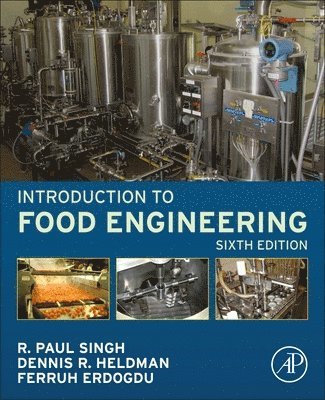
**2025 Textbook and Academic Authors Association (TAA) Textbook Excellence "Texty" Award Winner**The sixth edition of Introduction to Food Engineering, with revised and updated content, aims to enhance the learning of quantitative approaches to designing food processing operations. The book, translated into six languages, is widely acclaimed in teaching and learning food engineering by many generations of students worldwide. It is notable for blending engineering principles based on fundamental physics applied to commonly used and emerging food processing technologies. The chapters are written to facilitate the instructors in presenting lectures in an organized sequence for effective teaching. Numerous solved examples, detailed steps, and end-of-chapter problems of industrial relevance are included to help students learn underlying concepts and their applications. Many illustrations, with companion web-based animations, aim to improve the subject's comprehension. A new chapter introduces quantitative aspects of cleaning and sanitation in food operations to enhance food safety. Quantitative aspects of emerging electrotechnologies for food processing are explained. Spreadsheet-based problem-solving techniques are included for designing unit operations with “what-if” analysis. Practicing professionals in the industry will find an extensive collection of reference data helpful in the design and operation of industrial food processes.
Numerical examples are reworked using the latest data on fluid properties obtained from the National Institute of Standards and TechnologyQuantitative examples describe the use of earth-friendly refrigerants in the cold chainDesign procedures relevant to emerging electrotechnologies in food processingNew content on resource sustainability for designing future food processing systems that support circular bioeconomyDescription of quantitative approaches to food processing to assist practicing professionals in the food industry2 577 kr
Skickas inom 10-15 vardagar
954 kr
Skickas inom 10-15 vardagar
927 kr
Skickas inom 10-15 vardagar
900 kr
Skickas inom 10-15 vardagar
927 kr
Skickas inom 10-15 vardagar
927 kr
Skickas inom 10-15 vardagar